


Marquetry Mahogany Carver
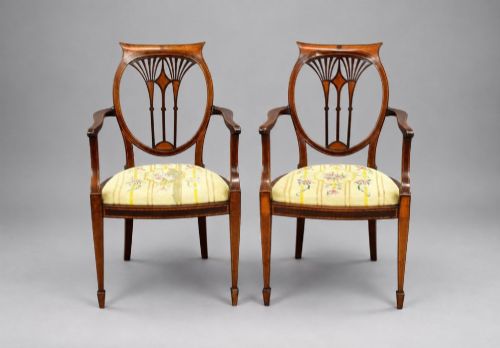
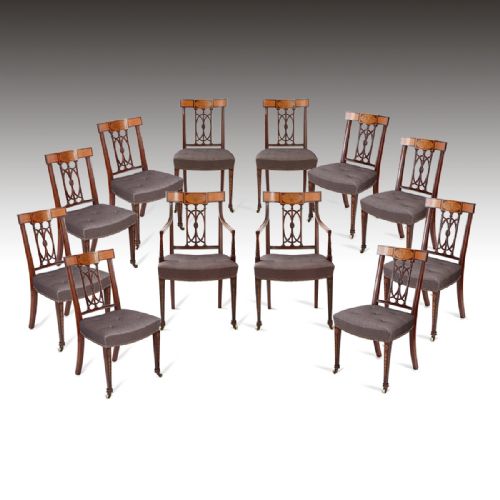
These marquetry mahogany carver armchairs combine substantial timber frames with detailed contrasting wood inlay.
Marquetry Mahogany Carver
A marquetry mahogany carver provides a substantial seating option with open arms, designed historically for the head of a dining table or use at a desk. You will find these items appearing frequently from the Edwardian period and the late nineteenth century, alongside earlier nineteenth century examples.
The forms span formal dining armchairs, elbow chairs, and occasional salon seating. Many incorporate delicate inlay work across the backrests and splats, distinguishing them from standard dining chairs.
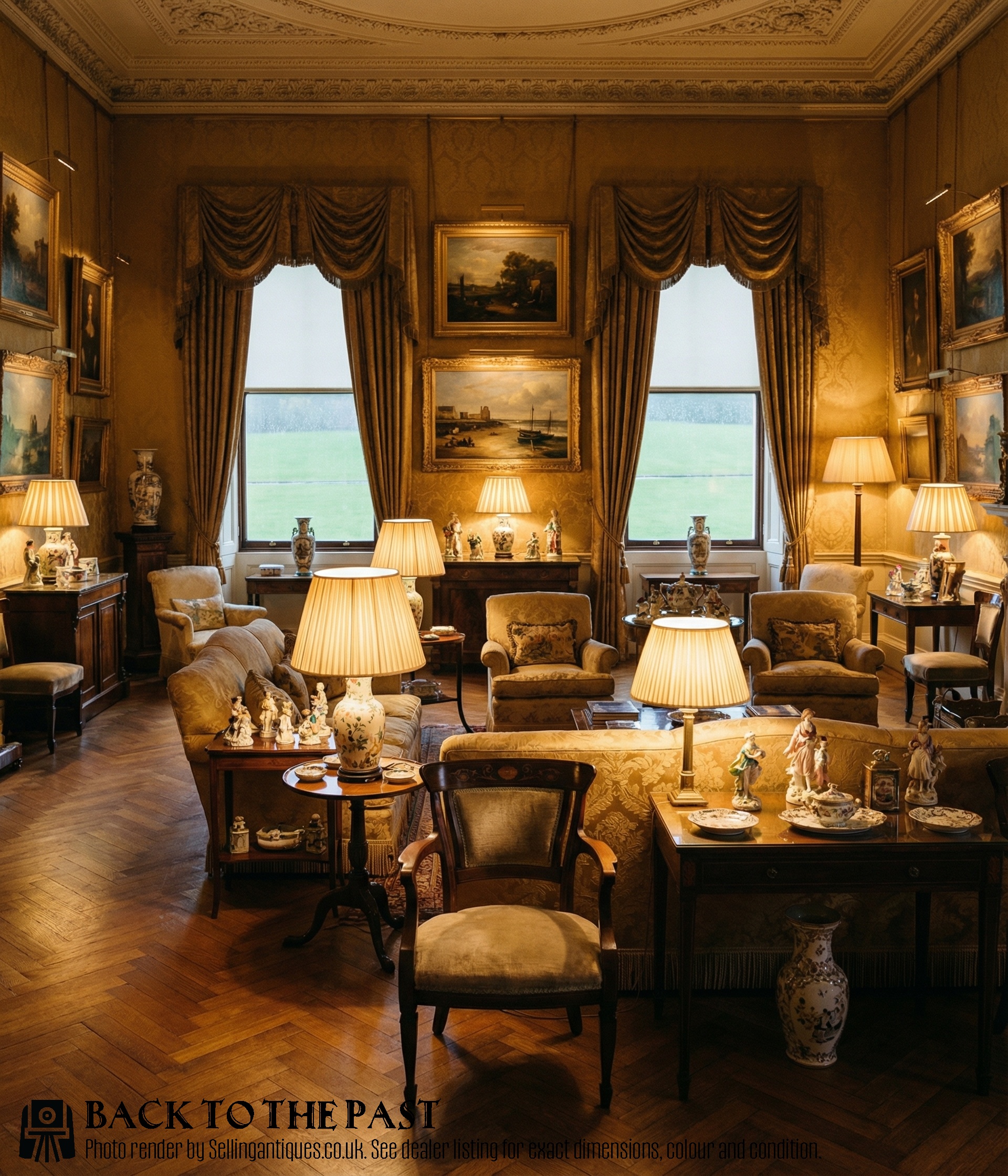
Makers adapted these carvers for various domestic settings, ranging from formal morning rooms to studies and drawing rooms. The scale typically allows them to function comfortably as desk chairs or standalone accent pieces.
How they were made
Cabinet makers built the primary frames using solid mahogany, shaping the arms, legs, and back structures to provide structural rigidity. Selected pieces incorporate additional timbers such as satinwood for contrasting details.
Marquetry and wood inlay techniques involve cutting fine veneers into decorative motifs and setting them flush into the mahogany ground. Artisans secured these intricate patterns by hand before polishing the complete surface.
The listings here span the Victorian, Edwardian, and Regency periods, with mahogany and satinwood inlay recurring across multiple forms.
What varies in quality
The refinement of the marquetry and the crispness of the wood inlay separate standard production from superior work. Expert execution in the floral or geometric motifs shows clean lines and precise fitting without excessive filler.
The proportion of the frame and the elegance of the open arms dictate the visual success of the piece. Heavier, unrefined turnings contrast with finely sculpted arm supports and well-balanced proportions.
Shoolbred·Jenks and Wood
The Marquetry Mahogany Carver Glossary
- Carver
- An armchair, traditionally larger than the surrounding dining chairs, featuring open arms designed to accommodate formal clothing. These chairs often sat at the head and foot of a dining table.
- Marquetry
- A decorative technique where small pieces of veneer are assembled into pictorial or geometric patterns on a wooden ground. Craftsmen used contrasting timbers to create depth and shade.
- Satinwood
- A durable tropical hardwood with a lustrous yellow or golden sheen, frequently employed for contrasting inlay work on mahogany furniture. It provides a bright visual accent against darker timbers.
- Elbow chair
- An alternative term for an armchair with shorter or lower armrests that support the elbows. These seats often served dual purposes in studies and bedrooms.
- Sheraton Revival
- A late nineteenth and early twentieth century style drawing inspiration from late eighteenth century neoclassical designs. It is characterised by light proportions, straight tapered legs, and subtle inlay.
Marquetry Mahogany Carver: Frequently Asked Questions
What is a marquetry mahogany carver?
A marquetry mahogany carver is an armchair constructed from mahogany with decorative wood veneer inlay. These chairs typically served as principal seating at a dining table or as occasional chairs in a parlour.
The inclusion of open arms distinguishes them from standard side chairs. They combine structural timber framing with ornamental surface decoration.
Where were these chairs used?
Historically, these armchairs stood at the head and foot of dining tables in large homes. They also functioned as desk chairs, library chairs, or occasional seating in reception rooms.
Their substantial construction and supportive armrests made them suitable for sitting over longer periods. Today, they adapt easily to modern living spaces as accent chairs.
How do I care for mahogany marquetry?
Protect these pieces by keeping them away from direct sunlight and sudden temperature changes. This prevents the mahogany timber from drying out and guards against veneer lifting.
Apply a traditional beeswax polish sparingly to maintain the natural lustre of the wood. Avoid modern liquid polishes containing silicones that can damage historical finishes.