

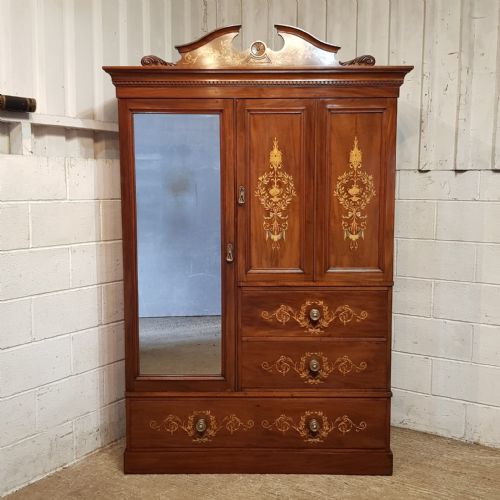
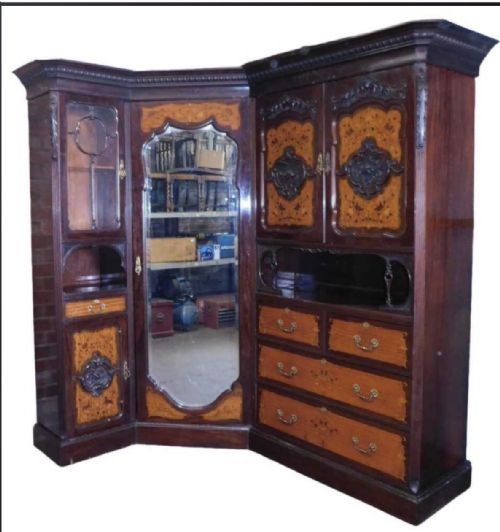
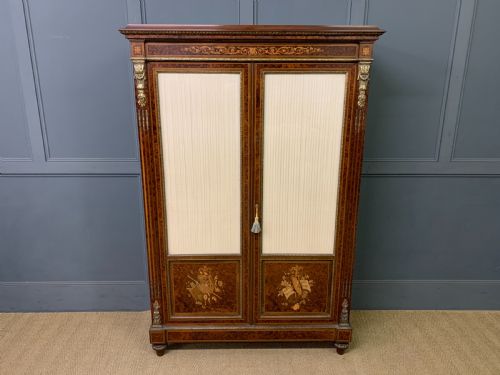


Marquetry Mahogany Armoire
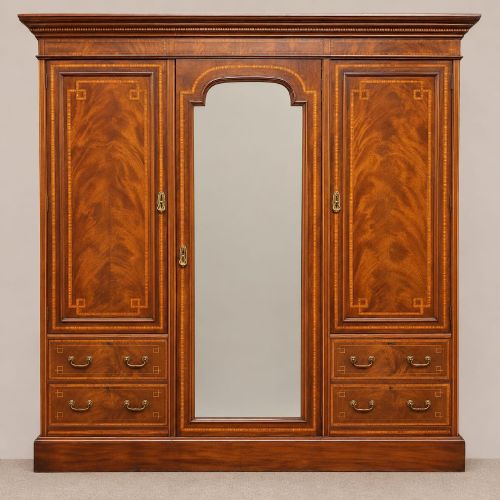
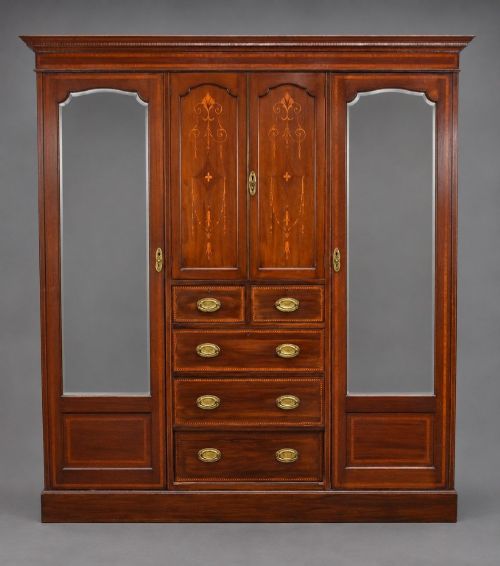
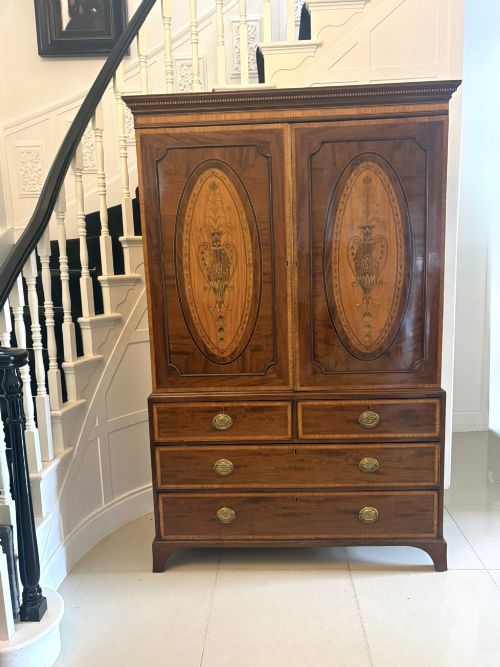
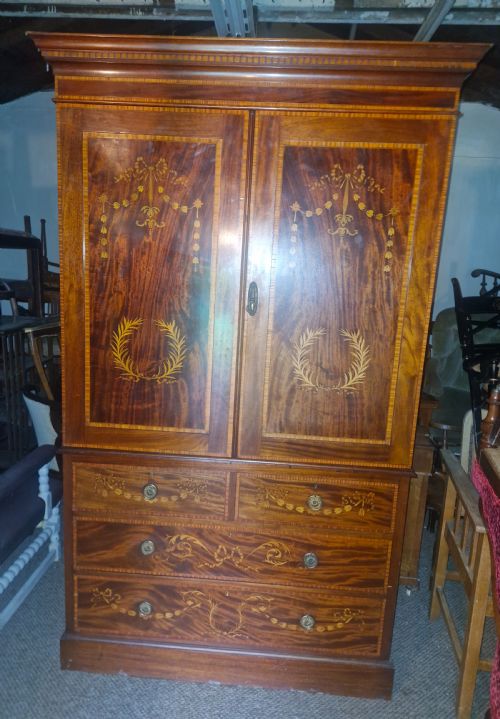
These marquetry mahogany armoire pieces combine generous storage with intricate inlaid patterns, offering a striking centrepiece for a traditional bedroom.
Marquetry Mahogany Armoire
When you search for a marquetry mahogany armoire, you are looking at substantial storage furniture including wardrobes, linen presses, compactums, and bookcases. These pieces originate predominantly from the Victorian and Edwardian eras, alongside Georgian examples.
The most common forms on this page are large wardrobes and linen presses built from mahogany and enriched with detailed inlay work. They frequently arrive in configurations such as triple wardrobes, breakfront designs, and combination pieces with fitted interiors.
Origins span English cabinet-making traditions, French workshops, and Dutch makers, reflecting diverse aesthetic preferences from the Georgian period through to the turn of the twentieth century.
How they were made
Makers constructed the primary carcase and panels using solid mahogany or mahogany veneers over secondary timbers, establishing a stable and heavy foundation. Cabinet-makers then applied contrasting wood veneers such as satinwood, boxwood, walnut, and amboyna to create complex marquetry designs.
Surface ornamentation often incorporates brass hardware and gilt or ormolu mounts to accent the woodwork. Carved details and glass elements appear on specific styles like Edwardian breakfront wardrobes and nineteenth-century bookcases.
Marquetry Mahogany Armoire Retail Price Guide 2026
Typical asking prices for marquetry mahogany armoire among the pieces listed under this phrase on Sellingantiques today, from the lower quarter to the upper quarter. They describe what is for sale here now, not the wider market.
Object types range from triple wardrobes and linen presses to corner compactums, bookcases, and Dutch marquetry robes.
What varies in quality
Quality rests heavily on the precision of the marquetry and the choice of contrasting timbers used for the inlay. Finer examples display crisp, intricate botanical or geometric patterns executed with exceptional accuracy.
Construction methods and internal fittings also differentiate the pieces, with superior wardrobes featuring complex fitted compartments, well-integrated compactum sections, and robust carcases built by established makers.
Druce & Co.·Edwards & Roberts·Maples & Co
The Marquetry Mahogany Armoire Glossary
- Marquetry
- Decorative veneer work forming pictures or patterns on a wooden surface. Craftsmen cut contrasting pieces of wood like satinwood or boxwood and fit them into a background veneer.
- Linen Press
- A tall piece of furniture designed originally for storing folded linen, typically featuring sliding trays in the upper section and drawers below. These often double as housekeepers wardrobes in listings.
- Compactum
- A fitted wardrobe designed to maximise internal storage by combining hanging space, drawers, shelves, and sometimes sliding trays within a single multi-door unit.
- Ormolu
- Gilded bronze mounts and decorative details applied to furniture. This technique adds metallic highlights that contrast with the dark mahogany carcase.
Marquetry Mahogany Armoire: Frequently Asked Questions
What is a compactum wardrobe?
A compactum wardrobe is a specialised piece designed to offer diverse storage solutions within one unit. It typically combines hanging space, drawers, and sliding trays.
These pieces emerged to maximise bedroom utility without requiring multiple separate items of furniture.
How do I care for mahogany furniture?
Mahogany benefits from stable room temperatures and protection from direct sunlight to prevent the timber from fading or drying out. Regular dusting with a soft, dry cloth maintains the polished finish.
Avoid using silicone-based polishes, as they build up over time and attract dust to the intricate marquetry and carved details.
Are linen presses still useful?
Linen presses offer exceptional internal capacity through their combination of sliding linen trays and deep drawers. They provide practical storage for folded garments, bedding, or modern utility needs.
Their substantial presence also makes them a strong architectural anchor in a large bedroom or dressing room.
How do I distinguish Edwardian from Victorian pieces?
Victorian wardrobes often lean towards heavy proportions, darker timbers, and robust architectural cornices. Late Victorian examples frequently introduce lighter Sheraton Revival influences.
Edwardian pieces generally present brighter mahogany tones, more delicate stringing and inlay work, and occasionally simpler carved motifs.