

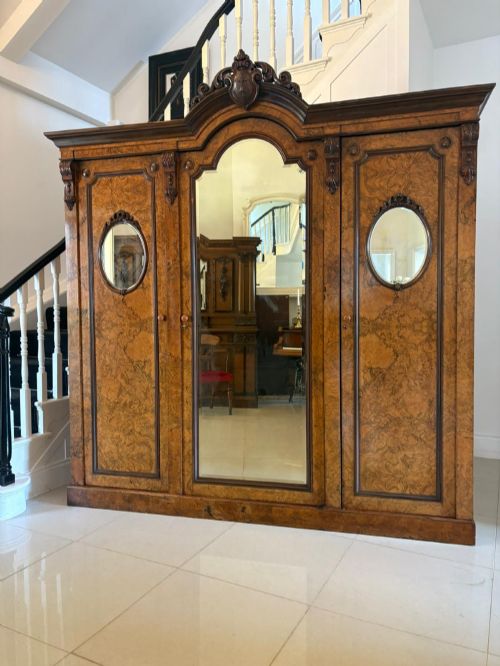
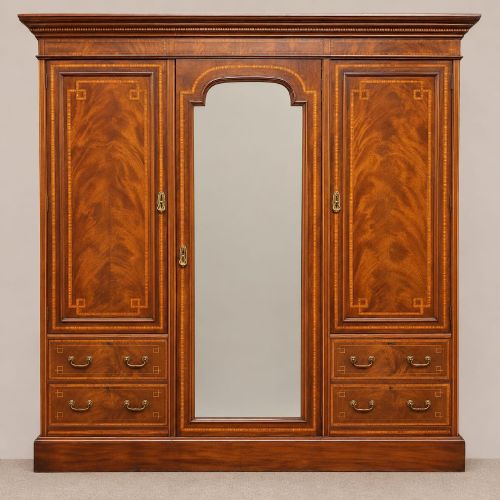
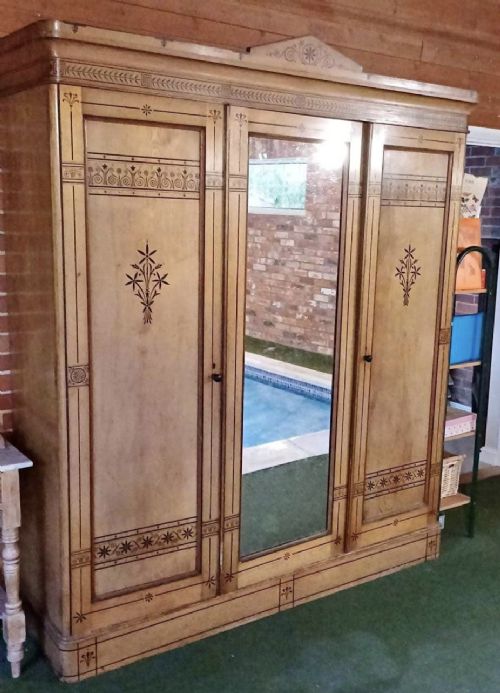
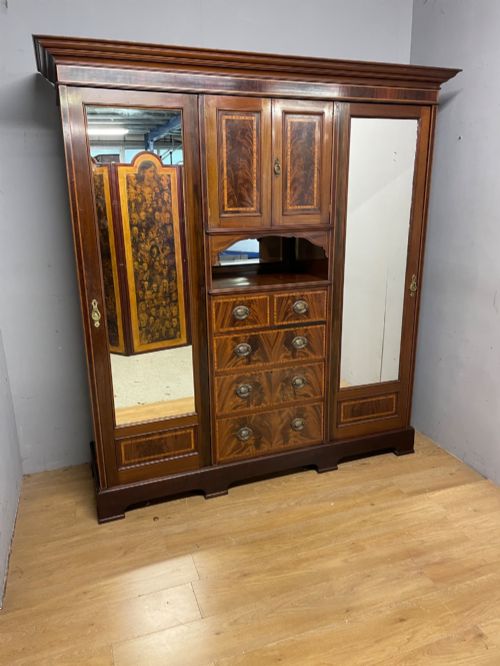
Victorian Armoire Mirror Door
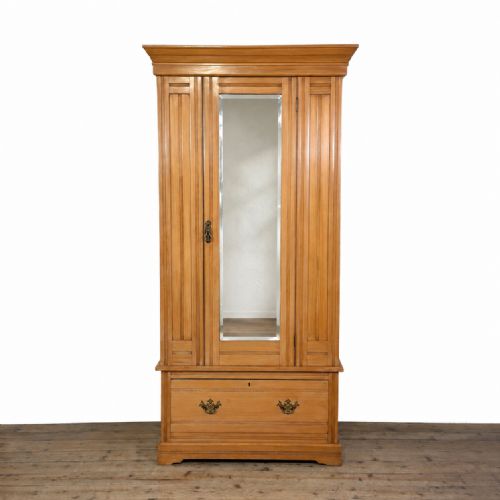
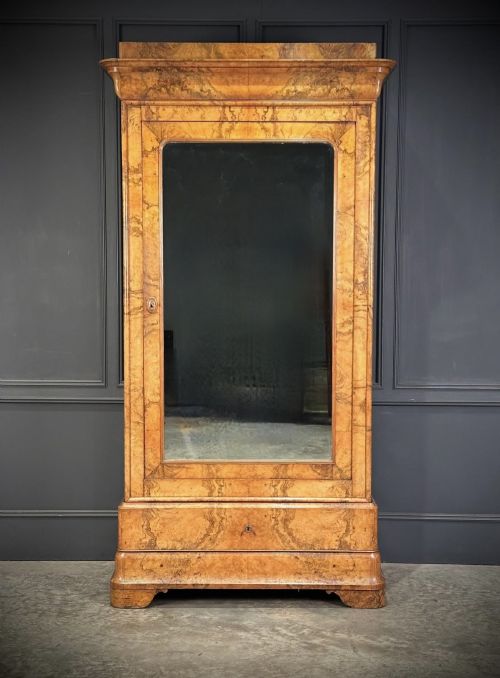
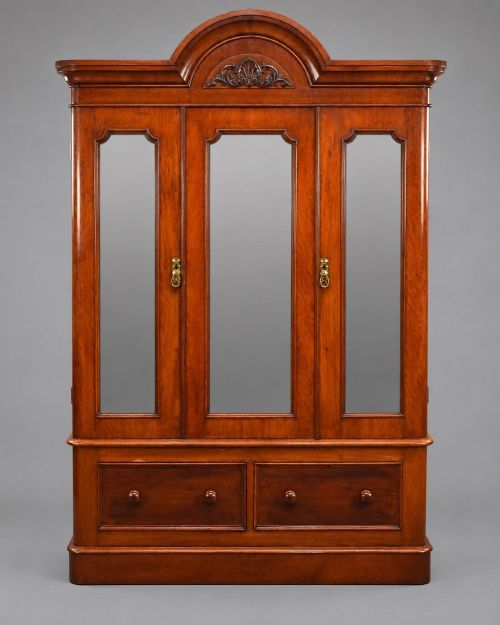
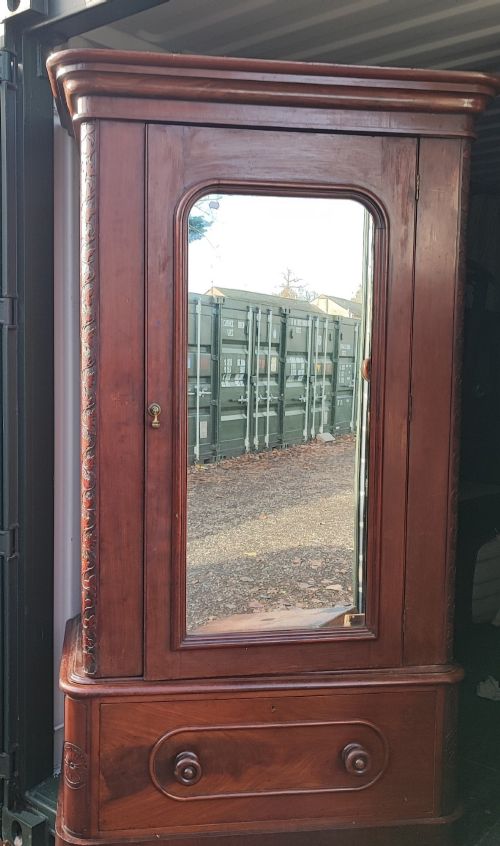
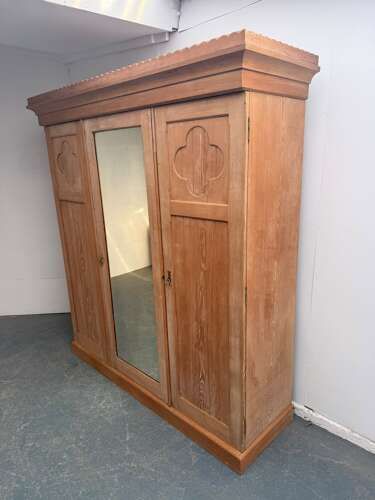
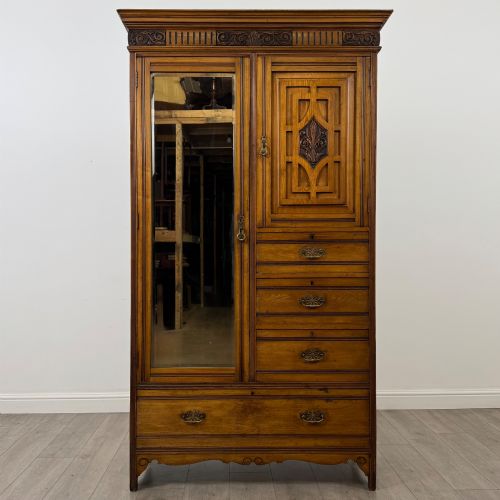
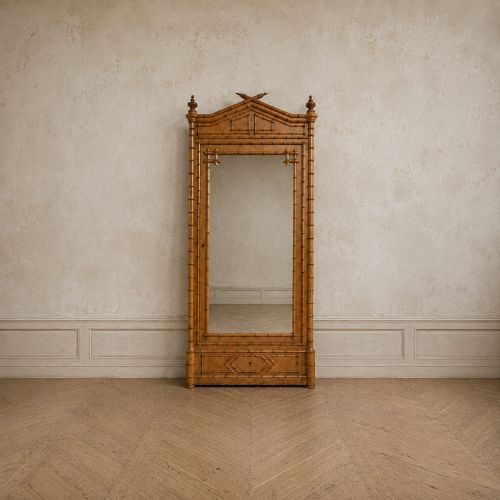
A victorian armoire mirror door brings grand nineteenth-century presence and practical bedroom storage together through expansive reflective glass set into timber cabinetry.
Victorian Armoire Mirror Door
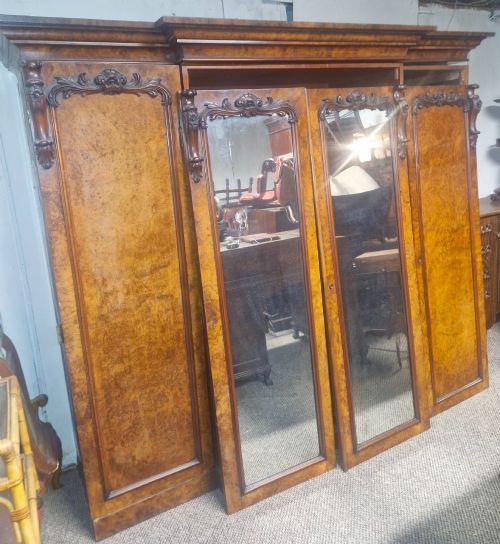
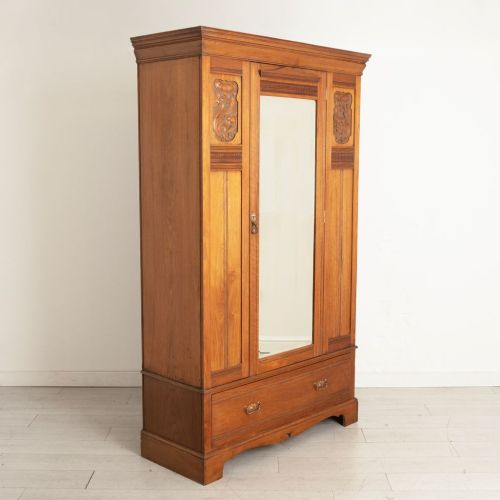
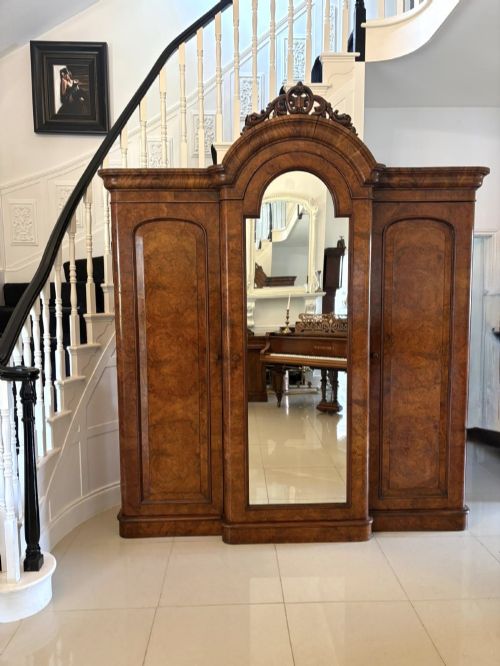
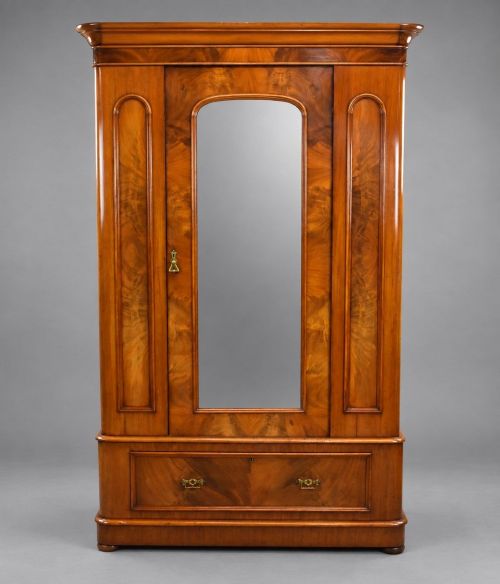
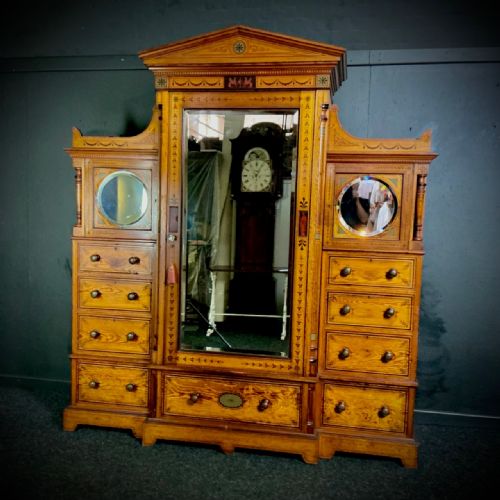
A victorian armoire mirror door search covers large bedroom wardrobes and compactum pieces designed to hold hanging garments and folded attire while reflecting light into the room. These functional items emerged during the nineteenth century in various configurations, ranging from single door examples to grand triple and quadruple breakfront versions.
The selections span distinct stylistic movements including Arts and Crafts, Aesthetic Movement, and Sheraton Revival, alongside standard Victorian output. Mahogany, burr walnut, ash, and pine form the primary carcasses, frequently incorporating fitted interior drawers and sliding linen trays.
Makers such as Shapland and Petter, Holland and Sons, and Gillows of Lancaster produced high-end iterations featuring intricate marquetry inlay, carved details, and specialised wood selections. Buyers most frequently encounter larger triple wardrobes alongside smaller single door hall or child wardrobes originating between eighteen-fifty and nineteen-hundred.
How they were made
Cabinetmakers utilised solid timbers and figured veneers applied over secondary woods to construct these substantial carcasses. Mahogany, walnut, and ash form the structural framework, while burr walnut and bird’s eye maple provide decorative exterior surfaces.
Glass panels were bevelled and set into heavy timber doors to serve as functional mirrors, supported by brass hardware and internal fittings. Inlaid decoration employed contrasting woods and marquetry techniques, particularly within Sheraton Revival and Arts and Crafts examples.
Victorian Armoire Mirror Door Retail Price Guide 2026
Typical asking prices for victorian armoire mirror door among the pieces listed under this phrase on Sellingantiques today, from the lower quarter to the upper quarter. They describe what is for sale here now, not the wider market.
Object configurations range from single door hall wardrobes to four-door breakfront and compactum designs.
What varies in quality
The standard of timber selection and veneer matching defines the upper tiers of production, particularly on burr walnut and mahogany pieces where grain patterns flow across multiple doors. Master workshops employed superior timber preparation and finer interior drawer construction using secondary hardwoods.
Carved ornamentation and inlaid marquetry distinguish standard output from bespoke workshop commissions. Structural complexity, such as breakfront facades and fully fitted internal compartments with sliding trays, separates basic utility wardrobes from grand reception pieces.
Shapland & Petter·Holland and Sons·Gillows of Lancaster
The Victorian Armoire Mirror Door Glossary
- Compactum
- A multi-compartment wardrobe combining hanging space with internal drawers, linen slides, and sometimes small cupboards. These fitted interiors provided comprehensive personal storage for gentlemen and ladies.
- Breakfront
- A piece of cabinetry featuring a central section that projects forward from the flanking wings. This architectural form adds depth and visual rhythm to large wardrobes.
- Marquetry
- The art of applying decorative pieces of veneer to a structure to form intricate pictorial designs or geometric patterns. Makers utilised contrasting timbers like satinwood and rosewood to achieve tonal variation.
- Satin Birch
- A pale yellow-brown hardwood with a distinct shimmering grain pattern popular during the nineteenth century. It frequently appeared in Aesthetic Movement furniture.
- Pollard Oak
- Timber taken from trees that were periodically pruned above the trunk height, resulting in dense clusters of growth rings and burr-like figuring. Cabinetmakers prized this material for its rich texture.
Victorian Armoire Mirror Door: Frequently Asked Questions
How do I fit a large wardrobe?
Most nineteenth-century wardrobes separate into modular sections including a cornice, base, and individual flanking or central carcass units. This sectional construction allows for transport and assembly within domestic rooms.
Ensure you measure ceiling height and floor space precisely before installation, accounting for projecting cornices and door swing radii.
What is a compactum wardrobe?
A compactum integrates hanging space, linen drawers, and small shelving compartments into a single multi-functional cabinetry unit. These interiors offered organised storage for varied garments.
They represent a more sophisticated approach to bedroom storage than basic hanging cupboards found in simpler domestic settings.
How do I care for antique timber?
Maintain stable room humidity and avoid placing wooden furniture near direct heat sources or strong sunlight. Regular dusting with a dry cloth preserves the polished surface.
Occasional waxing with traditional beeswax formulations nourishes the grain without building up synthetic residues.
How are different periods identified?
Stylistic markers such as geometric satinwood inlay point towards Sheraton Revival influence, while unadorned pitch pine often indicates utilitarian Victorian production. Wood choices also shift across the decades.
Early pieces frequently showcase figured burr walnut and rich mahogany, whereas later nineteenth-century examples embrace ash and decorative oak.