
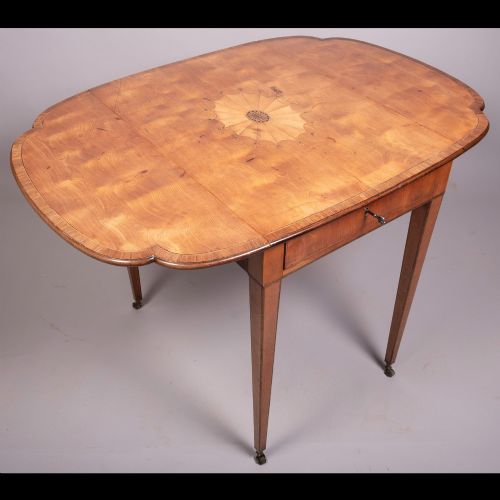
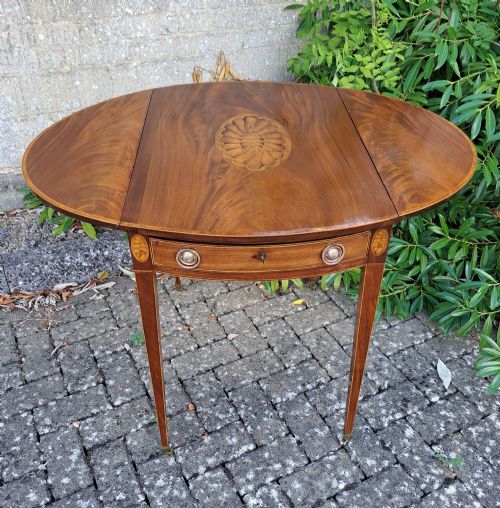


Marquetry Inlay End Table
Marquetry inlay end table examples combine timber surfaces with intricate decorative veneers to provide compact display space beside seating.
Marquetry Inlay End Table
A marquetry inlay end table provides a compact surface for lamps and ornaments, appearing across forms such as side tables, occasional tables, lamp tables, and nests of tables. The selection ranges from Georgian and Victorian periods through the Edwardian era into the early twentieth century.
Most examples found here utilise mahogany, rosewood, walnut, or satinwood as a base timber. Makers arranged contrasting woods and botanical motifs to ornament the tops and borders of these occasional pieces.
Materials and construction
Craftsmen built these tables using solid framework timbers like mahogany, walnut, and rosewood, applying finely sliced veneers to the main surfaces. Boxwood, satinwood, and various specimen woods were precisely cut and fitted into geometric or floral patterns.
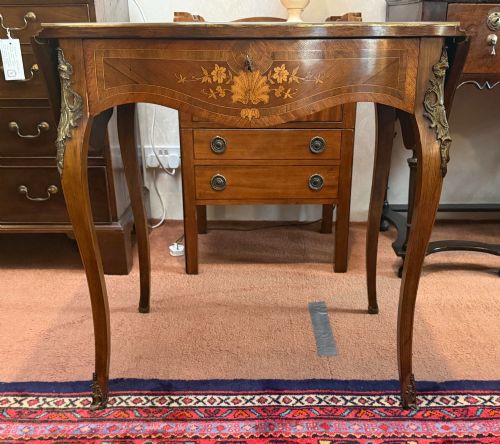
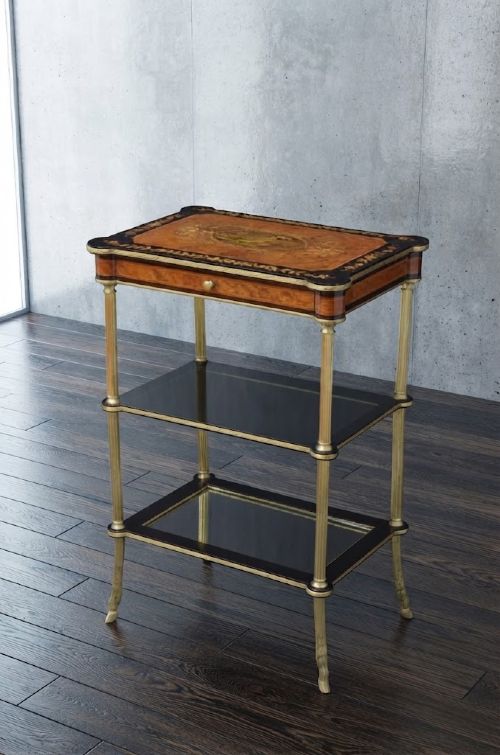
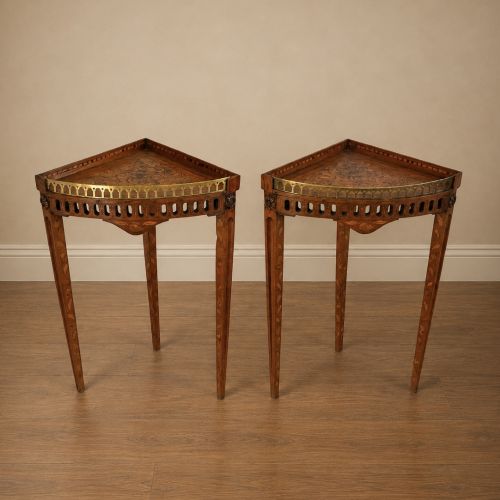
Many specimens incorporate cast brass galleries around the table top or mount ormolu details at the corners and legs. French ebonised finishes and polished timber grains complete the structural execution.
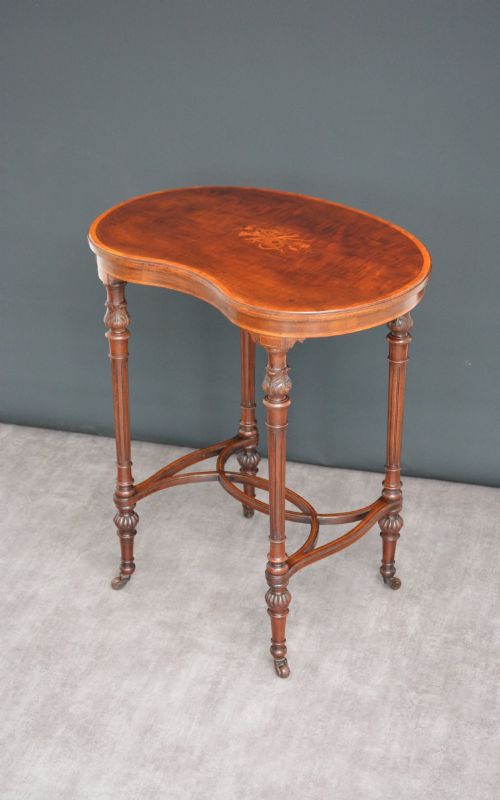
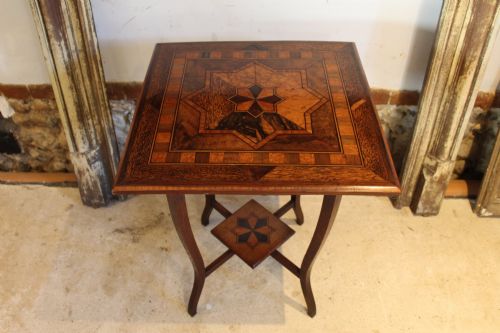
Ceylonese specimen wood tables pack entire botanical excursions into a single tabletop mosaic.
Indicators of quality
The precision of the veneer cutting dictates the definition of the marquetry design, separating basic geometric patterns from intricate floral compositions. Tighter joints between contrasting wood species show greater skill in the workshop.
Selection of secondary materials such as solid brass galleries, mirrored tiers, or exotic specimen woods elevates the standard of the piece. The depth of the timber polish and the structural integrity of the legs determine the enduring finish.
The Marquetry Inlay End Table Glossary
- Marquetry
- Decorative veneer work arranged in pictorial or geometric patterns across a timber surface. This technique uses contrasting wood species to form complex designs.
- Pembroke table
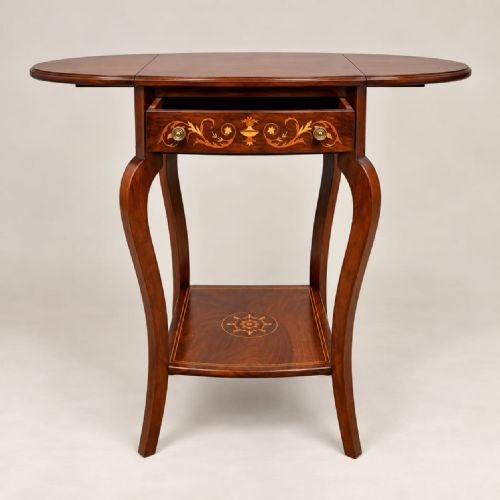
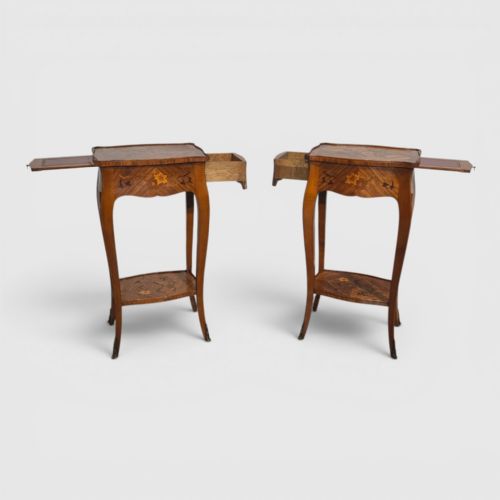
- A small drop-leaf table with hinged flaps on either side, often fitted with a single drawer. These tables emerged during the eighteenth century.
- Ormolu
- Gilded bronze mounts applied as decorative ornaments to furniture legs and corners. French cabinet makers favoured this finish during the nineteenth century.
- Specimen wood
- Timber chosen for its distinctive grain or unusual origin, assembled into mosaic patterns. These woods highlight natural colour variations.
Marquetry Inlay End Table: Frequently Asked Questions
Where should I place an inlaid table?
These compact tables suit living rooms and bedrooms as lamp tables or bedside surfaces. Their decorated tops are best positioned where ambient light highlights the timber grain.
Keep them away from direct heat sources and strong sunlight to protect the delicate veneers from drying or fading over time.
How do I clean marquetry surfaces?
Dust the surface regularly with a soft, dry cloth to prevent grit accumulation in the veneer joints. Avoid using abrasive cleaning agents or excessive water.
Apply a traditional beeswax polish occasionally to nourish the timber and maintain a gentle lustre across the inlaid panels.
What is the difference between marquetry and parquetry?
Marquetry involves cutting various wood veneers into pictorial or floral motifs such as urns and foliage. It creates curving, organic designs across table tops.
Parquetry arranges uniform geometric shapes like cubes or chequers into repeating patterns. Both techniques adorn the surfaces of nineteenth-century tables.
How can I identify an Edwardian table?
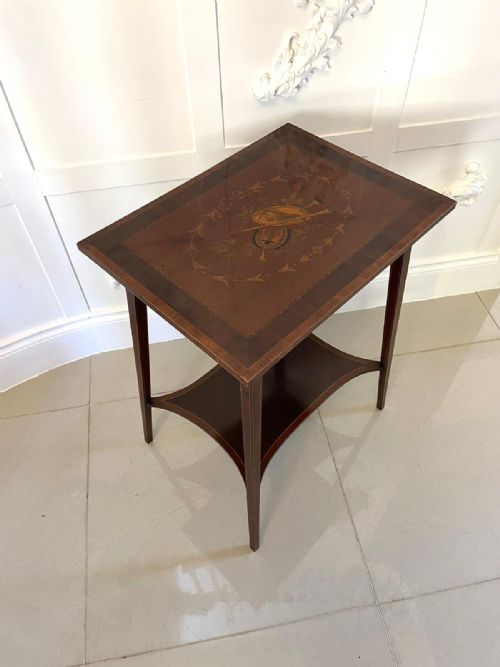
Edwardian examples often feature satinwood or mahogany frames with light boxwood stringing and delicate floral inlays. They reflect the Sheraton Revival style popular around nineteen hundred.
Look for slender tapered legs and refined proportions that distinguish these lighter domestic pieces from earlier heavy Victorian designs.