


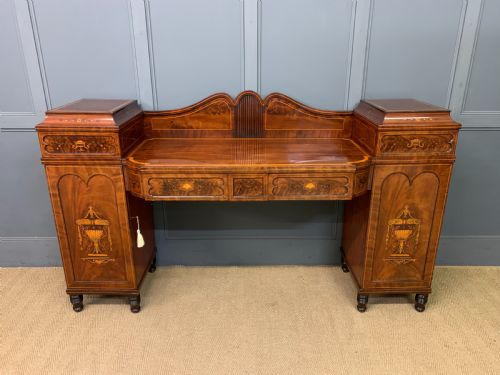

Marquetry Inlay Dining Table
A marquetry inlay dining table brings intricate wood patterns and rich period character to the principal room of the house.
Marquetry Inlay Dining Table
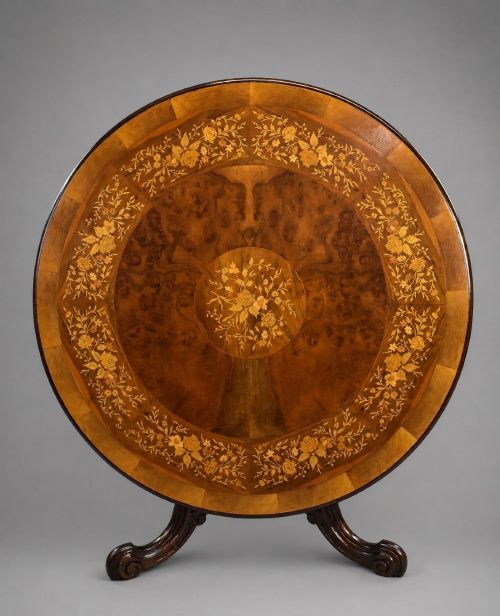
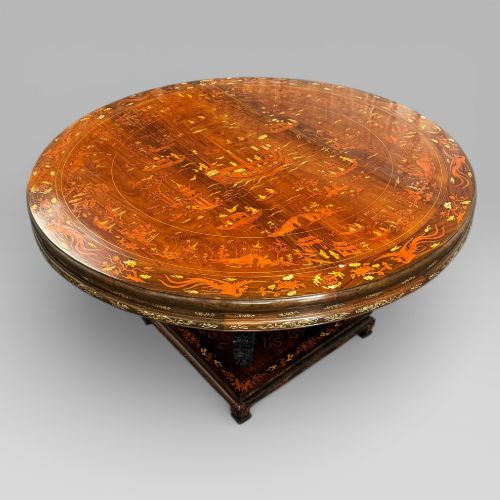
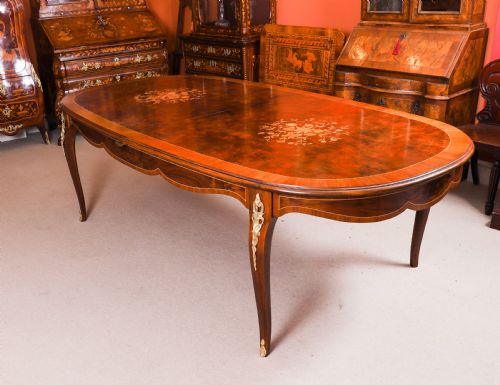
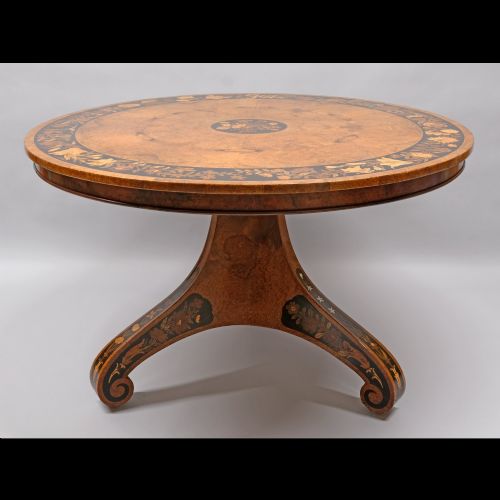
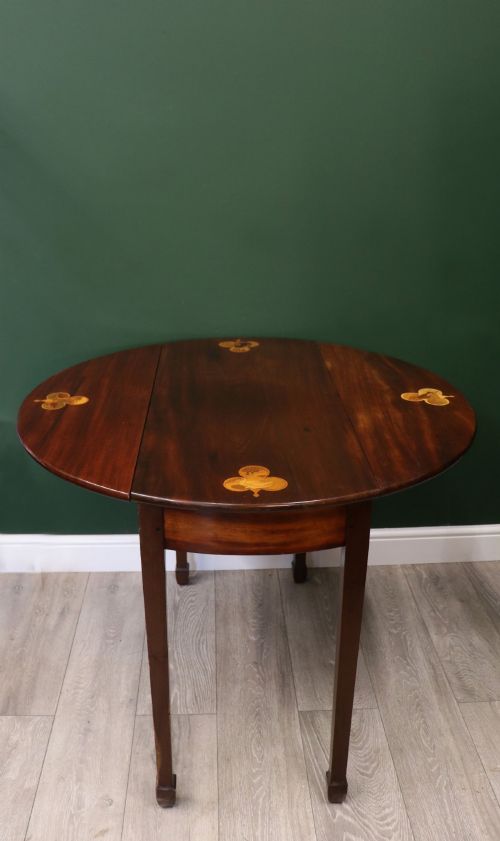
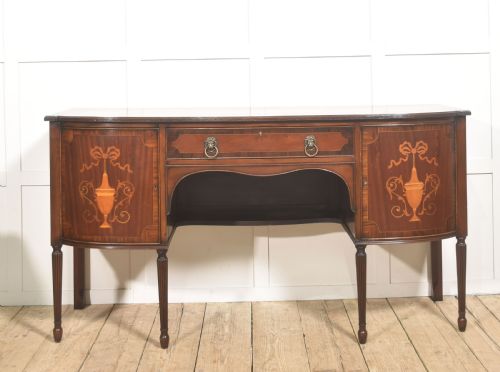
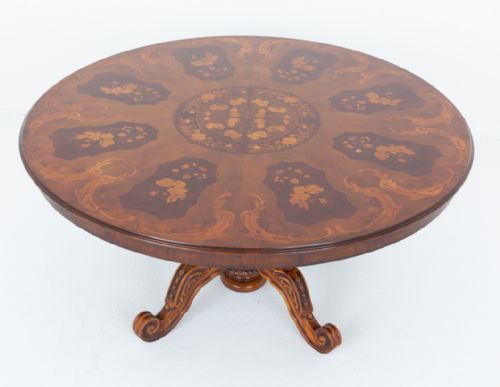
A marquetry inlay dining table combines functional dining space with decorative timber veneers arranged in pictorial or geometric patterns. These tables appear primarily in Victorian, Regency, and Edwardian designs, alongside revival pieces from the early twentieth century.
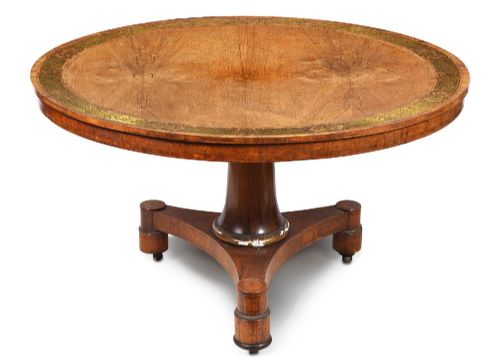
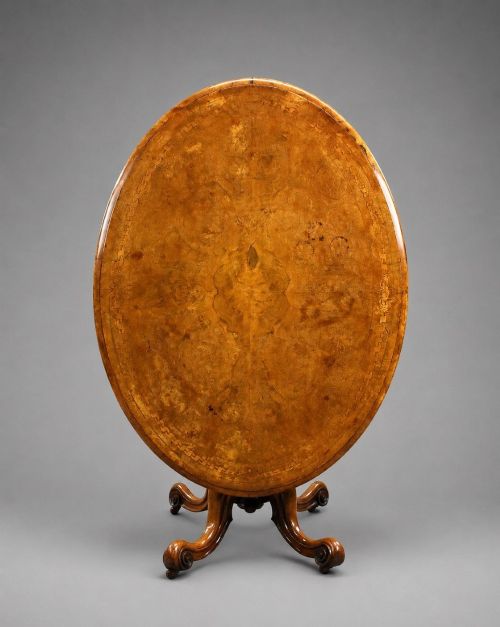
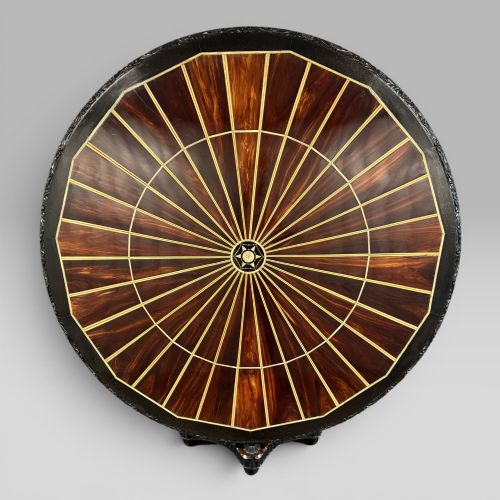
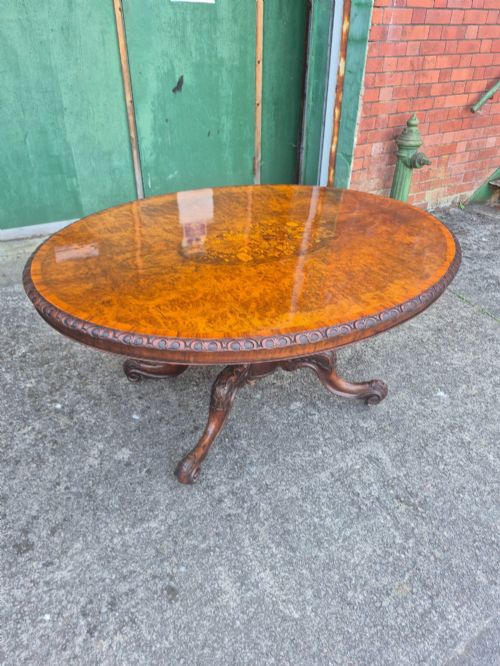
The pieces listed on this page span formal centre tables, breakfast tables, and large dining surfaces constructed in walnut, mahogany, and rosewood. Buyers frequently encounter nineteenth-century walnut and mahogany examples featuring detailed boxwood, satinwood, and brass work.
What varies in quality
The distinction between standard production and exceptional craftsmanship lies in the precision of the veneer work and the depth of the timber grain. Finer tables utilise highly figured burr walnut or dense rosewood paired with meticulously aligned marquetry that remains flush with the surrounding surface.
Structural integrity also separates the grades, visible in the weight of the pedestal bases, the crispness of any carved ornamentation, and the quality of secondary timbers used in the internal framing.
Listings feature walnut, mahogany, rosewood, and birch timbers alongside brass and boxwood inlay elements.
Edwards & Roberts·Holmes Baldock
The Marquetry Inlay Dining Table Glossary
- Marquetry
- Decorative veneer work assembled in patterned pieces to form pictorial designs on furniture surfaces. This technique requires expert cutting and fitting of various coloured woods.
- Burr walnut
- Timber taken from the abnormal growth of a walnut tree, yielding a swirling and highly ornamental grain pattern. Cabinet makers prize this wood for high-status table tops.
- Ormolu
- Gilded bronze ornamentation applied to furniture mounts and details. The metal undergoes a mercury gilding process or electroplating to achieve a bright gold finish.
- Tilt top
- A pivoting table top mechanism that allows the surface to tilt vertically for storage or placement against a wall when not in use. This feature appears frequently on breakfast and loo tables.
Marquetry Inlay Dining Table: Frequently Asked Questions
How do I care for a marquetry surface?
Keep wooden tables away from direct heat sources and strong sunlight to prevent the timber veneers from drying and lifting. Apply traditional beeswax periodically to nourish the polished grain.
Avoid using modern chemical sprays or excessive moisture on inlaid surfaces. A soft, dry cloth removes dust safely without harming the delicate boxwood or brass details.
Were these tables used for dining?
Many large centre and loo tables served multiple domestic functions, including dining, tea, and evening gatherings. Drop-leaf and tilt-top formats allowed households to adapt room layouts easily.
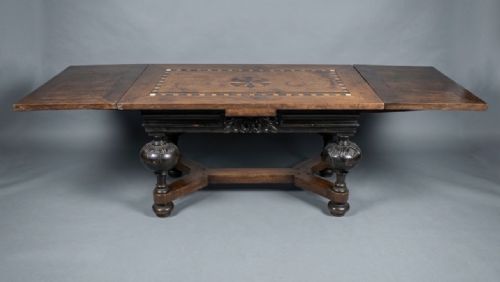
Larger extension models and robust pedestal tables provided dedicated seating for formal meals. Smaller occasional formats functioned primarily as decorative centrepieces rather than dining surfaces.
How do I identify a Regency period table?
Regency tables typically feature classical architectural proportions, dark rosewood or mahogany timbers, and distinct brass inlay or ormolu mounts. Pedestal bases often take the form of heavy pillar columns resting on platform feet with sabre legs.
Cabinet makers working in this era drew inspiration from Greek and Roman design motifs. The resulting pieces emphasise clean geometric lines contrasted with rich metallic detailing.
What is the difference between inlay and marquetry?
Inlay involves setting pieces of contrasting material into a recessed cavity carved directly into a solid wood base or veneer. This method often creates linear borders or geometric stringing.
Marquetry assembles an entire picture or pattern from various veneer sheets before applying the complete sheet to the furniture carcase. This technique permits intricate floral and pictorial compositions.