


Brown Marquetry Dining Table
A brown marquetry dining table brings intricate wood inlay and rich tones to the room, offering a functional surface shaped by centuries of cabinetmaking tradition.
Brown Marquetry Dining Table
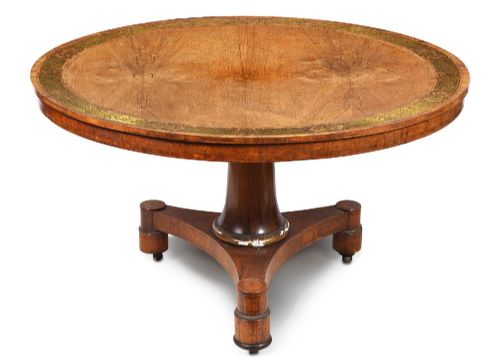
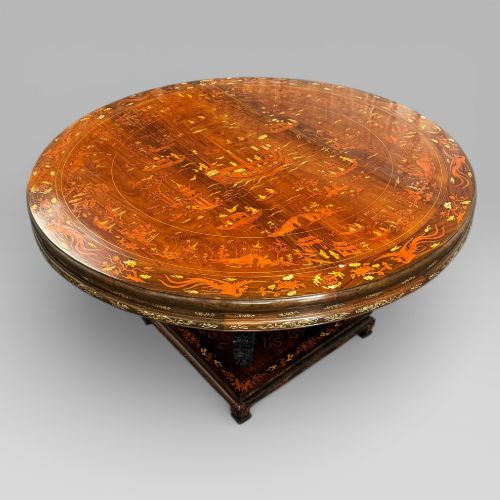
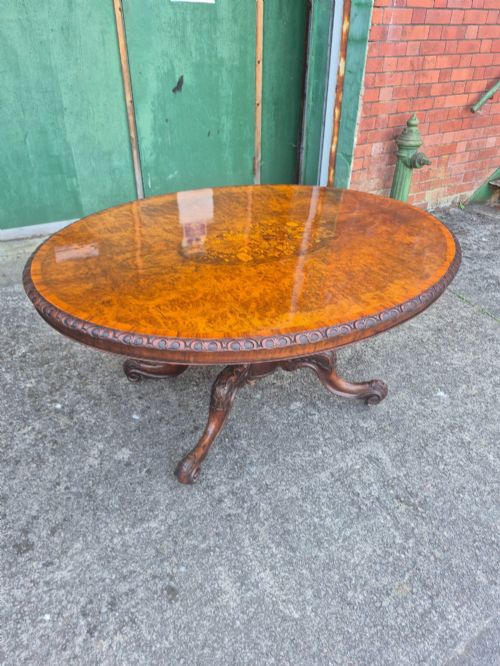
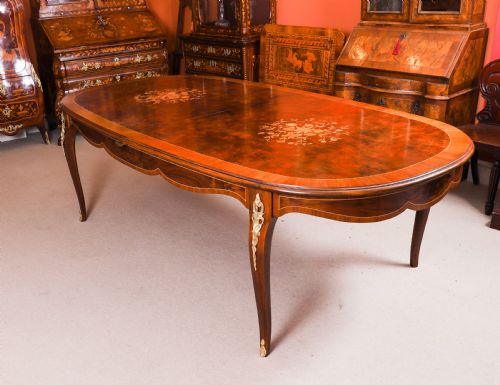
When you search for a brown marquetry dining table, you encounter larger surface furniture designed for dining and entertaining, frequently drawn from nineteenth-century Victorian and Regency periods as well as earlier Georgian eras.
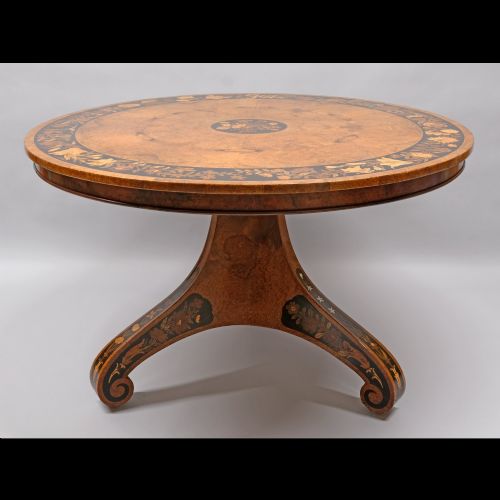
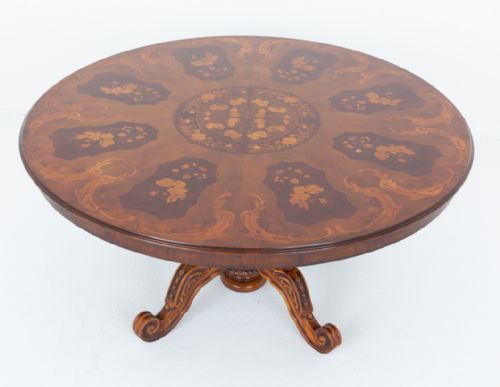
The selections span oval, round, and rectangular forms, including centre tables, loo tables, and breakfast tables constructed from substantial timber frames.
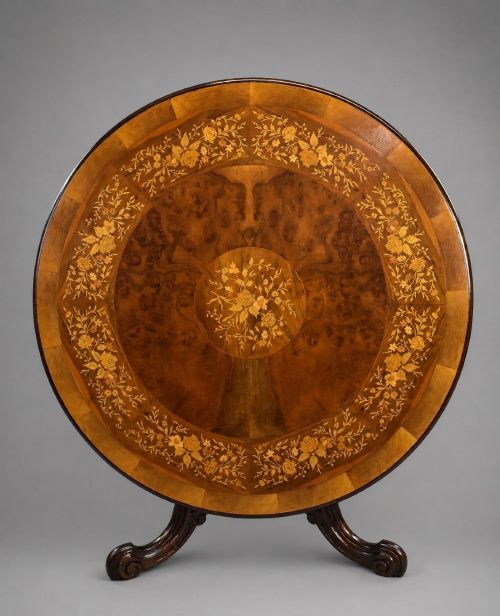
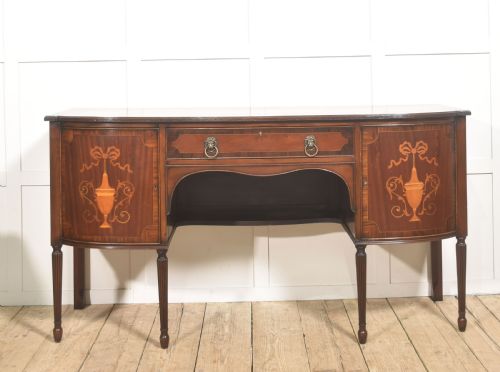
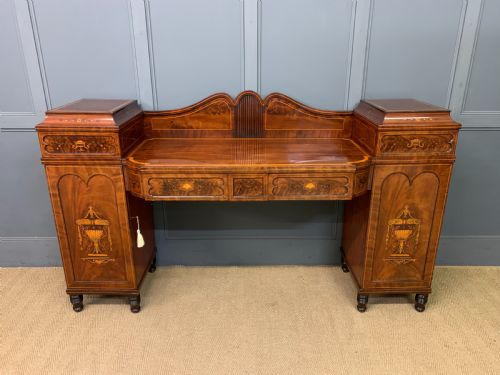
Victorian burr walnut and mahogany pieces dominate the offerings, often featuring elaborate marquetry inlay across the top surfaces alongside pedestal or pillar supports.
How they were made
Cabinetmakers utilised dense timbers such as walnut, mahogany, rosewood, and pollard oak as the primary structural and surface foundations.
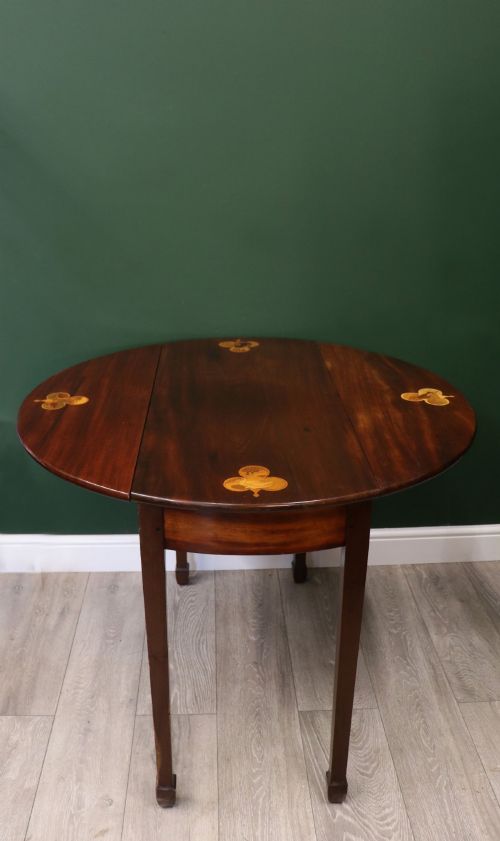
Marquetry inlay work combined contrasting lighter woods such as boxwood and satinwood, occasionally incorporating brass elements to create detailed geometric or floral motifs.
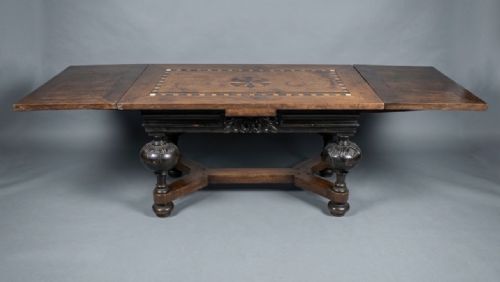
Joinery techniques ranged from tilt-top mechanisms and pedestal bases to draw leaves, securing stability beneath ornamented tops.
Object forms span centre tables, loo tables, breakfast tables, and substantial dining variations.
What varies in quality
The finesse of the marquetry cutting and the choice of timber grain dictate the visual depth of the piece, with burr walnut and figured mahogany setting the higher standard.
Precision in the flush fit of inlaid contrasting woods and the structural integrity of pedestals and joints separate standard workshop production from finer cabinetmaking.
Edwards and Roberts·Holmes Baldock
The Brown Marquetry Dining Table Glossary
- Marquetry inlay
- Decorative patterns formed by fitting together small pieces of veneer into a wood panel. This technique allows intricate pictorial or floral designs across tabletops.
- Burr walnut
- Wood taken from the wart or growth on a walnut tree, prized for its swirling, highly figured grain pattern. It provides a rich visual texture on Victorian tables.
- Loo table
- A round or oval nineteenth-century table with a tilt-top mechanism, originally used for the card game loo. They allow convenient storage against walls when not in use.
- Pedestal table
- A table supported by a central column resting on a solid base or feet rather than four corner legs. This design maximises legroom around the dining surface.
- Satinwood
- A durable, hard timber with a yellowish lustre and fine grain, frequently utilised for contrasting inlay work. It highlights borders and central medallions in table designs.
Brown Marquetry Dining Table: Frequently Asked Questions
How do I date a marquetry table?
Dating relies on identifying timber choices, structural forms, and inlay styles characteristic of specific periods like the Victorian era or Regency years. Examining the underside and joinery yields further clues about manufacturing methods.
Cabinetmaking trends shifted from geometric brass work in the Regency period to elaborate floral burr walnut marquetry during the mid-nineteenth century.
Were these tables used for dining?
Many large round or oval examples served dual purposes as centre tables and dining surfaces, adapting to Victorian domestic routines.
Tilt-top mechanisms also allowed tables to be cleared and stored upright against room perimeters when dining finished.
How do I care for inlaid wood?
Maintaining these surfaces involves keeping timber away from direct heat sources and fluctuating humidity to prevent veneer lifting or wood splitting.
Regular dusting with a dry cloth preserves the finish without introducing moisture that might harm delicate boxwood or satinwood inlay.