



Marquetry Inlaid Timekeeper
A marquetry inlaid timekeeper brings architectural warmth to a room through precise woodwork and dependable movement.
Marquetry Inlaid Timekeeper
When you search for a marquetry inlaid timekeeper, you look for mantel clocks housed in wooden cases decorated with contrasting veneers. The pieces seen on this page span the Regency, Victorian, Edwardian, and Belle Epoque periods, stretching into the early twentieth century.
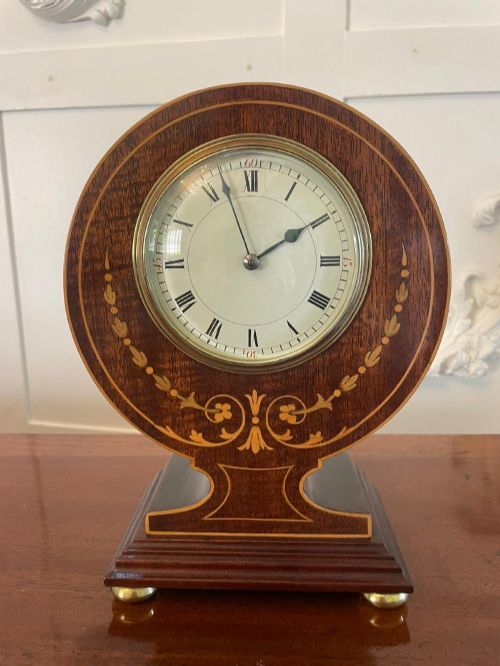
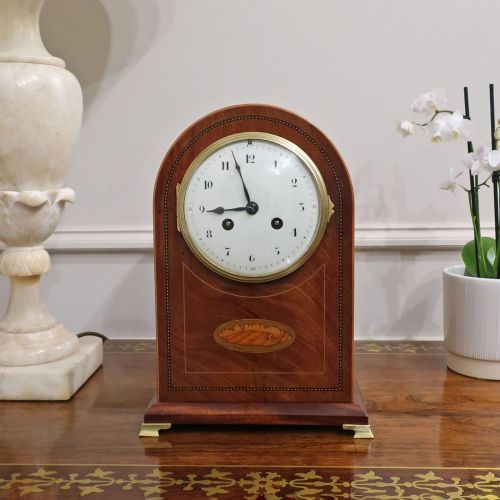
Mahogany and rosewood form the primary bodies of these mantel clocks, often shaped with dome tops or traditional bracket outlines. The most common version met here is the Edwardian mahogany mantel clock, frequently finished with delicate floral or geometric inlay.
Makers such as W. Burton contributed single fusee movements to these wooden cases, combining accurate timekeeping with decorative woodcraft. These timekeepers sit comfortably on mantelpieces and tables, serving both a practical and an aesthetic purpose in domestic spaces.
Construction and materials
Cabinetmakers constructed the bodies of these timekeepers from dense hardwoods like mahogany and rosewood, applying fine slices of contrasting timber to the surfaces. Craftsmen cut intricate patterns into the wood base, recessing satinwood and other light veneers to create detailed floral motifs and borders.
The dial faces incorporate brass bezels, protective glass covers, and enamel chapters with Arabic or Roman numerals. Mechanical clockwork inside regulates the passing hours through spring-driven or fusee mechanisms designed for domestic use.
Marquetry Inlaid Timekeeper Retail Price Guide 2026
Typical asking prices for marquetry inlaid timekeeper among the pieces listed under this phrase on Sellingantiques today, from the lower quarter to the upper quarter. They describe what is for sale here now, not the wider market.
Listings span four distinct periods: Regency, Victorian, Edwardian, and the 1920s.
Judgements of quality
Quality in a wooden timekeeper rests upon the precision of the veneer work and the integration of the case design. Tighter joints, sharper floral details in the marquetry, and heavier brass fittings separate finer examples from standard production pieces.
The sophistication of the internal movement also dictates the standing of the clock, particularly where single fusee systems provide more consistent tension than simpler spring movements. A harmonious balance between the richness of the wood grain and the crispness of the enamel dial defines the superior end of the range.
W. Burton
The Marquetry Inlaid Timekeeper Glossary
- Marquetry
- Decorative veneer applied to wood furniture in detailed pictorial or geometric patterns. It differs from simple inlay by covering the entire surface with fitted pieces of various woods.
- Fusee
- A conical pulley used in mechanical clocks to maintain even power from the mainspring as it unwinds. This mechanism improves timekeeping accuracy across the duration of the wind.
- Mantel clock
- A portable clock designed to sit on the shelf above a fireplace. These domestic timepieces range from simple wooden boxes to elaborate architectural forms.
- Enamel
- A glassy substance fused to metal dials to create a smooth, durable white surface for painted numerals. It provides a crisp background that resists fading over generations.
Marquetry Inlaid Timekeeper: Frequently Asked Questions
What is a marquetry inlaid timekeeper?
A marquetry inlaid timekeeper is a mantel clock housed in a wooden case decorated with contrasting wood veneers. These pieces rely on mechanical movements to track time while displaying decorative woodwork.
They function primarily as decorative objects for mantels and tabletops, combining cabinetmaking skills with horology.
How do I wind an antique clock?
Antique clocks generally require a key inserted into the dial face to tension the internal springs or weights. Care must be taken not to overwind the mechanism.
Different movements require different intervals, with some eight-day systems needing attention weekly while others run on shorter cycles.
Where were these clocks placed?
These timekeepers were designed for domestic interiors, most commonly resting upon mantelpieces in sitting rooms and parlours. Their compact proportions allowed them to sit securely on shelves and side tables.
Their polished mahogany and rosewood surfaces complemented the surrounding furniture of period homes.
How are different periods told apart?
Periods reveal themselves through case shapes, wood choices, and decorative motifs like floral marquetry or brass inlay. Regency pieces often feature bold brass work on rosewood, while Edwardian examples favour lighter mahogany with delicate botanical patterns.
Dial styles and lettering also shift from Victorian complexity to cleaner Edwardian layouts.