
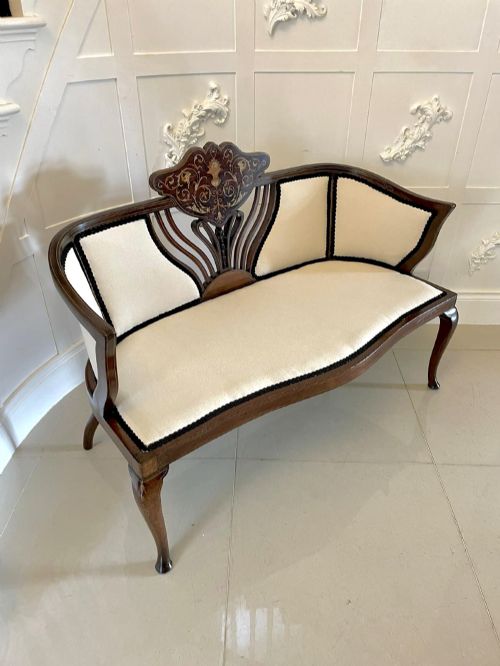
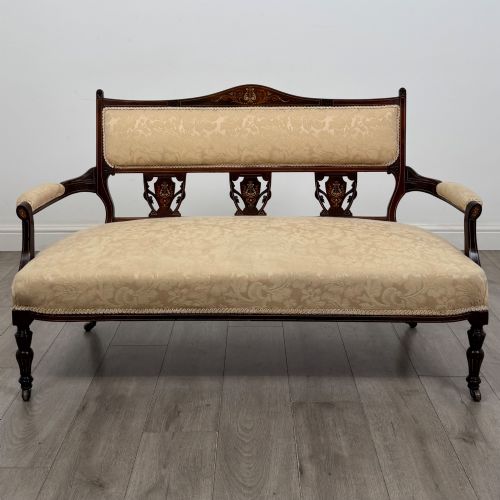
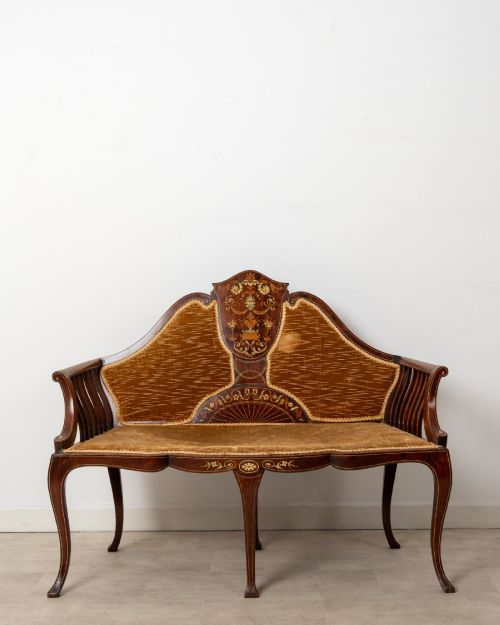
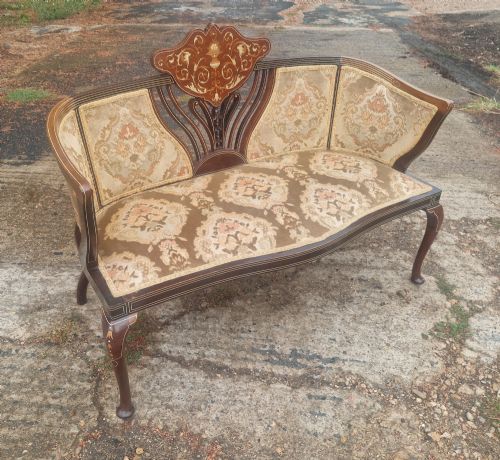
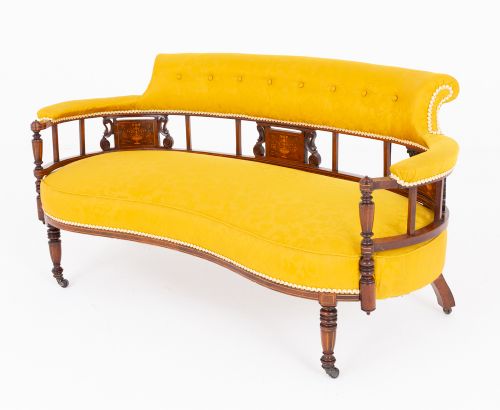


Marquetry Inlaid Settee
A marquetry inlaid settee brings tactile timber work and graceful seating into a room, offering both decorative presence and functional elegance.
Marquetry Inlaid Settee
A marquetry inlaid settee combines upholstered seating with intricate wood veneers, spanning periods from late Victorian and Edwardian eras into the early twentieth century. These pieces appear as two-seater sofas, salon suites, parlour seating, and window seats.
The materials recorded across these forms include mahogany, rosewood, and walnut, frequently accented by satinwood inlay and bone details. Such seating served formal reception rooms and parlour spaces where display mattered as much as comfort.
Makers and workshops produced these couches in various stylistic revivals, incorporating Sheraton, French Empire, and Art Nouveau influences. Buyers encounter everything from compact end-of-bed benches to larger salon suites with matching armchairs.
How They Were Made
Cabinet makers built the structural frames from solid hardwoods like mahogany, rosewood, and walnut, ensuring sufficient strength to support upholstered seating areas. Artisans applied thin veneers of contrasting timbers to the show wood surfaces, cutting geometric or pictorial motifs into the grain.
Inlay work incorporated satinwood, brass, and bone elements fitted precisely into chased channels within the primary timber. Upholstery techniques ranged from traditional horsehair stuffing secured with webbing and springs to simple fabric covers designed for later re-upholstery.
Bone inlay details occasionally peek through the floral marquetry on Edwardian window seats.
What Varies in Quality
The precision and complexity of the wood inlay separate standard production from superior examples, with multi-timber pictorial marquetry requiring exceptional skill from the artisan. Crispness in the botanical or classical motifs and the harmonious grain selection of the primary mahogany or rosewood indicate higher workshop standards.
Structural integrity of the timber frame and the retention of original decorative brass or bone accents determine the overall merit of a piece. Finer examples maintain crisp carving alongside carefully proportioned frames, whereas simpler variants rely on basic banding.
James Shoolbred
The Marquetry Inlaid Settee Glossary
- Marquetry
- A decorative technique where small pieces of wood veneer are assembled into pictorial or geometric patterns on a panel. This method differs from inlay by covering the entire surface with fitted veneer.
- Settee
- A medium-length upholstered bench with a back and arms, designed to seat two or more people. These pieces function as principal seating in Victorian and Edwardian reception rooms.
- Satinwood
- A durable tropical timber with a lustrous golden yellow appearance, frequently utilised for contrasting inlay work. Cabinet makers favoured it for banding and detailed floral motifs.
- Salon Suite
- A matched set of seating comprising a settee and companion armchairs or side chairs. Such suites provided uniform furnishing for formal entertaining spaces.
Marquetry Inlaid Settee: Frequently Asked Questions
Where were these settees placed?
These pieces sat in formal reception rooms, parlours, and drawing rooms where guests gathered for conversation.
Smaller variants also served as window seats or end-of-bed furniture in private chambers.
How do I identify the period?
Victorian examples tend to utilise heavier rosewood or mahogany frames with dense, dark finishes.
Edwardian pieces often display lighter satinwood contrasts and refined inlay work influenced by Sheraton revivals.
Are these seats comfortable?
Traditional upholstery utilised coil springs, webbing, and horsehair stuffing to provide firm support.
Many surviving pieces retain their original structure, though some require re-upholstery for modern daily use.
What is the difference between inlay and marquetry?
Inlay involves inserting contrasting materials into hollowed-out recesses within a solid wood background.
Marquetry assembles entire decorative pictures from pre-cut veneers before gluing the whole sheet onto the carcass.