


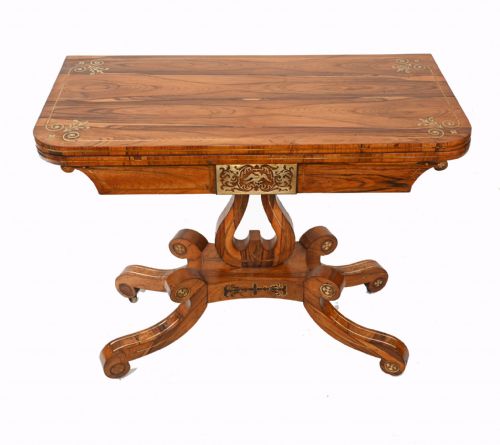
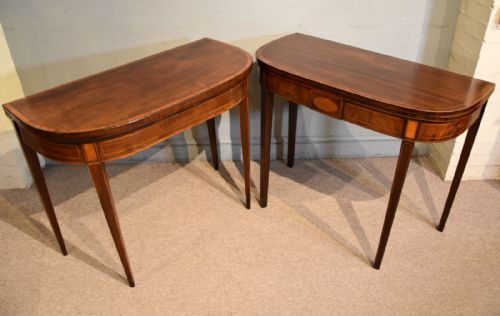
Marquetry Inlaid Games Table
When you seek a marquetry inlaid games table, you enter a sphere where clever folding tops and meticulous wood veneers combine utility with display.
Marquetry Inlaid Games Table
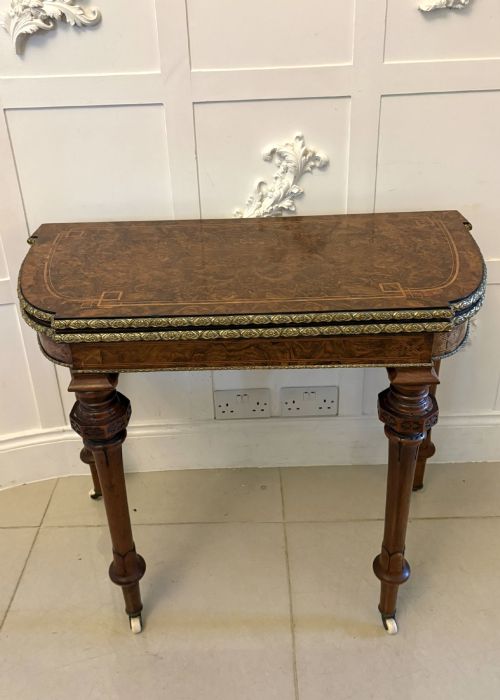
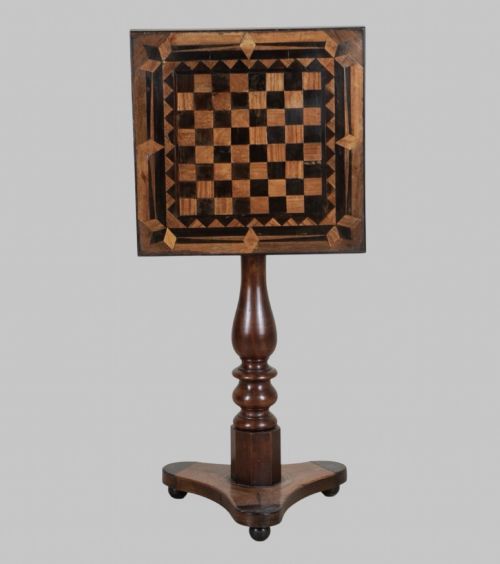
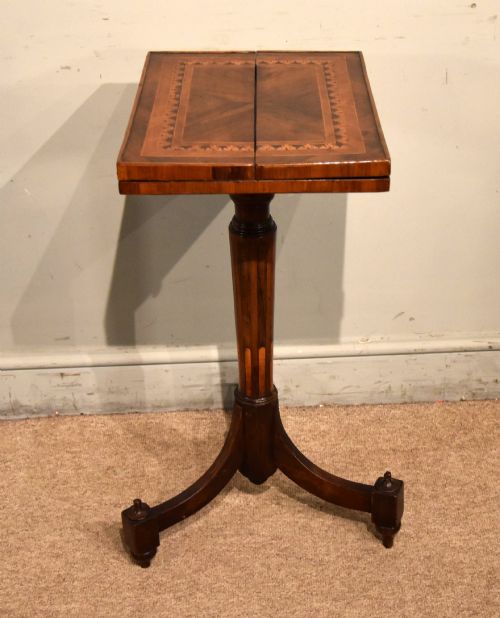
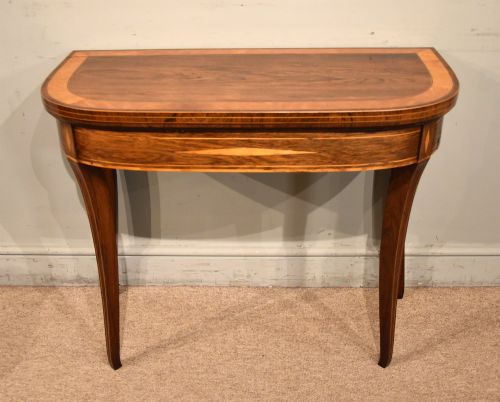
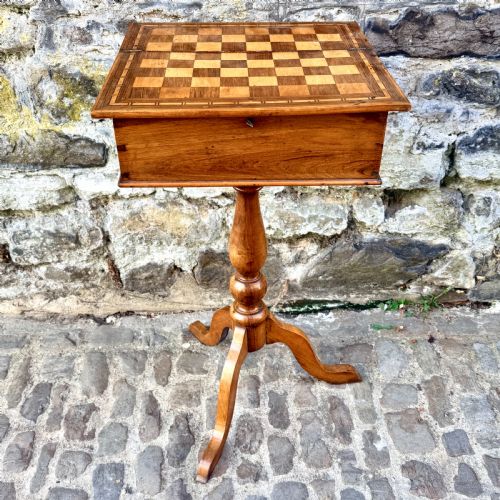
A marquetry inlaid games table is a multifunctional piece designed for leisure, most commonly taking the form of a card, chess or envelope table from the Victorian and Georgian eras.
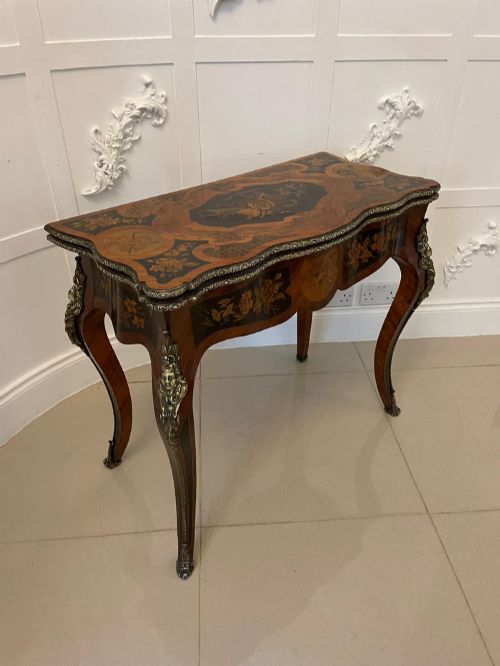
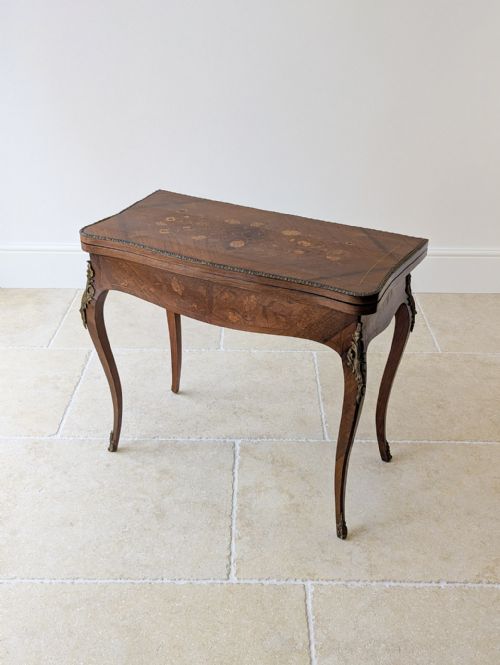
You will frequently encounter Victorian burr walnut examples featuring intricate floral marquetry and swivelling or folding tops that conceal storage for cards and pieces.
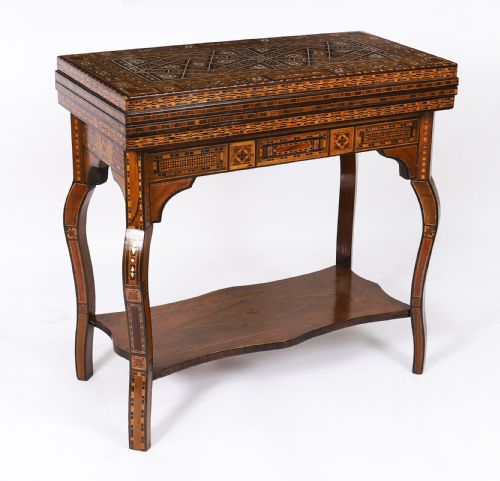
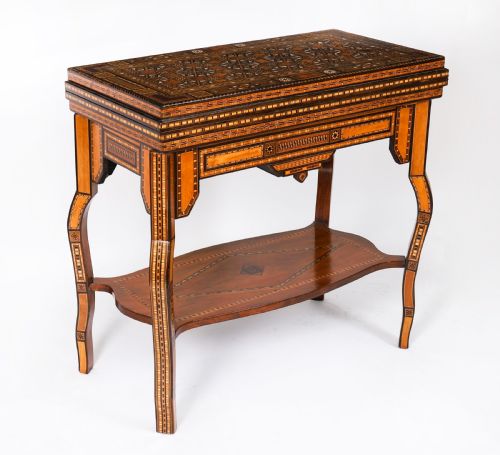
Origins stretch from English workshops to French Louis XV style salons and Syrian or Damascan centres, providing diverse decorative vocabulary within the same utilitarian root.
Materials and construction
Cabinet makers utilised dense timber foundations of walnut, mahogany, rosewood and satinwood, applying finely sliced veneers in geometric or floral patterns across the surfaces.
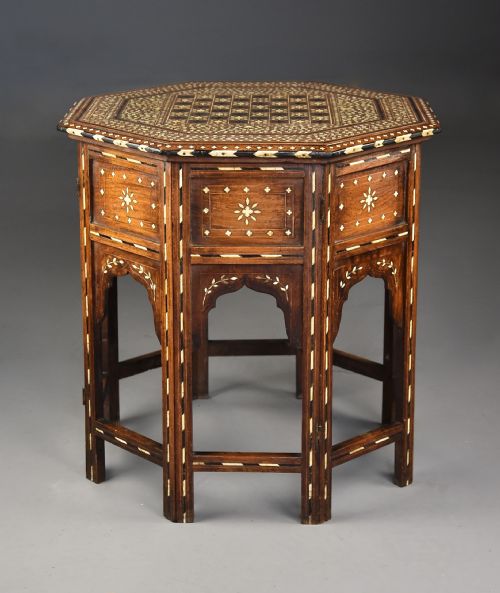
Contrasting woods like boxwood and maple, alongside brass and mother-of-pearl, were hand-cut and fitted into the primary veneer to build up complex pictorial or linear marquetry motifs.
Complex mechanisms such as rotating hinges, folding leaves and pivoting envelopes required precise joinery to ensure the timber maintained stability across seasonal changes in humidity.
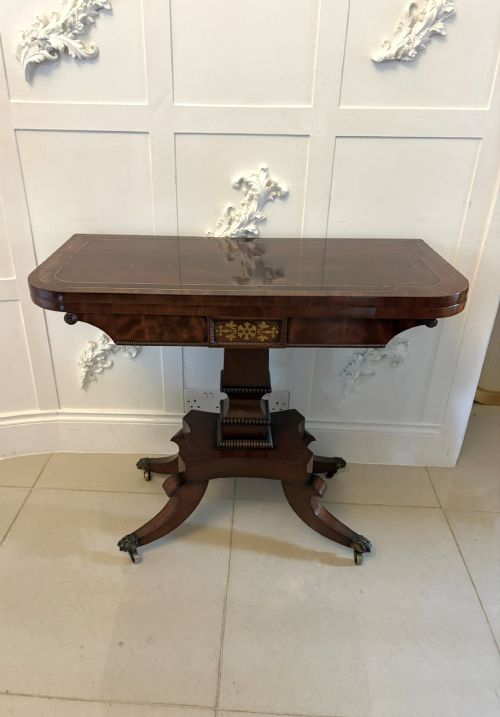
Listings demonstrate a strong prevalence of Victorian burr walnut and rosewood, alongside Georgian mahogany and later Edwardian satinwood variations.
Determinants of quality
The standard of execution in the marquetry itself sets the better pieces apart, visible in the tightness of the veneer joints and the subtlety of shaded woods.
Construction choices dictate longevity, where secondary timbers of solid mahogany or oak beneath the veneers and robust pivoting pivot actions signal superior workshop origin.
The integration of gilt bronze or ormolu mounts, cast brass inlay and polished interior surfaces reveals whether a piece received standard commercial output or exhibition attention.
George Bullock·Maple and Co·Gillows
The Marquetry Inlaid Games Table Glossary
- Marquetry
- Decorative veneer work arranged in pictorial or geometric patterns across a surface. Craftsmen cut contrasting thin woods together to ensure tight interlocking seams.
- Envelope table
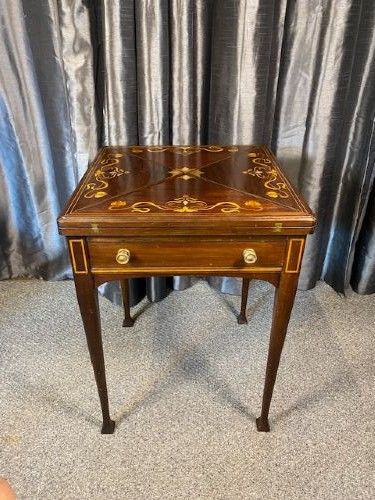
- A square card table with four triangular flaps that fold over each other like an envelope. Rotating the top reveals a lined playing surface and internal wells.
- Ormolu
- Gilded bronze mounts applied to furniture edges and legs for ornamentation. The finish combines acid-gilding techniques over cast bronze bases.
- Demi-lune
- Half-moon shaped furniture profile designed to sit flat against a wall. These forms often feature folding leaves to double their surface area for card games.
- Specimen wood
- Furniture constructed from a multitude of different native and exotic timber species. These varieties are often displayed in panels to showcase botanical diversity.
Marquetry Inlaid Games Table: Frequently Asked Questions
How do envelope tables work?
Envelope tables feature a clever hinged mechanism where the top four triangular sections pivot open simultaneously. As the leaves unfold, they reveal a baize-lined interior designed for holding cards.
Beneath this playing surface, small wells or compartments often provide storage for counters and dice. When closed, the piece reverts to a compact occasional table.
Were these tables used daily?
Middle and upper-class households relied on these furnishings for evening entertainment, bringing them out for card games, chess and backgammon. Their dual nature allowed them to function as side or console tables when not in use.
Many incorporate sewing or work compartments alongside gaming boards, doubling as practical stations for domestic needlework during daylight hours.
How do I distinguish Victorian from Georgian examples?
Georgian tables tend to rely on understated mahogany or rosewood surfaces with crisp linear stringing and restrained proportions. Their brass work is typically limited to simple hinges and escutcheons.
Victorian pieces embrace heavier burr walnut veneers, elaborate floral marquetry, and occasionally cast ormolu mounts. The forms are generally more exuberant and draw inspiration from French revival styles.
What is the difference between inlay and marquetry?
Inlay involves recessing pieces of contrasting material into a solid wood ground by carving out channels. This technique typically produces linear borders or geometric stringing.
Marquetry covers the entire surface in a veneer puzzle where pictorial scenes or symmetrical floral patterns are assembled before being glued down as a complete sheet.