



Marquetry Inlaid Dining Chairs
Marquetry inlaid dining chairs bring patterned timber work to the table, offering a decorative surface that elevates a dining room.
Marquetry Inlaid Dining Chairs
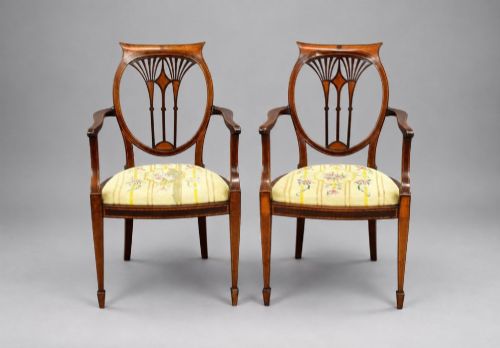
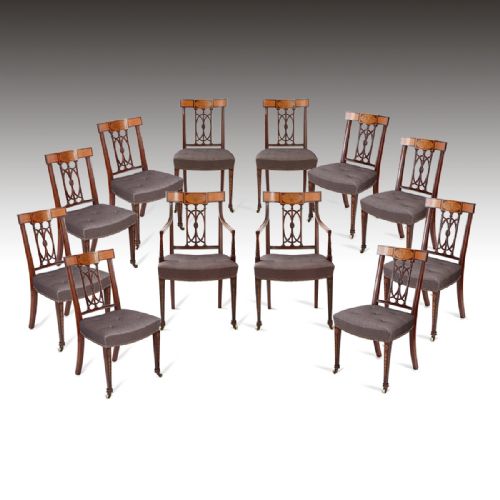
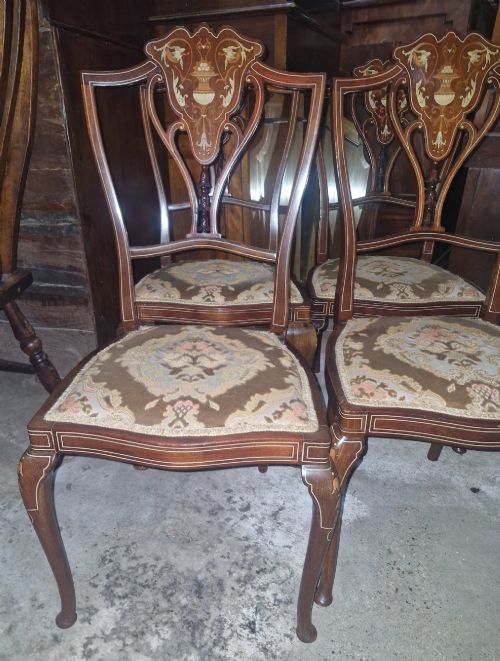
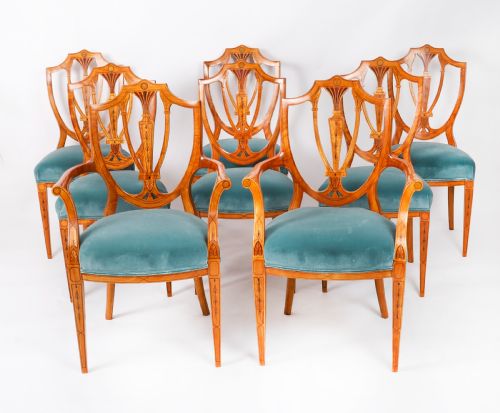
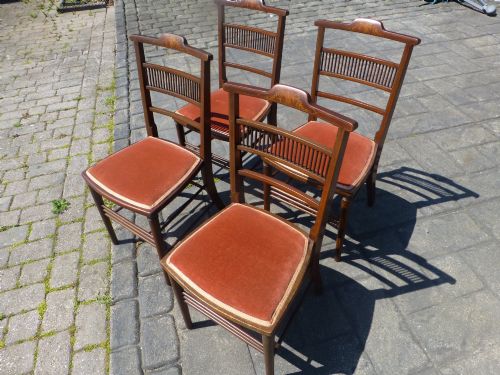
Marquetry inlaid dining chairs appear frequently from the Edwardian and Victorian periods, alongside Regency, Georgian, and eighteenth-century examples. These seating forms range from formal dining armchairs and side chairs to salon chairs and occasional seating.
The buyer encounters sets of varying sizes, from pairs up to substantial groups of twelve, formed in woods such as mahogany, satinwood, walnut, and rosewood.
Construction and Materials
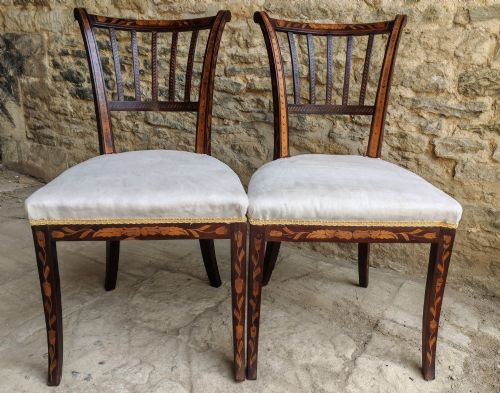
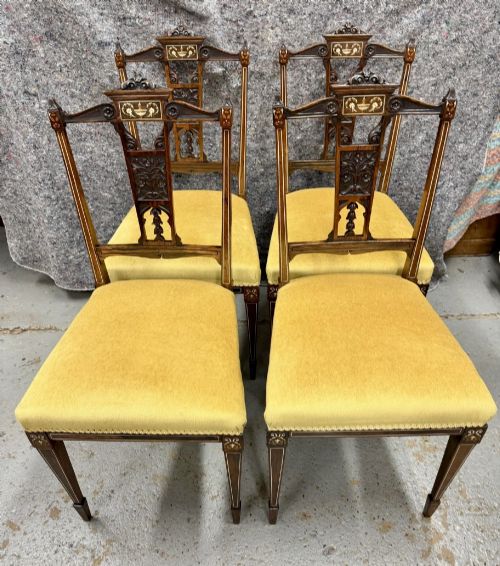
Craftsmen built these chairs using hardwoods like mahogany, walnut, and rosewood, incorporating contrasting timber veneers and wood inlay to create pictorial or geometric patterns on the backrests and splats.
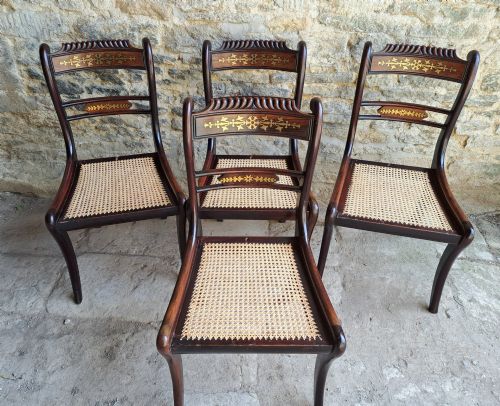
Certain Regency and nineteenth-century examples integrate brass inlay alongside the timber, while upholstery options recorded in the listings include fabric and velvet.
One extraordinary nineteenth-century piece incorporates a musical mechanism right inside its walnut marquetry frame.
Assessing Quality
Quality rests in the crispness of the timber inlay and the precision with which the contrasting veneers fit into the primary wood of the frame. The structural integrity of the joints and the handling of the timber grain dictate the distinction between ordinary workshop production and finer cabinet work.
Cowtan & Sons·Shoolbred·John Gee
The Marquetry Inlaid Dining Chairs Glossary
- Marquetry
- Decorative veneer work forming pictures or patterns by fitting together small pieces of wood and other materials. This technique defines the surface ornamentation of the backrests.
- Satinwood
- A durable, yellowish timber prized for its lustrous grain, frequently utilised in lighter Edwardian and Sheraton Revival designs. It provides strong visual contrast against darker woods.
- Carver
- An armchair designed with elbow rests, traditionally placed at the heads of a dining table. These match the smaller side chairs in a larger dining set.
- Shieldback
- A chair back shaped in the outline of a heraldic shield, popularised during the eighteenth century and revived in later periods. It offers a broad canvas for inlay.
Marquetry Inlaid Dining Chairs: Frequently Asked Questions
How do I care for antique marquetry chairs?
Keep wooden seating away from direct heat sources and sudden humidity shifts to protect the delicate veneer and timber joints.
Apply traditional wax polish occasionally to nourish the surface without building up excessive residue on the inlaid details.
Can these antique chairs handle daily dining?
Most sturdy frames tolerate regular daily use provided the joints remain tight and secure under normal seating loads.
Larger sets often benefit from professional inspection of the underpinnings before heavy everyday employment at the dining table.
How do I distinguish Edwardian from Regency examples?
Regency seating typically leans towards darker rosewood or mahogany with brass stringing and classical lines dating from the early nineteenth century.
Edwardian interpretations often display lighter satinwood, delicate floral marquetry, and softer revival styling characteristic of the early nineteen hundreds.
Are replacement upholstery seats acceptable?
Re-upholstery is standard practice for antique seating to maintain comfort and hygiene over generations of domestic use.
Provided the wooden frame and original inlay remain undisturbed, modern fabric replacement does not detract from the piece.