


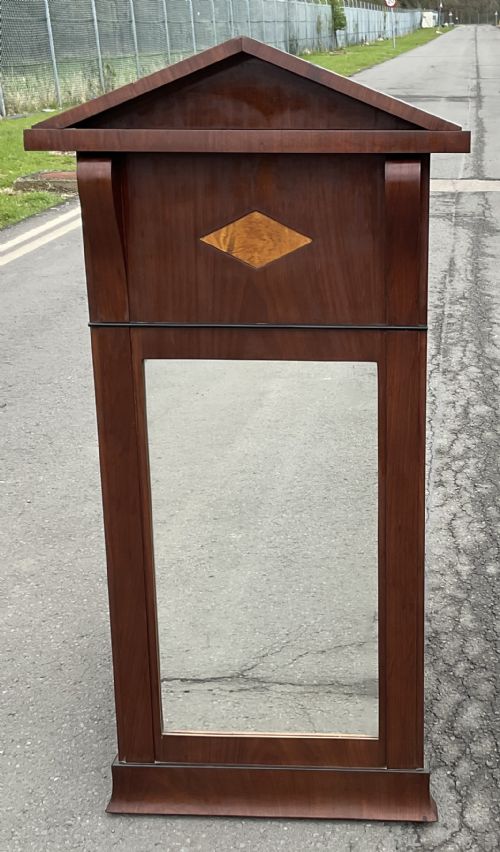


Marquetry Frame Mirror
These marquetry frame mirror pieces offer elaborate floral woodwork and fine period glass, bringing historical character to any wall.
Marquetry Frame Mirror
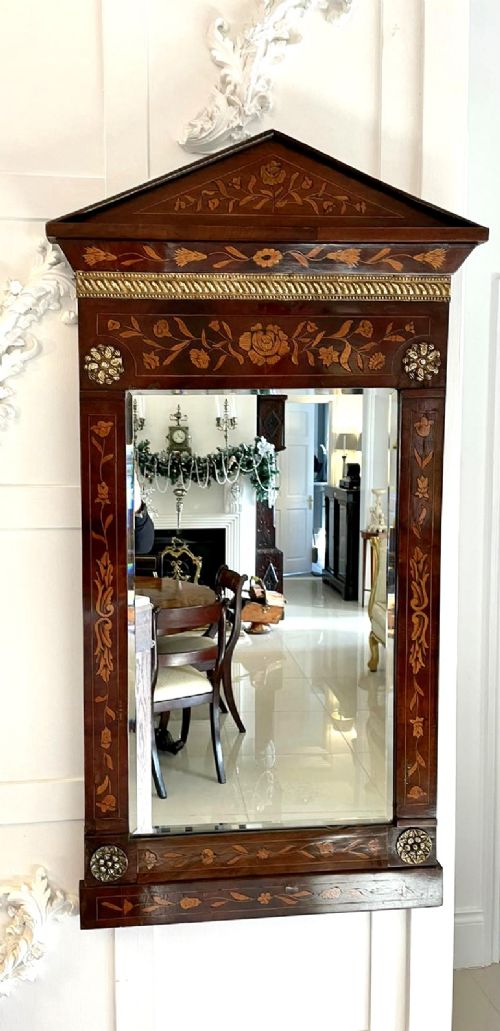
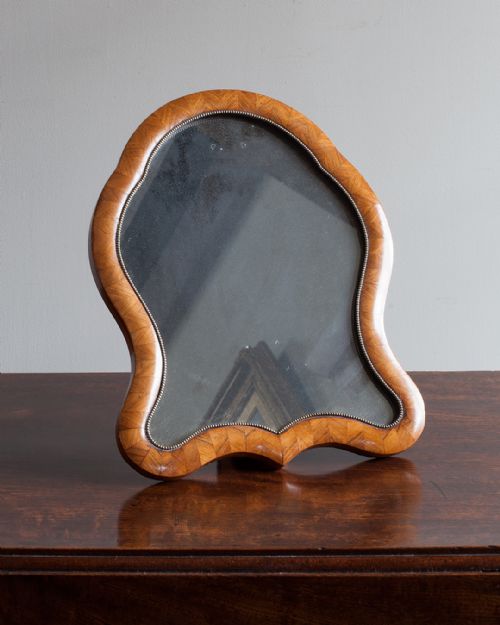
A marquetry frame mirror brings together patterned wood veneers and functional glass in forms ranging from compact table versions to grand overmantels. When searching for a marquetry frame mirror, buyers encounter wall mirrors, hanging types, and pier glasses designed for domestic interiors.
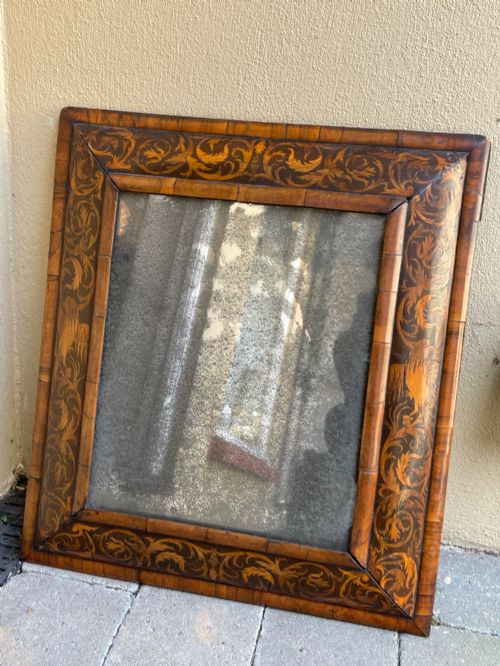
The pieces on offer span several centuries, drawing on William and Mary, Georgian, Victorian, and Edwardian periods. Makers deploy styles including Dutch marquetry, French Rococo revival, Art Nouveau, and Arts and Crafts to shape the timber surrounds.
Formats vary from rectangular wall formats and cushion frames to large overmantel installations intended for placement above fireplaces. Beech, oak, walnut, mahogany, and rosewood form the structural foundation for intricate decorative veneers.
How they were made
Cabinetmakers construct the primary wooden structure using timbers such as mahogany, walnut, oak, and rosewood. They apply contrasting veneers of satinwood, boxwood, fruitwood, and kingwood to create detailed inlaid patterns across the surface.
Marquetry technique involves hand-cutting thin sections of diverse woods and fitting them together like a puzzle to form floral or geometric scenes. Artisans secure these decorative elements to the base frame before applying final polishes and housing the glass plate.
Marquetry Frame Mirror Retail Price Guide 2026
Typical asking prices for marquetry frame mirror among the pieces listed under this phrase on Sellingantiques today, from the lower quarter to the upper quarter. They describe what is for sale here now, not the wider market.
Some mirrors hide tiny wooden birds amongst their floral marquetry, waiting quietly for a close observer to spot them.
What varies in quality
The standard of a piece depends on the intricacy of the veneer work and the precision of the wood inlay. Dense floral patterns executed in varied fruitwoods and boxwood demand greater skill than simpler geometric arrangements.
Proportion and the preservation of original timber surfaces distinguish finer examples from standard production. The integration of period glass and the structural integrity of cushion or flat frames determine the overall standard.
A.J Rowley·Rowley Gallery
The Marquetry Frame Mirror Glossary
- Marquetry
- Decorative veneer work created by fitting together small pieces of different coloured woods to form pictorial designs. This technique covers the flat surfaces of the frame.
- Cushion frame
- A convex or gently rounded moulding profile popular in seventeenth-century mirror designs. It adds physical depth and throws light across the inlaid patterns.
- Overmantel mirror
- A large wall mirror specifically scaled to hang above a fireplace mantelpiece. These pieces often incorporate shelf elements or wider horizontal proportions.
- Inlay
- The technique of inserting pieces of contrasting material into a solid wood ground to form a pattern. Boxwood and satinwood frequently serve this purpose.
Marquetry Frame Mirror: Frequently Asked Questions
How do I clean a marquetry frame mirror?
Dust the wooden frame gently with a dry, soft cloth to protect the delicate veneer and inlaid details. Avoid harsh chemical polishes that might degrade historic finishes.
Clean the glass plate using a mild glass cleaner applied to a cloth rather than sprayed directly onto the glass. This prevents moisture from seeping behind the plate and damaging the silvering or the inner wooden rabbet.
Where should I hang an overmantel mirror?
Position the piece centrally above a fireplace mantelpiece, leaving enough clearance to balance the height of the room. Ensure the wall fixings match the weight of the timber frame and glass.
Consider the reflection angle from windows opposite to maximise natural light in the space. Proper placement highlights the intricate floral marquetry and grain patterns of the wood.
How can I tell a William and Mary mirror from a Victorian one?
William and Mary pieces from around 1700 typically feature cushion-moulded frames with dense floral marquetry in walnut. They reflect the early cabinetmaking techniques and smaller proportions of that specific era.
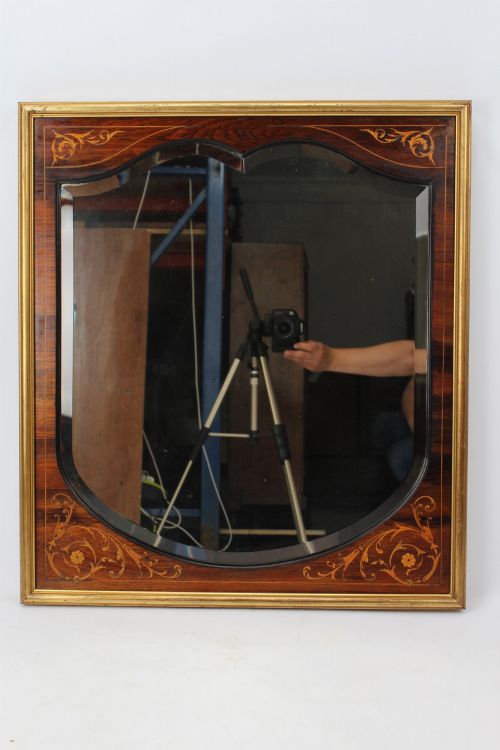
Victorian examples dating towards the late nineteenth century often combine heavier rosewood or walnut structures with gilt accents and broader dimensions. Their inlay styles reflect a revivalist approach to earlier historical motifs.