


Marquetry Dining Carver
These marquetry dining carver armchairs combine sturdy timber frames with intricate inlaid decoration, bringing enduring character and practical seating to the dining table.
Marquetry Dining Carver
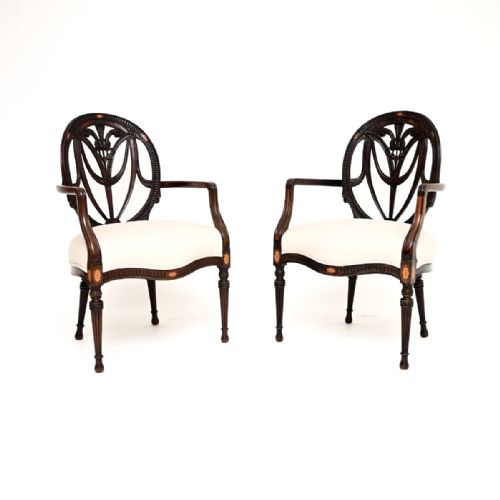
A marquetry dining carver is an armchair designed for the head or foot of a dining table, featuring ornamental wood inlay across the backrest, splat, or frame. When you search for a marquetry dining carver, you encounter robust seating built to accompany dining tables in various period and revival styles.
The selections span distinct historical eras, most notably the Edwardian period, the nineteenth century, and the late eighteenth century. These pieces appear primarily as mahogany or walnut armchairs, often incorporating elaborate wood inlay and fruitwood details.
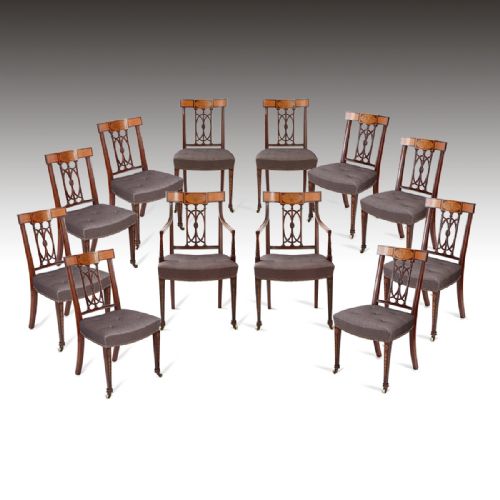
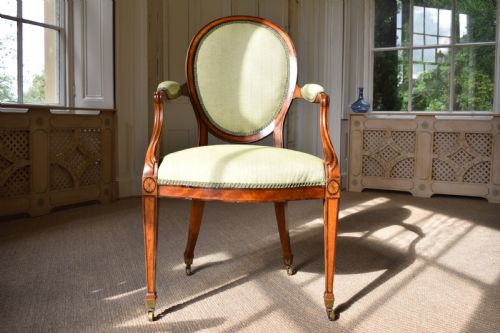
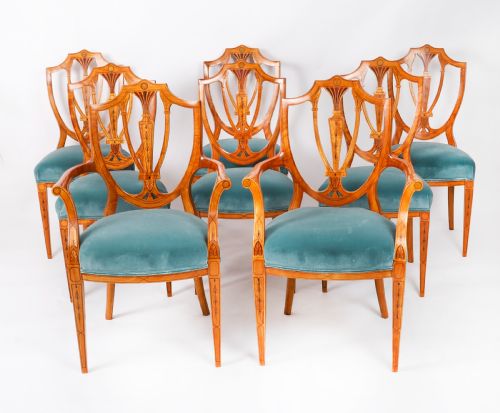
Forms range from high-backed Dutch rococo examples to Sheraton revival models and Edwardian inlaid mahogany armchairs. Buyers frequently encounter single armchairs or matched pairs alongside larger dining sets.
Materials and construction
Cabinetmakers built these armchairs using dense hardwoods such as mahogany, walnut, and satinwood to ensure structural stability for everyday use. Frames often feature traditional joinery alongside curved elbow rests and upholstered seats covered in fabric, velvet, or leather.
The decorative surface relies on wood inlay and fruitwood inlay, where contrasting veneers are meticulously cut and fitted into the primary timber ground. Certain Regency examples incorporate brass inlay alongside timber to accentuate the structural lines of the chair.
Listings feature mahogany, walnut, satinwood, and fruitwood inlay across pieces from the eighteenth, nineteenth, and twentieth centuries.
Assessing quality and execution
Quality rests upon the precision of the wood inlay and the crispness of the carved details on the arms, legs, and back splats. Superior examples display seamless integration of contrasting veneers without gaps or lifting along the edges.
The integrity of the underlying timber frame and the retention of original upholstery foundations also separate standard production from finer workshop output. Chairs that maintain their structural rigidity and original surface patination command greater interest among collectors.
Cowtan & Sons·Shoolbred·John Gee
The Marquetry Dining Carver Glossary
- Marquetry
- Decorative veneer work assembled in patterns using various coloured woods to picture flowers, landscapes, or geometric designs. This technique transforms a plain wooden backrest into a detailed visual panel.
- Carver
- An armchair designed to match a set of dining chairs, traditionally placed at the ends of the table. The arms provide extra support and distinguish it from standard side chairs.
- Splat
- The vertical strip of wood down the middle of a chair back, often shaped and decorated with inlay. It supports the back of the sitter while offering a canvas for decorative motifs.
- Veneer
- A thin slice of figured wood applied over a secondary timber base to create decorative surfaces. Finer grain patterns are utilised this way to display rich figuring across the chair components.
- Elbow seat
- An alternative term for an armchair, referencing the low padded or wooden rests designed to support the arms. These seats offer enhanced comfort during long dining sessions.
Marquetry Dining Carver: Frequently Asked Questions
What is a marquetry dining carver?
A marquetry dining carver is an upholstered armchair with decorative inlaid wood patterns, meant to sit at the head of a dining table.
These chairs provide extra comfort with side armrests while adding ornamental detail to the dining room.
How do I spot an Edwardian carver?
Edwardian carvers frequently utilise inlaid mahogany with light wood stringing and slender tapering legs. They often date from around nineteen hundred and reflect refined revival aesthetics.
Examine the timber finish and the lightness of the frame construction to identify this period.
Can I mix carvers with side chairs?
Mixing carvers with standard dining chairs is a traditional approach to furnishing a dining table. Ensure the timber tones and decorative styles complement each other for a cohesive look.
Matching the wood inlay or the general period helps tie disparate seating together.
How should I care for wood inlay?
Protect inlaid wood surfaces by keeping them away from direct sunlight and maintaining stable room humidity. Regular dusting with a soft cloth preserves the polished finish.
Avoid harsh chemical cleaners that can loosen the delicate veneers embedded in the timber.