
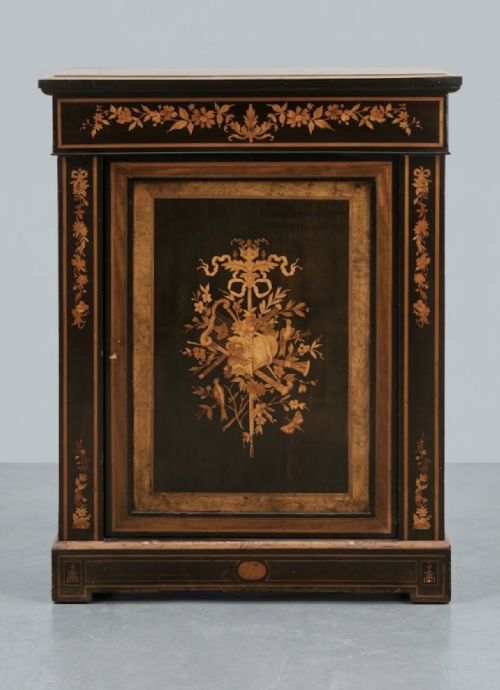
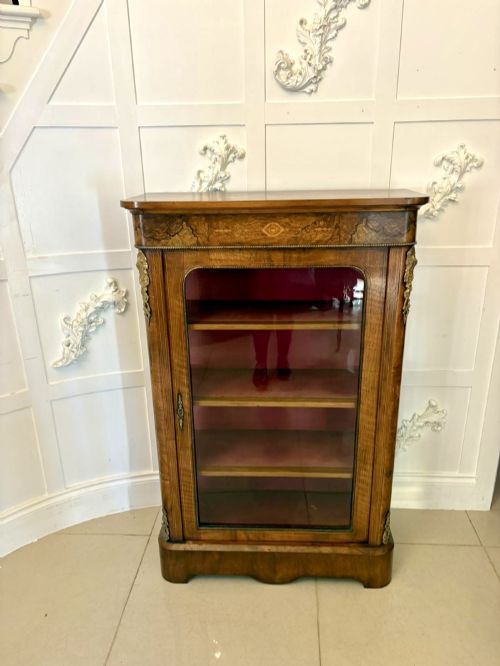
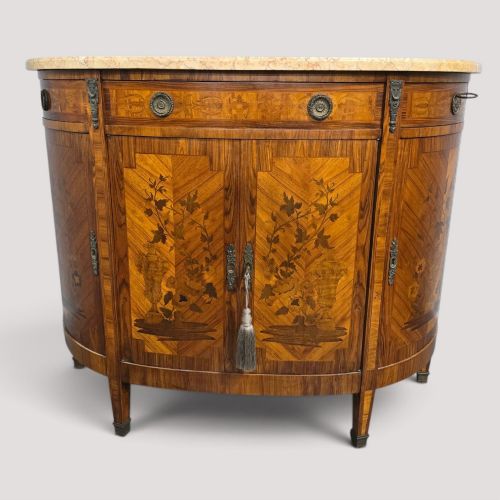
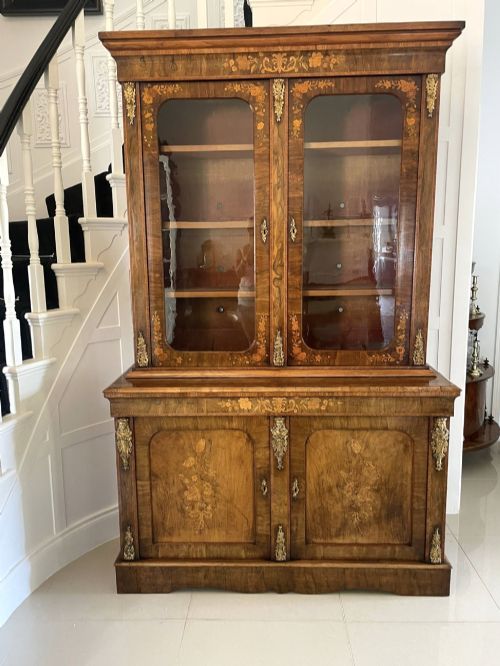
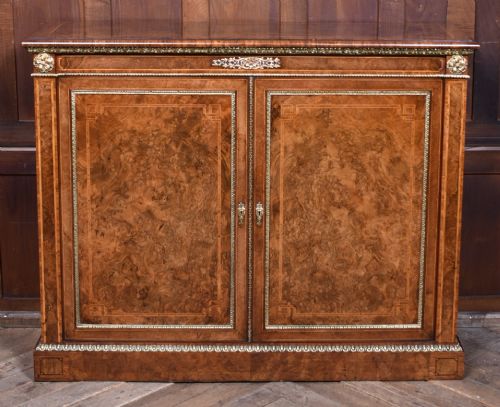

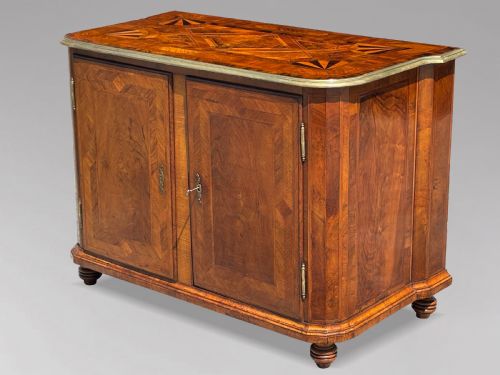
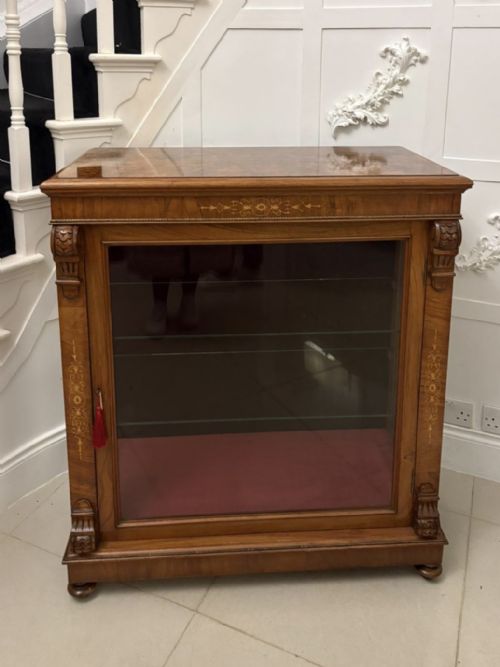
Marquetry Credenza Cupboard
These marquetry credenza cupboard examples offer intricate woodwork and stately proportions for a formal room.
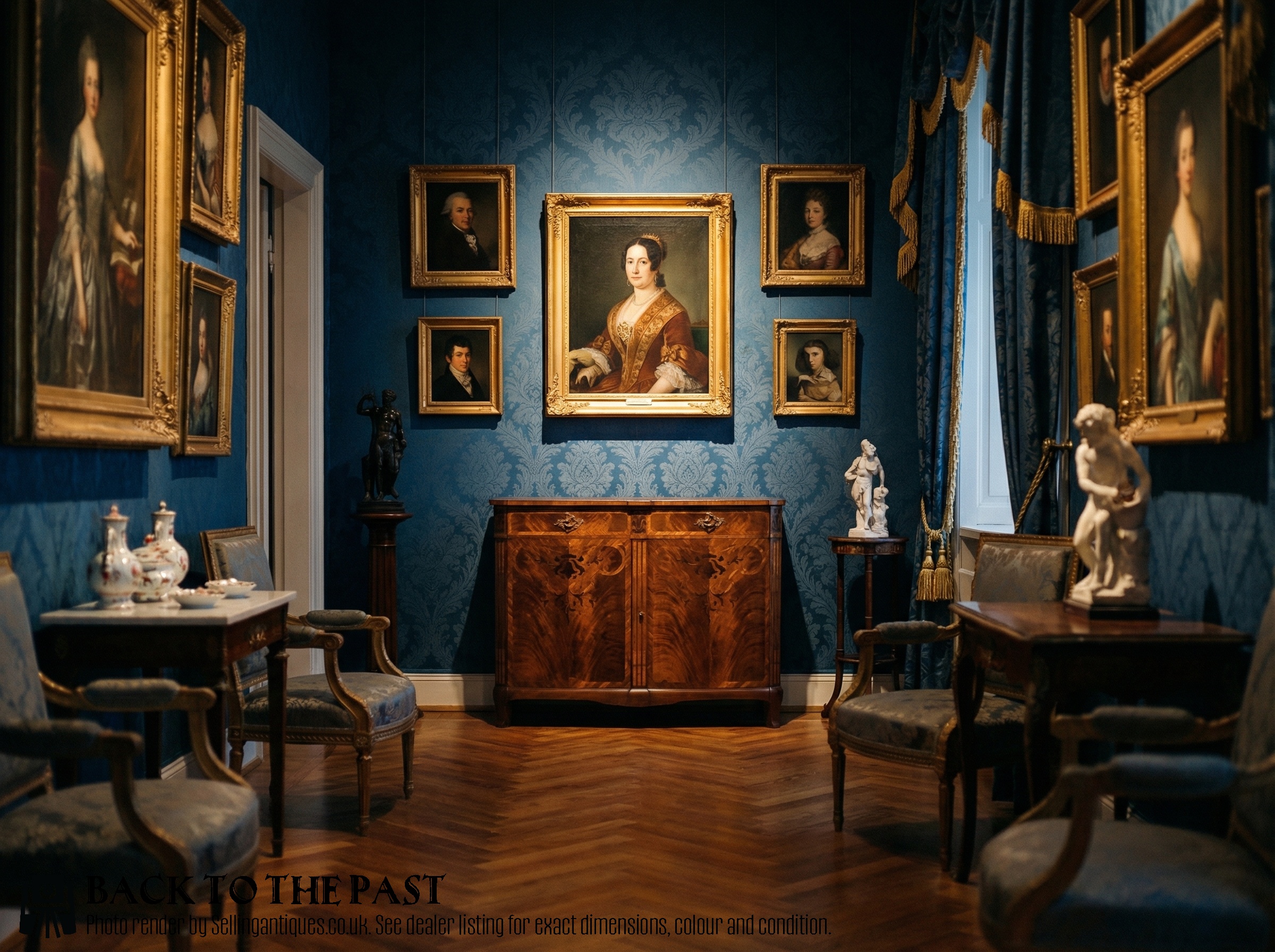
Marquetry Credenza Cupboard
A marquetry credenza cupboard combines decorative wood veneers with enclosed shelving, serving as a focal point in a reception room or parlour. Buyers seeking this form encounter various iterations spanning the eighteenth, nineteenth, and early twentieth centuries.
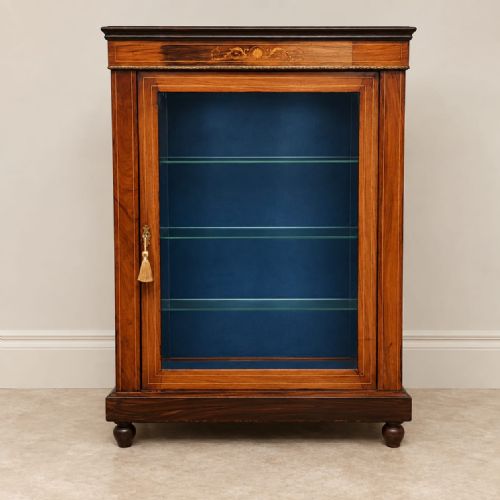
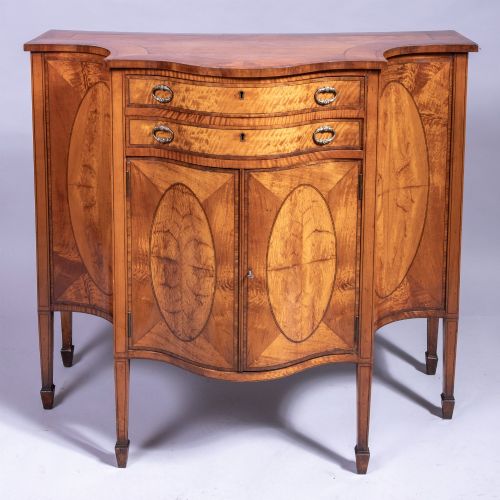
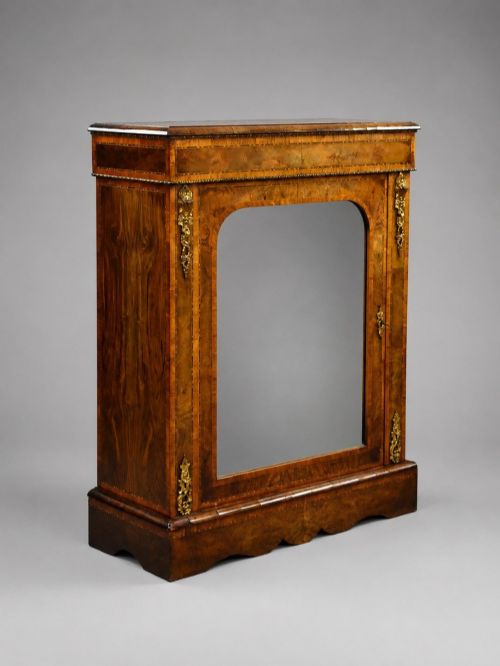
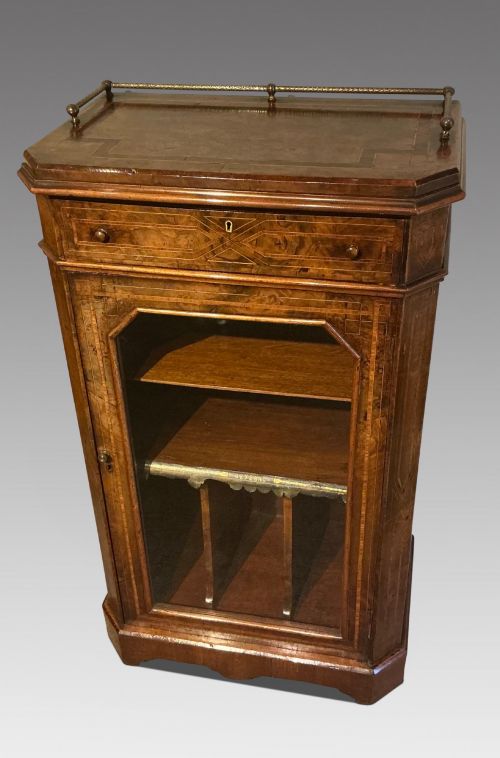
The nineteenth-century Victorian walnut pier cabinet represents the most frequent encounter on this page, often featuring glazed doors and fine floral or foliate inlays. Alongside these, French Napoleon III and Louis XV revival pieces appear frequently, bringing distinct continental flair to the category.
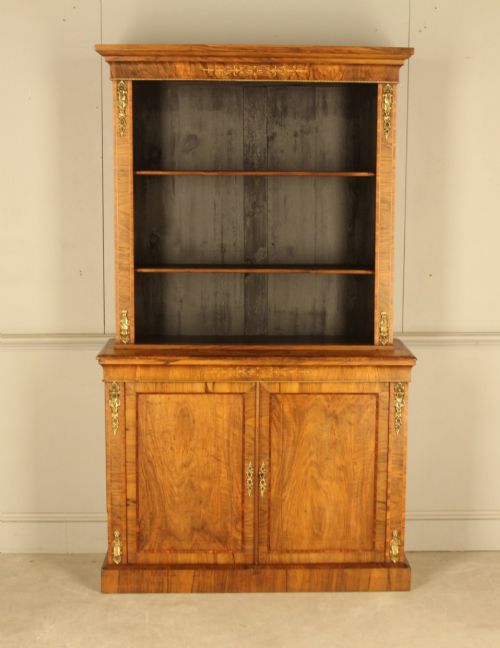
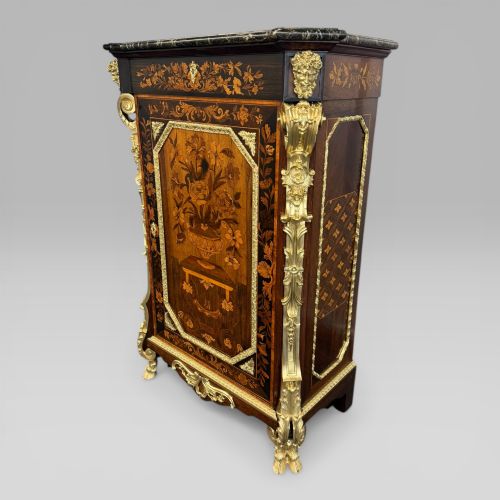
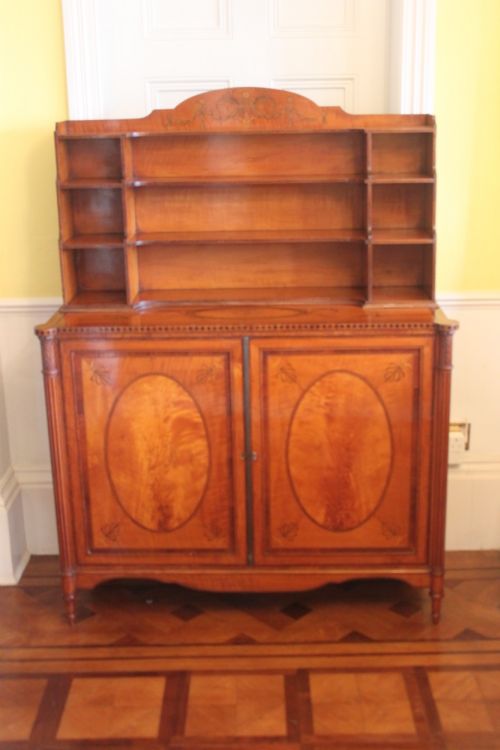
Forms range from compact demi-lune side cabinets to larger bookcase cabinets and marble-topped commodes. Walnut and satinwood provide the primary carcasses, augmented by elaborate marquetry panels and polished stone surfaces.
Materials and Construction Methods
Cabinetmakers constructed these pieces using solid timber frames of walnut, mahogany, or oak, faced with finely figured veneers such as burr walnut, kingwood, and satinwood. Artisans then meticulously hand-cut contrasting woods to create complex pictorial or geometric marquetry patterns.
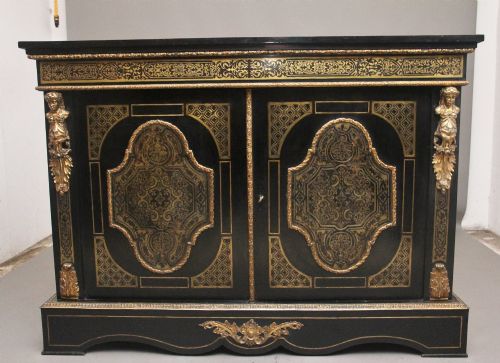
Gilded bronze or brass mounts, known as ormolu, edge the panels and frame the doors, while marble tops feature on many French and English credenzas. Brass inlay and tortoiseshell boullework appear on specific nineteenth-century examples, adding metallic contrast to the dark wood grounds.
Several cabinets on this page include secret compartments designed to hide love letters from prying eyes.
Assessing Quality and Execution
The standard of a marquetry credenza cupboard rests on the precision of the veneer work and the crispness of the cast ormolu mounts. Finer pieces demonstrate seamless integration of contrasting timbers without gaps, whilst lesser examples rely on painted rather than inlaid decoration.
Substantial weight, substantial timber thickness, and refined interior fittings distinguish superior workshops from mass-produced equivalents. Original marble slabs and intact fire-gilt mounts elevate a piece significantly above those with later replacements.
Edward Holmes Baldock·Maple and Co·Whytock and Reid·Maison Millet·Edwards and Roberts
The Marquetry Credenza Cupboard Glossary
- Marquetry
- Decorative veneer work forming pictures or patterns by assembling small pieces of coloured wood. This technique requires exceptional skill to fit disparate timbers together perfectly.
- Ormolu
- Gilded bronze mounts applied to furniture for decorative accent and edge protection. The term derives from the French for milled gold.
- Boulle
- A form of marquetry using tortoiseshell and brass inlaid in contrasting patterns, named after the cabinetmaker André-Charles Boulle. It creates a striking metallic sheen across the surface of the cabinet.
- Demi-lune
- Half-moon shaped furniture designed to sit flush against a wall. This profile is common in fine satinwood side cabinets from the revival periods.
- Pier cabinet
- A narrow cabinet designed specifically to fit the wall space between windows. These pieces often incorporate glass doors to display ornaments.
Marquetry Credenza Cupboard: Frequently Asked Questions
What rooms suit a marquetry credenza cupboard?
These cabinets suit drawing rooms, dining rooms, and spacious hallways where their decorative veneers and polished mounts can catch the light. They function well as focal points against a plain wall.
Their enclosed shelving also provides practical storage for glassware, linens, or books while maintaining a formal appearance.
How do I care for walnut and marquetry?
Keep walnut and satinwood pieces away from direct sunlight and strong heat sources to prevent the veneers from drying and lifting. Regular dusting with a soft, dry cloth preserves the polished finish.
Apply a microcrystalline wax occasionally to nourish the timber, avoiding silicone-based polishes that damage antique surfaces.
How can I distinguish French from English pieces?
French cabinets often feature heavy ormolu mounts, serpentine curves, and inset marble tops, particularly in styles influenced by Louis XV and Napoleon III. English versions tend to favour restrained satinwood or burr walnut with linear stringing.
Construction details inside the carcass, such as secondary woods like oak or pine, also help confirm the workshop's country of origin.
Were these cupboards used for storage?
Historically, pier cabinets and side cupboards served to store precious ceramics, books, or writing materials behind locked doors. The glass-fronted variations were designed specifically for display.
Today, they perform a similar dual role of concealing household items while exhibiting decorative objects on their upper surfaces.