

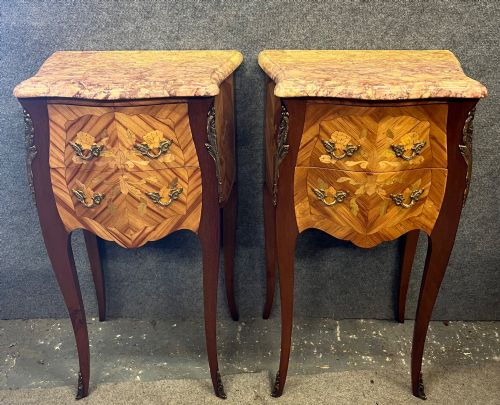
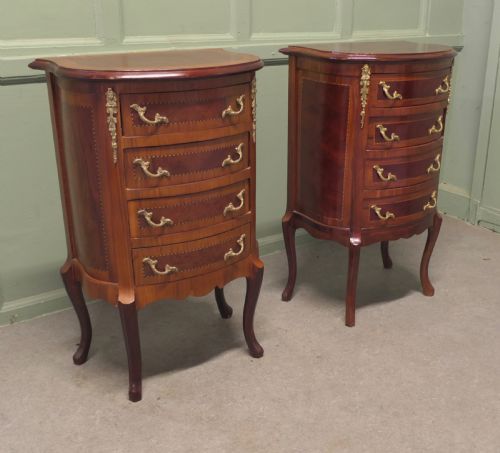
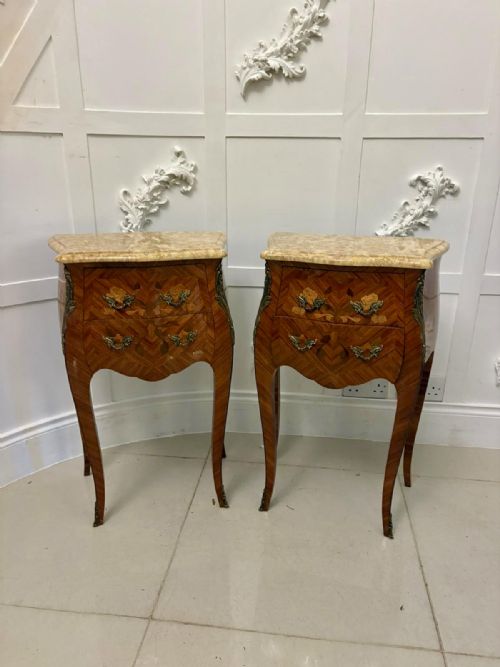
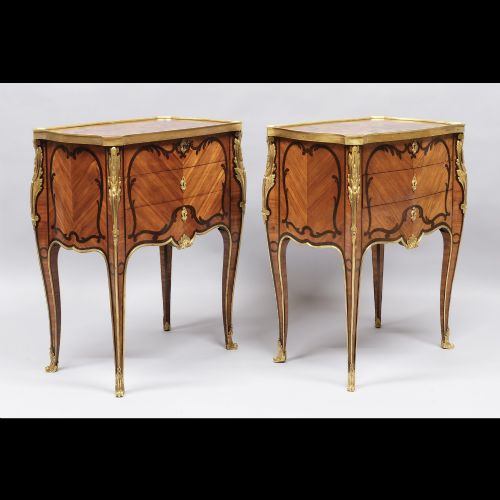


Marquetry Commode Pair
A marquetry commode pair brings symmetrical French and Italian elegance to a bedroom or sitting room with contrasting wood veneers.
Marquetry Commode Pair
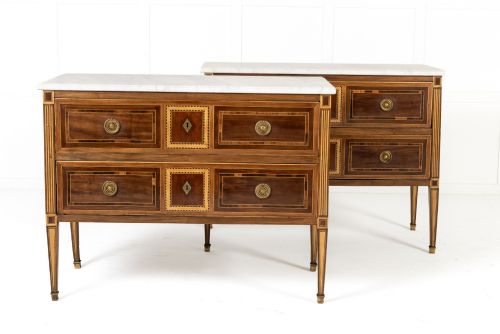
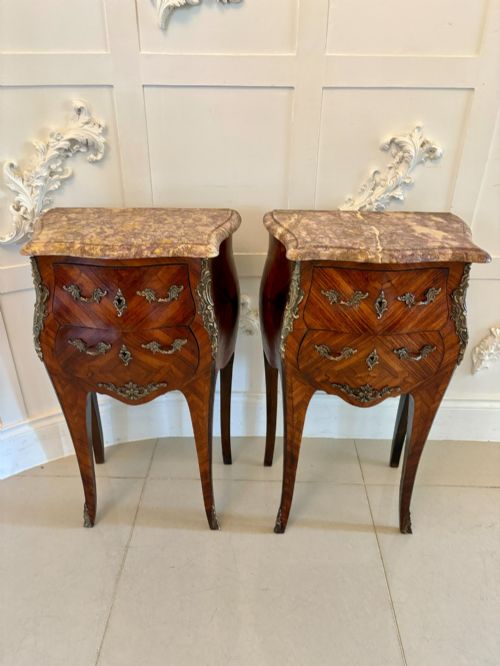
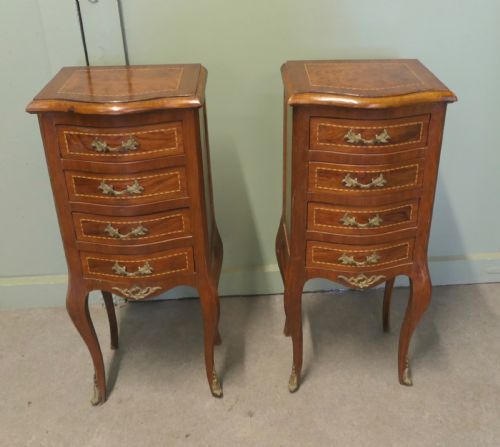
A marquetry commode pair consists of matching sets of drawer units or low cabinets decorated with patterned wood veneers. When searching for a marquetry commode pair, buyers encounter smaller bedside tables alongside larger chests of drawers and side cabinets.
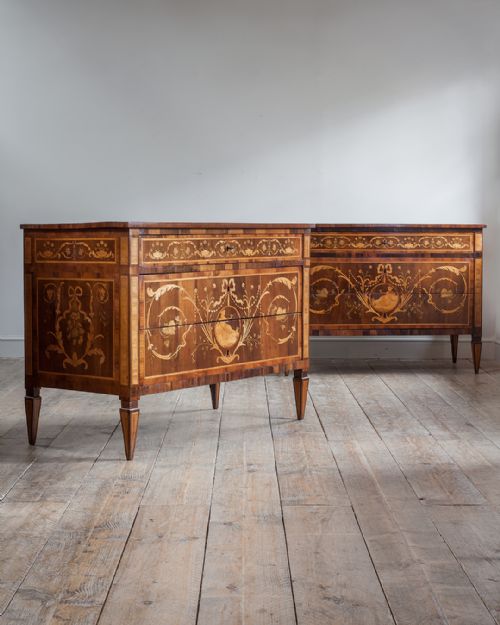
The pieces span from the 18th century through the Victorian era up to the 1920s and 1930s. French Louis XV and Louis XVI styles dominate alongside Italian Neoclassical designs and Sheraton revival pieces.
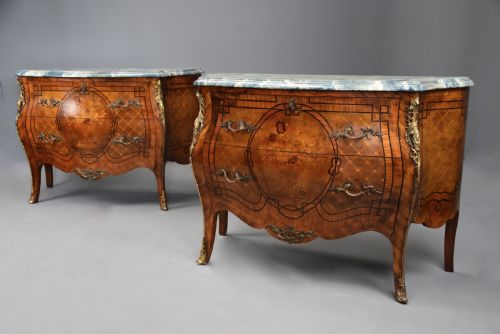
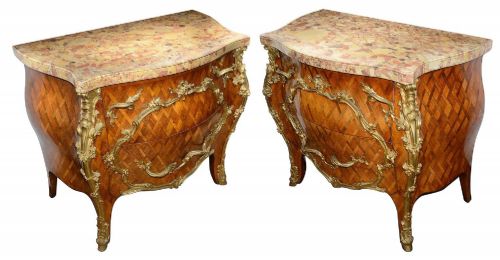
Forms vary from serpentine bombe shapes and bow-front chests to straight-sided bedside cabinets and demi-lune lamp tables. Marble tops frequently complete these matched pairs.
How these pieces were made
Craftsmen built carcases using solid woods like mahogany, walnut, and burr walnut as a stable base. Finer timbers such as kingwood and rosewood were then sliced into thin veneers for decorative patterning.
Intricate pictorial or geometric designs were assembled using contrasting wood types inlaid into the surface. Ormolu, gilt bronze, and brass mounts were cast and applied to corners, feet, and handles.
Polished marble slabs were cut and fitted to the top surfaces of many pieces to provide a durable and decorative finish.
Marquetry Commode Pair Retail Price Guide 2026
Typical asking prices for marquetry commode pair among the pieces listed under this phrase on Sellingantiques today, from the lower quarter to the upper quarter. They describe what is for sale here now, not the wider market.
Even side lockers need matching partners, proving that furniture truly believes in the company it keeps.
What varies in quality
The precision and complexity of the wood inlay determine much of the visual standard. Fine examples display intricate botanical or geometric patterns with seamless joints between contrasting veneers.
The quality of the cast metal mounts separates standard production from exhibition pieces. Crisp chasing on ormolu and gilt bronze mounts indicates superior workshop output.
Construction details beneath the surface, such as the timber used for drawer linings and the weight of the marble top, reflect the original maker's investment in materials.
Sormani·Pietro Ferrario·Edwards and Roberts·Jean-Henri Riesener·Joseph Zwiener
The Marquetry Commode Pair Glossary
- Marquetry
- Decorative veneer work formed by fitting together small pieces of various coloured woods to create pictorial or geometric designs on a surface.
- Bombe
- A swelling, outward-curving chest or commode shape that bulges on the front and sides, typical of mid-18th-century French design.
- Ormolu
- Gilt bronze ornamentation applied to furniture, cast and chased to produce a bright gold-coloured metallic finish.
- Kingwood
- A dense, heavy Brazilian timber with dark violet-brown streaks used extensively for high-end decorative veneering.
- Demi-lune
- A half-moon shape used for table and cabinet tops designed to sit flush against a wall.
Marquetry Commode Pair: Frequently Asked Questions
How do I place a pair in a room?
Matched pairs work best flanking a bed, a fireplace, or a large doorway to establish visual balance. Their symmetrical wood patterns draw the eye and anchor the surrounding decor.
Because sizes vary from compact bedside tables to larger cabinets, measure the available wall space carefully before placement.
Are marble tops original to these pieces?
Many commodes and bedside cabinets from the 18th century onwards were designed and built to receive fitted marble slabs. These tops offered a practical, wipe-clean surface for bedroom use.
Replacement marble is sometimes fitted during restoration, so check the underside and edges for consistency with the period.
How do I clean marquetry veneer?
Dust surfaces regularly with a soft, dry cloth to prevent grit from scratching the polished wood. Avoid harsh chemical sprays and excess moisture which can lift the delicate veneer.
Apply a quality furniture wax sparingly when the wood appears dry to maintain the natural lustre of the finish.