

Marquetry China Cabinet
A marquetry china cabinet brings intricate wood inlay and glass display together, housing valued porcelain behind polished panels.
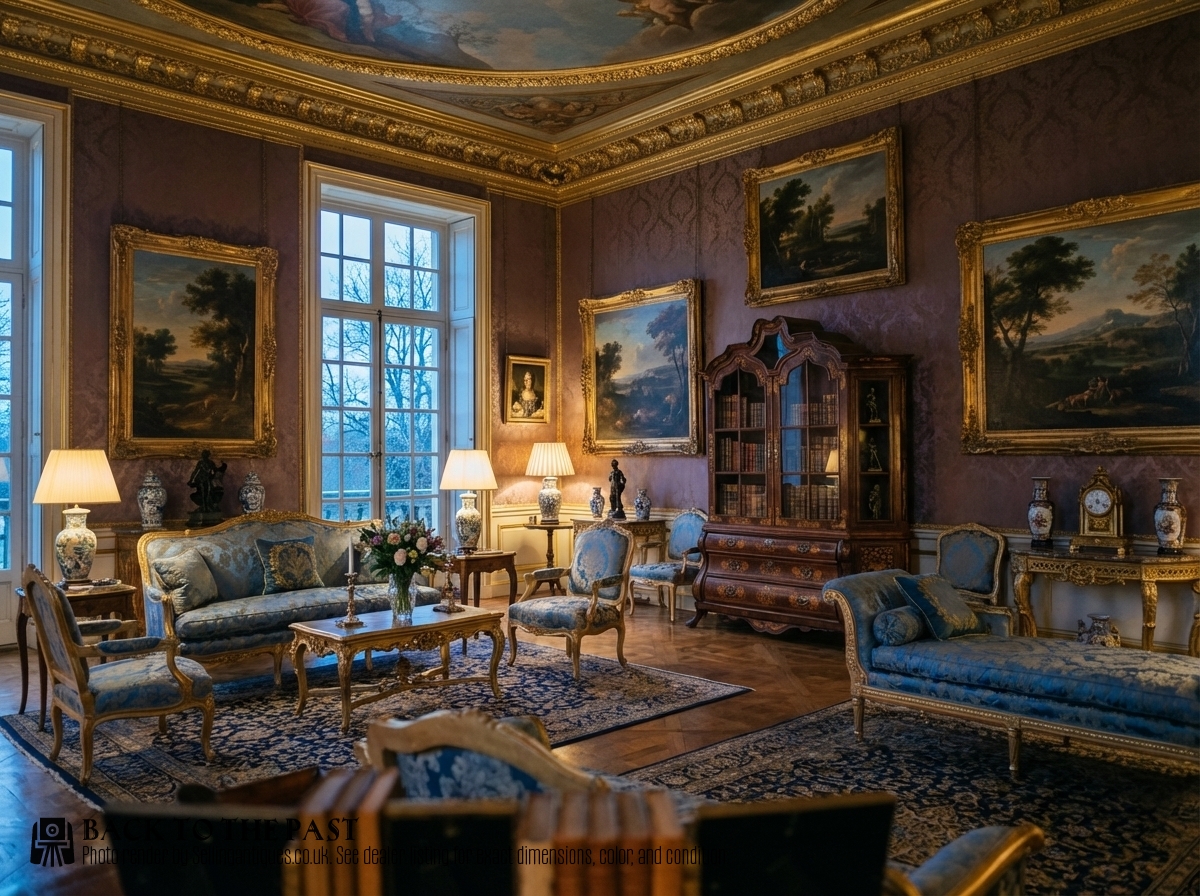
Marquetry China Cabinet
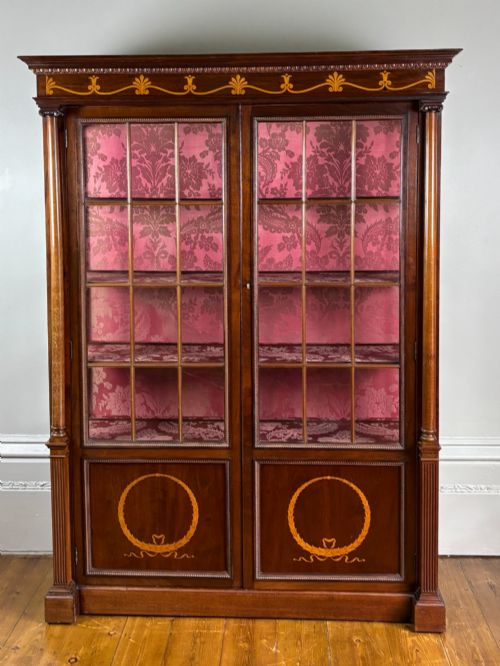
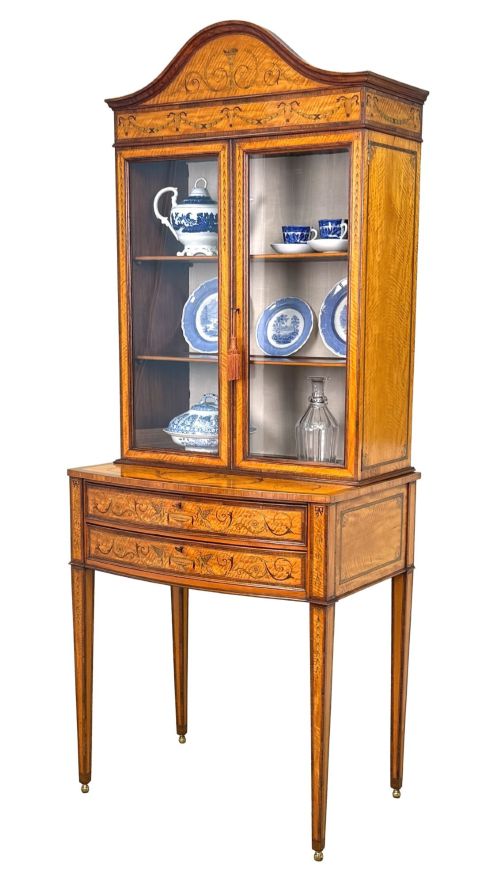
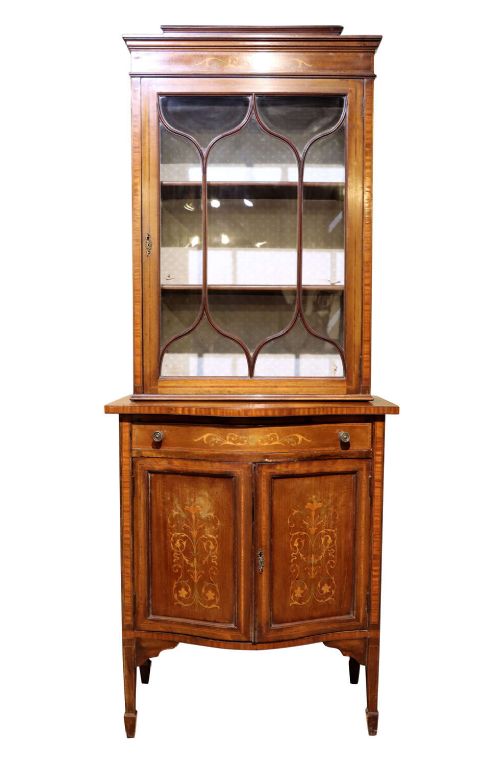
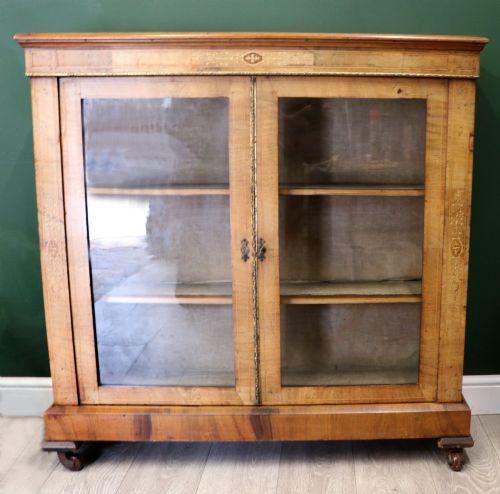
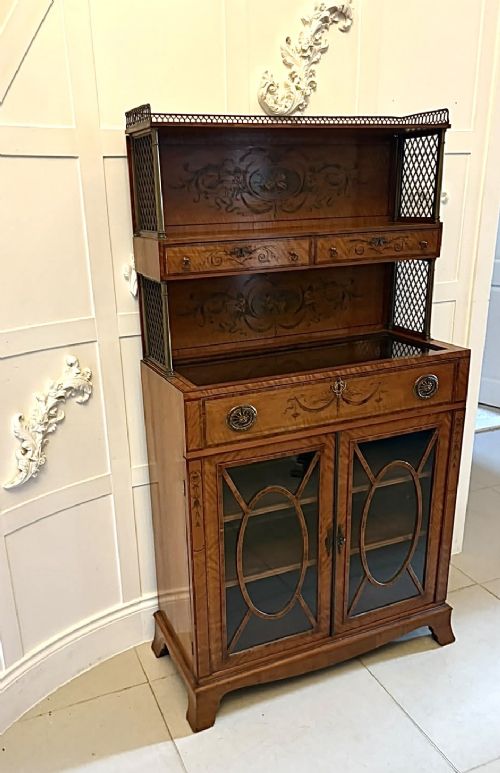
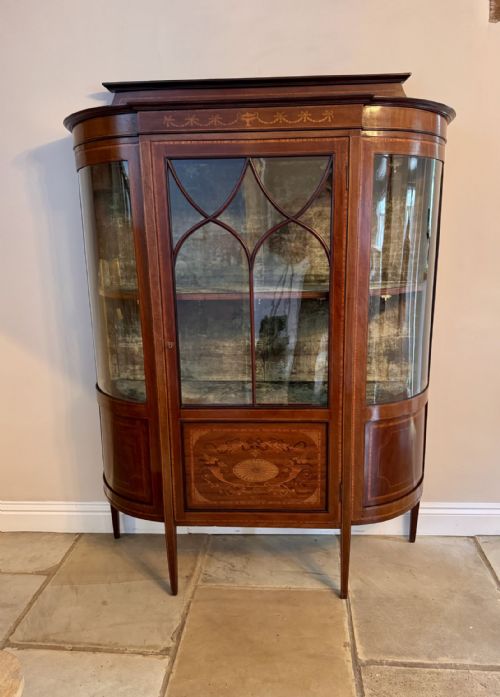
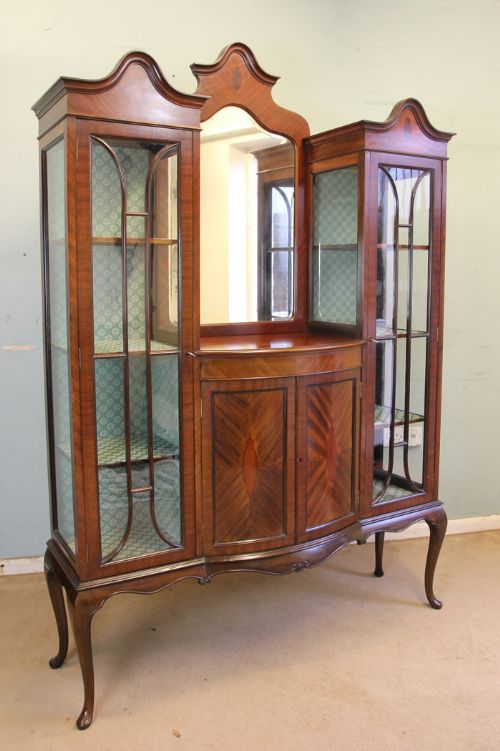
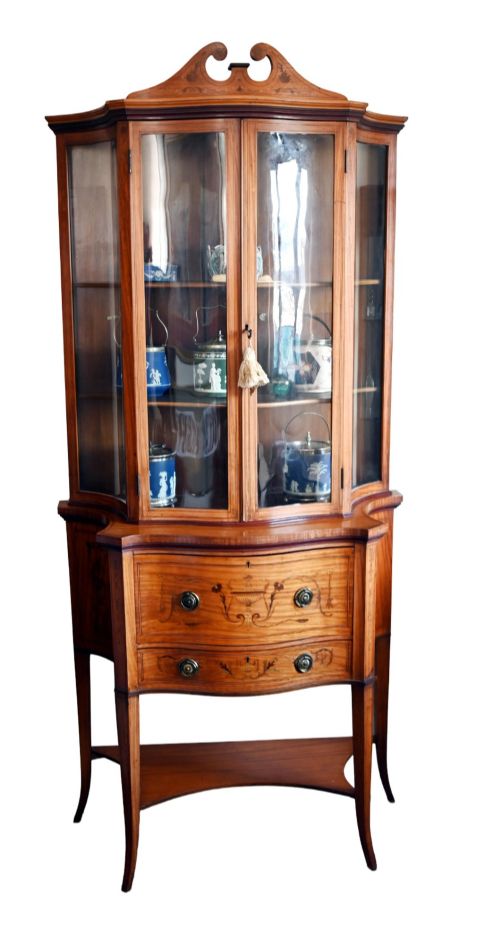
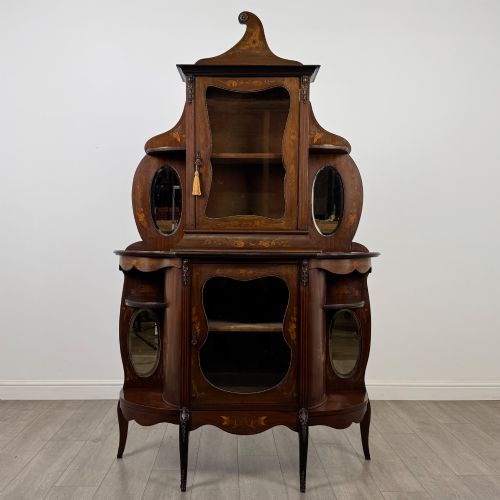
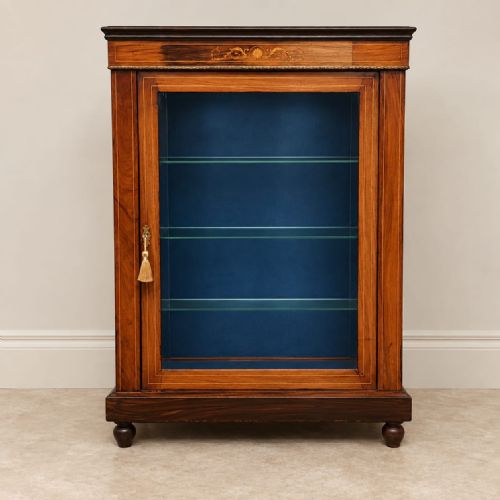
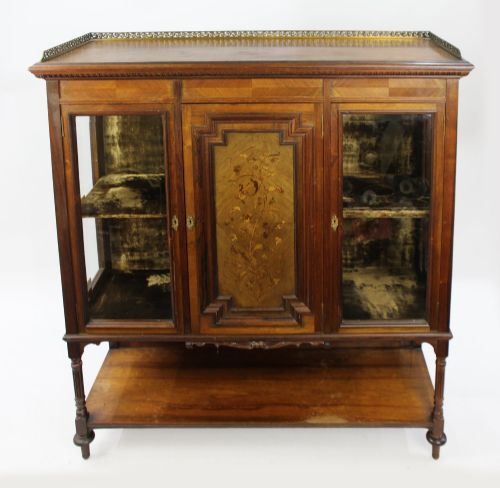
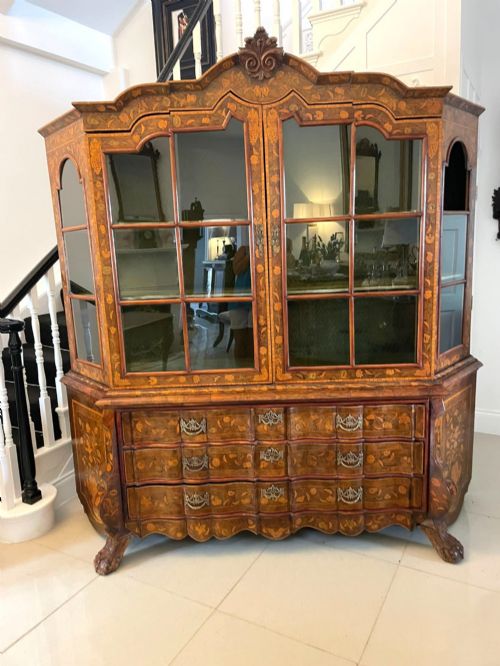
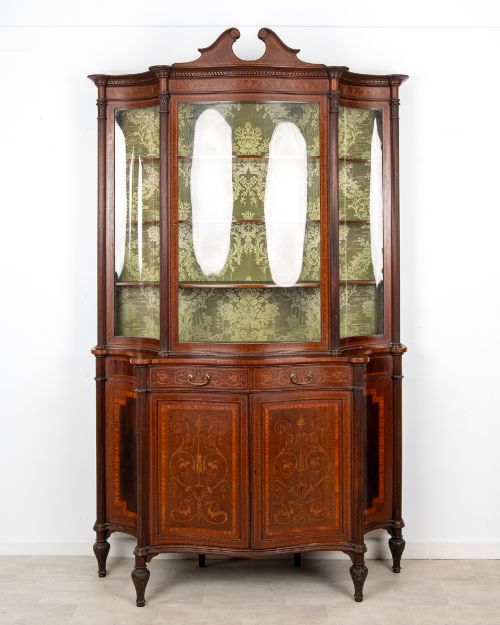
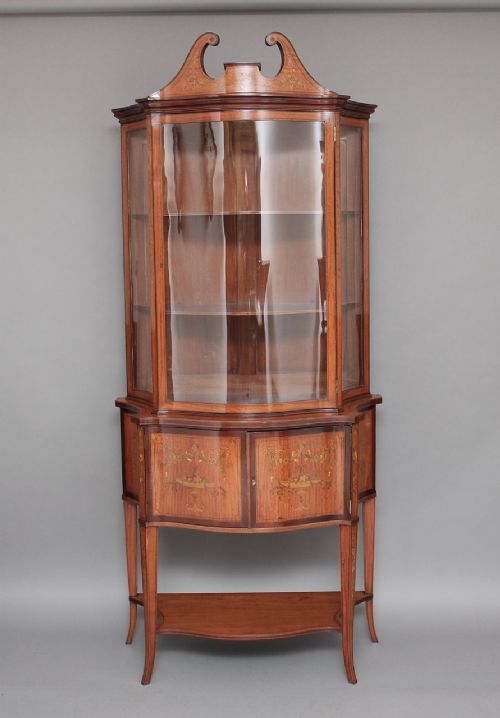
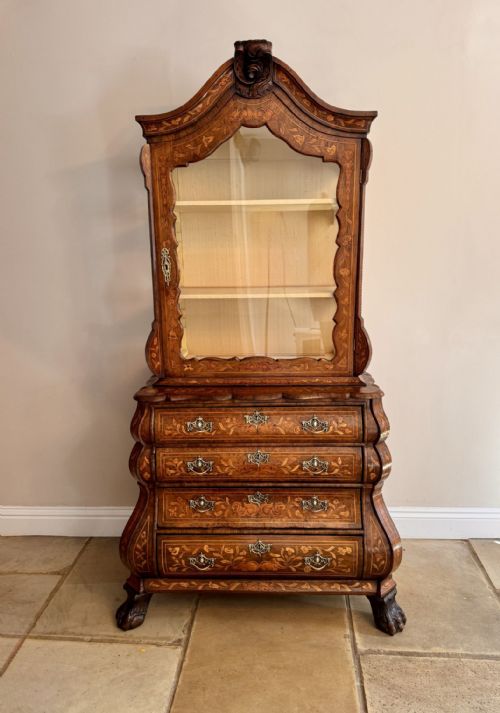
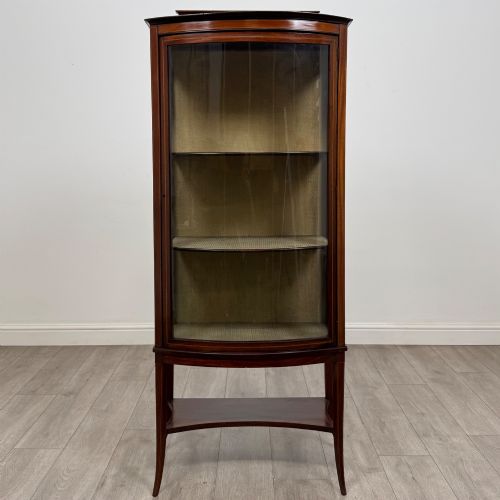
A marquetry china cabinet is a glazed display piece designed to showcase porcelain and glassware while exhibiting patterned wood veneers on its exterior surfaces. The pieces gathered here span the Victorian, Edwardian, and eighteenth-century periods, with Edwardian mahogany and satinwood examples appearing most frequently alongside Dutch walnut designs.
Forms vary from upright display cabinets and pier cabinets to corner cabinets and two-part bookcase combinations. Origins stretch across British workshops as well as continental makers in France, Austria, and the Netherlands, utilising styles such as Sheraton Revival, Art Nouveau, and Dutch Baroque.

How They Were Made
Cabinet makers constructed carcasses primarily from mahogany, walnut, satinwood, and rosewood, applying contrasting wood veneers to create detailed floral or geometric marquetry patterns. Brass mounts, ormolu details, and mirrored backs often complemented the primary timbers.
Glazing typically involved fitted glass panels within timber doors, sometimes featuring astragal bars. Inlay work required precise hand-cutting of different wood species to fit flush within the surface veneer before polishing.
Marquetry China Cabinet Retail Price Guide 2026
Typical asking prices for marquetry china cabinet among the pieces listed under this phrase on Sellingantiques today, from the lower quarter to the upper quarter. They describe what is for sale here now, not the wider market.
Listings feature mahogany, satinwood, walnut, and rosewood timbers decorated with floral marquetry and ormolu mounts.
What Varies in Quality
Quality rests in the precision of the marquetry cutting and the depth of the timber selection, where tightly grained satinwood, mahogany, or walnut display superior natural figure. The intricacy of floral or figural inlay work distinguishes standard production from finer cabinet-making.
Structural refinement also separates examples, seen in the harmony of proportions, the weight of the brass or ormolu mounts, and the crispness of the glazing bars on the cabinet doors.

Collinson and Lock·Edwards and Roberts·August Ungethüm·Maple and Co
The Marquetry China Cabinet Glossary
- Marquetry
- Decorative veneer work forming pictures or patterns by assembling small pieces of various coloured woods. This technique covers the exterior surfaces of the cabinet.
- Vitrine
- A glass-fronted cabinet used for displaying fine china or curiosities. These pieces often feature glass on the sides as well as the doors.
- Astragal glazing
- Glass divided into smaller panes by narrow wooden or metal bars. These bars form geometric frameworks across the cabinet doors.
- Ormolu
- Gilt bronze mounts applied to furniture for decorative effect. Such metalwork frequently accents the corners and feet of continental cabinets.
- Satinwood
- A durable, lustrous timber from tropical trees with a golden yellow sheen. It serves as a primary wood or a contrasting veneer for inlay.
Marquetry China Cabinet: Frequently Asked Questions
What is a marquetry china cabinet?
A marquetry china cabinet is a wooden display piece decorated with patterned veneer work and fitted with glass doors or panels. These cabinets serve to exhibit porcelain collections while adding decorative timber textures to a room.
Most examples date from the Victorian and Edwardian eras, utilising timbers such as mahogany, walnut, and satinwood with floral or geometric inlay.
How do I date a china cabinet?
Dating relies on observing the primary timbers, the style of the marquetry, and the overall construction methods used in the carcass. Edwardian pieces often display lighter satinwood and Sheraton Revival motifs, whereas Victorian examples tend to utilise heavier mahogany and rosewood.
Earlier eighteenth-century and nineteenth-century Dutch pieces frequently feature exuberant floral marquetry on walnut or oak foundations.
Where should I place a corner cabinet?
A corner cabinet fits into room junctions to utilise unused angles while providing vertical display space for ceramics. These pieces work effectively in dining rooms or drawing rooms where floor space requires careful management.
Matching the timber tone of the cabinet to existing furniture helps integrate the piece into the room's layout.
How are different wood styles identified?
Wood styles are determined by examining the grain, colour, and the specific veneer combinations used in the marquetry panels. Mahogany and walnut provide deep brown tones, while satinwood offers a pale, reflective yellow finish.
Inlay patterns also indicate stylistic periods, ranging from classical floral arrangements to Art Nouveau curves.