



Marquetry Cabinet Victorian
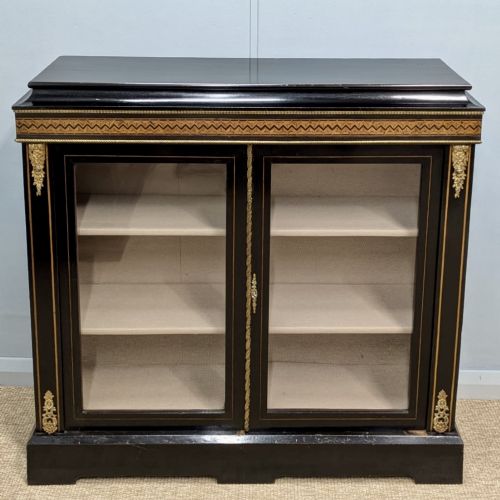
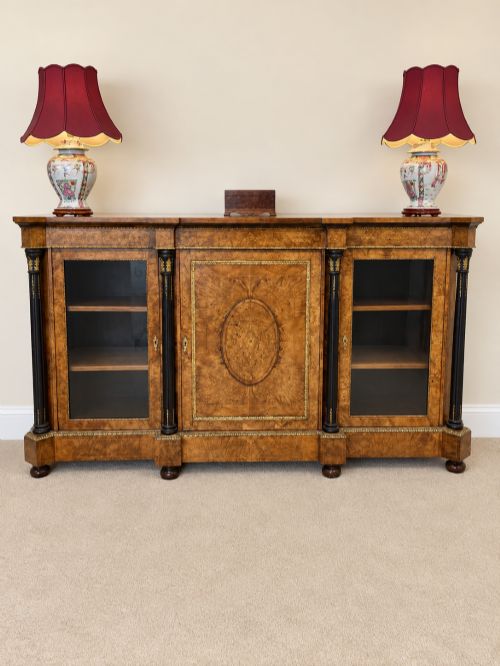
A marquetry cabinet victorian brings together rich burr walnut, ebonised timber and meticulous floral veneer work to anchor a room with nineteenth-century presence.
Marquetry Cabinet Victorian
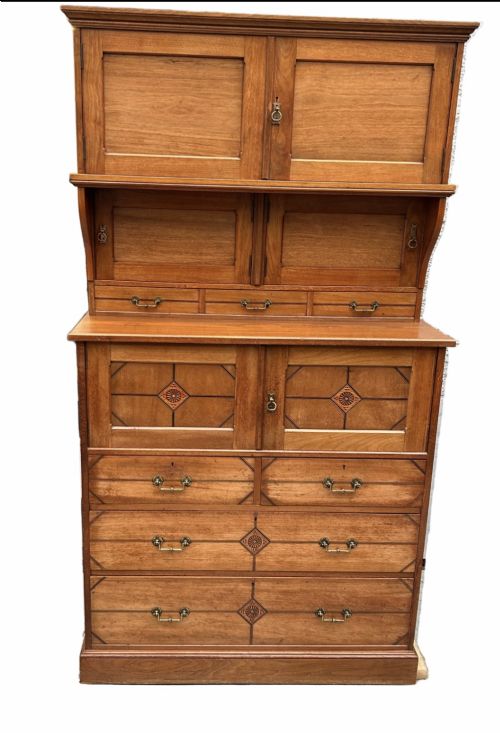
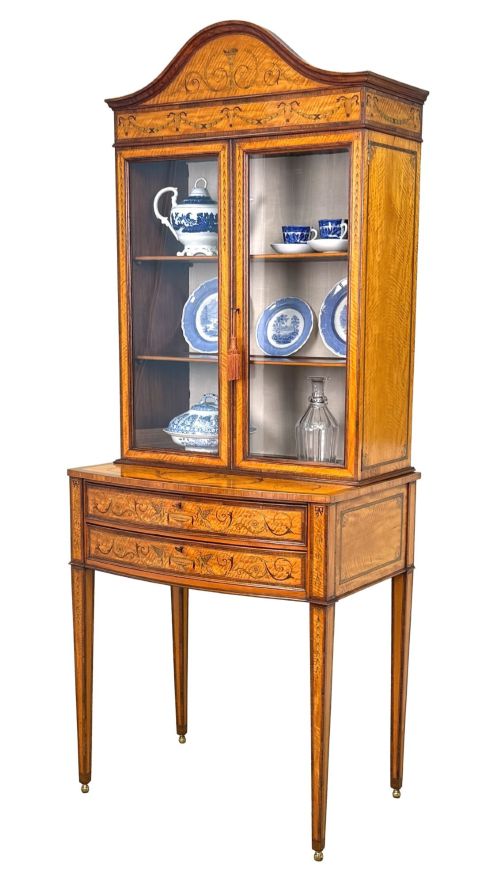
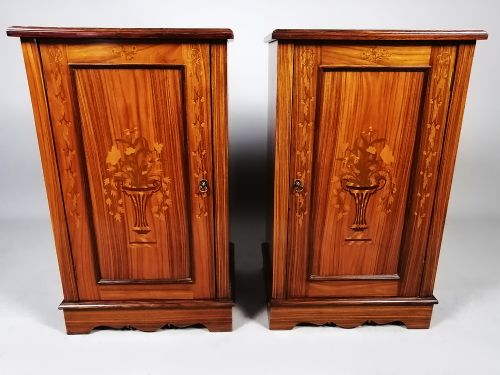
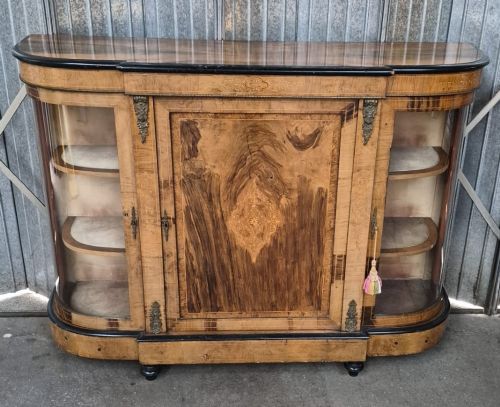
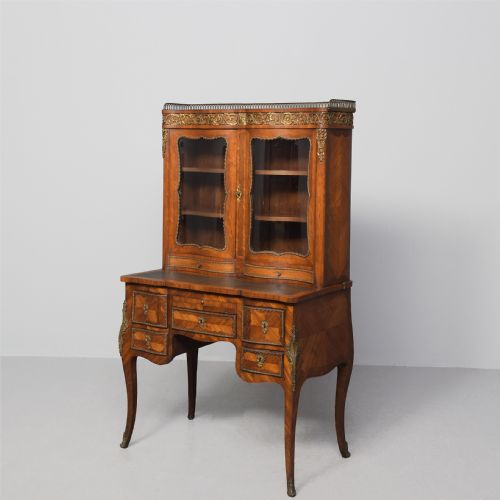
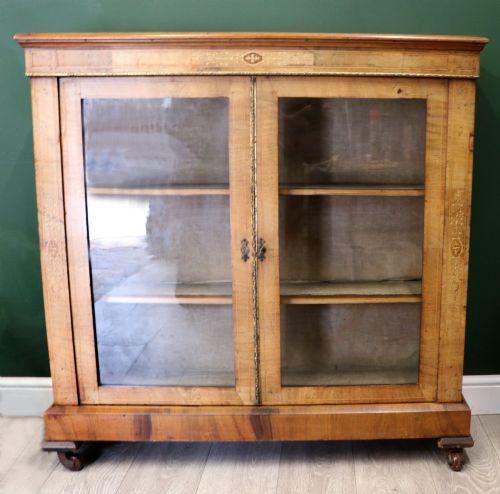
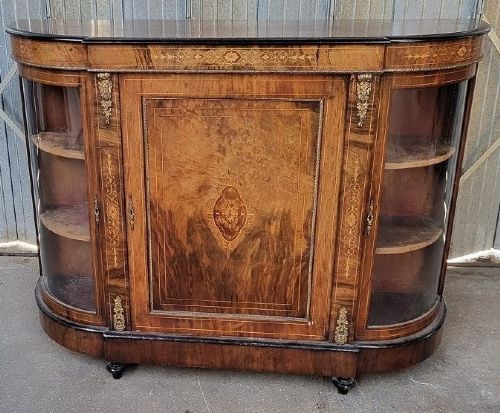
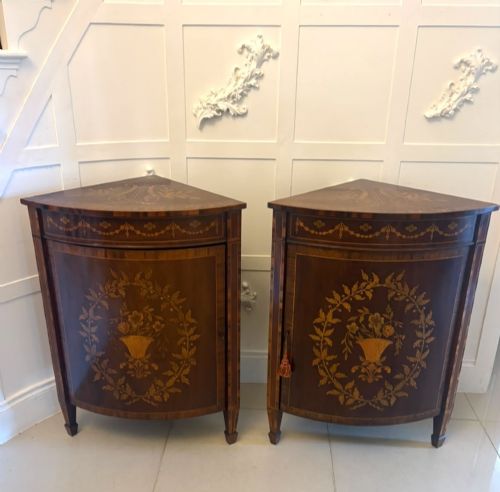
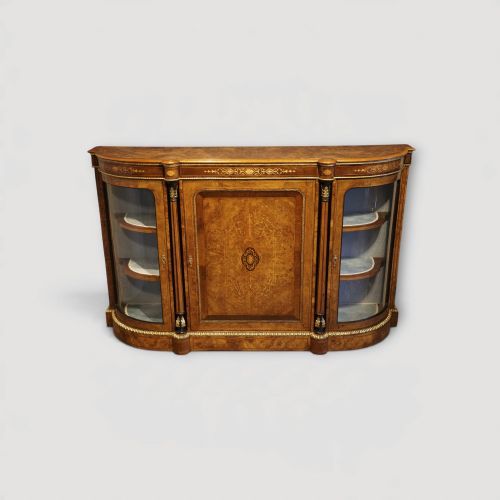
When you search for a marquetry cabinet victorian, you encounter a selection of nineteenth-century credenzas, pier cabinets, and glazed display furniture built during the Victorian period. Burr walnut and ebonised wood dominate the selection, frequently paired with intricate floral inlay.
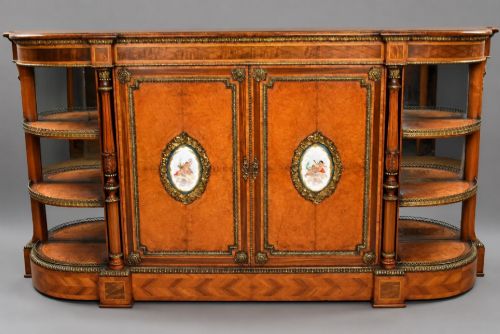
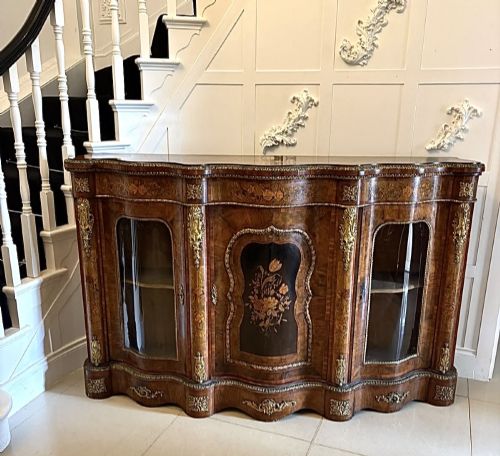
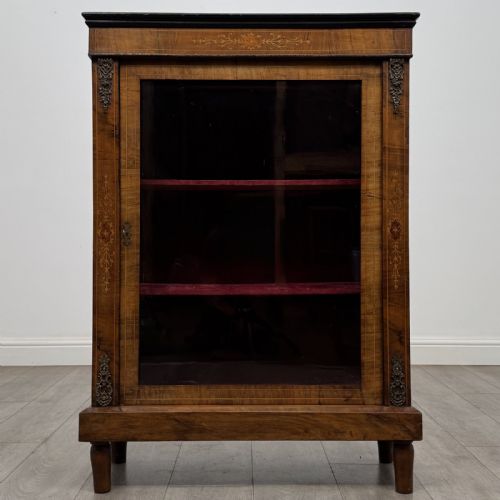
Credenzas and side cabinets form the core of this group, often featuring curved glass doors, gilt ormolu mounts, and fitted shelving designed for display. Smaller pier cabinets and corner cupboards also appear regularly across the listings.
Origins span standard Victorian production alongside revival styles such as Louis XV and Sheraton Revival, reflecting the eclectic tastes of the nineteenth century.
Materials and technique
Cabinet makers applied fine veneers of burr walnut, satinwood, and rosewood over solid secondary timbers, cutting contrasting woods to form detailed floral and geometric marquetry panels. Ebonised finishes provided a dark, dramatic ground for inlaid motifs.
Gilt bronze and ormolu mounts reinforced corners and borders, while curved glass panels were set into doors for display cabinets and credenzas.
Marquetry Cabinet Victorian Retail Price Guide 2026
Typical asking prices for marquetry cabinet victorian among the pieces listed under this phrase on Sellingantiques today, from the lower quarter to the upper quarter. They describe what is for sale here now, not the wider market.
Several Davenport desks in the selection hide stationery compartments inside sloping top writing surfaces.
What separates the grades
Quality rests upon the crispness of the marquetry cutting and the choice of veneer, where densely patterned burr walnut distinguishes finer items from plainer stock. The complexity of the carcass shape, such as breakfront or serpentine forms, also indicates higher ambition.
Mounts contribute substantially to distinction, with chased ormolu details and porcelain plaques marking out the upper tier of nineteenth-century production.
Hewetsons London
The Marquetry Cabinet Victorian Glossary
- Marquetry
- A decorative technique where small pieces of veneer are fitted together to form pictorial or floral patterns on a wooden surface.
- Credenza
- A sideboard or display cabinet originating in the nineteenth century, typically featuring central doors flanked by curved glass compartments.
- Ormolu
- Gilt bronze mounts applied to furniture edges and corners for decorative accent.
- Burr Walnut
- Timber taken from walnut tree growths, prized for its swirling, highly figured grain pattern.
- Pier Cabinet
- A narrow cabinet designed to stand against the wall space between windows.
Marquetry Cabinet Victorian: Frequently Asked Questions
What is a marquetry cabinet victorian used for?
These cabinets served in nineteenth-century drawing rooms for displaying porcelain, storing books, and providing a decorative surface.
Today, they function well as focal storage pieces in living spaces and dining rooms.
How do I identify a Victorian period cabinet?
Look for timber choices such as burr walnut, rosewood, and ebonised finishes combined with hand-cut floral veneer work.
Construction methods, including hand-cut dovetails and traditional polishing, confirm nineteenth-century origin.
Where should I place a credenza at home?
A credenza suits dining rooms, hallways, or spacious living areas where its length and display glass can be appreciated.
Keep them away from direct sunlight and strong heat sources to protect the delicate veneers.
What is the difference between walnut and ebonised finishes?
Walnut reveals the natural, figured grain of the wood, often enhanced with French polish to show warm brown tones.
Ebonised wood is stained and polished deep black to imitate ebony, providing a stark contrast for inlaid marquetry.