



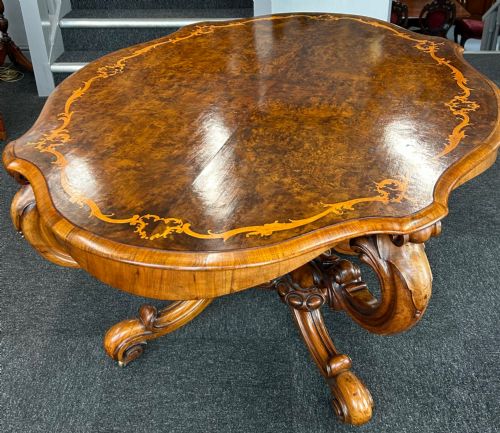


Marquetry Burr Walnut Top
These marquetry burr walnut top tables and desks bring rich nineteenth-century timber and floral detail into a room.
Marquetry Burr Walnut Top
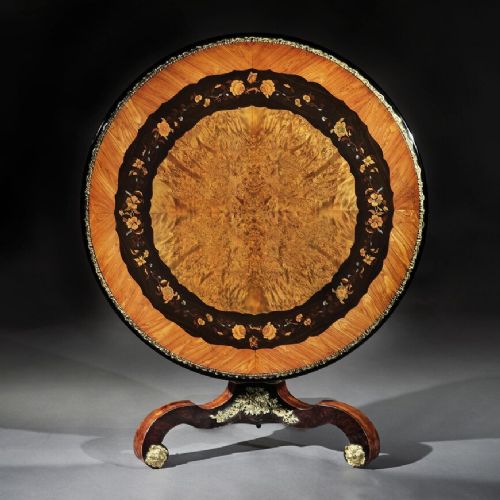
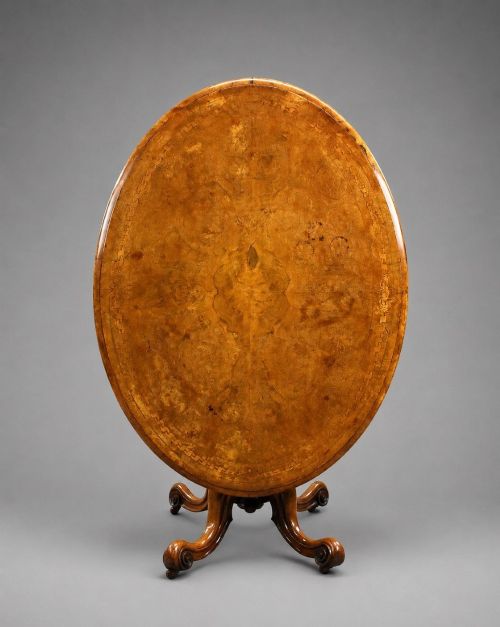
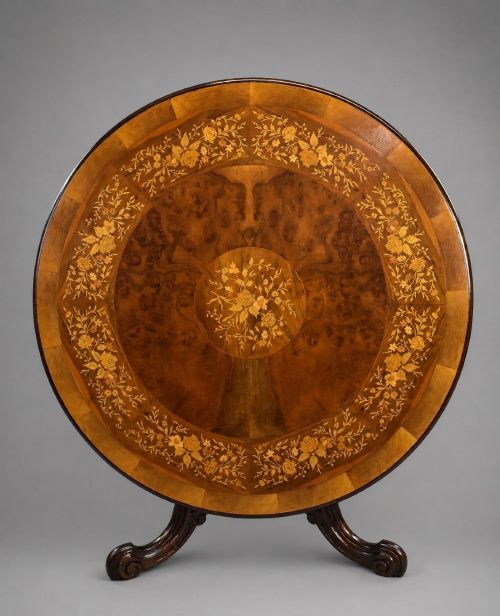
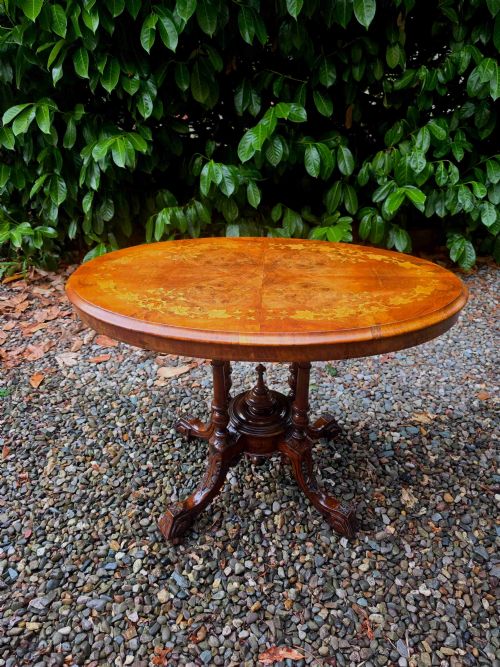
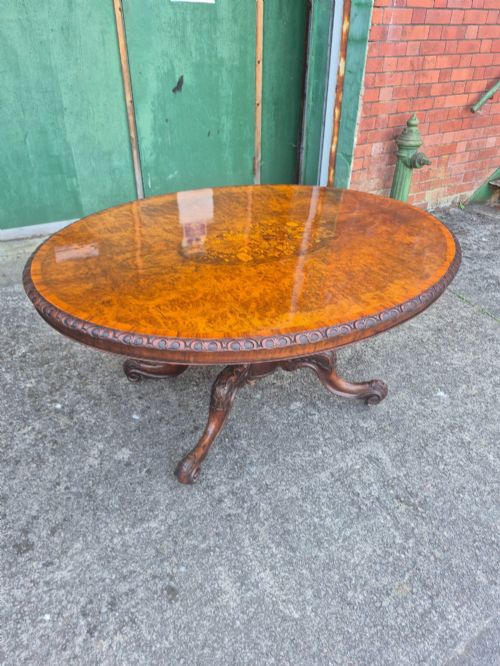
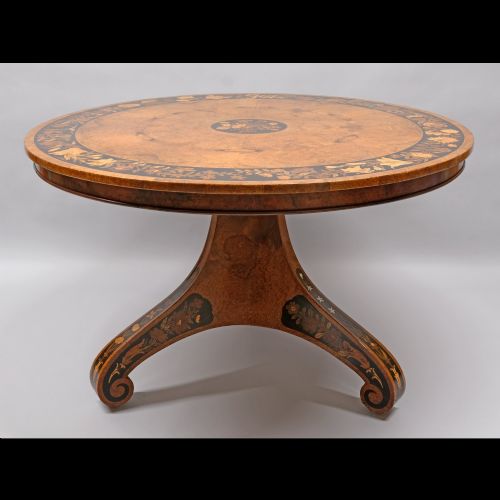
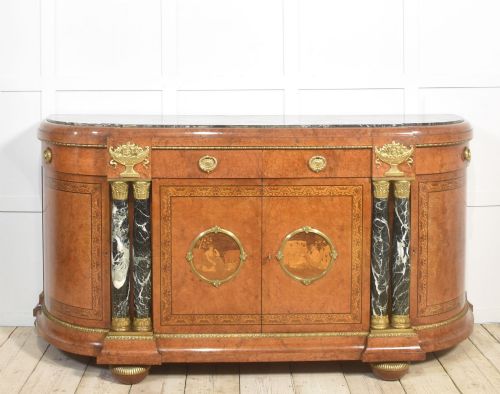
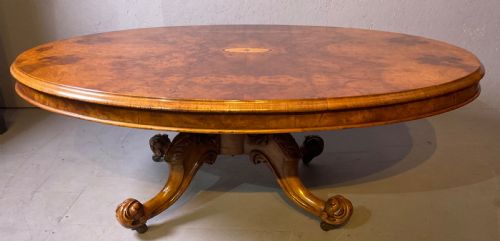
When you search for a marquetry burr walnut top, you encounter tables and desks produced primarily during the Victorian period. These pieces showcase elaborate veneered surfaces set onto centres, games tables, and writing desks.
The most common form on this page is the Victorian centre table or loo table featuring an oval or round top. Makers applied intricate floral marquetry directly into the figured walnut grain to create ornamental surfaces intended for principal reception rooms.
Desks such as davenports and writing tables also appear frequently with these decorative surfaces. These functional items combine fitted interiors with richly patterned timber tops designed to display craftsmanship.
How They Were Made
Cabinet makers selected burr walnut for its swirling grain patterns and applied it as thin veneer over stable secondary timbers. This figured wood formed the background field for complex decorative schemes.
Artisans created floral and geometric motifs using contrasting materials including boxwood and fruitwood inlay. These delicate veneers were hand-cut and fitted precisely into the walnut surface before polishing.
Materials span burr walnut, boxwood, fruitwood inlay, and brass, forming tables, desks, and tea caddies.
What Varies in Quality
The sophistication of the marquetry design determines the distinction between standard production and exceptional examples. Finer pieces display meticulous shading in the inlaid woods and complex botanical arrangements rather than repetitive geometric borders.
The choice and natural figure of the burr walnut veneer also dictate the character of the piece. Dense, highly figured growth patterns combined with precise cabinet construction elevate the standing of the furniture.
Edward Holmes Baldock·Gillows
The Marquetry Burr Walnut Top Glossary
- Marquetry
- Decorative veneer work forming pictures or patterns by fitting together small pieces of wood, shell, or ivory. This technique transforms a plain wooden surface into an ornate picture.
- Burr Walnut
- Timber taken from a tree growth where the grain has swirled into intricate knots and eyes. It provides a highly decorative figured surface favoured by nineteenth-century cabinet makers.
- Davenport
- A small compact writing desk featuring a sloping hinged top above a pedestal of drawers. It gained popularity during the Victorian era for domestic correspondence.
- Loo Table
- A large round or oval nineteenth-century table designed for card games like loo. Many examples feature a tilt-top mechanism allowing the table to stand flat against a wall when not in use.
Marquetry Burr Walnut Top: Frequently Asked Questions
How do I care for a burr walnut top?
Keep these timber surfaces away from direct sunlight and excessive heat sources to prevent the veneer from drying out.
Dust regularly with a soft dry cloth and apply occasional specialist wax polish to maintain the sheen.
What is a tilt-top table used for?
The tilting mechanism allowed large tables to be stored upright against a wall when not in use. This saved valuable floor space in nineteenth-century drawing rooms.
When lowered, the central pedestal lock secured the top firmly for daily activities.
How can I date a Victorian table?
Examine the construction methods, timber choices, and secondary woods used beneath the veneered surfaces. Cabinet making techniques shifted noticeably across the nineteenth century.
Stylistic revivals such as Louis XV influence also provide clues regarding the decade of manufacture.
Where should I place a centre table?
Centre tables are designed to stand free in the middle of a room rather than pushed against a wall. They provide a decorative surface visible from all angles.
Ensure adequate walking space around the piece to appreciate the inlaid top fully.