




Marquetry Bombe Chest
A marquetry bombe chest brings together swelling, curved wooden forms and intricate floral inlay, originating primarily in eighteenth-century Dutch and French workshops.
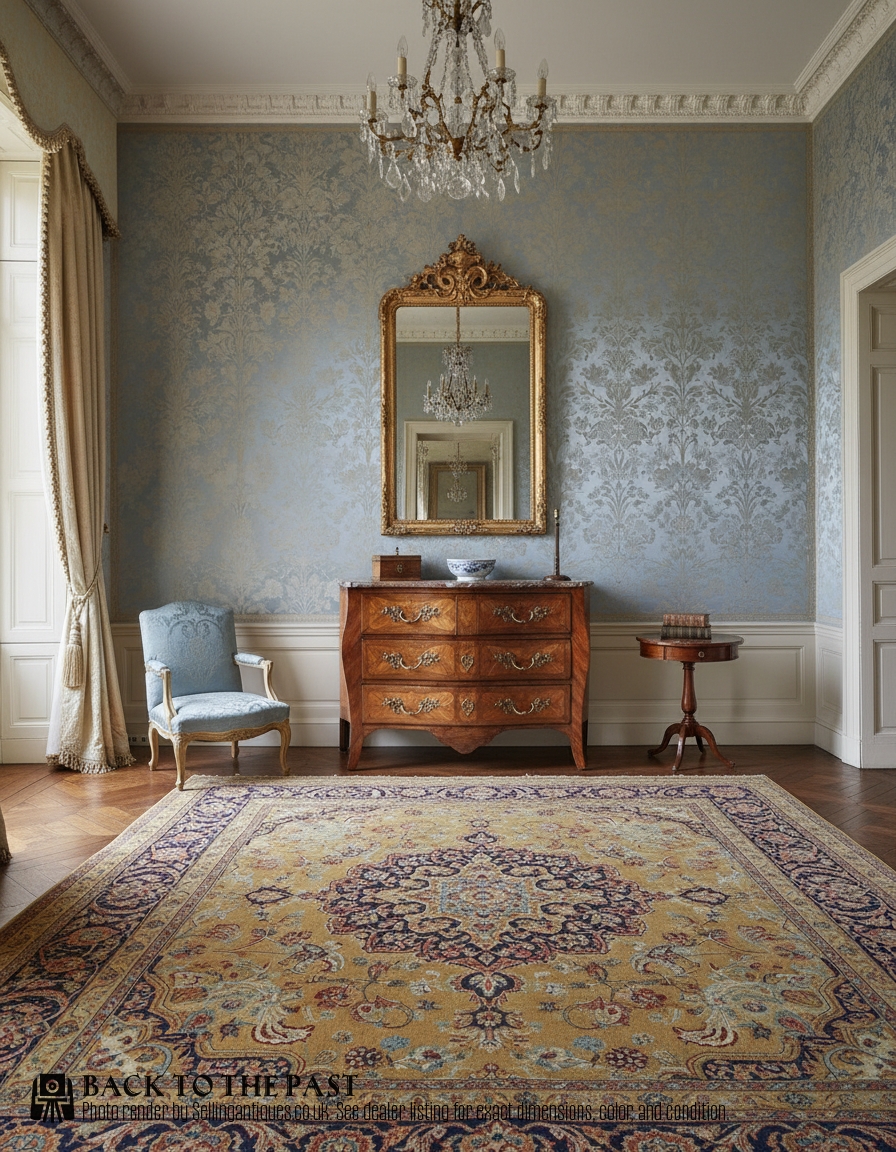
Marquetry Bombe Chest
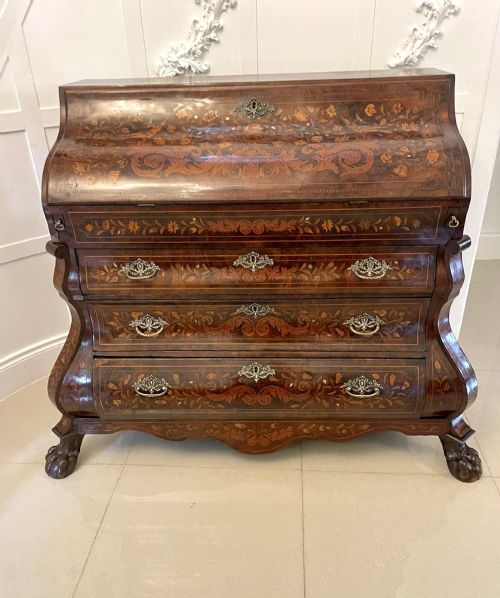
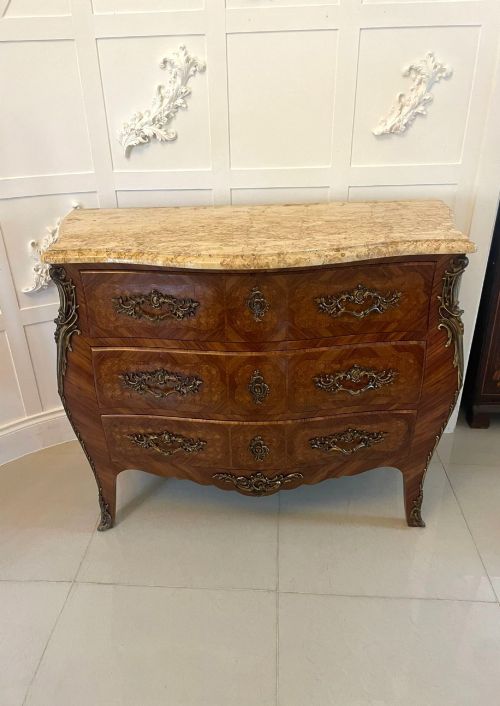
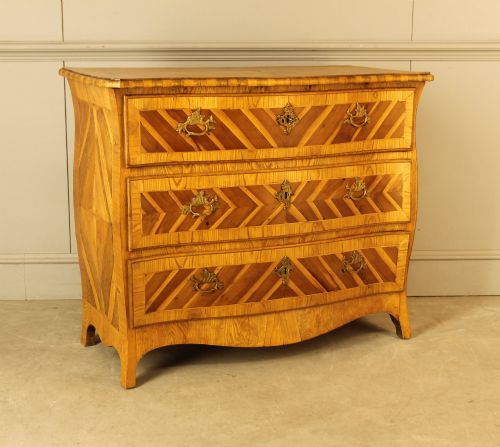
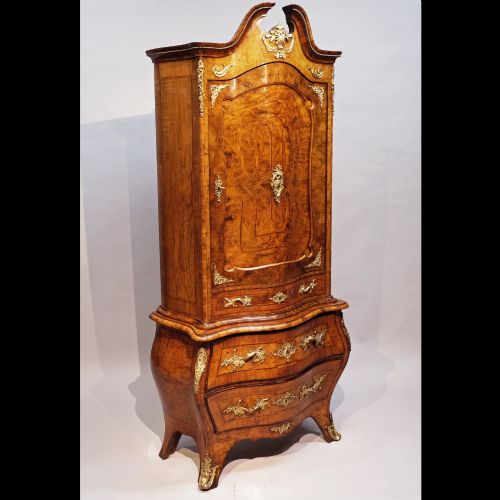
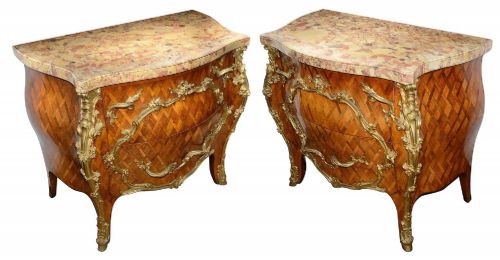
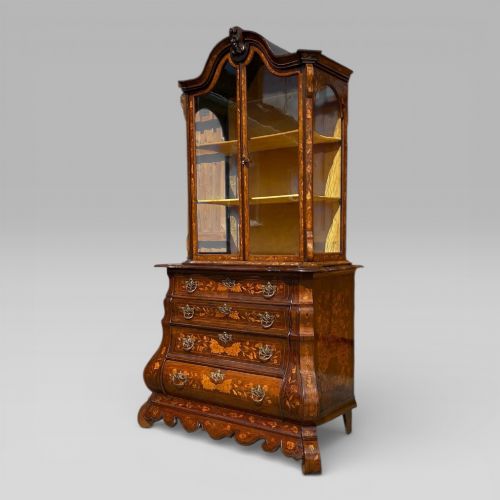
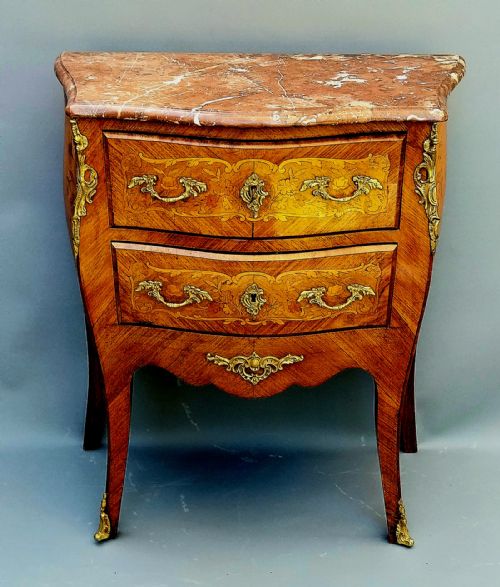
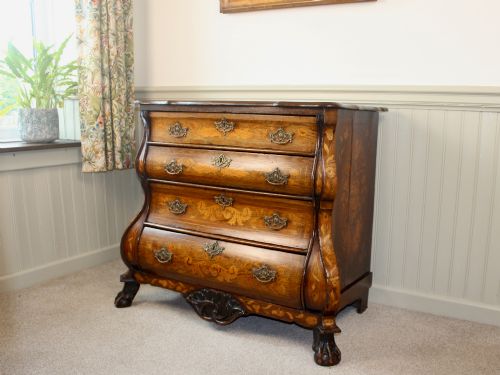
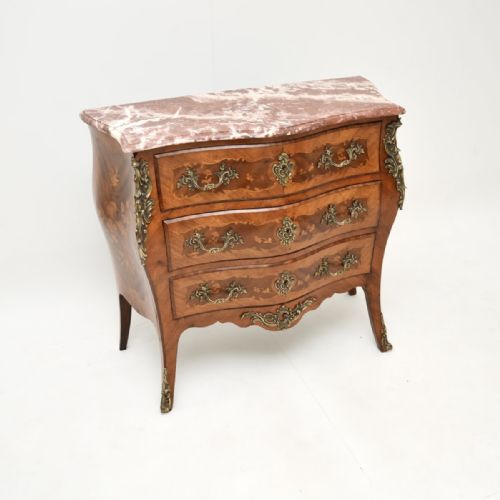
A marquetry bombe chest is a storage piece defined by its distinct bulging, convex silhouette and patterned wood veneer decoration. The form appears primarily as a commode, a chest of drawers, or a bureau, often standing on short, splayed feet.
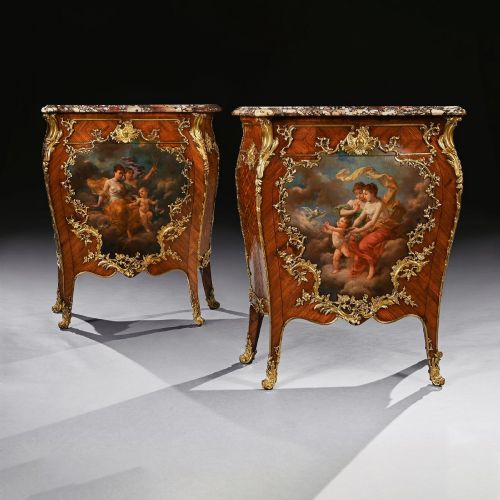
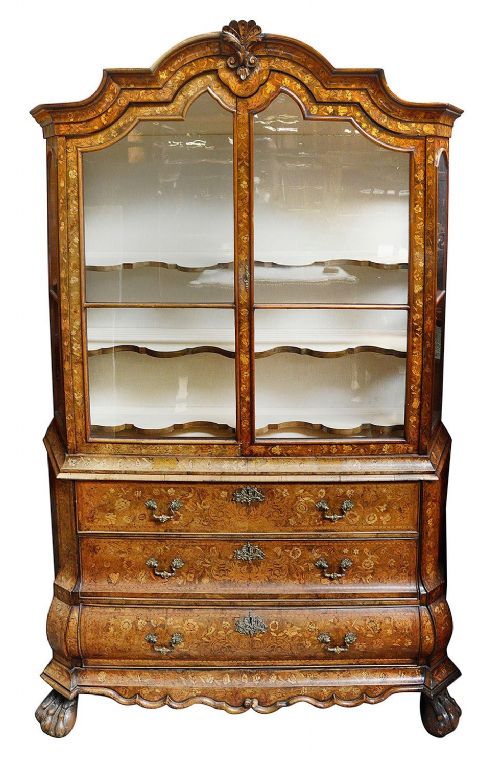
The pieces listed here span the eighteenth, nineteenth, and early twentieth centuries, with a strong representation of Dutch floral marquetry and French commodes. Alongside standard chests, the selection includes bureau bookcases, display cabinets, and smaller bedside tables displaying the characteristic outward-swelling profile.
Originating largely from cabinet-makers working in continental Europe, these pieces served as formal storage in domestic interiors. They combine functional drawer space with elaborate decorative surfaces that reflect Baroque and Rococo tastes.
How They Were Made
The carcase is constructed from solid timbers such as oak or walnut, which are then shaped to form the curved bombe contours. Cabinet-makers applied fine veneers of walnut, kingwood, fruitwood, and burr walnut over this foundational structure.
Inlay is executed using marquetry techniques, where contrasting timbers are cut and fitted into intricate floral or geometric patterns. Cast brass, gilt bronze, and ormolu mounts are frequently added to frame the drawers and protect the vulnerable corners of the swelling carcase.
Several chests hide secret compartments behind their sloping bureau flaps, designed for storing quiet correspondence.
What Varies in Quality
The precision of the marquetry cutting determines the clarity of the floral and pictorial designs, where tighter joints and subtle shading using scorched wood indicate superior craftsmanship. The choice of underlying veneer, such as heavily figured burr walnut or select kingwood, also distinguishes finer examples.
Construction details reveal the standard of the piece, visible in the smoothness of the serpentine drawer movement and the weight and chasing of the ormolu or brass mounts. Additionally, the handling of the bombe curve itself, maintaining symmetry and proportion across the swelling sides, separates master workshop production from simpler output.
Edwards & Roberts
The Marquetry Bombe Chest Glossary
- Bombe
- A French term describing furniture with an outward-swelling, bulging front and sides. This three-dimensional curved profile requires advanced woodworking techniques to construct.
- Marquetry
- A decorative technique where thin slices of various coloured woods are fitted together to form pictorial or floral patterns. These veneers are then glued onto the furniture carcase.
- Commode
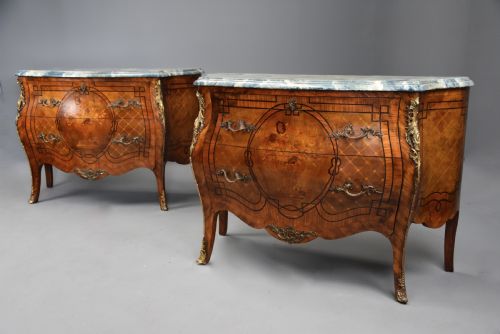
- A low French chest of drawers standing on legs, popular during the eighteenth century and revived in later periods. They frequently feature marble tops and gilt bronze mounts.
- Ormolu
- Gilded bronze used for decorative mounts, handles, and feet on high-status furniture. The metal is cast and chased before being coated in gold leaf or mercury gilding.
- Bureau
- A desk featuring a sloping writing flap that opens to reveal internal small drawers and pigeonholes. Many examples incorporate the swelling bombe shape below the writing surface.
Marquetry Bombe Chest: Frequently Asked Questions
What is a bombe chest?
A bombe chest is a storage unit featuring convex, swelling sides and front profiles that curve outward. This sculptural form developed during the eighteenth century in continental Europe.
Cabinet-makers utilised this shape to create visually striking furniture pieces that combined large storage capacity with elaborate veneer work.
Are these chests French or Dutch?
The selection includes both French and Dutch pieces, each displaying distinct regional design characteristics. French examples often favour kingwood veneers, marble tops, and gilt bronze mounts in the Rococo style.
Dutch versions lean towards walnut timbers covered extensively in floral marquetry with characteristic bombé shaping. Both traditions emerged strongly during the eighteenth century and saw revivals in the nineteenth and twentieth centuries.
How do I care for a marble top?
Marble tops require gentle cleaning using a soft cloth and warm water without harsh chemical cleaners. Avoid placing acidic substances directly onto the stone to prevent surface etching.
These heavy stone slabs rest upon the wooden carcase and should be lifted carefully if separation is required for transport or maintenance.