



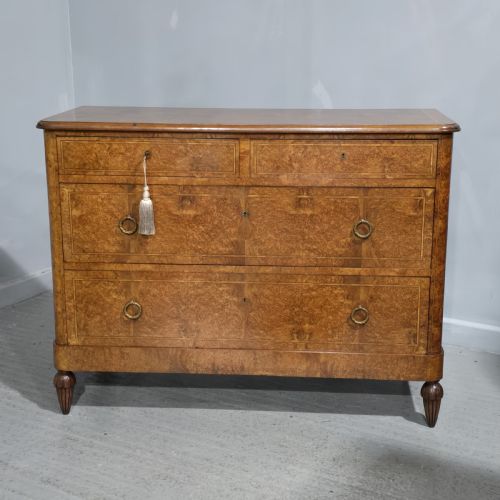
Marquetry Bedroom Furniture
Marquetry bedroom furniture brings together patterned wood veneers and fitted domestic storage from across the eighteenth, nineteenth and twentieth centuries.
Marquetry Bedroom Furniture
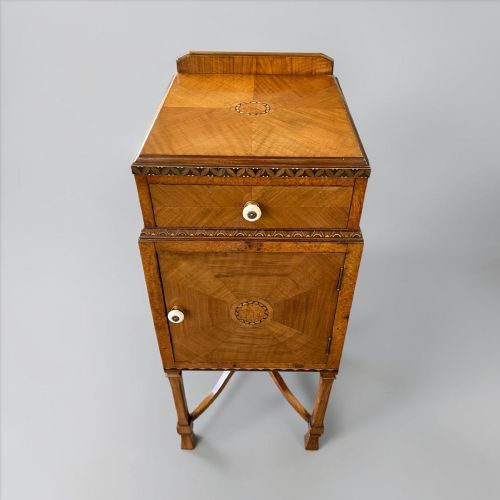
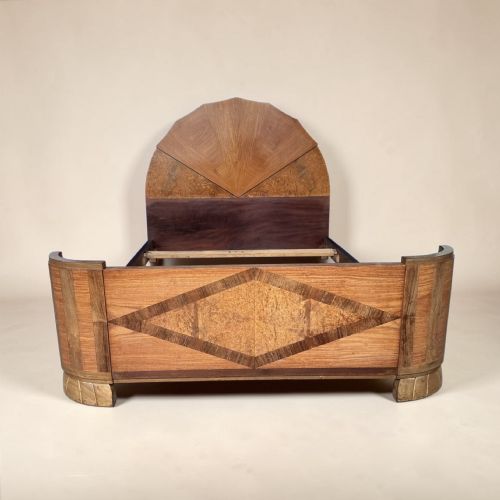
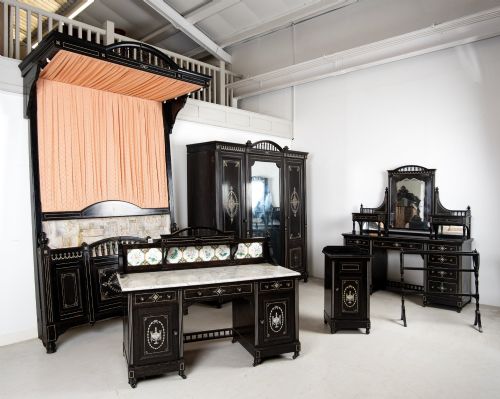
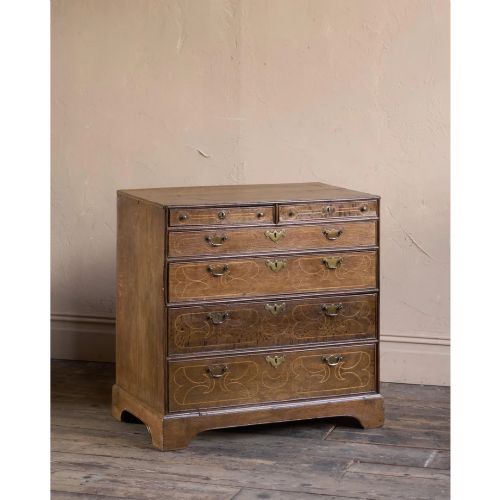
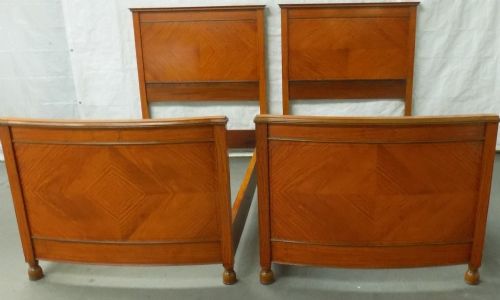
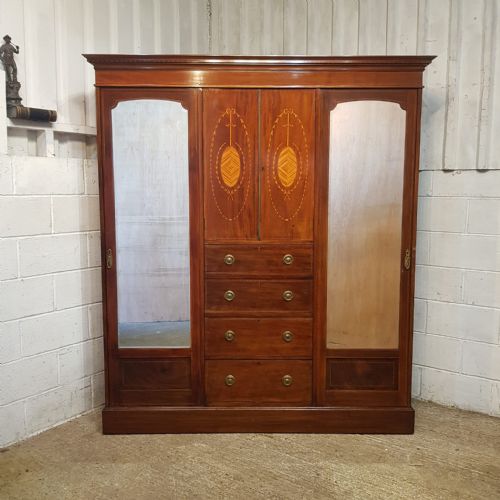
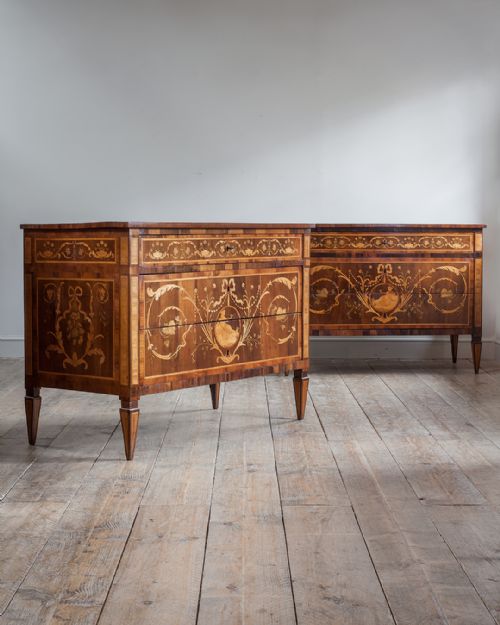
Marquetry bedroom furniture consists of wardrobes, chests of drawers, dressing tables and beds decorated with cut wood veneers arranged in pictorial or geometric patterns. These pieces span eighteenth-century walnut commodes, Victorian satinwood dressing tables and Art Deco bedroom suites.
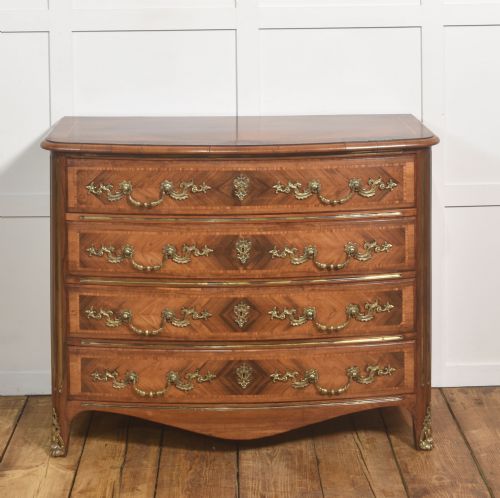
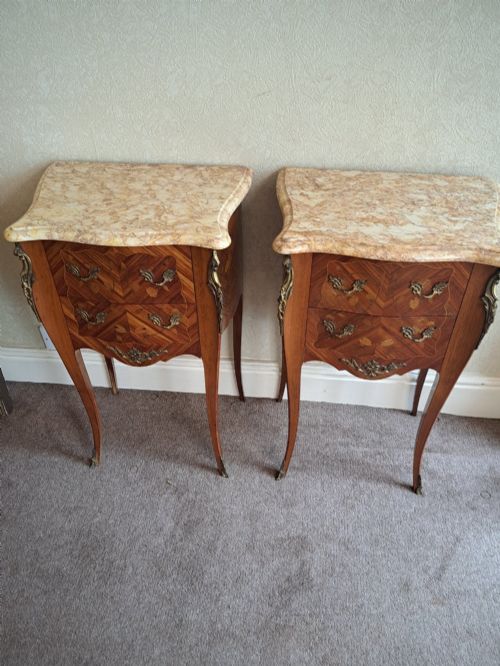
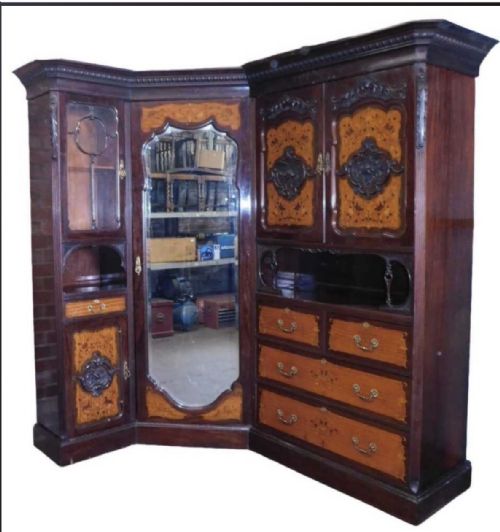
Buyers meet varied forms on this page, ranging from single bedside tables and compactum wardrobes to complete multi-piece bedroom suites. Continental commodes with marble tops and French Louis-style pieces appear alongside English mahogany and satinwood chests.
How they were made
Craftsmen built these items using structural timbers like mahogany, oak and walnut, applying fine surface veneers of satinwood, kingwood, tulipwood and burr walnut. Brass mounts, marble slabs and glass components complete the construction of specific commodes and cabinets.
The decorative surfaces rely on precision cutting of contrasting wood veneers, assembling floral or geometric motifs before gluing them to the carcass. Inlayers then polished and finished the timber to highlight the natural grain and colour variations.
Listings include eighteenth, nineteenth and twentieth-century pieces, spanning walnut, mahogany, satinwood, kingwood and burr walnut.
What varies in quality
The standard of marquetry bedroom furniture depends upon the precision of the veneer work and the choice of underlying timber. Superior examples display intricate, tightly fitted wood patterns without gaps, using rich timbers like kingwood and satinwood.
Construction details separate standard pieces from finer ones, including secondary wood selection, dovetail joints in drawer construction and original marble tops. Maker attribution and matching suite components elevate specific wardrobes and commodes.
Holland & Sons·Edwards & Roberts·Gillows·B Cohen & Sons
The Marquetry Bedroom Furniture Glossary
- Marquetry
- Decorative veneer work forming pictures or geometric designs by fitting together pieces of wood, shell or ivory. This technique defines the surface ornamentation on panels and drawer fronts.
- Commode
- A low chest of drawers, often with a decorative top and French stylistic influences. These pieces frequently feature marble surfaces and curved serpentine fronts.
- Compactum
- A large, compartmentalised wardrobe designed to hold multiple types of clothing in an organised manner. Victorian versions often combine hanging space with internal drawers and shelves.
- Poudreuse
- A French dressing table equipped with folding lids and internal compartments for cosmetics and mirrors. Eighteenth and nineteenth-century examples often use tulipwood and satinwood veneers.
- Bedsstead
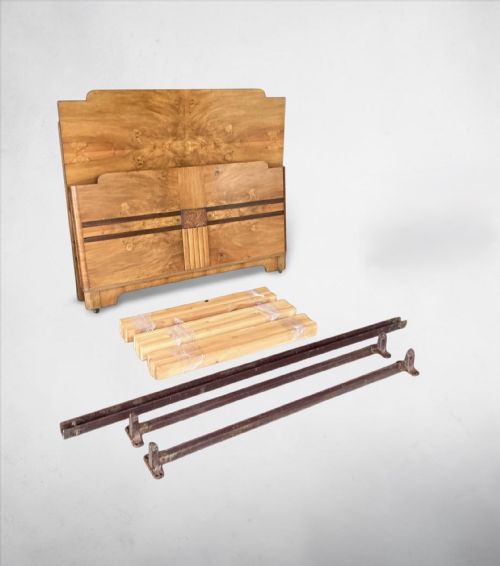
- The structural framework of a bed, excluding the mattress and bedding. Examples on this page range from brass and walnut frames to upholstered Art Deco designs.
Marquetry Bedroom Furniture: Frequently Asked Questions
How do I clean marquetry furniture?
Dust surfaces regularly with a soft, dry cloth to prevent dirt accumulation in the veneer joints. Avoid excessive moisture and harsh chemical polishes that can damage the old polish and lift the fine wood inlay.
Apply a traditional beeswax polish sparingly when the wood appears dry, buffing gently to maintain a natural sheen. Protect tabletops from direct heat and damp objects using coasters and mats.
Are these pieces suitable for daily use?
Most wardrobes, chests of drawers and bedside tables function well for everyday modern storage. Drawers slide on traditional wooden runners, and wardrobes provide sturdy hanging space.
Care must be taken with antique veneers and polished surfaces to prevent scratches and chips. Placing pieces away from direct sunlight and radiators prevents the wood from drying out and cracking.
How do I identify a Victorian piece?
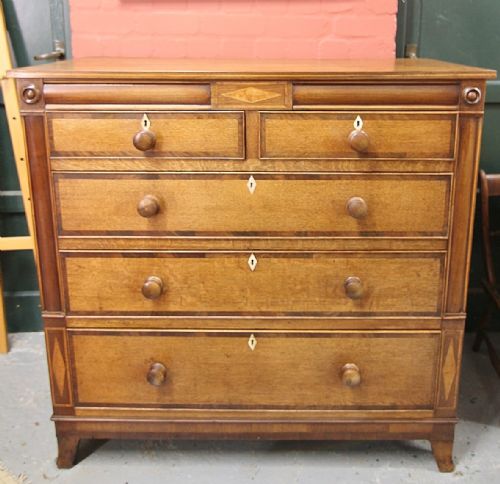
Victorian items often utilise dense timbers like walnut and mahogany, frequently enhanced by satinwood inlay or ebonised finishes. Common forms include Wellington chests, kneehole dressing tables and breakfront wardrobes.
Construction indicators include hand-cut dovetails on drawer interiors and secondary woods such as pine or oak. Maker stamps or labels inside drawers occasionally confirm the period and origin.
What is a French commode?
A French commode is a decorative chest of drawers, often featuring serpentine or bow fronts and mounted marble tops. Eighteenth and nineteenth-century versions frequently employ kingwood, tulipwood or marquetry designs.
These pieces typically stand on cabriole legs and serve as prominent focal points in bedrooms or living spaces. Their construction prioritises decorative impact alongside practical drawer storage.