




Marquetried Walnut Buffet
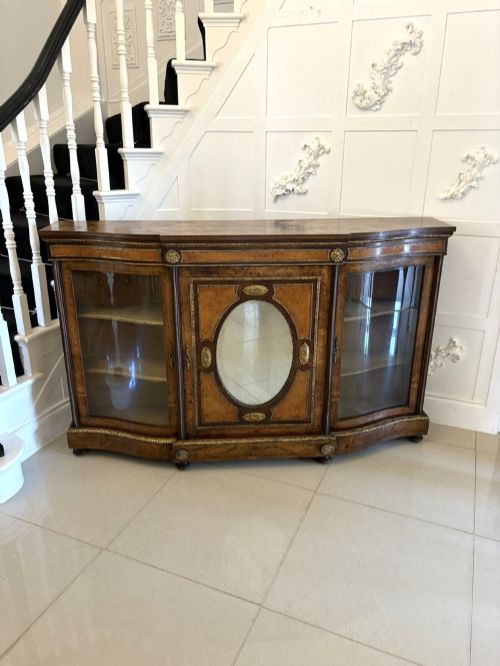
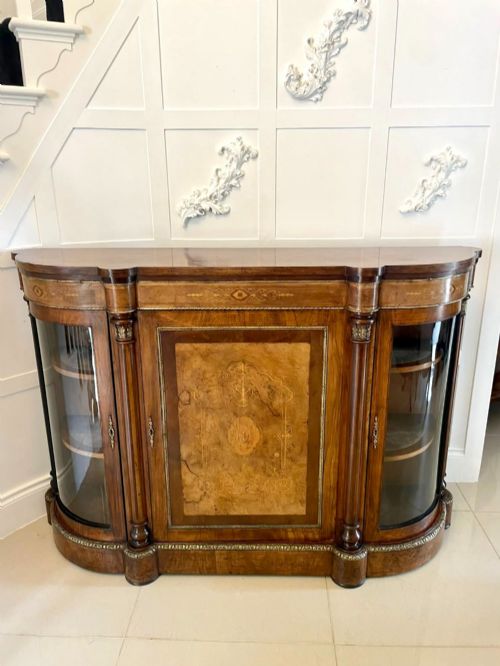
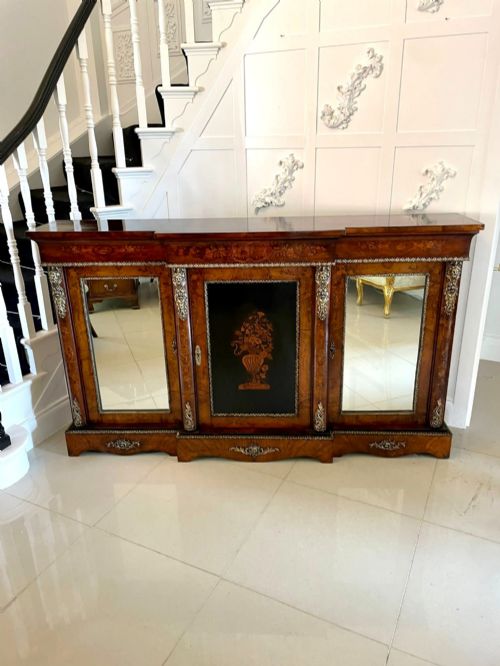
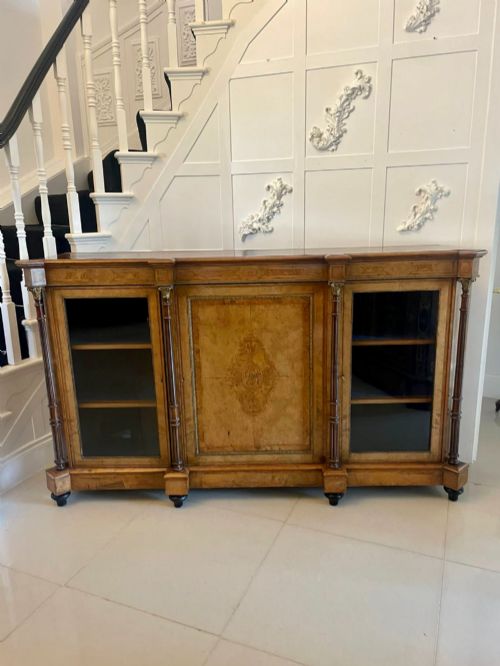
A marquetried walnut buffet brings together rich timbers and intricate inlay, offering both functional storage and striking decorative presence.
Marquetried Walnut Buffet
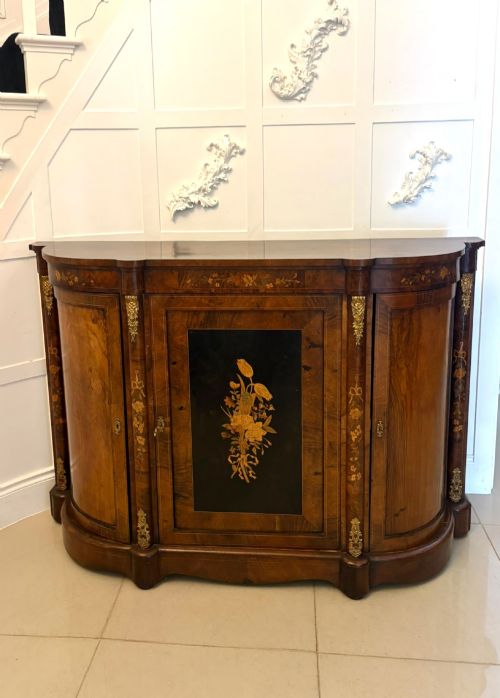
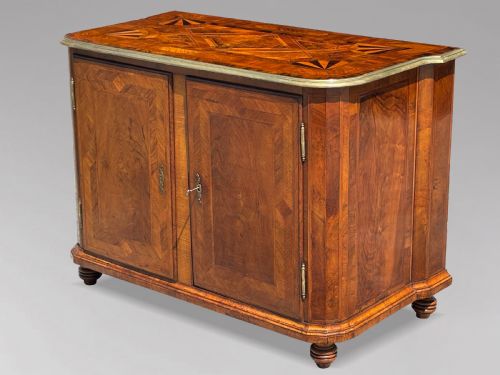
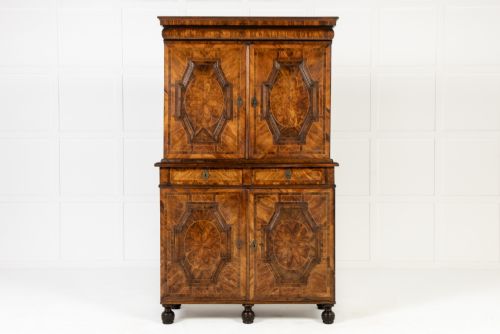
When searching for a marquetried walnut buffet, buyers encounter a variety of related forms including credenzas, sideboards, cabinets, and side cabinets spanning several centuries. The most common examples on this page are Victorian pieces, particularly credenzas and sideboards dating from the mid to late nineteenth century.
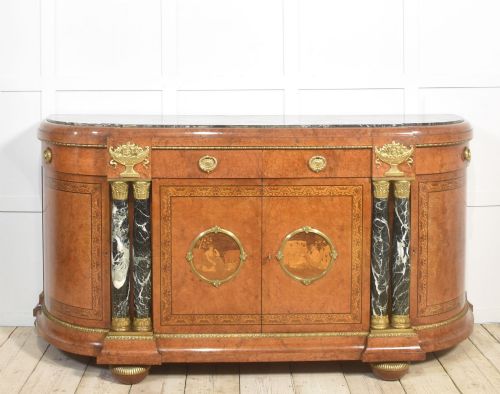
These items emerge from periods such as the Victorian era, the eighteenth century, and the early twentieth century, reflecting stylistic influences ranging from French Rococo Revival and Louis XV to Baroque and Spanish Renaissance Revival.
Makers and workshops across England, France, Spain, and Malta produced these pieces to serve as prominent storage and display furniture in formal reception rooms and dining spaces.
Distinctions in craftsmanship and design
The sophistication of the marquetry and inlay work dictates much of the distinction between standard production and exceptional examples, with finer pieces exhibiting tightly controlled botanical or scroll motifs. The choice of timber grain, particularly highly figured burr walnut veneers selected for symmetry, elevates the visual depth of the facade.
Mount quality and secondary materials further define the tier of the piece, where heavy, finely chased ormolu mounts and thick, well-figured marble slabs indicate high workshop standards. Structural integration, such as serpentine shaping of the timber carcass and precise door alignment, separates accomplished cabinet making from simpler output.
Listings demonstrate a strong prevalence of Victorian burr walnut credenzas incorporating floral marquetry and ormolu mounts.
Gillow·James Plunckett Art Furniture Makers·Gordovil Spain
The Marquetried Walnut Buffet Glossary
- Marquetry
- Decorative patterns created by fitting thin pieces of wood veneer and other materials onto a structural surface. This technique produces detailed pictorial or symmetrical ornamentation.
- Burr walnut
- Timber harvested from growth deformations on walnut trees, yielding highly swirled and mottled grain patterns. Cabinet makers prize this wood for its decorative veneer potential.
- Ormolu
- Gilded bronze or brass mounts applied to furniture for decorative accent. Workshops cast and chase these metal elements to frame doors and corners.
- Credenza
- A formal cabinet or sideboard originating in Italy and developed during the nineteenth century for display and storage. These pieces frequently feature central cupboards flanked by curved glass doors.
Marquetried Walnut Buffet: Frequently Asked Questions
What is a marquetried walnut buffet used for?
These pieces served historically in formal dining rooms and drawing rooms to store table linen, silver, or porcelain while providing a surface for display.
Today, they function as substantial storage credenzas or sideboards in living spaces, holding everyday items while anchoring the room's decorative scheme.
How do I identify a Victorian walnut credenza?
Victorian walnut credenzas typically date from the mid to late nineteenth century and feature rich burr walnut veneers combined with intricate boxwood inlay. Many incorporate curved glass doors, mirrored backs, and gilt ormolu mounts reflecting French revival styles.
Proportions are generally robust, and interior fittings often include adjustable wooden shelving lined for storage.
How should I care for antique walnut furniture?
Keep walnut furniture away from direct sunlight and strong heat sources to prevent the timber veneers and inlay from drying out or splitting. Maintaining stable room humidity preserves the stability of the wood and the security of the marquetry.
Clean surfaces gently with a soft, dry cloth and avoid harsh chemical polishes that can damage the historical finish.
What distinguishes French revival styles in these pieces?
French revival pieces draw inspiration from Louis XV and Rococo design, featuring serpentine fronts, sweeping curves, and elaborate floral marquetry. Ormolu mounts are frequently heavier and more sculptural on these examples.
In contrast, standard Victorian production often relies on more restrained architectural lines while retaining rich walnut grain and boxwood details.