



Maritime Travelling Chest
A maritime travelling chest is a robust portable container built for journeys at sea and service overseas.
Maritime Travelling Chest
A maritime travelling chest is a robust portable container built for journeys at sea and service overseas. The pieces found here span the nineteenth century, the Victorian era, nineteen hundred, and the Edwardian period. Buyers encounter forms identified as trunks and chests, storage trunks, chests and coffers, and blanket boxes.
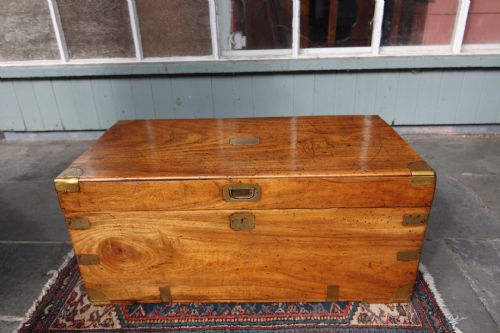
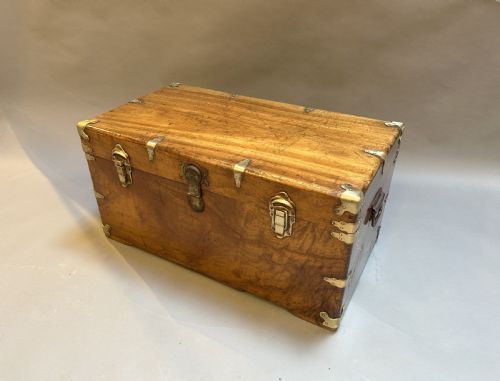
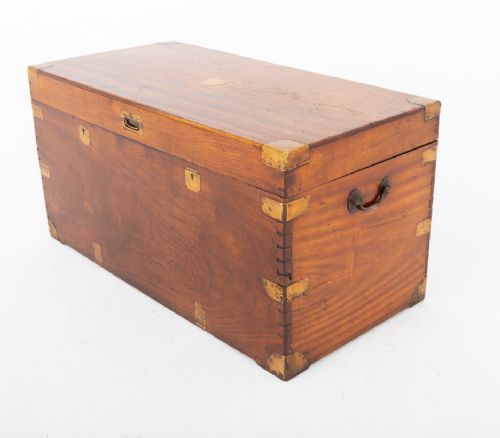
Camphorwood dominates the selection alongside pine, teakwood, and steel. These are reinforced with brass and iron mounts, reflecting styles such as military campaign, colonial campaign, and Victorian maritime. Some examples hail from the China Trade or bear associations with the Cunard Line, while others function as transport packing cases.
How they were made
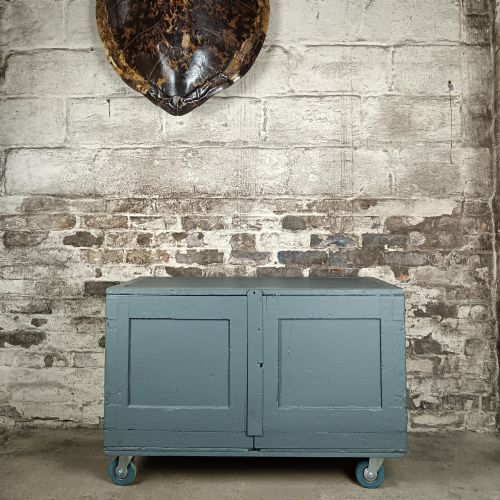
Makers constructed these chests primarily from resilient timbers such as camphorwood, teakwood, and pine. Camphorwood provided a naturally fragrant interior that deterred insects during long voyages across the empire. Pine served for painted travel trunks and simpler storage coffers.
Metal reinforcement was essential for structural integrity under harsh travel conditions. Workers applied brass and iron bindings, corners, and straps to protect the edges and joints. Steel and paper also appear in specific iterations, such as shipping line trunks.
Maritime Travelling Chest Retail Price Guide 2026
Typical asking prices for maritime travelling chest among the pieces listed under this phrase on Sellingantiques today, from the lower quarter to the upper quarter. They describe what is for sale here now, not the wider market.
Materials recorded across the selection include camphorwood, brass, iron, pine, teakwood, steel, paint, and paper.
What varies in quality
Quality rests upon the selection of timber and the precision of the metal hardware. Heavy brass binding and well-fitted corner plates indicate a higher grade meant for rigorous military or maritime service. Finer examples display carefully joined camphorwood boards and retained keys.
The distinction also lies in the provenance and specialised function, such as China Trade production or designated transport packing cases. Plain pine painted boxes sit at a different tier from brass-bound campaign pieces built for officers on active duty.
The Maritime Travelling Chest Glossary
- Camphorwood
- A dense, aromatic timber prized for maritime furniture. Its natural oils repel moths and wood-boring insects.
- Brass bound
- A construction method utilising brass strips and corners to protect wooden chests from heavy impacts during travel. This hardware adds both strength and decorative contrast.
- Coffer
- A large deep box used for storage, often predating standard trunk designs. These pieces served domestic and travel purposes alike.
Maritime Travelling Chest: Frequently Asked Questions
What is a maritime travelling chest?
A maritime travelling chest is a sturdy wooden container constructed for transporting belongings across oceans and during military campaigns. These pieces were built to withstand rough handling aboard ships and in transit.
They utilise durable timbers like camphorwood and teak, frequently fitted with brass or iron hardware for extra reinforcement.
How were these chests used?
These chests served officers, travellers, and sailors as secure storage for uniforms, documents, and personal effects during long sea voyages. Their robust construction ensured contents remained protected from moisture and impact.
Many doubled as blanket boxes or furniture inside quarters once the journey reached its destination.
What woods are common in these chests?
Camphorwood is the predominant timber found in these pieces, valued for its insect-repellent properties and pleasant aroma. Teakwood and pine also appear frequently across the inventory.
Pine is typically found on painted travel trunks, whereas camphorwood and teak form the core of campaign and military styles.
How do I date a campaign chest?
Dating relies upon stylistic markers, construction methods, and materials associated with specific periods like the Victorian era or Edwardian times. Nineteenth-century examples often feature heavy brass bindings and distinct dovetailing.
Reference to specific transport lines, such as the Cunard Line, or origin points like the China Trade further help establish the era.