


Maritime Storage Trunk
A maritime storage trunk is a rugged wooden chest built for travel at sea, offering robust storage with enduring historical character.
Maritime Storage Trunk
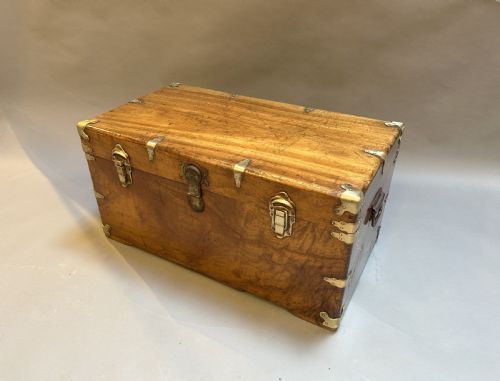
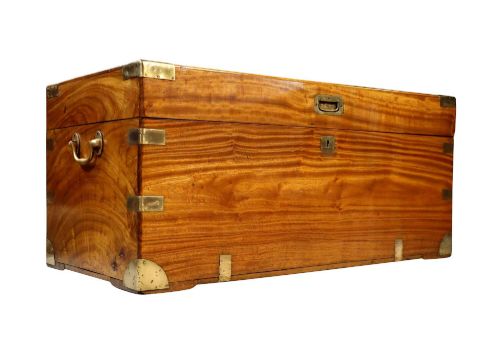
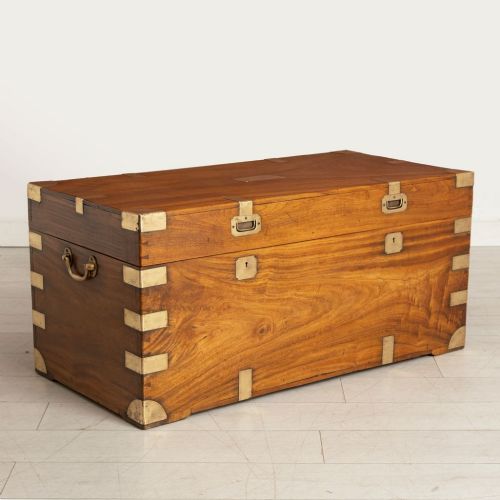
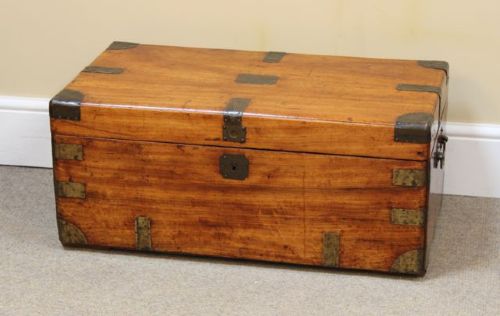
A maritime storage trunk serves as a sturdy receptacle designed to protect belongings during long journeys across the ocean. These pieces appear frequently in styles such as Victorian campaign, military campaign, and Anglo-Indian.
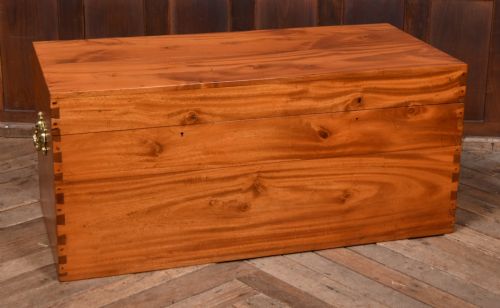
The inventory on this page consists largely of nineteenth-century examples alongside vintage pieces from the early twentieth century. Common forms include camphor wood chests, teak merchants trunks, and painted pine seaman chests.
Originating from maritime trade, colonial travel, and naval service, these trunks reflect practical utility combined with robust craftsmanship. Buyers select them to bring authentic nautical history and substantial storage into modern interiors.
Materials and construction
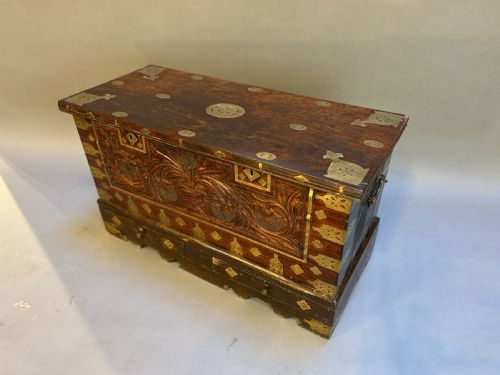
Makers utilised durable timbers including camphor wood, teak, padouk, hardwood, and pine to withstand harsh sea conditions and prevent warping. Camphor wood offered the additional benefit of repelling insects from stored textiles.
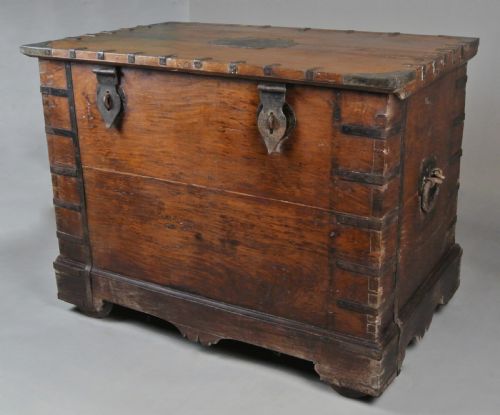
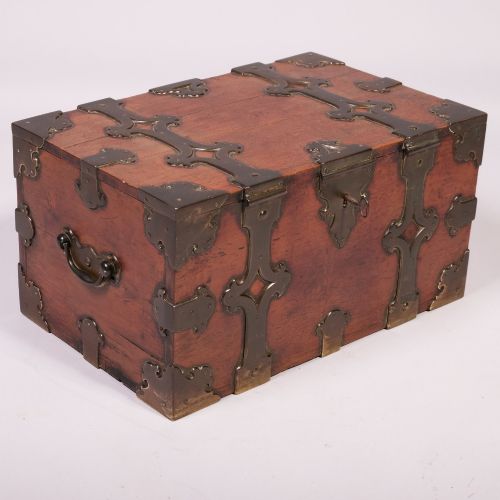
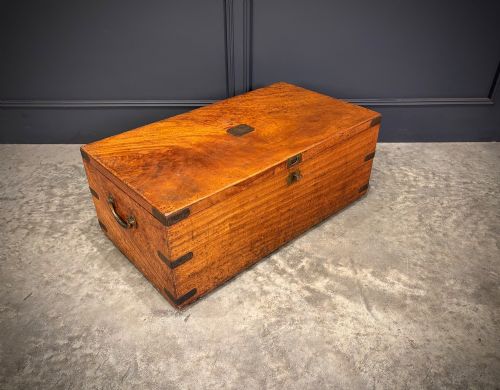
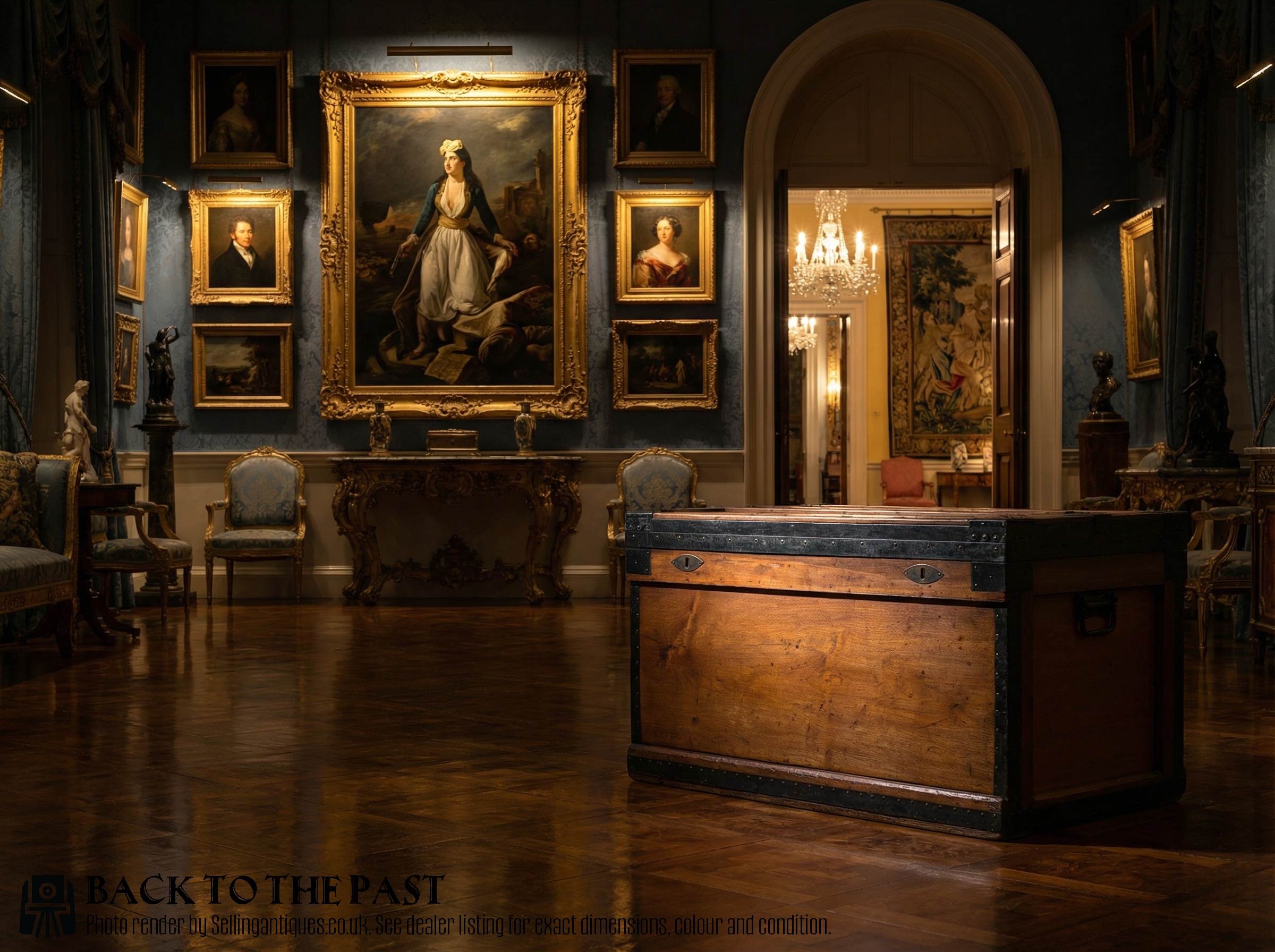
Corner brackets, straps, and decorative studwork in brass and iron reinforce the structural joints of the trunk. These metal fittings provide impact resistance during transport while securing the heavy wooden panels.
Rope handles and iron hardware facilitate lifting and lashing the trunks down on deck or inside a ship's hold. Joinery techniques prioritize resilience against moisture and constant movement.
Maritime Storage Trunk Retail Price Guide 2026
Typical asking prices for maritime storage trunk among the pieces listed under this phrase on Sellingantiques today, from the lower quarter to the upper quarter. They describe what is for sale here now, not the wider market.
The selection here spans the Georgian era through the Victorian period and into the 1930s, featuring camphor wood, teak, pine, and brass.
Assessing quality
The calibre of a trunk rests upon the density of its timber and the integrity of its original brass or iron mounts. Superior examples retain all their structural hardware, flush-fitting handles, and functional locks.
Subtleties in hand-cut dovetail joints and decorative brass studwork distinguish workshop production from standard utility items. Pieces retaining original paintwork or rich surface patination hold greater character.
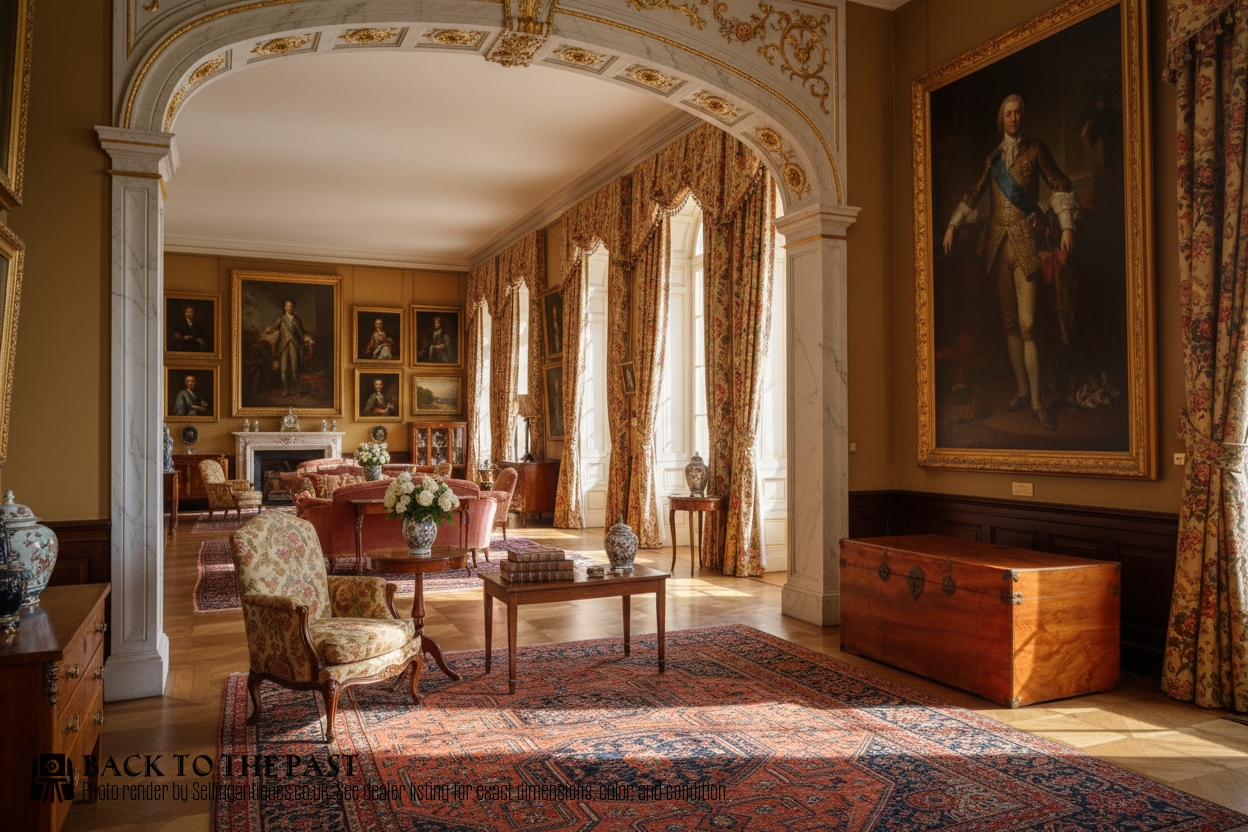
The Maritime Storage Trunk Glossary
- Campaign trunk
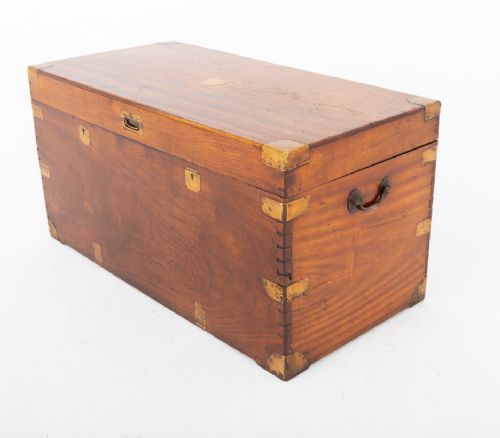
- A collapsible or easily transportable chest made for military officers or travellers on the move. These incorporate recessed brass handles and reinforced corners.
- Camphor wood
- An aromatic hardwood native to Asia, prized for its distinct scent and natural insect-repellent properties. It forms the primary material for many colonial and maritime chests.
- Zanzibar chest
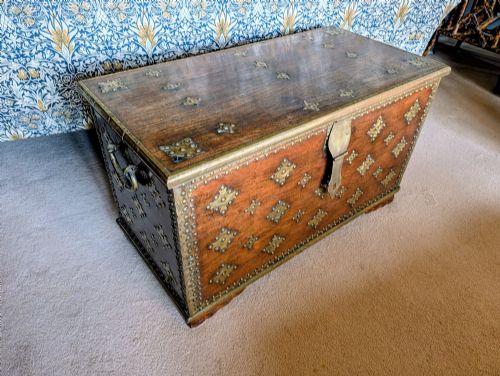
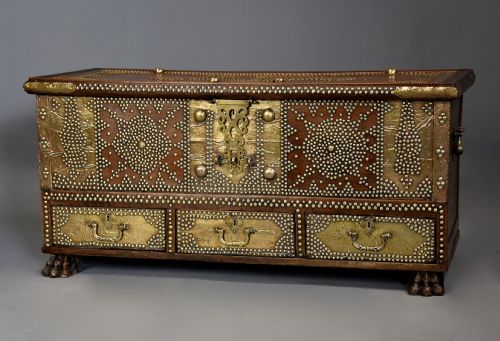
- An ornate merchant chest decorated with brass studwork, intricate strapwork, and central lock plates. These reflect trade routes linking India, the Middle East, and East Africa.
- Seaman chest
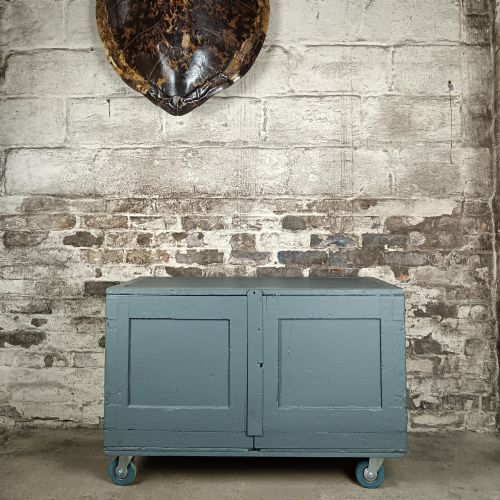
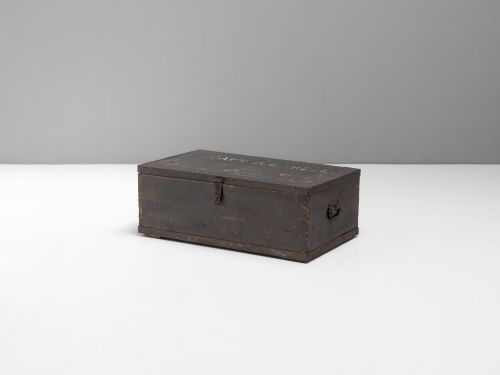
- A utilitarian wooden box built for individual sailors to store personal belongings aboard ship. They often feature painted decoration, rope beckets, and durable pine construction.
- Teak
- A dense, oily tropical hardwood highly resistant to moisture and decay. It serves as a primary material for heavy-duty marine furniture.
Maritime Storage Trunk: Frequently Asked Questions
What were maritime storage trunks used for?
Sailors, soldiers, and merchants utilised these sturdy chests to transport clothing, navigational instruments, and personal valuables during long sea voyages. The heavy construction protected contents from crashing waves and rough handling in cargo holds.
Over time, these trunks transitioned from utilitarian travel gear to practical domestic storage. Households deployed them at the foot of beds or in hallways to house blankets, linens, and seasonal garments.
How do I identify a camphor wood trunk?
Camphor wood emits a distinct, clean, medicinal aroma that remains detectable decades after manufacture. The timber displays a warm golden-brown tone with varied grain patterns.
These trunks often exhibit heavy brass bound corners and recessed carrying handles suited for military or colonial transport. The natural oil content of the wood helps keep the interior free from dampness and pests.
Where should I place a trunk in my home?
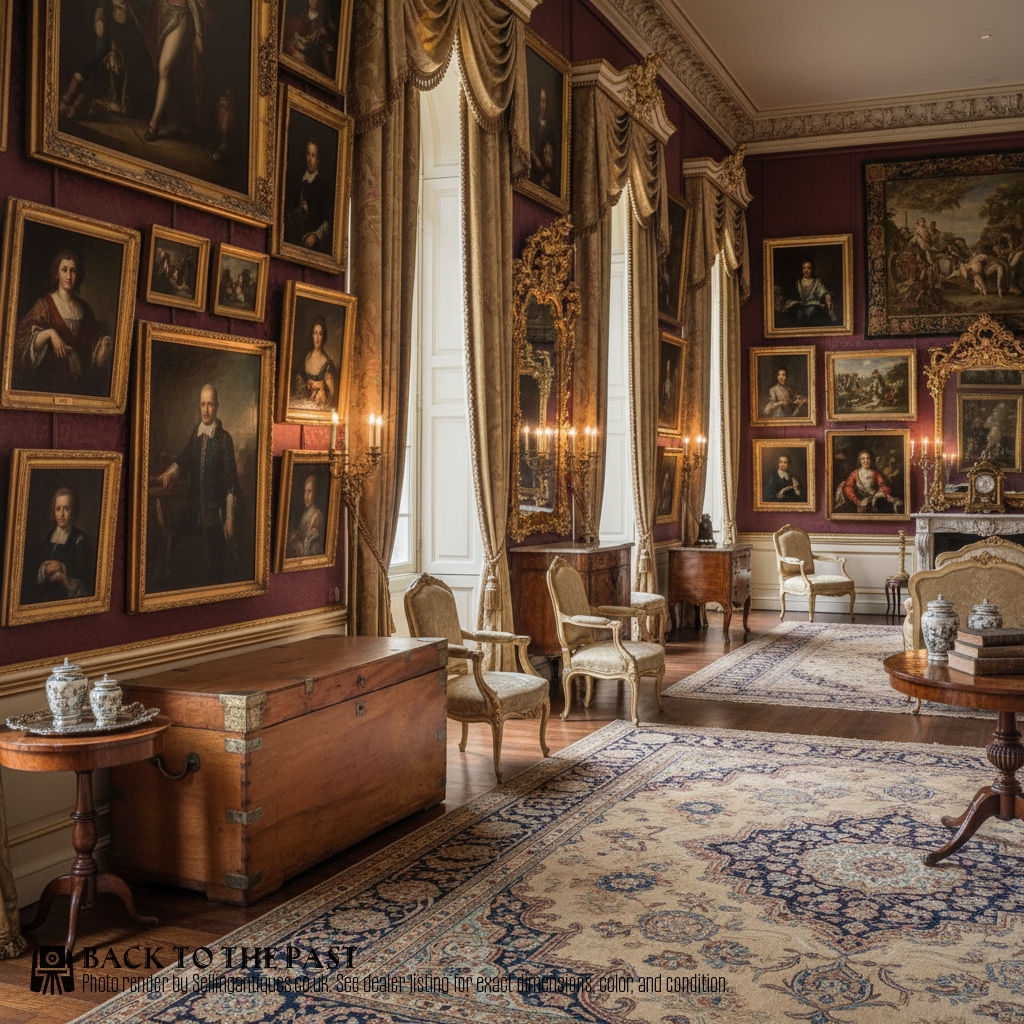
These chests function effectively as coffee tables in a living room, providing a flat surface alongside hidden storage within. Their robust tops support books, lamps, and decorative objects with ease.
In a bedroom, positioning a trunk at the base of a bed offers convenient access to extra bedding and pillows. The substantial timber presence anchors room decor while serving a daily functional purpose.
How do I care for antique wood and brass?
Maintain the timber by applying a microcrystalline wax periodically to nourish the surface without attracting dust. Avoid placing the trunk near direct heat sources or in strong sunlight to prevent timber splitting.
Clean brass fittings gently with a soft dry cloth to preserve their aged appearance. Avoid harsh chemical polishes that strip away the historical patina accumulated over generations.