

Maritime River Artwork
Maritime river artwork captures the enduring industrial and pastoral life along commercial waterways through Victorian oils and twentieth-century watercolours.
Maritime River Artwork
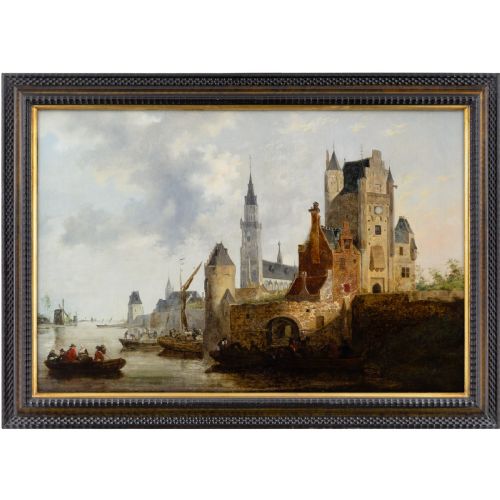
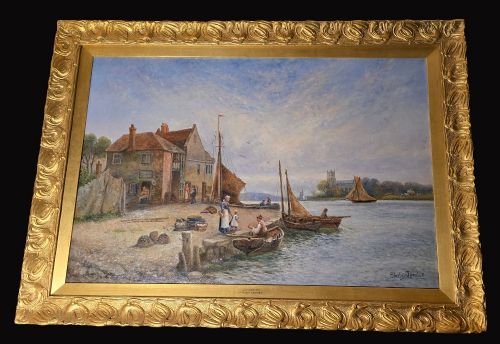
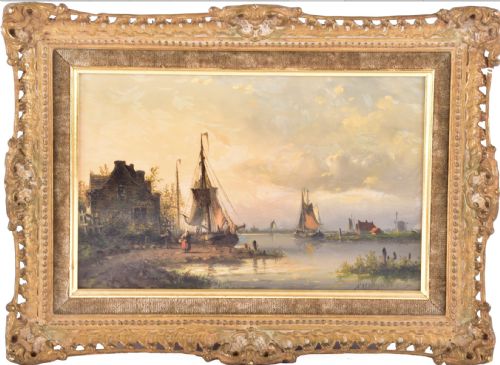
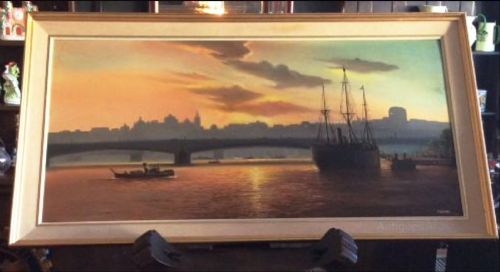
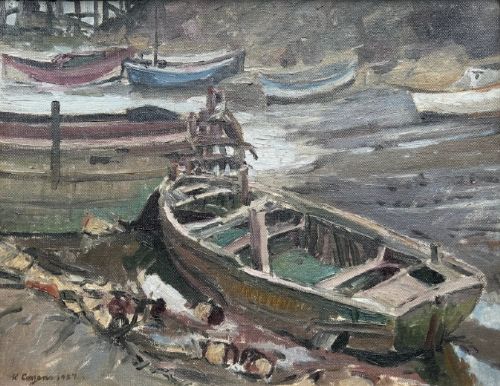
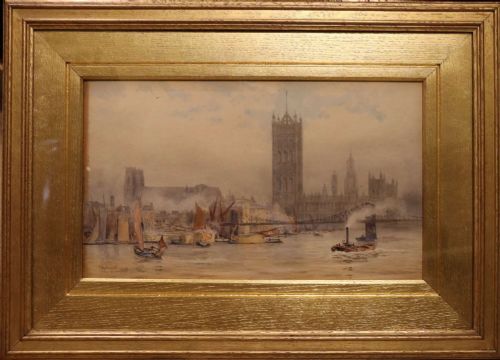
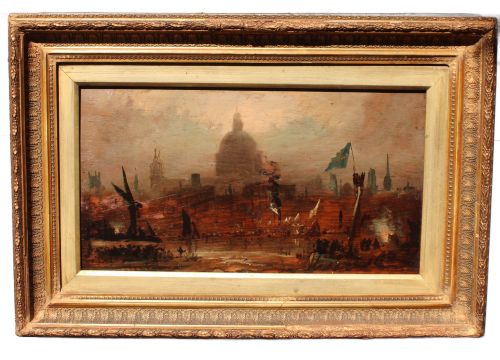
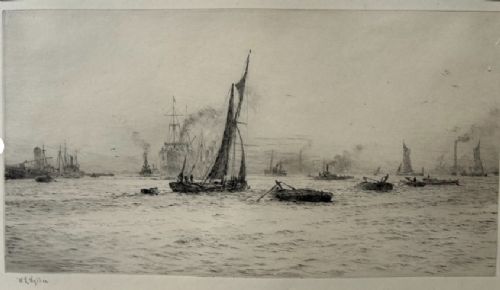
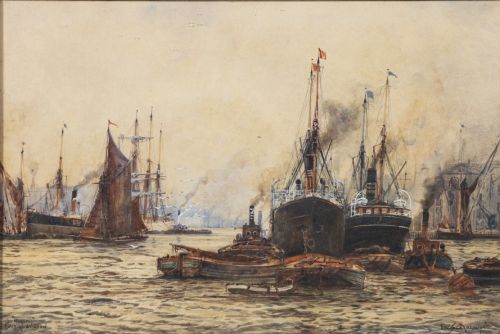
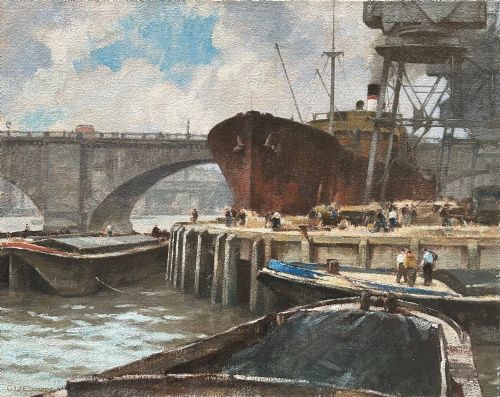
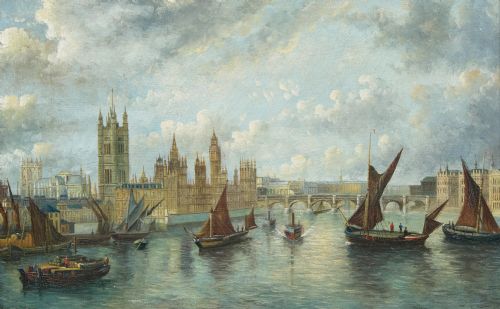
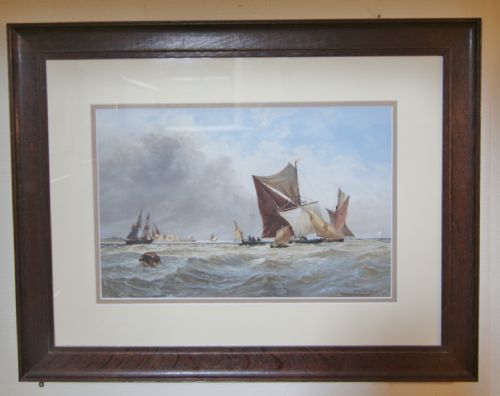
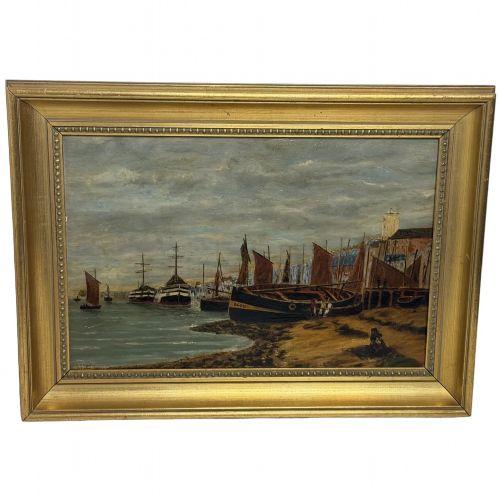
Maritime river artwork encompasses oil paintings, watercolours, and etchings depicting active ports, tidal reaches, and urban riverbanks. The pieces record working vessels such as Thames barges, commercial junks, and industrial tugs operating along domestic and international waterways.
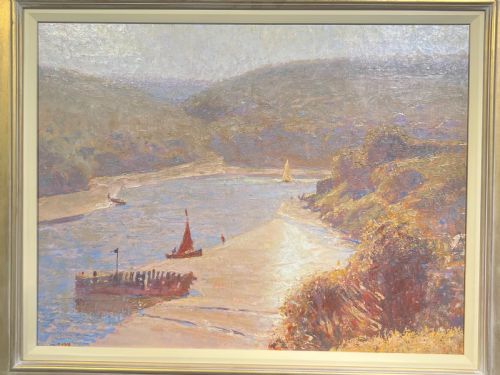
The selections available here span from the early nineteenth century through to the mid-twentieth century, with a strong representation of Victorian and Edwardian marine scenes. Creators range from named professional painters to regional artists working in British Impressionist and traditional academic modes.
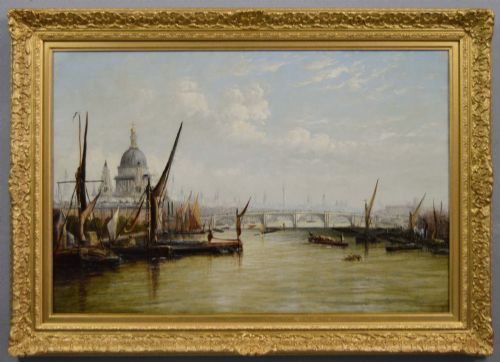
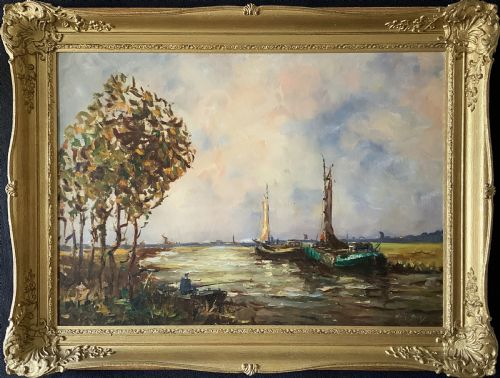
Subjects frequently centre on recognizable locations like the River Thames, northern harbours, and European canal networks. These visual records document historical waterfronts, bridges, and fortifications before subsequent twentieth-century industrial transformations.
How They Were Made
Artists utilised traditional oil paints on canvas, wood, or board to build luminous layers depicting light reflecting off water and damp atmospheric conditions. Watercolour on paper was similarly employed for rapid on-site sketching, often finished with delicate pencil work or gum arabic highlights to render surface glints.
Etchings relied on metal plates inscribed with acid and printed onto fine paper, capturing the intricate rigging of moored shipping through precise linear marks. Gold leaf frames were frequently applied to oil paintings to enhance the tonal depth of darker marine palettes.
Maritime River Artwork Retail Price Guide 2026
Typical asking prices for maritime river artwork among the pieces listed under this phrase on Sellingantiques today, from the lower quarter to the upper quarter. They describe what is for sale here now, not the wider market.
Listings feature paper, oil on canvas, wood, and watercolour as primary materials across nineteenth and twentieth-century styles.
What Varies In Quality
Execution of maritime river artwork depends on the artist's grasp of naturalistic water movement, atmospheric perspective, and accurate vessel rigging. Stronger examples display confident brushwork and tonal balance that convey the weight of commercial craft and the specific quality of river light.
Compositional structure separates standard topographical records from more accomplished interpretations of river life. Superior works integrate human activity and industrial architecture into a cohesive visual narrative rather than relying on stiff or formulaic harbour layouts.
Charles Eschard·Stanley Leader·Nicolaas Martinus Wijdoogen·H. Medlycott·Kenneth Cozens·William Lionel Wyllie·Frank William Scarbrough·Francis Moltino·Willem Bos·TB Hardy·Alfred George Morgan·Charles William Wyllie·Edward Henry Eugene Fletcher·Ah Hee Studio·Leslie Rackham·Charles Harmony Harrison·William Wyld·Armand Guillaumin·Henry Barlow Carter·Walter Duncan·Lieutenant Harold E Frecker·Pauline Boumphrey·Robert Anderson·Hubert Thornley·Fred Lawson
The Maritime River Artwork Glossary
- Watercolour
- A paint consisting of pigment suspended in a water-soluble binder, traditionally applied to paper for fluid transparency. It allowed artists to capture shifting river weather quickly.
- Etchings
- Prints produced by biting lines into a metal plate with acid before applying ink and running it through a press. This technique produced sharp, durable details of urban bridges and rigging.
- Impressionism
- A style emphasising loose brushstrokes and natural light rather than precise academic finish. Artists applied this approach to dissolve industrial haze over nineteenth-century waterways.
- Canvas
- A heavy woven fabric stretched across a wooden frame to serve as a support for oil paintings. It offered a resilient, textured surface suitable for heavy impasto and tonal layering.
Maritime River Artwork: Frequently Asked Questions
What subjects appear in maritime river artwork?
These pieces depict working boats, commercial shipping, and industrial port infrastructure along domestic and international waterways. Common motifs include sailing barges, tug boats, and urban bridges set against historical townscapes.
The focus is primarily on maritime activity rather than purely rural landscapes, reflecting the economic importance of nineteenth and twentieth-century river commerce.
How do watercolours differ from oil paintings here?
Watercolours are executed on paper using translucent pigments, yielding lighter, more immediate atmospheric effects of river mists and open skies. Oil paintings utilise heavier binders on canvas or board, allowing for richer tonal depth and layered textures.
Watercolours were frequently used for field studies or finished works on paper, whereas oils served for larger, more substantial framed compositions intended for permanent display.
Which waterways are most commonly represented?
The River Thames in London forms the primary focus for many listed items, capturing bridges, pools, and parliament from various historical viewpoints. Other British rivers like the Tyne, the Esk, and the Medway appear alongside European canal networks and international ports.
This geographic spread illustrates both local maritime heritage and the broader global trade routes active during the Victorian and Edwardian eras.
How should these framed works be displayed?
Watercolours require placement away from direct sunlight to prevent fading of the paper and pigments beneath the glass. Oil paintings on canvas benefit from stable indoor humidity and occasional gentle dusting of the surface and frame.
Original framing, where present, should be maintained with care to preserve the historical context of the piece.