





Continental Cityscape Art
Continental cityscape art captures European streets and harbours in oil and watercolour across several centuries.
Continental Cityscape Art
Continental cityscape art encompasses painted and drawn views of European streets, markets, rivers and harbours spanning from the eighteenth century to the mid-twentieth century. Buyers exploring this category encounter architectural studies, bustling market scenes and tranquil town views executed by named artists and anonymous hands.
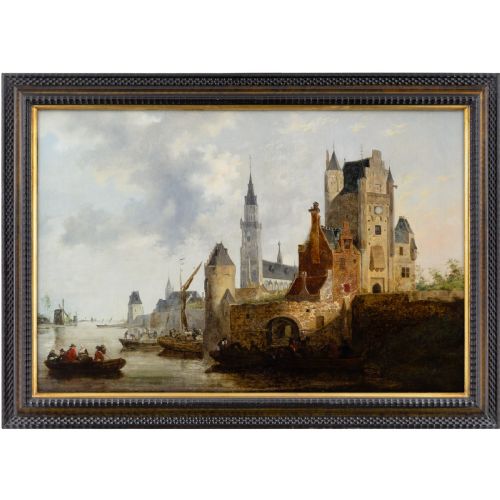
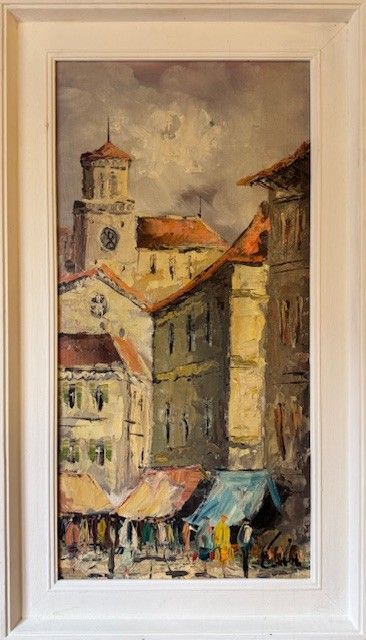
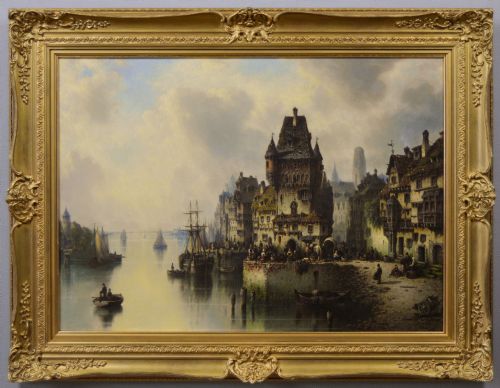
The selections available here range from eighteenth-century European works to mid-century impressionism, capturing urban architecture in varied mediums. Works often feature prominent landmarks such as cathedrals, bridges and fortified town walls set along rivers or coastal harbours.
Materials and construction
These works rely on traditional supports including stretched canvas, wooden boards and heavy paper, providing sturdy surfaces for oil and watercolour applications. Artists applied oil paint and watercolour pigments to build up architectural details, skies and water reflections.
Many pieces retain their original presentation framing, incorporating wood, gesso and gilt wood mouldings that complement the painting style of the period.
Continental Cityscape Art Retail Price Guide 2026
Typical asking prices for continental cityscape art among the pieces listed under this phrase on Sellingantiques today, from the lower quarter to the upper quarter. They describe what is for sale here now, not the wider market.
Listings feature works spanning the eighteenth, nineteenth and twentieth centuries, executed in oil and watercolour on canvas, wood, paper and gesso.
Judging quality in cityscape art
Quality rests upon the artist's ability to render perspective within complex architectural settings, balancing street life with structural precision. Stronger examples demonstrate confident brushwork and a clear handling of light across stone facades and water.
The depth of composition and the handling of atmospheric perspective distinguish finer works from simpler topographical records. Original framing materials such as period gilt wood also contribute to the integrity of the piece.
Charles Eschard·E A Minardo·J W Hogley·William George Meadows·Lewis J Wood·William Raymond Dommersen·Ludwig Hermann·Henry Schafer
The Continental Cityscape Art Glossary
- Oil on canvas
- Pigment suspended in a drying oil applied to a woven fabric stretched across a wooden frame. This medium allows for rich colour blending and textured surface applications.
- Watercolour
- Pigments suspended in a water-soluble binder applied to paper supports. It creates transparent washes and fine linear detail.
- Gilt wood
- Wood carved and coated with a thin layer of gold leaf or metallic gilt powder. It provides ornamental framing for nineteenth-century and earlier artworks.
- Gesso
- A plaster mix applied to wood or canvas to prepare a smooth surface for painting. It forms the base beneath traditional gilding and oil grounds.
- Impressionism
- A style focused on capturing the visual impression of a moment through shifting light and unblended brush strokes. Mid-century examples appear within this selection.
Continental Cityscape Art: Frequently Asked Questions
What periods do these cityscapes cover?
The works span from the eighteenth century through the nineteenth century and into the mid-twentieth century. Artists recorded European architecture across these distinct eras using changing painting styles.
Paintings range from eighteenth-century European school pieces to Victorian watercolours and mid-century impressionist townscapes.
What mediums are used in this art?
Artists employed oil paint on canvas and wood boards, alongside pencil and watercolour on paper. These materials define the visual character of each period.
Gilt wood and gesso frames frequently accompany the paintings and works on paper.
How do I choose a cityscape?
Consider the specific setting, whether a busy French market square, a cathedral street or a harbour view. The choice of medium, such as oil or watercolour, also shapes the visual impact.
Matching the period style to your interior space helps guide the selection.
Are these works signed by artists?
Some pieces bear signatures or attributions to known nineteenth-century and twentieth-century painters, while others remain by unknown hands. Attribution details appear in individual listings where recorded.
Works attributed to the Dutch school or specific named painters offer distinct historical context.