





Maritime Oil Landscape
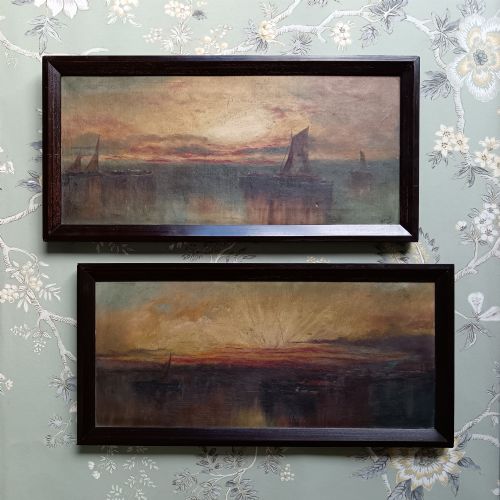
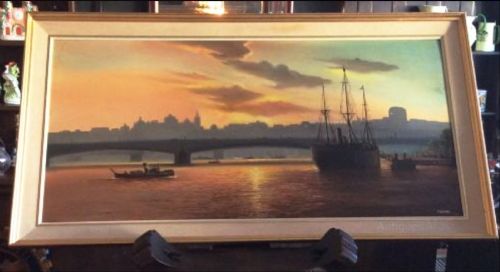
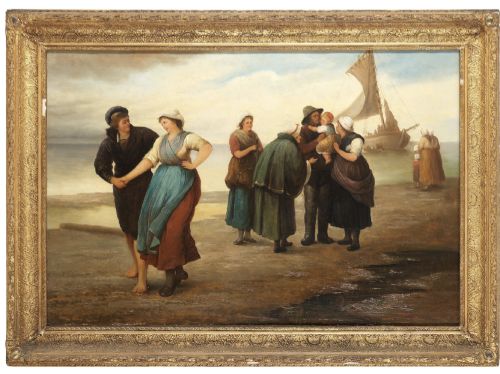
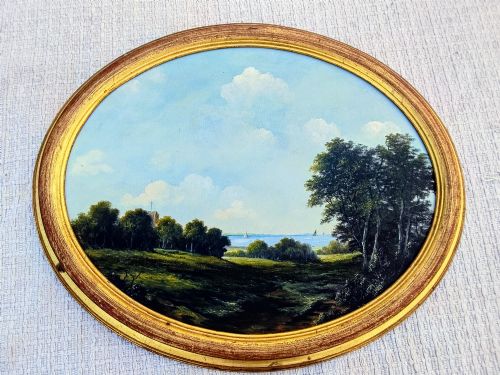
When you search for maritime oil landscape, you encounter painted views of coastal shores, harbours, and rivers rendered in oil on canvas or board.
Maritime Oil Landscape
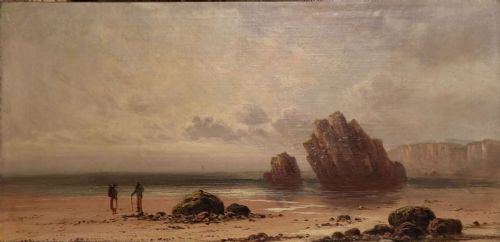
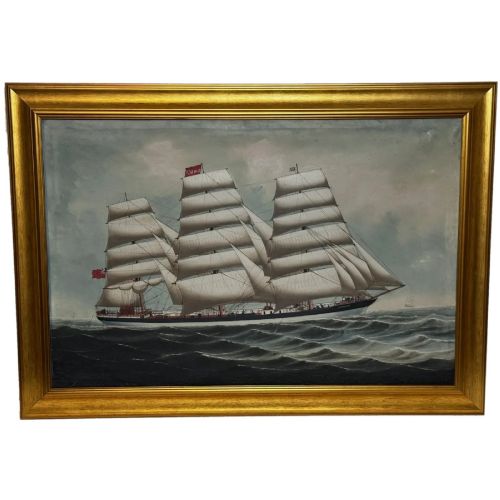
A maritime oil landscape captures bodies of water, coastal settings, and river scenes through the medium of oil paint. These works encompass nineteenth-century Victorian views, Edwardian scenes, and mid-twentieth-century interpretations.
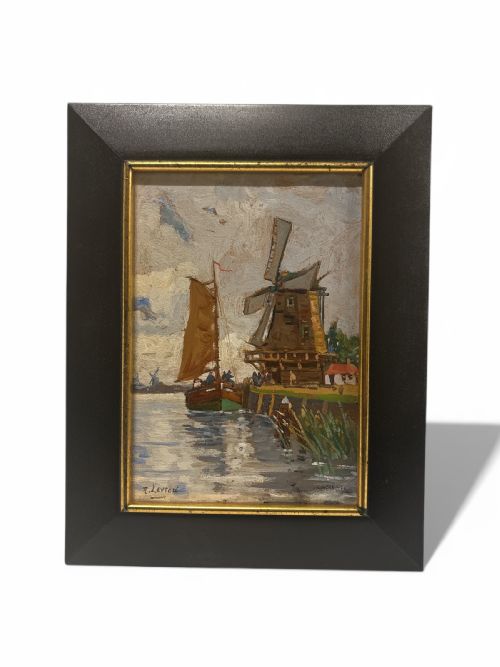
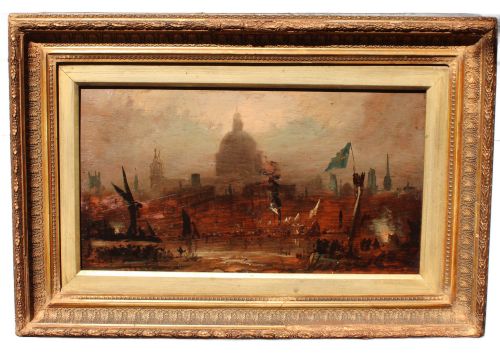
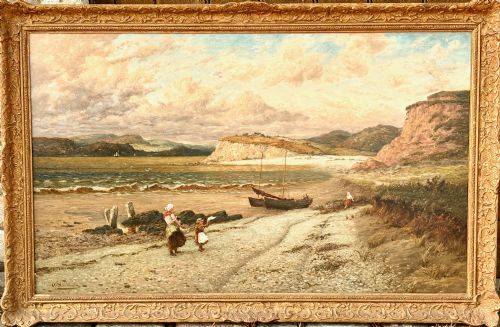
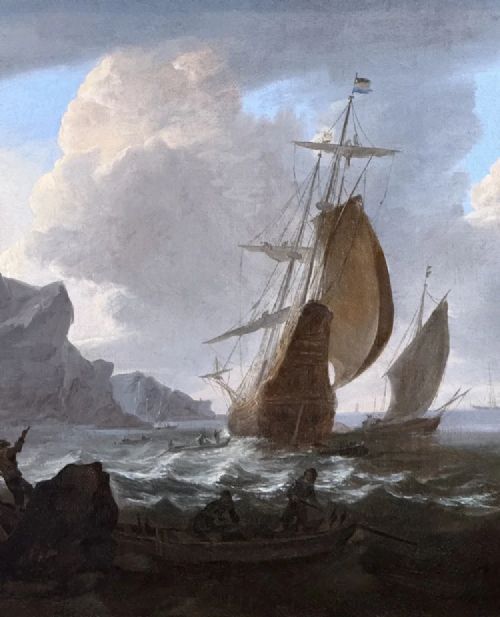
The subjects range from bustling harbours and industrial river views on the Thames to quiet coastal cliffs, Dutch boats in gales, and Venetian lagoons. Most examples appear framed in gilt wood, preserving the historic presentation of marine fine art.
How they were made
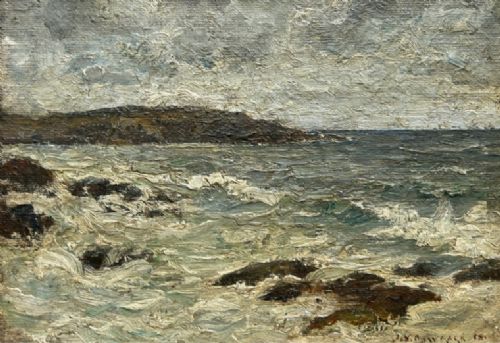
Artists painted primarily with oil paint on stretched canvas or wooden boards, applying pigment to build texture, depth, and luminosity. Impasto technique appears in works requiring thick, tactile brushstrokes to render rocky coastal seascapes.
Finished paintings were commonly housed in gilt wood frames designed to complement the subject matter. The combination of oil medium and sturdy wooden or canvas supports ensured long-term durability across the nineteenth and twentieth centuries.
Listings feature oil paintings on canvas and wood across nineteenth-century Victorian, Edwardian, and mid-twentieth-century periods.
What varies in quality
Quality rests upon the artist's command of light, atmospheric perspective, and the movement of water. Skilled painters capture the specific weight of a gale or the reflection of sunset upon a harbour with precise tonal variation.
The execution of the surrounding frame, whether an original gilt wood moulding or a later replacement, contributes to the overall integrity of the piece. Works bearing clear signatures and documented provenance from established painters generally command higher regard.
Bonaventura Peeters·Francis Moltino·John Wilson Carmichael·Thomas Creswick·Donald McIntyre
The Maritime Oil Landscape Glossary
- Impasto
- A technique where paint is laid onto a canvas in very thick areas, usually thick enough that the brush or painting-knife strokes are visible. This method adds tangible texture and depth to water and rocky shores.
- Seascape
- A type of fine art painting that depicts the sea, ocean, or marine views. These works focus specifically on coastal geography and maritime activity.
- Gilt wood
- Wood that has been treated with a thin layer of gold leaf or gilt finish. Frames constructed in this manner frequently accompany nineteenth-century oil paintings.
- Canvas
- A heavy woven fabric used as a surface for oil painting. Canvas is typically stretched tightly across a wooden frame before application of the ground and paint layers.
Maritime Oil Landscape: Frequently Asked Questions
What is a maritime oil landscape?
A maritime oil landscape is a fine art painting depicting coastal waters, rivers, harbours, or shipping scenes executed in oil paint. These artworks record maritime environments across the nineteenth and twentieth centuries.
Such works vary from expansive Victorian river views to intimate mid-century coastal board paintings, reflecting changing artistic approaches to marine subjects over time.
How were these paintings displayed?
Historic maritime paintings were traditionally housed in decorative wooden frames, often finished in gilt. These surrounds protected the edges of the canvas and enhanced the visual depth of the scene.
Many surviving pieces retain their original gilt wood frames, which help date the artwork and maintain its period context.
How do I identify the period?
Dating relies upon stylistic cues, framing methods, and signatures recorded within the painting. Nineteenth-century works often feature detailed academic realism or tonal romanticism, while twentieth-century examples embrace impressionist or modern British idioms.
Examining the reverse of the canvas or board can also reveal historic labels, inscriptions, or artist signatures that confirm the date of creation.
Where were these scenes painted?
Artists painted both on location along British and European shores and from studio studies based on preliminary sketches. Common locations include the River Thames in London, Morecambe Bay, Venetian lagoons, and Dutch waterways.
These settings reflect the vital role of rivers and the sea in commerce, travel, and artistic inspiration throughout history.