





Maritime Navigation Antiques
Maritime navigation antiques are working instruments of orientation and calculation that brought vessels safely across oceans, prized today for their historic mechanics.
Maritime Navigation Antiques
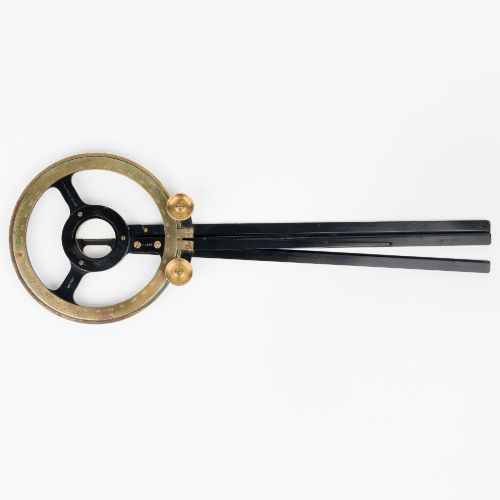
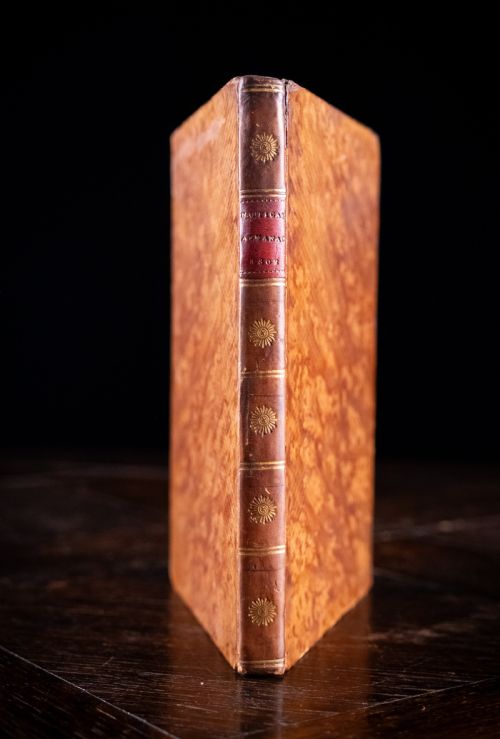
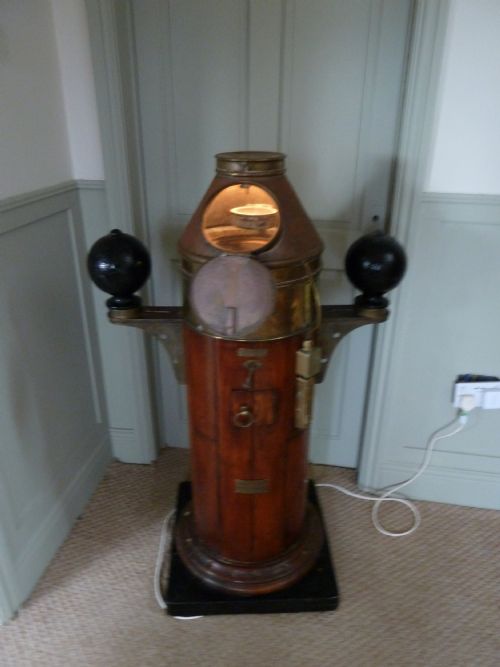
Maritime navigation antiques encompass a diverse range of scientific instruments, timepieces, books, and lighting designed for use at sea across several centuries. When exploring maritime navigation antiques, collectors encounter portable pocket compasses, heavy brass binnacles, and complex calculating devices such as station pointers and octants.
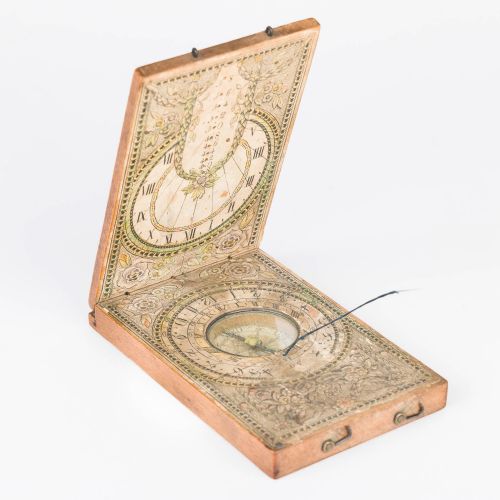
The objects stem from the eighteenth, nineteenth, and early twentieth centuries, reflecting the evolving precision of maritime travel and exploration. These pieces range from Georgian travelling sundials to mid-twentieth-century deck watches and chronometers.
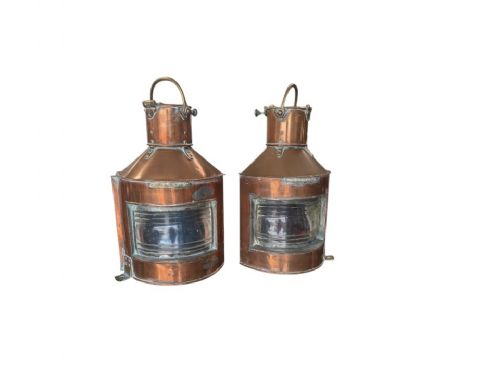
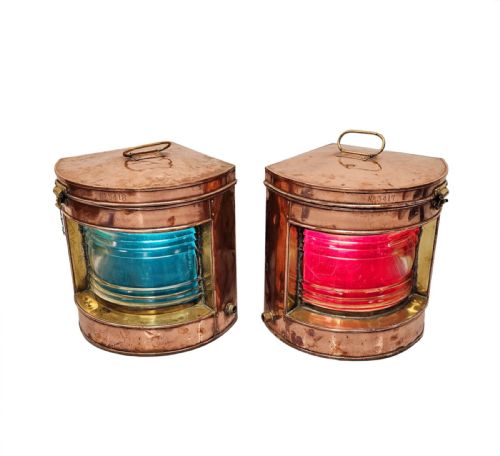
Vessels relied on specialised equipment including copper ship lanterns for port and starboard identification, alongside marine telescopes and artificial horizon sets. Such items served practical functions on working ships before transitioning into decorative and historical objects for modern interiors.
How they were made
Craftsmen utilised durable metals such as brass, copper, and lacquered metal to withstand harsh marine environments and resist corrosion on deck. These metallic components were frequently paired with organic materials including mahogany, walnut, ebony, leather, and wood.
Precision optics and delicate dials incorporated glass lenses and carefully printed paper scales, mounted within protective wooden cases or metal housings. Specialised workshops fabricated these scientific instruments to maintain accuracy under constant motion and variable weather conditions.
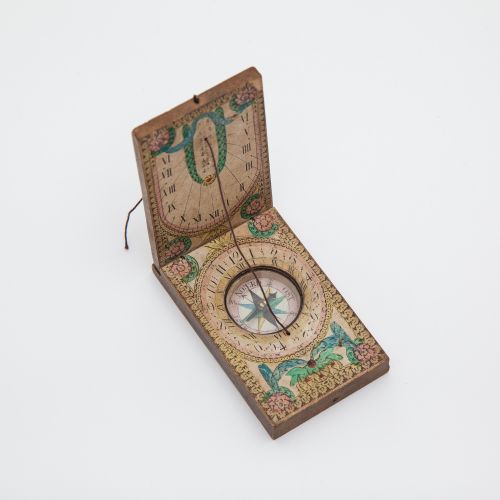
Early explorers occasionally relied on pocket-sized pocket compasses paired with sundials to keep track of both time and tide.
What varies in quality
Quality in these instruments depends upon the precision of the mechanics, the legibility of engraved or printed scales, and the integrity of the materials. Superior pieces retain their original optical clarity, fluid movement in compass needles, and matching components.
Maker attribution and the complexity of the scientific apparatus further separate standard items from exceptional examples. The survival of fitted wooden transport cases and legible maker signatures enhances the historic interest of each piece.
Hughes & Son·Alderson & Gyde Ltd·Ross of London·Henri de Magnac·A Hurlimann Paris·Tissot·John Lilley & Son London·Thomas Mercer
The Maritime Navigation Antiques Glossary
- Octant
- A reflective navigation instrument used to measure the angle between an astronomical object and the horizon to determine latitude. It predates the modern sextant and typically measures angles up to ninety degrees.
- Binnacle
- A built-in housing or stand on the deck of a ship that held the ship's magnetic compass and a lamp for night sailing. It protected the compass from weather and iron interference.
- Station pointer
- A three-arm protractor used in hydrographic surveying and navigation to plot a position from three known visual reference points. It allows navigators to fix their location on a chart accurately.
- Artificial horizon
- A device used with a sextant on land or when the natural sea horizon is obscured by fog, providing an independent horizontal plane for taking sights. These sets often utilised black glass.
- Chronometer
- A highly accurate marine timekeeper used to determine longitude by measuring time relative to a known reference meridian. Thomas Mercer produced notable examples of these precision instruments.
Maritime Navigation Antiques: Frequently Asked Questions
How do I operate a pocket compass sundial?
Pocket compass sundials combine a magnetic compass with a fold-down gnomon to indicate solar time and magnetic north simultaneously. The user levels the instrument and aligns the needle before reading the shadow cast on the dial face.
These portable instruments served travellers and mariners for quick estimations of time and direction before reliable pocket watches became widespread.
What is a deck watch used for?
A deck watch is a portable precision timepiece carried on deck by navigators to take timing observations or to check the reading of the primary marine chronometer. They provided accurate timekeeping close to the action without requiring the master chronometer to be moved.
These watches feature high-grade movements housed in protective metal cases designed to resist the damp conditions aboard ship.
How are ship lanterns dated?
Ship lanterns are generally dated by their construction materials, ventilation cowl designs, patent markings, and stamped maker plates. Copper and brass combinations were common in the late nineteenth and early twentieth centuries.
Changes in maritime regulations regarding port and starboard signal colours also help narrow down the period of manufacture for surviving navigation lights.
Can antique marine telescopes still focus?
Many antique marine telescopes retain functional draw tubes and clear glass lenses capable of focusing on distant objects. The multi-draw design allowed sailors to adjust the focal length while maintaining a compact size for storage.
Proper maintenance of the brass barrels and careful cleaning of the interior glass preserve the optical performance of these historical instruments.