


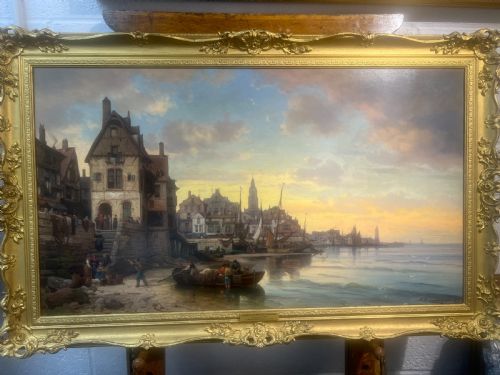
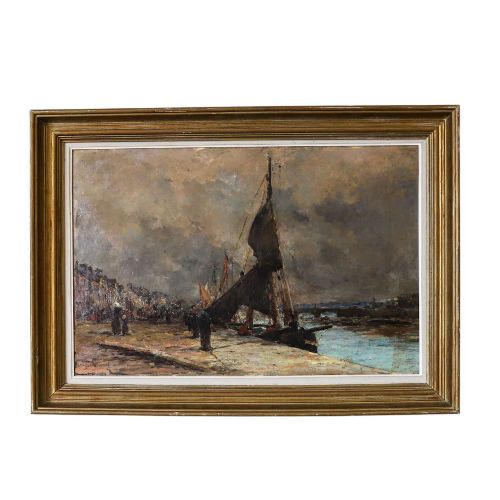
Marine Harbour Painting
A marine harbour painting captures the gritty reality of coastal trade and the quiet drama of nineteenth and twentieth-century docks.
Marine Harbour Painting
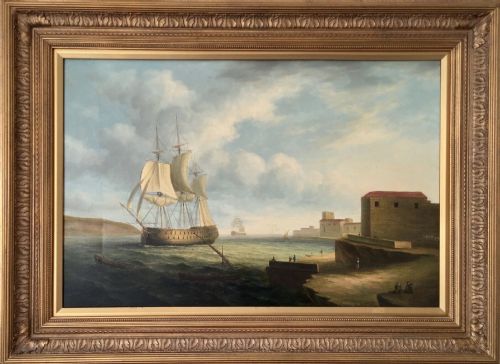
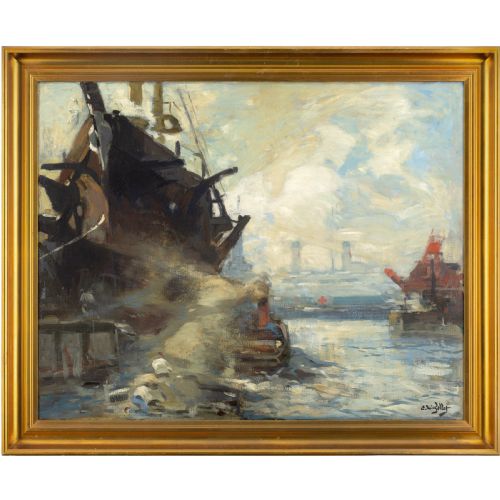
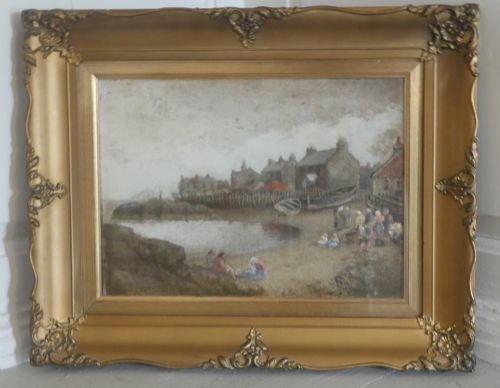
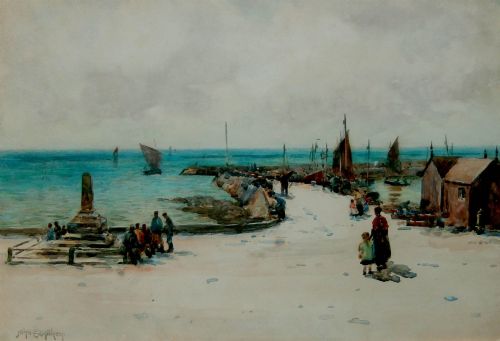
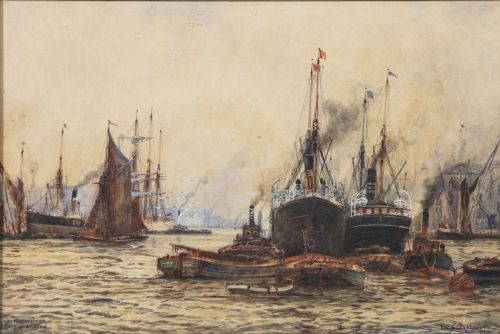
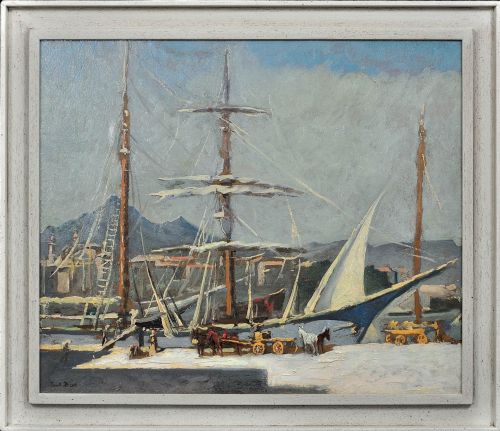
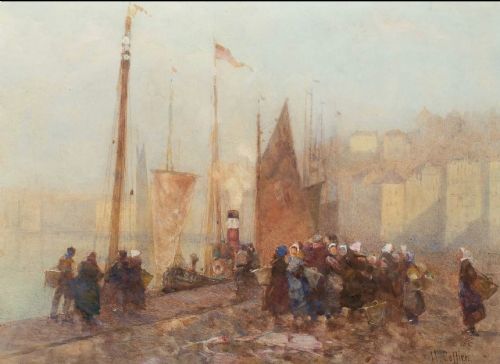
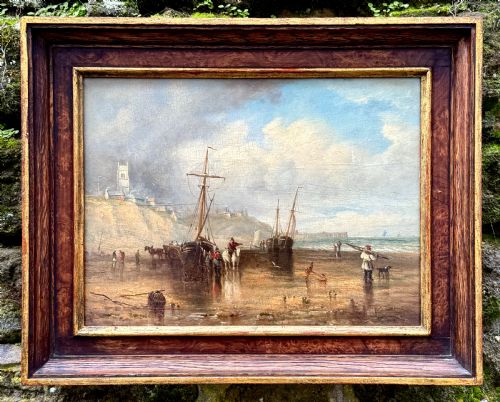
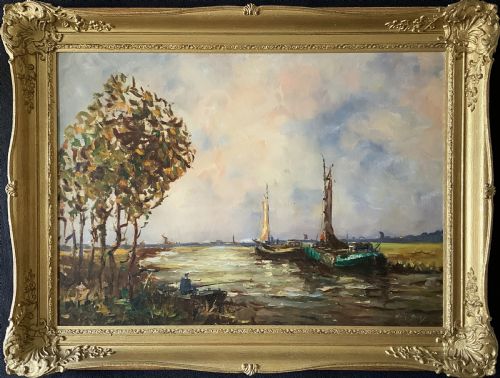
When you search for a marine harbour painting, you encounter works depicting bustling ports, quiet fishing quays, and tall ships at anchor across the nineteenth and twentieth centuries. The pieces on this page span Victorian maritime scenes through to mid-century modern interpretations of British and European coastal life.
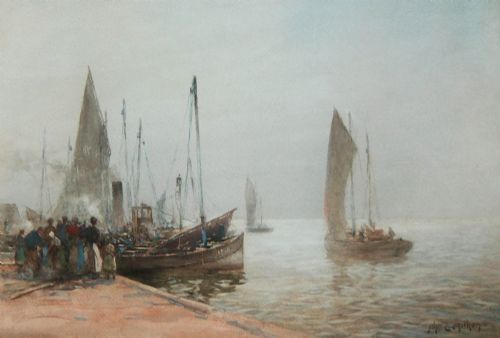
The most common formats you meet are detailed watercolours on paper and expressive oil paintings executed on canvas or board. These artworks document specific locations, from Yorkshire fishing ports and Cornish inlets to Mediterranean bays and the Pool of London.
Subjects range from traditional representations of sailing vessels unloading their catch to broader landscapes framing estuaries, piers, and local maritime architecture. Each piece offers a window into the historical routines of coastal communities and maritime commerce.
How They Were Made
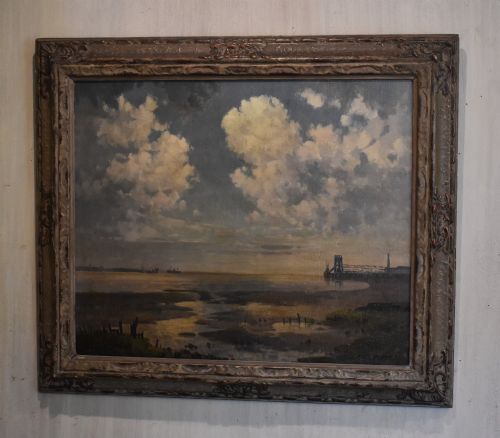
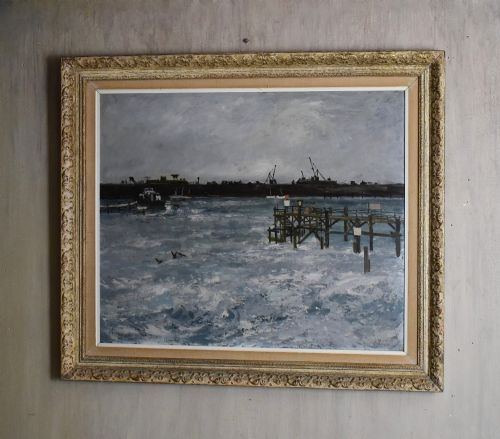
Artists typically utilised oil paint or watercolour applied to stretched canvas, wooden panels, heavy paper, or prepared board. Oil paint provided rich texture and depth, particularly when built up in impasto layers to capture the movement of water and heavy skies.
Watercolour works relied on transparent washes and careful pencil underdrawing on paper to render coastal light and architectural detail with immediacy. Many of these artworks retain their original wood or gilt frames, which frequently complement the palette of the painting within.
Sailors occasionally watched painters from the pier, critiquing every rogue wave.
What Varies in Quality
Quality rests upon the artist's ability to command perspective, atmospheric light, and the convincing anatomy of vessels against coastal tides. Stronger works demonstrate a confident handling of pigment that brings movement to the water and distinct character to the surrounding architecture.
The distinction between standard decorative pieces and finer works lies in the precision of the draughtsmanship and the artist's firsthand familiarity with maritime subjects. Historical context and documented provenance from known painters elevate the stature of an individual piece.
James Hardy·Kenneth Cozens·Eugène-Louis Gillot·Edward Mills·James E. Aitken·John E. Aitken·William Banks Fortescue·Frank William Scarbrough·Clive Browne·Peter Brannan·Paul Bret·Hector Caffieri·Thomas Creswick·Willem Bos·Charles Euphraisie Kuasseg·Frank Kelsey·Walter Goodin·F A Roylance·Alfred George Morgan·Charles William Wyllie·Commander Eric Tufnell·William Edward Webb·Richard Harry Carter·Raymond Picque·James Fry
The Marine Harbour Painting Glossary
- Watercolour
- A painting method where fine pigment is suspended in water-soluble binders and applied to paper. This medium allows for luminous washes that capture shifting coastal light.
- Impasto
- Paint applied thickly to a canvas or board so that the marks of the brush or palette knife remain visible. This technique adds tactile dimension to turbulent seas.
- Lugger
- A traditional small fishing vessel carrying lug sails on one or more masts. These boats frequently feature in nineteenth-century West Country coastal scenes.
- Provenance
- The documented history of ownership surrounding an artwork. A clear record helps establish authenticity and dates of creation.
Marine Harbour Painting: Frequently Asked Questions
What periods do these paintings cover?
The available selection spans from the nineteenth century through the early and mid-twentieth century. You will find Victorian and Edwardian pieces alongside modernist interpretations.
Chronological markers often appear in the signatures, framing, and recorded artist lifespans associated with individual works.
Where were most of these scenes painted?
Many depict British coastal towns, including Whitby, Scarborough, St Ives, and various stretches of the River Thames. European ports in France, Italy, and the Netherlands also feature prominently.
Artists frequently travelled to working harbours to record local shipping and daily maritime routines.
How should I hang a marine painting?
Consider placing these artworks in spaces with controlled natural light to prevent fading on watercolour paper. Secure mounting is essential, particularly for heavier framed oils on canvas.
Matching the frame tone to your interior style helps integrate historical pieces into modern rooms.
How do I distinguish watercolour from oil?
Watercolours are painted on paper and typically displayed behind glass to protect the delicate pigments. Oils utilise thick paint on canvas, panel, or board with a textured surface.
Examining the support under good light reveals whether the medium is bound in oil or water-soluble gum.