

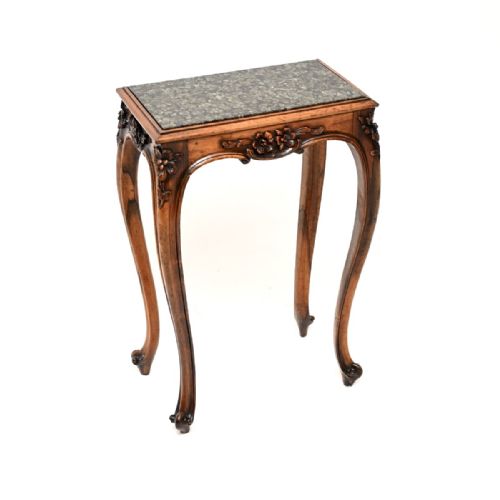
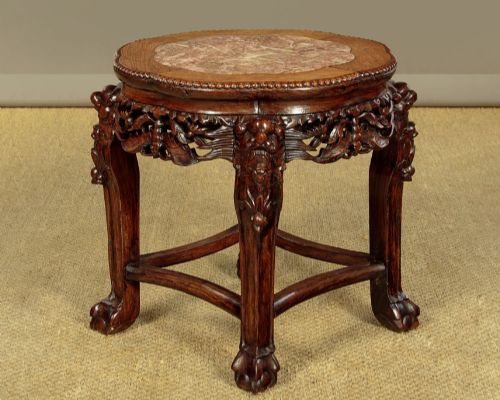
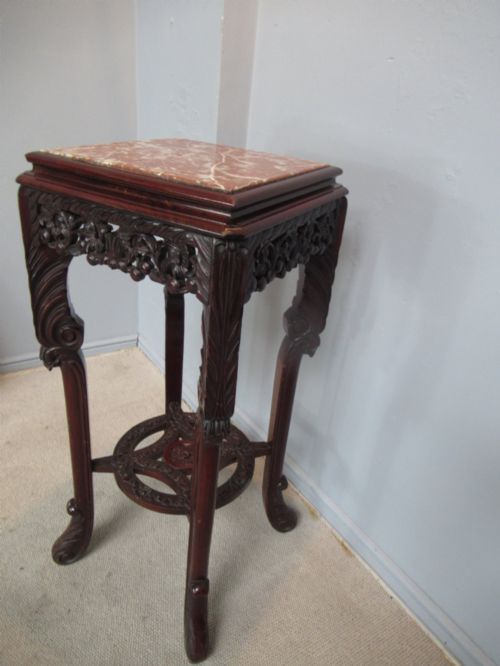
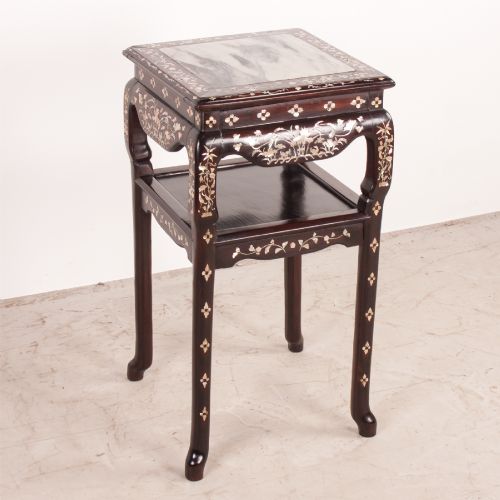


Marbled Rosewood Side Table
A marbled rosewood side table brings together dense tropical timber and cool stone for a heavy, durable surface.
Marbled Rosewood Side Table
A marbled rosewood side table combines a sturdy timber frame with an inset stone top designed for display and utility. These objects range from compact plant stands to long console tables intended for hallways and reception rooms.
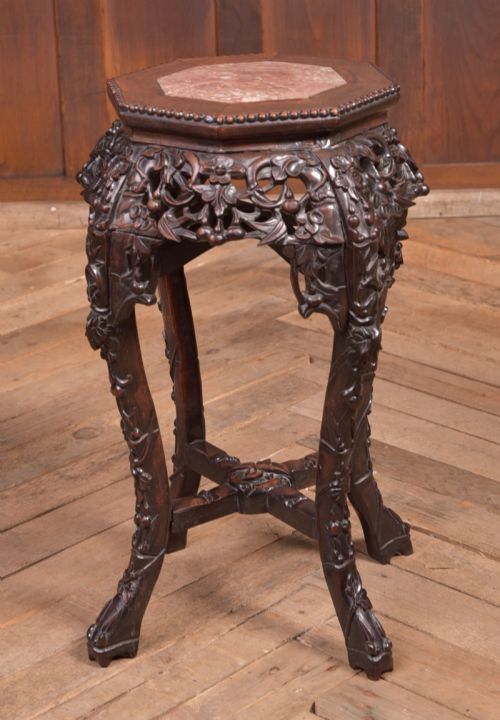
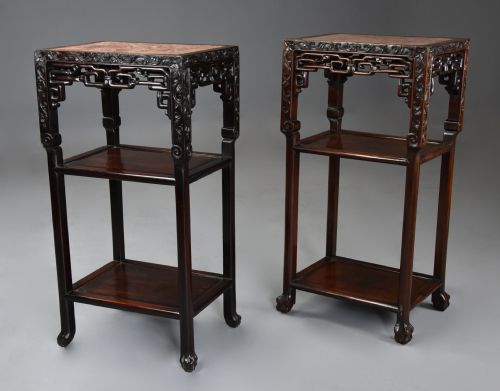
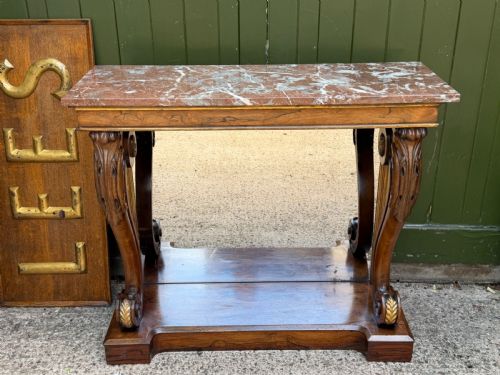
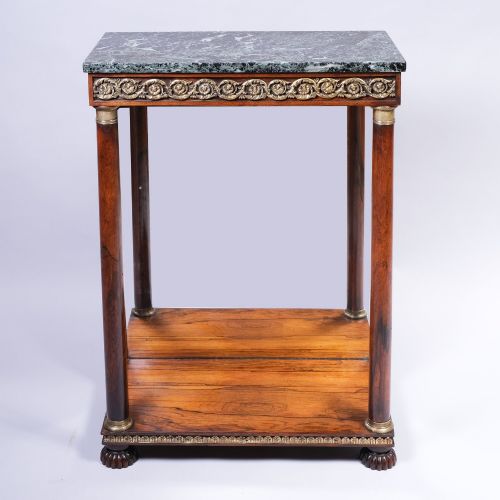
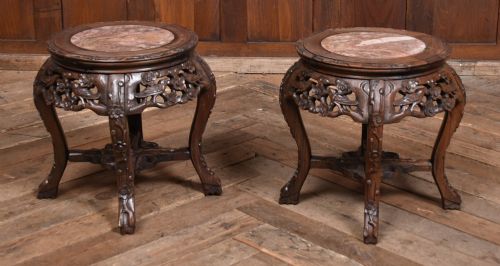
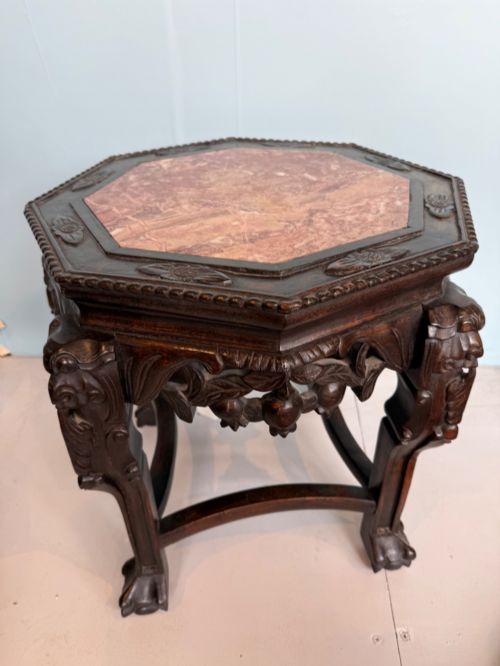
The selections on this page draw heavily from two distinct traditions: English Regency designs utilising rich timber and brass, and Chinese export pieces carved from dense hardwoods with inset marble panels.
Makers produced these tables in various forms, including occasional tables, games tables, and jardiniere stands, each pairing the distinctive grain of rosewood with smooth, veined marble.
Materials and technique
Craftsmen utilised heavy tropical woods such as rosewood, padouk, and other dense hardwoods to construct stable frames capable of supporting heavy stone inserts. Carpenters joined these timbers using traditional joinery, often embellishing the structures with intricate hand-carving or delicate brass mounts.
Surface decoration frequently included mother-of-pearl inlay, parcel-gilding, and polished finishes that highlighted the natural grain of the timber. Marble tops, ranging from white varieties to deep rouge panels, were precision-cut and fitted flush into the wooden framework.
Marbled Rosewood Side Table Retail Price Guide 2026
Typical asking prices for marbled rosewood side table among the pieces listed under this phrase on Sellingantiques today, from the lower quarter to the upper quarter. They describe what is for sale here now, not the wider market.
Listings feature items spanning the nineteenth century, including Regency, Victorian, and Chinese Qing Dynasty periods.
Separating top tier from ordinary
Quality rests in the weight of the timber and the depth of the carving rather than surface polish alone. Superior examples show crisp detail in the woodwork and precise joins between the hardwood frame and the marble insert.
The selection of the stone panel dictates the character of the piece, with well-matched veining and unblemished surfaces marking out better examples. Proportion and structural stability complete the distinction between standard utilitarian items and superior craftsmanship.
The Marbled Rosewood Side Table Glossary
- Rosewood
- A dense, heavily figured dark timber prized for its durability and rich natural grain. It forms the primary structural and decorative material for many of these tables.
- Console table
- A wall-mounted or freestanding table designed to stand against a vertical surface. These often feature decorative legs and architectural supports.
- Jardiniere stand
- A tall, compact pedestal table built specifically to hold heavy plant pots or floral arrangements. They frequently incorporate marble tops to resist water damage.
- Parcel-gilt
- A method of decoration where specific carved details of the wooden frame are partially covered in thin gold leaf. This technique accentuates particular motifs against the dark rosewood.
- Specimen marble
- A decorative top composed of various coloured marbles arranged in geometric patterns or pictorial designs. It represents a high degree of lapidary skill.
Marbled Rosewood Side Table: Frequently Asked Questions
How do I clean a marble top?
Wipe the surface gently with a soft cloth dampened in warm water and mild soap. Avoid acidic cleaners that etch the stone.
Dry the marble thoroughly afterwards to maintain the polish and prevent water marks from settling into the grain.
Can these tables hold heavy plants?
Most of these stands and tables were built specifically to support the considerable weight of large ceramic planters and stone urns. The dense hardwood frames provide strong structural integrity.
Ensure the weight sits evenly across the marble insert to avoid putting undue stress on the surrounding wooden edges.
Where should I place a console table?
Console tables suit entrance halls, narrow corridors, or against living room walls where floor space is limited. Their shallow depth allows them to sit flush against vertical surfaces.
Perect placement keeps walkways clear while offering a convenient surface for lamps, decorative objects, or everyday items.
How do I identify Regency pieces?
Regency items typically display classical architectural influences, such as reeded legs, brass mounts, and dark, highly figured rosewood veneers. The proportions lean towards symmetry and refinement.
Examining the construction methods underneath often reveals period-specific joinery and timber preparation typical of the early nineteenth century.