






Dark Wood Specimen Table
A dark wood specimen table brings rich timber tones and intricate inlaid surfaces into a room, offering both a functional surface and a detailed display piece.
Dark Wood Specimen Table
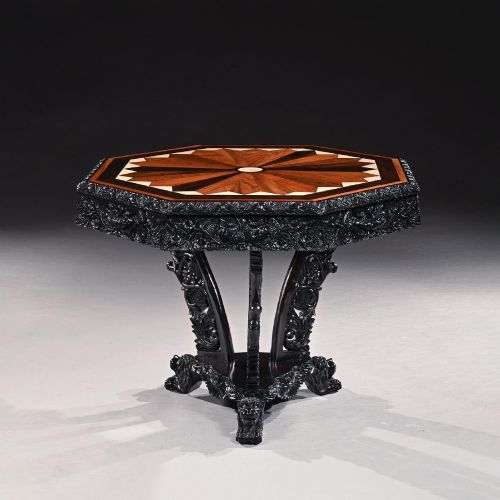
A dark wood specimen table is a low or mid-height piece designed to showcase timber grain, stone, or intricate marquetry, frequently appearing as centre tables, side tables, or occasional tables across this selection. Buyers seeking a dark wood specimen table will find examples originating in the nineteenth century, including Victorian and Regency eras, alongside Anglo-Indian colonial pieces.
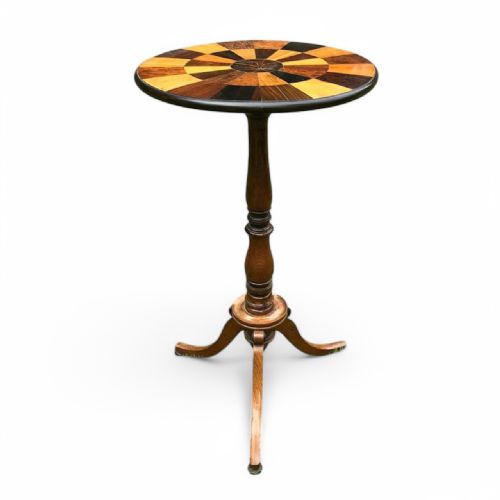
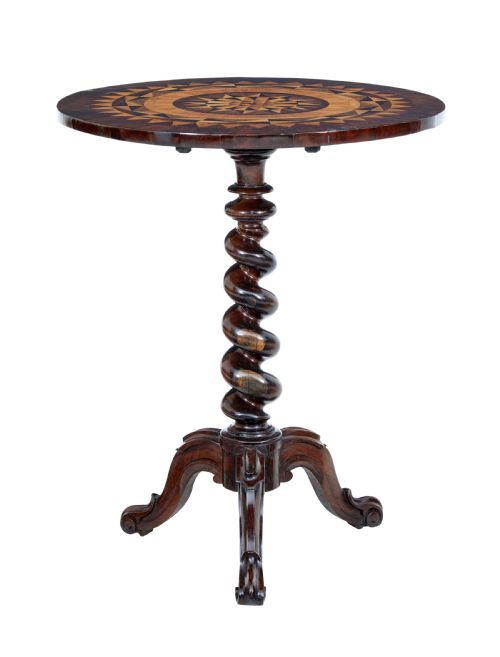
The primary forms found here include circular, oval, and octagonal tops supported by carved pedestals, wooden columns, or swan supports. Many pieces utilise dense timbers like ebony, walnut, mahogany, and calamander, occasionally paired with marble or pietra dura insets.
The most common versions on this page date from the Victorian period, reflecting mid-nineteenth-century taste for exotic woods and intricate surface decoration. These tables often double as display surfaces or collectors cabinets, combining robust structural framing with highly detailed tops.
Materials and construction
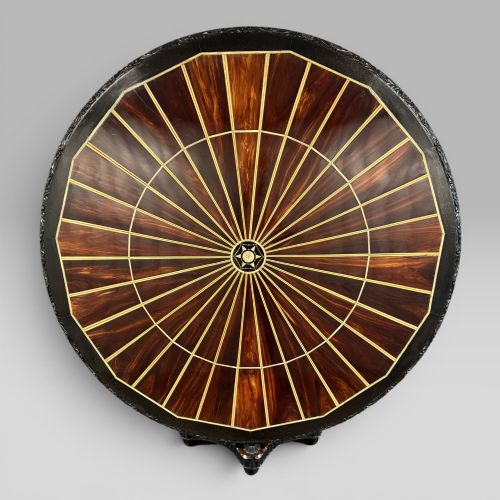
Construction relies heavily on dense dark hardwoods such as ebony, walnut, and mahogany, chosen for their deep natural colour and ability to hold fine carved details. Cabinet makers paired these structural timbers with contrasting exotic specimen woods and calamander to create complex geometric or floral patterns across the surface.
Many tops incorporate stone elements, utilising marble or pietra dura insets fitted flush into the wooden framework. Bases range from turned central pillars to carved wooden supports and oak underframes, joined using period cabinet-making techniques suited to heavy timber tops.
Dark Wood Specimen Table Retail Price Guide 2026
Typical asking prices for dark wood specimen table among the pieces listed under this phrase on Sellingantiques today, from the lower quarter to the upper quarter. They describe what is for sale here now, not the wider market.
The listings on this site feature nineteenth-century tables utilising ebony, calamander, marble, and specimen woods from both British and Anglo-Indian workshops.
What separates the finest examples
Quality rests in the precision of the timber selection and the complexity of the surface work. Superior examples demonstrate tight, seamless joins between contrasting specimen woods and stones, whereas lesser pieces rely on simpler painted or less varied grain arrangements.
The integrity of the structural support also distinguishes the range. Tables with deeply carved pedestals, balanced swan supports, or robust solid timber bases represent higher standards of period craftsmanship compared to plain or heavily restored frames.
The Dark Wood Specimen Table Glossary
- Specimen wood
- Timber selected specifically for its unusual grain pattern, contrasting colour, or exotic origin. These varied pieces of wood are arranged to form decorative patterns on tabletops.
- Pietra dura
- An artistic technique using cut and fitted polished coloured stones to create inlaid images on a dark stone or marble base. It appears frequently on decorative tabletops.
- Calamander
- A heavy, durable wood originating from South Asia featuring distinctive dark brown and light brown striping. It is prized for fine nineteenth-century cabinet work.
- Tilt top
- A tabletop hinged to the central pedestal so it can be tilted vertically when not in use. This mechanism allowed tables to be stored flat against a wall.
- Centre table
- A freestanding table designed to be viewed from all sides rather than pushed against a wall. These typically sit in the middle of a room.
Dark Wood Specimen Table: Frequently Asked Questions
Where should I place a specimen table?
These tables suit placement as a centrepiece in a hall or reception room where the top can be fully appreciated. Because many are finished on all sides, they work well away from walls.
Pinned against a wall or used beside seating, smaller occasional versions serve as display surfaces for decorative objects without dominating the room's layout.
How do I care for exotic wood surfaces?
Keep these surfaces away from direct sunlight and heat sources to prevent the dark timbers from fading or the inlaid joints from drying out. Routine dusting with a soft, dry cloth is sufficient.
Avoid using silicone polishes or heavy liquids, as nineteenth-century finishes and stone insets react poorly to moisture and chemical treatments.
What is the difference between an occasional table and a centre table?
Occasional tables are generally smaller and lighter, intended to be moved about a room for a specific use such as holding a book or a small lamp. They often feature tilt-top mechanisms.
Centre tables are larger, heavier, and structurally fixed as the primary focal point of a room, designed to anchor the surrounding furniture arrangement.
How can I tell a Victorian table from earlier periods?
Victorian pieces from the mid-nineteenth century often display a heavier use of contrasting exotic woods, complex geometric inlays, and dense carvings influenced by revival styles. Earlier Regency pieces tend to feature cleaner classical lines and simpler rosewood or mahogany surfaces.
Examining the construction methods underneath, such as the type of screw heads and timber preparation, helps confirm the nineteenth-century production window.