






Brass Feet Rosewood Table
A brass feet rosewood table brings warm timber and bright metalwork together, offering a surface built for card games or tea.
Brass Feet Rosewood Table
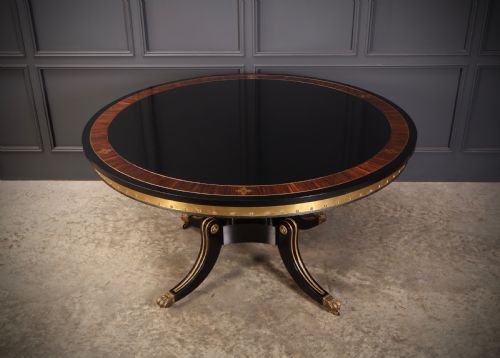
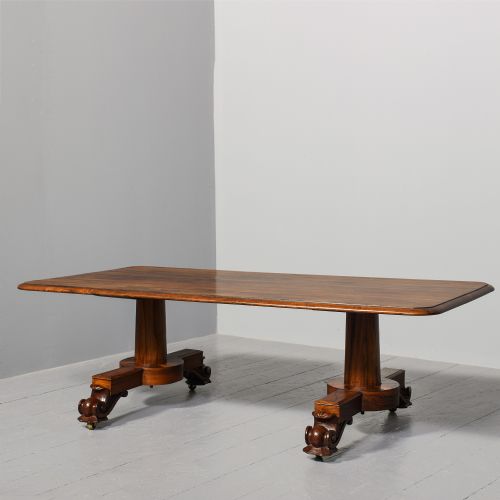
A brass feet rosewood table encompasses a range of formal domestic furniture primarily originating from the Regency and Georgian periods. These pieces are designed with rich tropical timber surfaces, often enriched by contrasting inlay and supported by cast metal mounts.
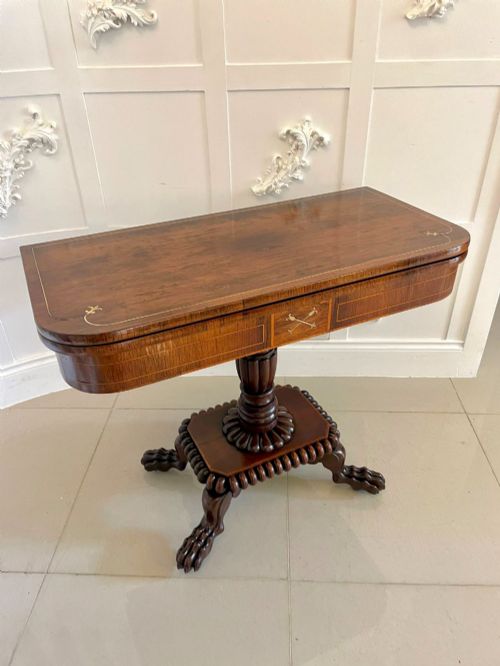
The most common formats found here are card tables, sofa tables, and games tables, alongside occasional and centre tables. Many examples feature fold-over tops or pedestals resting on castors, designed for flexible use in nineteenth-century drawing rooms.
How they were made
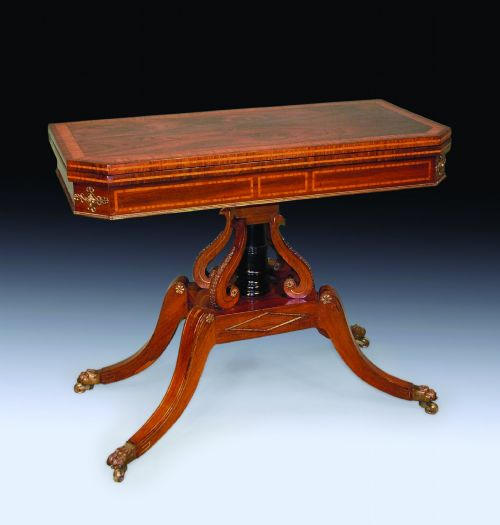
Cabinetmakers constructed these tables using dense rosewood and palisander veneers laid over secondary timbers, often accentuating the grain with satinwood, mahogany, or ebonised wood banding. Brass inlay, mounts, and cast feet provide structural contrast and decorative definition.
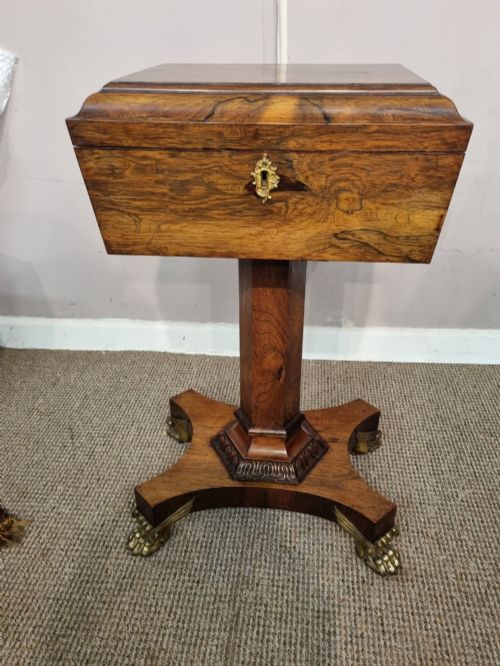
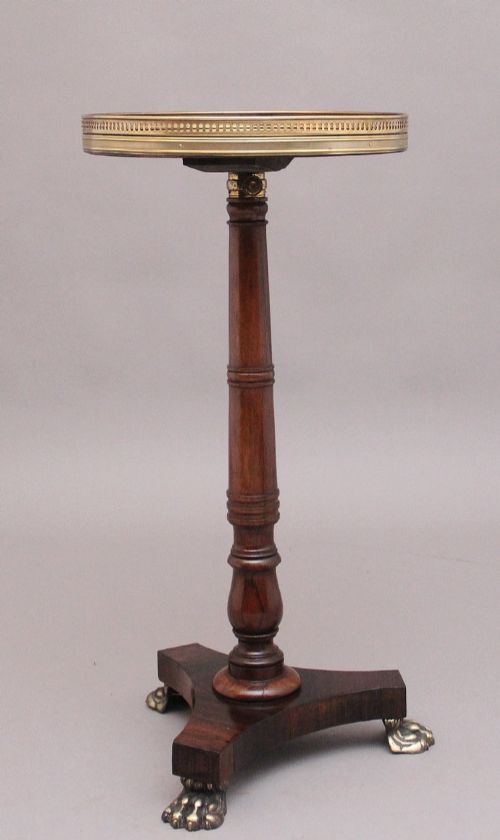
Pedestal bases frequently incorporate scroll work, pillars, and carved wooden supports leading down to cast brass paw feet with integrated castors. Surface embellishments rely on precision cutting of metal and timber to create flush geometric or floral patterns.
Brass Feet Rosewood Table Retail Price Guide 2026
Typical asking prices for brass feet rosewood table among the pieces listed under this phrase on Sellingantiques today, from the lower quarter to the upper quarter. They describe what is for sale here now, not the wider market.
Listings feature extensive Regency and Georgian examples incorporating brass inlay, rosewood veneers, and satinwood banding.
What varies in quality
The standard of timber selection and veneer matching defines the visual impact of the top, where continuous grain patterns elevate finer workshop outputs. Precision in the brass inlay work, ensuring the metal sits flush with the surrounding wood, also marks superior craftsmanship.
Structural integrity rests on the stability of the pedestal base and the crispness of the carved details or cast mounts. Original patination on both the rosewood surface and the brass feet contributes significantly to the integrity of the piece.
George Bullock·John McLean
The Brass Feet Rosewood Table Glossary
- Card table
- A folding table designed specifically for evening card games, typically featuring a baize-lined interior surface when opened.
- Sofa table
- A rectangular occasional table traditionally placed in front of or beside a sofa, often fitted with drop leaves and small drawers.
- Teapoy
- A small stand or chest designed to hold tea caddies, frequently supported by a central pillar and platform base.
- Crossbanding
- A border veneer applied around the edges of a tabletop where the grain runs perpendicular to the central panel.
- Ormolu
- Gilded bronze applied as mounts or decorative detailing on furniture and clocks.
Brass Feet Rosewood Table: Frequently Asked Questions
What is a brass feet rosewood table used for?
These tables served various social functions in nineteenth-century parlours, from holding tea services to providing a stable surface for card games and evening entertainment. Many featured fold-over tops or drop leaves to adapt the surface area for different activities.
Today, they function well as central display surfaces, console tables in hallways, or occasional tables in living spaces, combining decorative timber with practical proportions.
How do I identify a Regency period table?
Regency pieces often display classical architectural influences, including brass inlay, scroll pedestal bases, and substantial brass paw feet. The timber selection typically relies on dark rosewood or palisander contrasted with lighter satinwood stringing.
Cabinetwork from this era emphasises geometric clarity and proportion, distinguishing it from the heavier proportions seen in later Victorian furniture.
How should I care for antique rosewood furniture?
Protect the timber surface from direct sunlight and excessive heat fluctuations to prevent the rosewood veneer from drying out or splitting. Regular dusting with a soft, dry cloth maintains the finish without requiring heavy polishes.
Avoid placing damp items directly on the wood, and use coasters to protect the polish and any inlaid brass elements from moisture.