

Marble Topped Wine Table
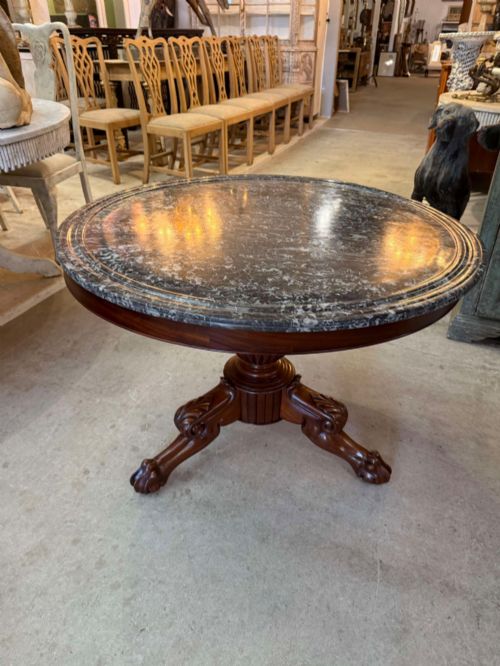
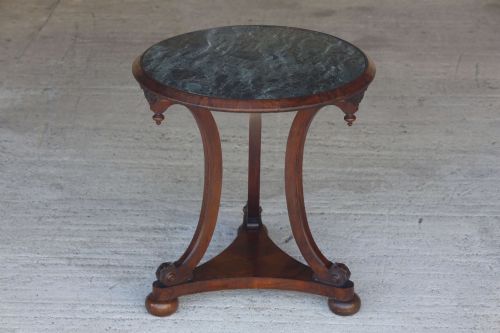
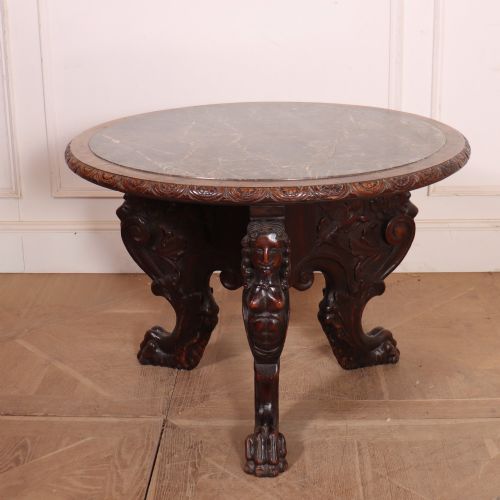
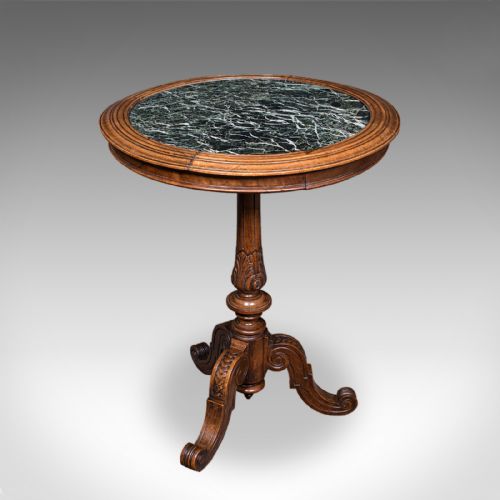
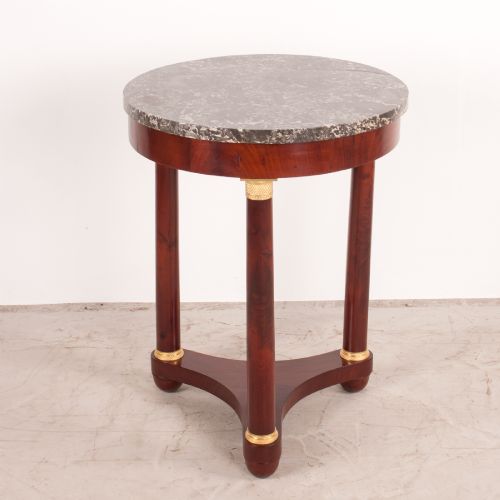
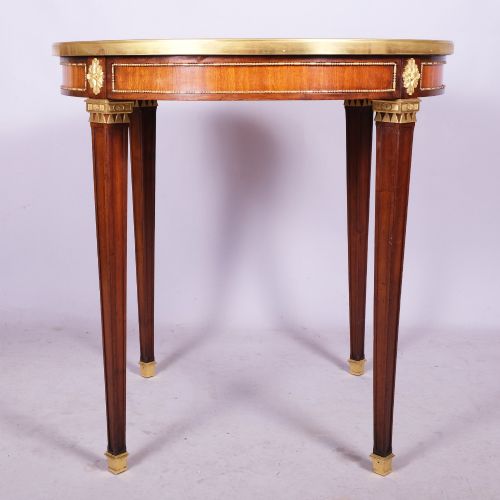
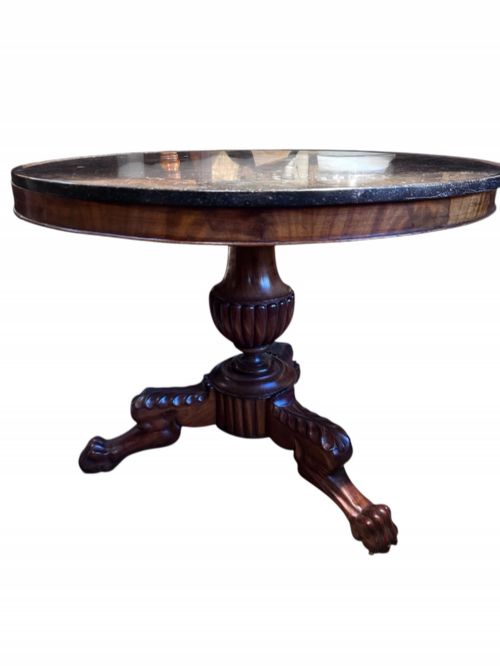
These marble topped wine table selections bring together classical French and English forms, offering steady circular surfaces designed for holding drinks and lamps.
Marble Topped Wine Table
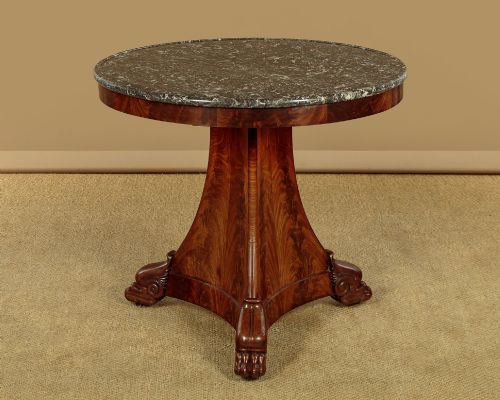
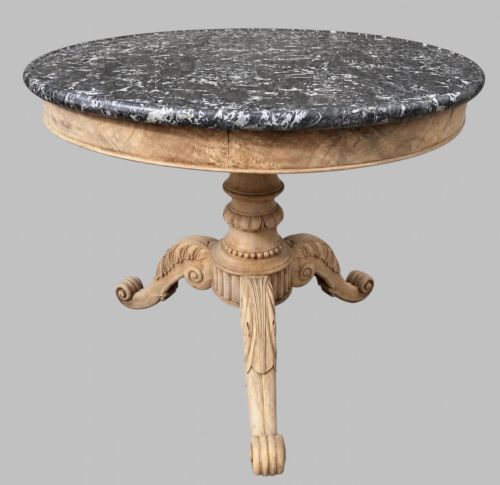
A marble topped wine table functions as a compact circular surface for holding glasses, bottles, or small lamps beside a seating group. These pieces appear primarily as French gueridon tables, alongside English occasional and lamp tables.
Most examples date from the nineteenth century, including Victorian and Regency periods, shaped with single central pillars or tripod supports. Makers often utilised figured timbers like mahogany, walnut, and rosewood to frame the stone inserts.
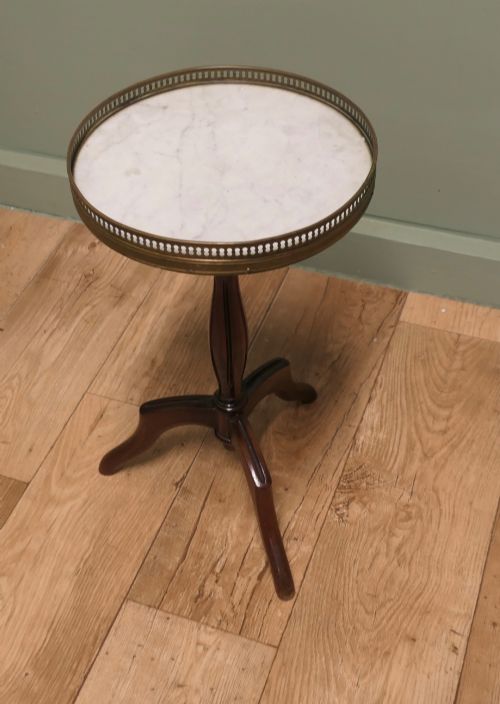
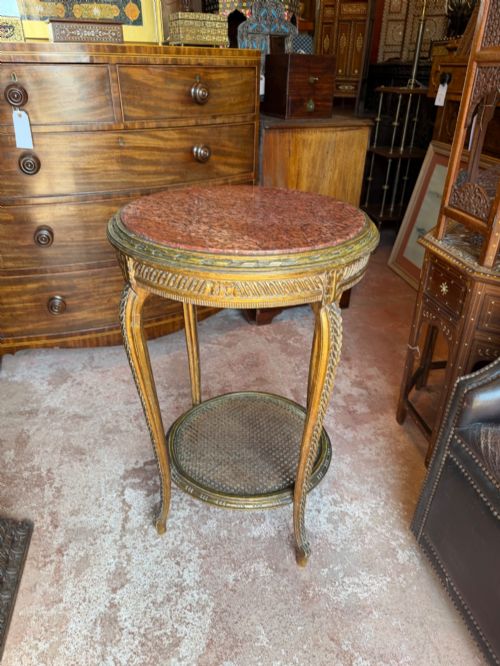
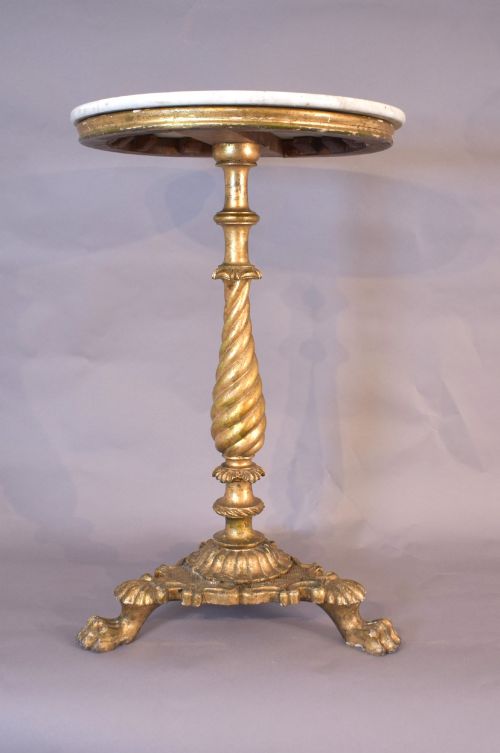
Buyers encounter variations ranging from simple ebonised stands to decorative giltwood designs featuring applied bronze or brass mounts. The stone tops themselves span plain white marble, black onyx, and multi-coloured specimen marble compositions.
How they were made
Cabinetmakers built the foundational frames using dense hardwoods like mahogany and walnut, frequently turning central pedestals on lathes. Tables often incorporate subsidiary timbers such as satinwood or employ ebonising techniques to achieve contrasting tones.
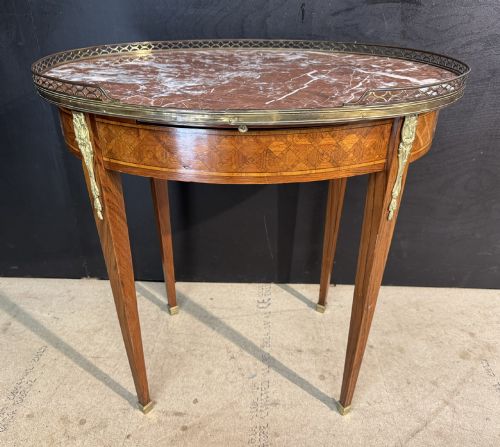
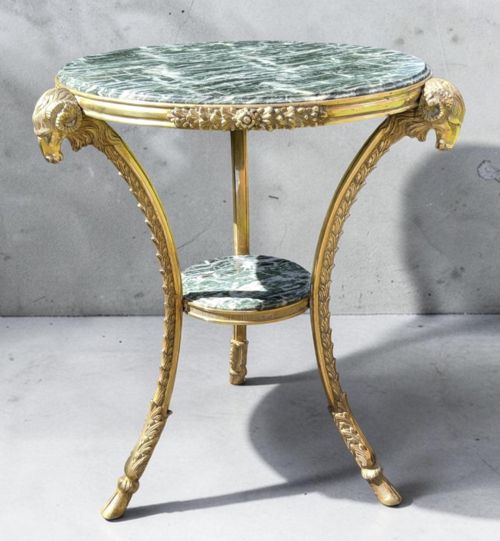
Stonemasons cut and polished the inset marble tops to fit flush within raised wooden rims or brass galleries. Giltwood and brass components, including cast mounts like rams heads or floral mouldings, were applied to enrich the structural joins.
Marble Topped Wine Table Retail Price Guide 2026
Typical asking prices for marble topped wine table among the pieces listed under this phrase on Sellingantiques today, from the lower quarter to the upper quarter. They describe what is for sale here now, not the wider market.
Several tables feature cast brass rams heads peering out from beneath the marble rim.
What varies in quality
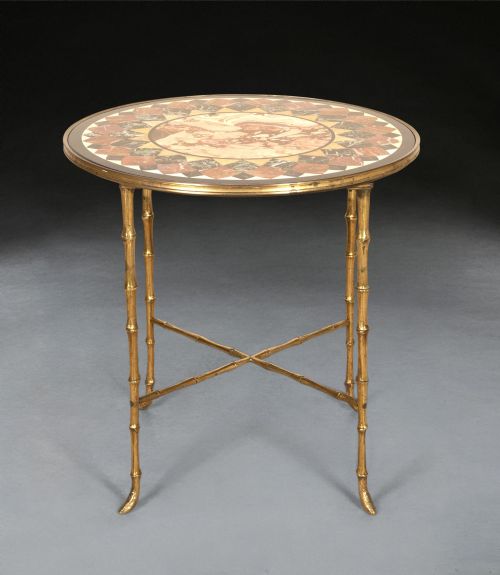
Quality rests upon the selection of timber figures and the grade of the stone inset, particularly where multi-coloured specimen marbles or pietra dura work appear. Finer pieces demonstrate precise joinery on pedestal bases and finely chased or cast ormolu mounts rather than plain stamped brass.
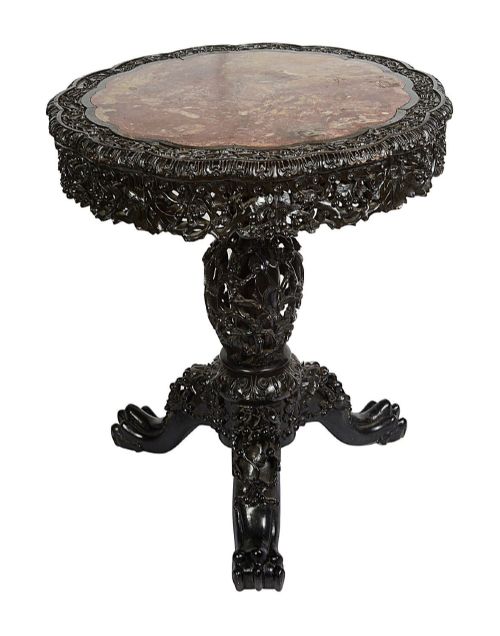
The sophistication of the carved wooden details, such as swan motifs, fluted columns, or gilded foliage, separates standard production furniture from high workshop output.
L.Martin of Paris·Weisweller
The Marble Topped Wine Table Glossary
- Gueridon
- A small circular table on a single pillar or tripod base, originating in France during the seventeenth century. These pieces serve primarily as occasional or lamp tables.
- Bouillotte table
- A small French neoclassical occasional table with a raised gallery around the edge of the marble top to prevent items from sliding off during card games. They often include small pull-out candle slides beneath the rim.
- Pietra dura
- An artistic technique using cut and fitted polished coloured stones to create geometric or pictorial designs. This painstaking mosaic work appears inset into tabletops.
- Ormolu
- Gilt bronze ornamentation applied to furniture and decorative objects. The technique involves creating a finely chased bronze mount and coating it in gold amalgam.
- Specimen marble
- A tabletop composed of numerous small samples of different coloured and textured marbles arranged in geometric patterns. These pieces demonstrate the mineral collecting tastes of the period.
Marble Topped Wine Table: Frequently Asked Questions
What is a gueridon table?
A gueridon is a traditional French circular table supported by a single central pedestal or three legs. They were originally designed to hold candlesticks or wine vessels.
Over time, these versatile stands evolved into general occasional furniture used for lamps and decorative objects in principal rooms.
How do I care for a marble top?
Marble is a porous stone that absorbs liquids readily, so coasters should be used beneath all glasses and cups. Wipe spills immediately with a damp cloth and avoid acidic cleaners that etch the polished surface.
Periodic application of a specialist stone wax helps protect the finish from moisture and minor scratches.
Where should I place a wine table?
These compact tables suit corners, tight spaces between armchairs, or beside sofas where a full-sized coffee table will not fit. Their small circular footprint makes them easy to move about a room as needed.
They also function effectively as plant stands or display surfaces for small sculptures and lamps.
How do I identify a Regency period table?
Regency tables, dating from the early nineteenth century, typically display classical revival influences such as sabre legs, carved reeding, and dark tropical hardwoods like rosewood or mahogany. Brass inlay and gilt bronze mounts frequently accent the timber frames.
Proportions during this era remain clean and restrained, drawing inspiration from ancient Greek and Roman design.