

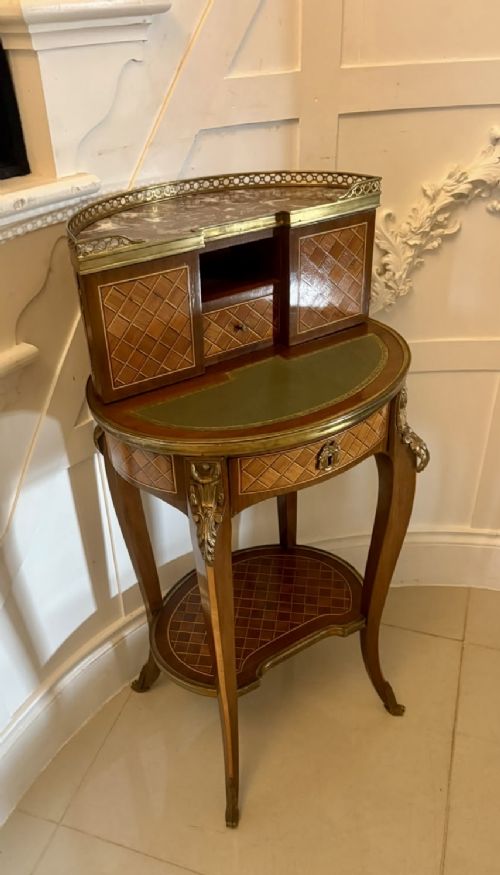
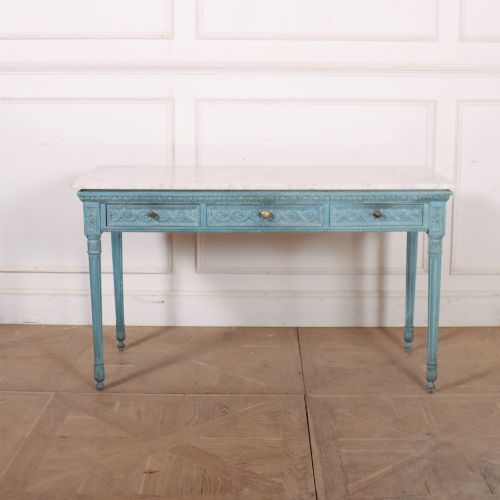


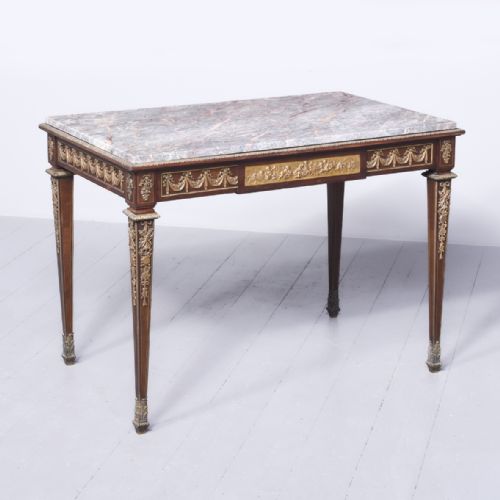
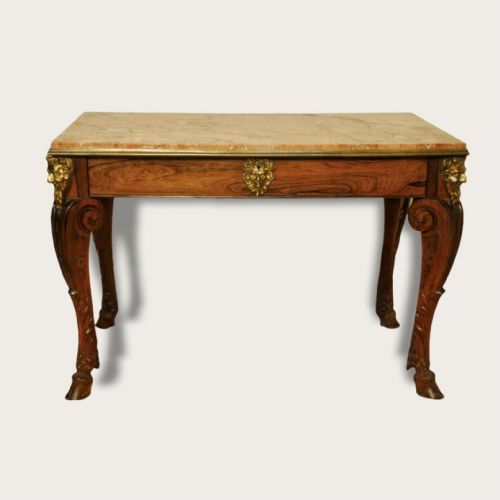


Marble Top Writing Table
A marble top writing table brings solid stone and warm timber together for a practical surface with architectural weight.
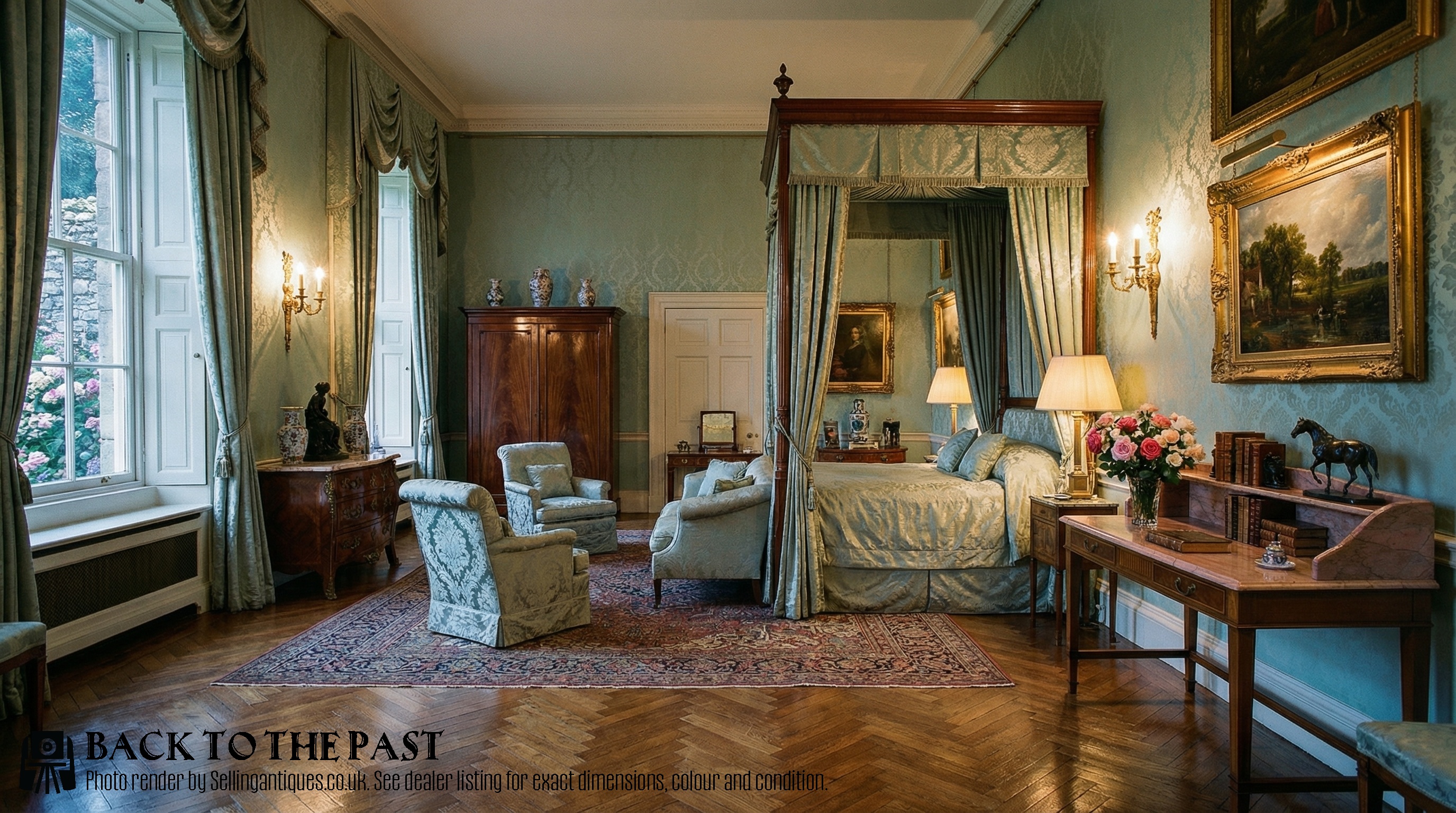
Marble Top Writing Table
A marble top writing table spans several distinct forms including side tables, centre tables, console tables, and dedicated writing desks. These pieces appear across the eighteenth century, nineteenth century, and early twentieth century, reflecting varied European cabinet-making traditions from British workshops to French and Italian makers.
The most frequent examples on this page date from the Victorian and nineteenth-century periods, often utilising mahogany, burr walnut, or satinwood as the primary timber. Buyers encounter diverse regional expressions, from Louis XVI style French pieces with ormolu mounts to Regency designs and Swedish painted furniture.
Beyond standard desks, the inventory encompasses related forms like bonheur du jours, dressing tables, washstands, and sofa tables fitted with marble surfaces. Each object combines a sturdy stone top with a timber base designed for writing, display, or general surface use in reception rooms and bedchambers.
How they were made
Cabinet-makers constructed the timber frames of these tables using dense hardwoods like mahogany, satinwood, and walnut, often enhanced by ebonised or painted finishes. Skilled joiners shaped curved fronts, pedestal supports, and delicate legs to bear the substantial weight of fitted stone.
Carved or cast ormolu mounts, brass details, and inlaid stone elements frequently decorate the exterior structures, particularly on French Neoclassical and Louis XVI style items. Heavy marble slabs were cut, smoothed, and fitted precisely to the wooden carcass to provide a durable, cool working surface.
Marble Top Writing Table Retail Price Guide 2026
Typical asking prices for marble top writing table among the pieces listed under this phrase on Sellingantiques today, from the lower quarter to the upper quarter. They describe what is for sale here now, not the wider market.
Current listings feature pieces spanning the 18th century, 19th century, and Edwardian periods in mahogany, walnut, and satinwood.
What varies in quality
The distinction between standard production and exceptional work lies in the refinement of the timber selection and the crispness of any applied bronze or ormolu mounts. Finer pieces display carefully figured burr walnut, satinwood, or fiddle back mahogany matched across the surfaces.
Construction methods determine structural longevity, visible in the precision of the joinery, the thickness and polish of the marble slab, and the integration of secondary woods. Signed or attributed pieces by notable makers demonstrate superior hand-finishing and more ambitious architectural proportions.
Maples·Paul Sormani·John Mclean·Befort Jeune
The Marble Top Writing Table Glossary
- Ormolu
- Gilded bronze mounts applied to furniture. This technique gained widespread popularity in French Neoclassical and Louis XVI style pieces.
- Bonheur du jour
- A small, light ladies' writing desk featuring a tiered superstructure with drawers and pigeonholes above the main writing surface.
- Satinwood
- A lustrous, fine-grained yellow timber utilised extensively in eighteenth and nineteenth-century cabinet-making for decorative veneers.
- Console table
- A table designed to stand against a wall, often supported by brackets or console legs rather than four independent vertical posts.
Marble Top Writing Table: Frequently Asked Questions
How do I clean a marble top?
Wipe the surface gently with a soft cloth dampened in warm water and mild, neutral soap.
Avoid abrasive cleaners or acidic substances that can etch the polished stone finish over time.
Are these tables heavy to move?
The integrated stone slabs add considerable weight to the overall timber frame.
Lifting requires two people to prevent strain on the joints and secure the loose marble top.
Can I use it as a desk?
Many examples are specifically designed as writing tables or bonheur du jours with built-in drawers.
Check the height and knee clearance of each individual piece to ensure comfortable daily seating.
How do I identify the period?
Examine the secondary timbers inside the drawers and the style of the decorative mounts.
Neoclassical and Victorian items display distinct joinery techniques and proportions typical of their respective decades.