

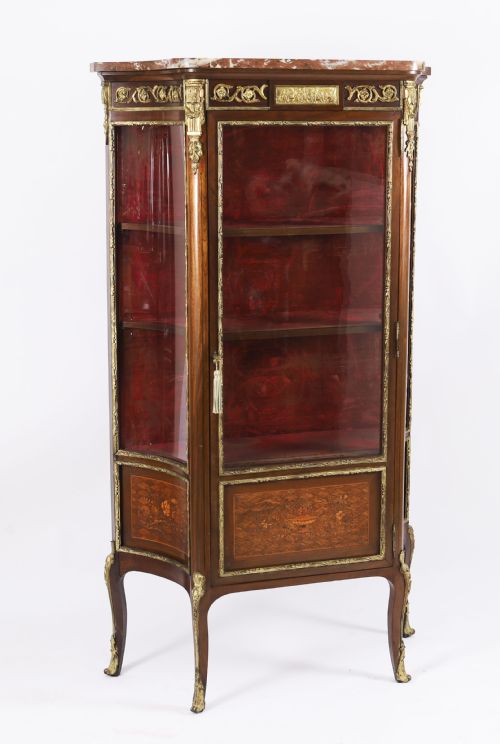


Marble Top Vitrine Cabinet
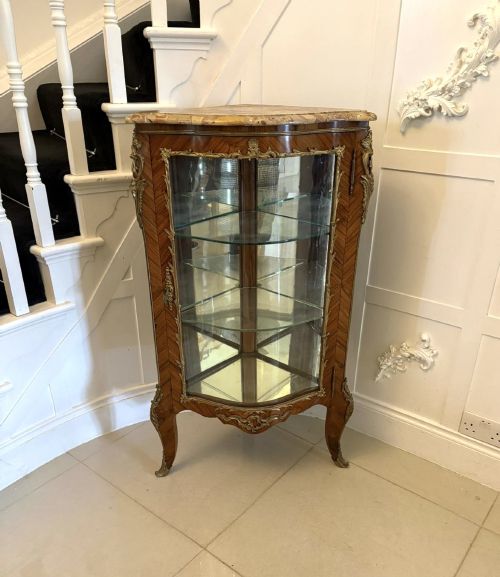
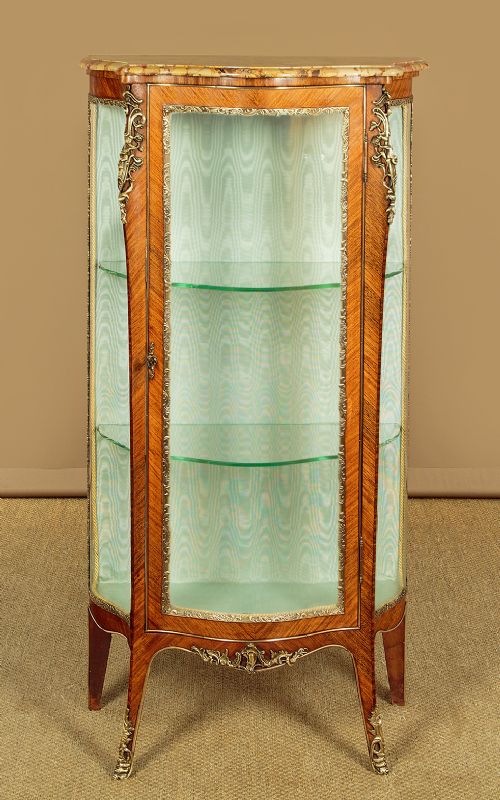
A marble top vitrine cabinet brings a combination of polished stone and glass display into a room, designed to showcase porcelain and small treasures.
Marble Top Vitrine Cabinet
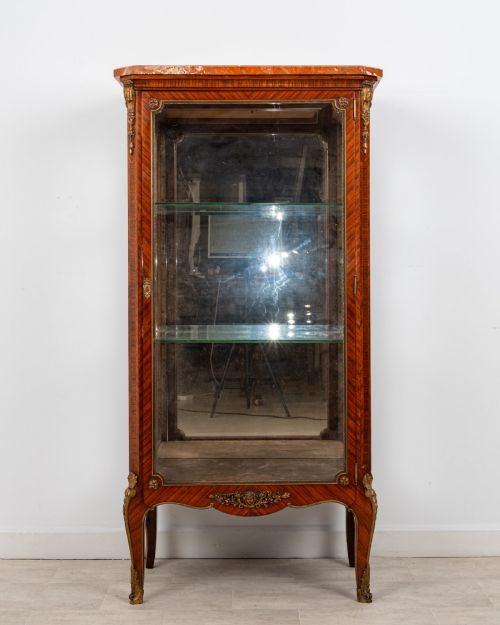
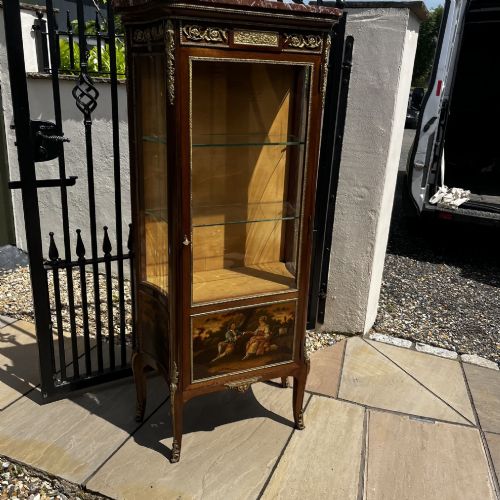
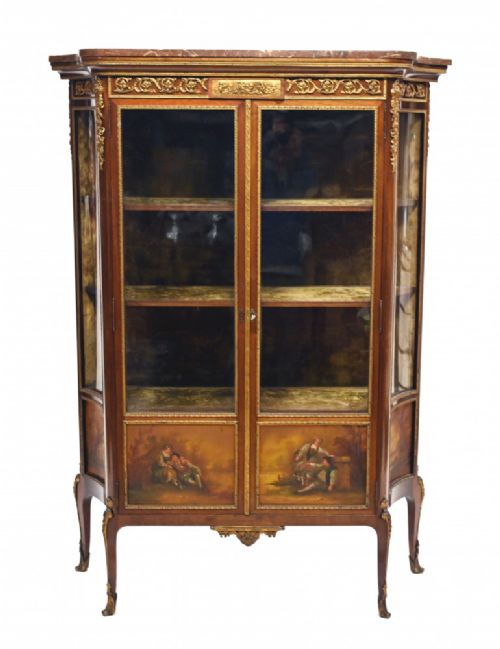
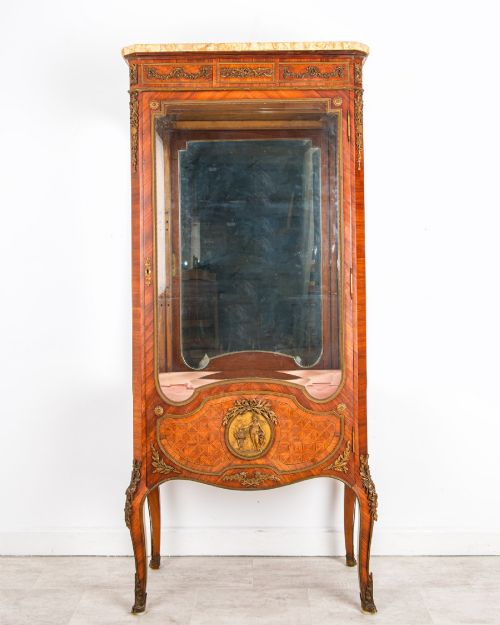
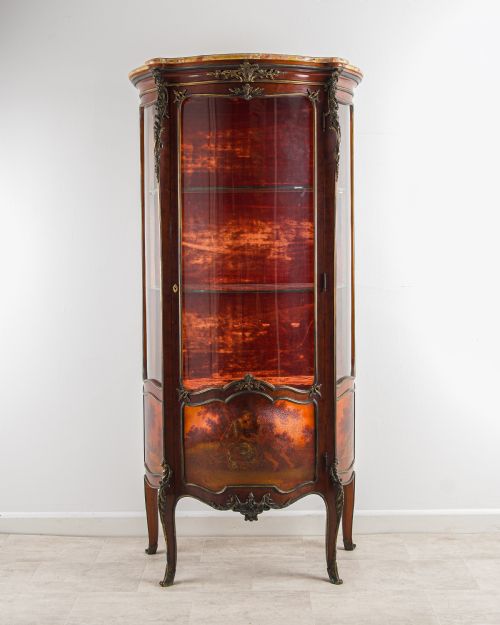
A marble top vitrine cabinet combines a sturdy stone surface with glazed wooden framing, creating an enclosed display space for porcelain and objects. The pieces found here predominantly date from the nineteenth century into the early twentieth century, showing strong French revival influences.
Forms range from compact corner cabinets and narrow pier cabinets to serpentine fronted display pieces and boudoir cabinets. Many examples follow Louis XV and Louis XVI styles, incorporating curved glass sides and elaborate gilt mounts alongside their characteristic stone slabs.
How They Were Made
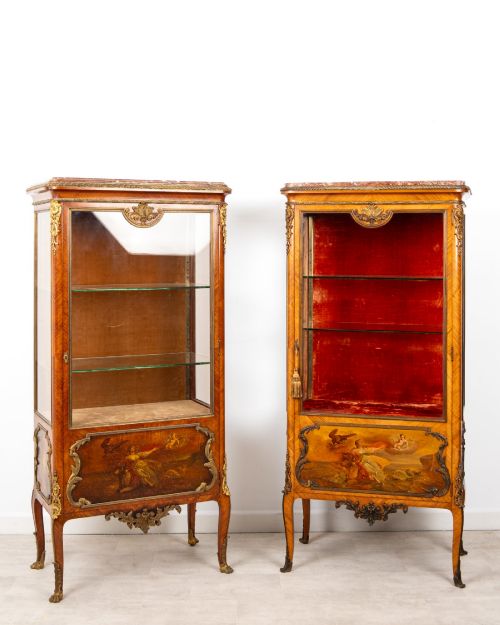
Cabinet makers utilised dense hardwoods such as kingwood, mahogany, and walnut as a foundation for intricate marquetry and parquetry patterns. These timber frames were shaped into serpentine or straight profiles, often finished with hand-painted Vernis Martin panels depicting pastoral scenes.
Cast ormolu and gilt-bronze mounts decorate the corners, feet, and friezes, framing the glass doors and complementing the heavy marble slabs fitted to the upper surface.
Marble Top Vitrine Cabinet Retail Price Guide 2026
Typical asking prices for marble top vitrine cabinet among the pieces listed under this phrase on Sellingantiques today, from the lower quarter to the upper quarter. They describe what is for sale here now, not the wider market.
The selection includes mahogany, walnut, and kingwood structures paired with marble and ormolu mounts across nineteenth-century and early twentieth-century dates.
What Varies in Quality
The distinction between standard production and masterwork pieces rests in the execution of the bronze mounts and the precision of the timber veneers. Finer examples feature crisply chased ormolu, hand-mixed varnishes, and substantial marble tops with well-finished edges.
Signatures from established makers or workshops elevate a piece, alongside the integration of hand-painted panels rather than printed decorations behind the glass and brass frameworks.
François Linke·G. Durand·Maison Krieger·Victor Raulin
The Marble Top Vitrine Cabinet Glossary
- Vitrine
- A glass-fronted cabinet designed for displaying fine objects and porcelain. These pieces usually feature glazed sides to let light pass across the interior shelves.
- Ormolu
- Gilt bronze mounted onto furniture and decorative objects. The technique involves applying a gold amalgam to a bronze base and firing it to leave a rich metallic finish.
- Vernis Martin
- A type of simulated Japanese lacquer developed in France during the eighteenth century. Artisans applied multiple layers of varnish and hand-painted scenes onto the wooden panels of the cabinet.
- Marquetry
- The art of applying thin slices of wood veneers to a structure to form decorative pictures or geometric patterns. Makers selected contrasting timber tones to create depth on the cabinet doors.
- Parquetry
- A geometric mosaic of wood pieces used for decorative surfaces on furniture. This technique forms repeatable patterns such as squares or cubes across the timber panels.
Marble Top Vitrine Cabinet: Frequently Asked Questions
What is a vitrine cabinet used for?
These cabinets were designed to display porcelain, glass, and small decorative items safely while keeping dust away. The glass panels and shelves allowed light to circulate around the displayed objects.
Over time, they transitioned from practical storage in salons and drawing rooms into decorative statement furniture that defined nineteenth-century interior styling.
How do I identify Louis XV style?
Louis XV style furniture relies on asymmetrical curves, naturalistic floral motifs, and serpentine shapes. You will see cabriole legs and sweeping lines throughout the wooden framework.
This aesthetic draws heavily on French Rococo design, favouring flowing contours over rigid geometric symmetry.
Where does the marble top sit?
The marble slab rests directly on the upper surface of the cabinet, providing a durable and decorative counter. These slabs are generally heavy and cut to follow the exact serpentine or straight profile of the timber below.
In many examples, the edges of the stone are bevelled or moulded to match the contours of the gilt bronze mounts.
What is a pier cabinet?
A pier cabinet is built specifically to fit the narrow wall space found between windows or architectural pillars. These pieces tend to have a shallow depth while maintaining height to maximise display capacity.
They often incorporate a single glass door and a marble top, making them suitable for smaller rooms where floor space is limited.