
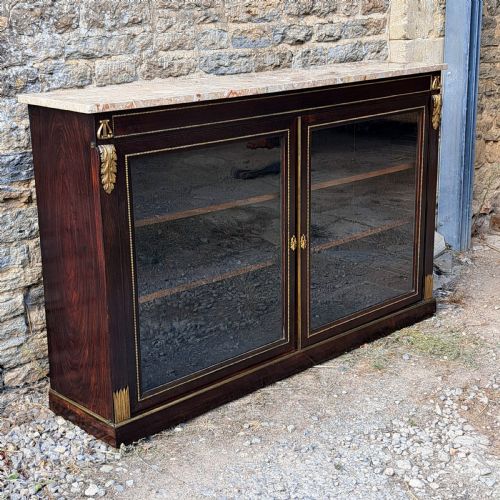
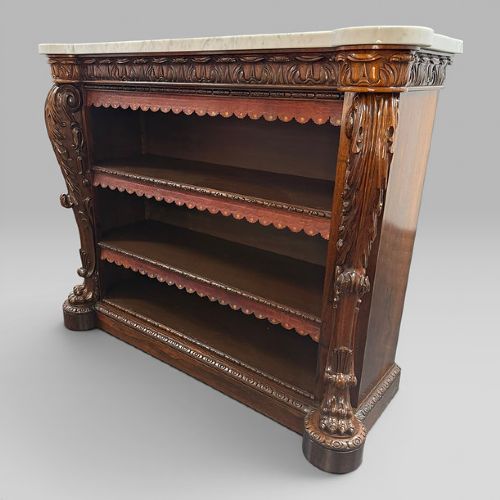


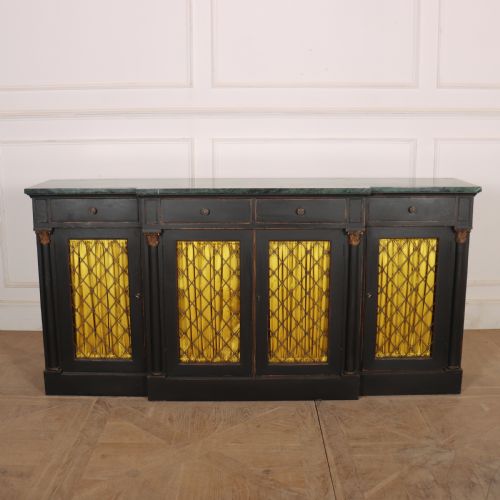
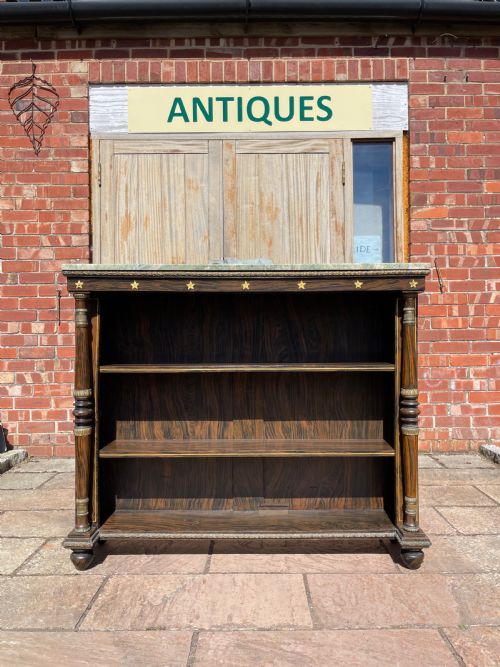

Marble Top Low Bookcase
A marble top low bookcase brings substantial weight and refined surface texture to a room, offering display space above and book storage below.
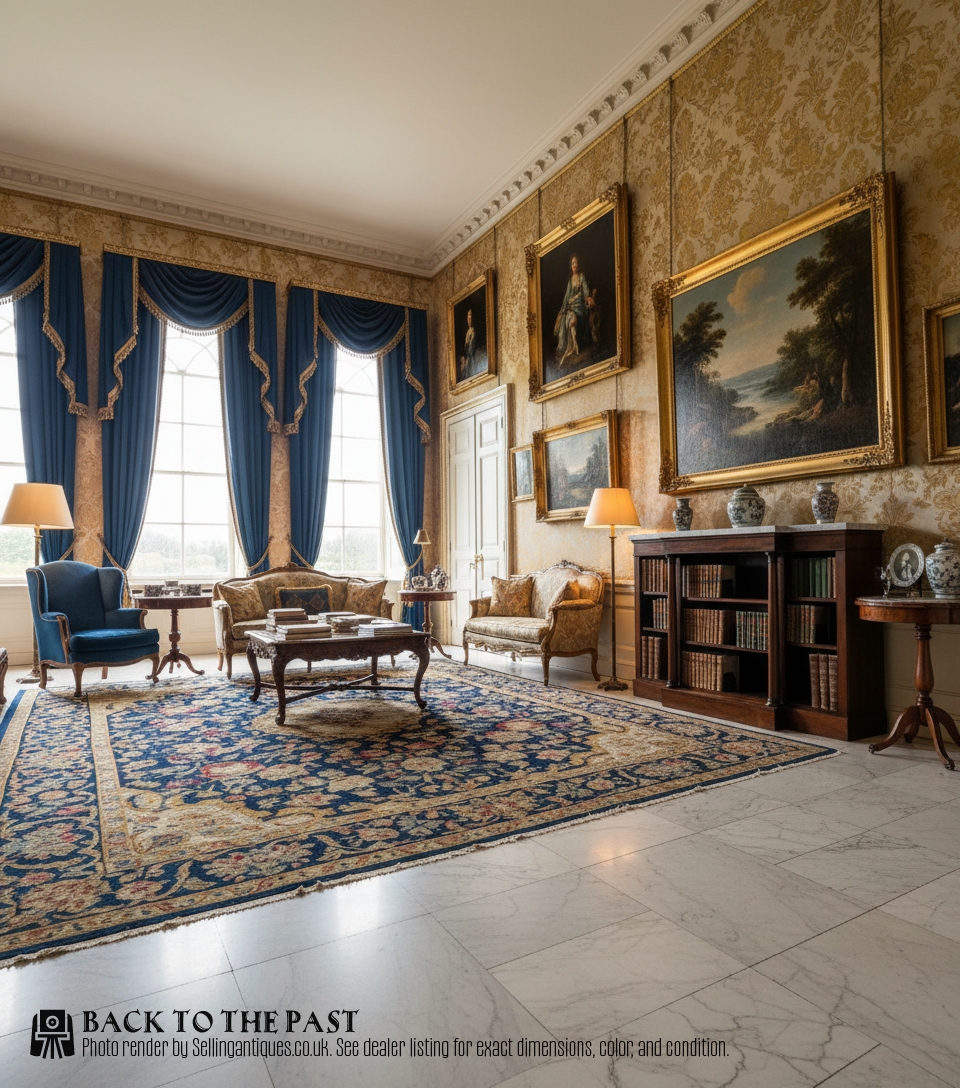
Marble Top Low Bookcase
A marble top low bookcase combines lower cabinet storage or open shelving with a sturdy stone surface, appearing in forms such as side cabinets, pier cabinets, and chiffoniers. These low pieces emerge across the Georgian, Regency, William IV, and Victorian periods.
Rosewood and mahogany dominate the timber construction, frequently accented with brass, ormolu, and glass. The proportion remains low to the ground, allowing the marble slab on top to function as a display surface.
Examples on this page span from the early nineteenth century through to the Edwardian era, showing both English cabinet-making and French influence such as French Empire and Napoleon III styles.
Markers of Quality
The choice and figuring of the timber veneer dictate much of the visual weight, with well-matched grain patterns separating standard items from superior commissions. The weight, thickness, and colour variation of the marble top also indicate the original cost of the piece.
Fine craftsmanship shows in the precision of brass or ormolu mounts, the integration of parcel gilding, and the condition of interior fittings like adjustable shelving and leather-lined elements.
Listings feature rosewood, mahogany, walnut, and kingwood cabinets paired with marble tops across Georgian, Regency, and Victorian periods.
Gillows of Lancaster·Collinson and Lock London
The Marble Top Low Bookcase Glossary
- Chiffonier
- A low cabinet featuring a combination of shelves, drawers, or enclosed cupboards. This form evolved during the Regency period and often incorporates a marble top.
- Ormolu
- Gilded bronze mounts applied to furniture for decorative effect. It brings a bright metallic contrast to dark woods like rosewood and mahogany.
- Pier Cabinet
- A narrow low cabinet designed to stand against the wall space between windows. These frequently include glass doors and marble tops.
- Breakfront
- A piece of furniture where the central section projects forward from the flanking sides. This layout adds architectural depth to large cabinets and bookcases.
- Parcel Gilt
- Partially gilded woodwork where specific carved details or mouldings receive a gold leaf finish. It highlights structural lines against the dark timber base.
Marble Top Low Bookcase: Frequently Asked Questions
Where should I place a low bookcase?
These cabinets suit living rooms, studies, or hallways where tall shelving might overwhelm the space. The low profile keeps sightlines open across the room.
Position them against plain walls to let the timber grain and marble surface draw the eye without competing with other furniture.
How do I care for the marble top?
Wipe the stone surface regularly with a soft, damp cloth and neutral soap. Avoid acidic cleaners that can etch the polish.
Use coasters and felt pads under objects placed on the marble to prevent scratching and staining over time.
Can I adjust the interior shelves?
Many nineteenth-century examples feature adjustable wooden or brass rack supports for the internal shelves. This allows you to alter shelf heights to fit various book sizes.
Check the listing details to confirm whether the shelving is fixed or movable.
How do I distinguish Regency from Victorian pieces?
Regency pieces often display restrained classical lines, brass inlay, and rosewood veneers, reflecting early nineteenth-century neoclassical tastes. Victorian examples tend to be heavier in proportion, sometimes incorporating richer carving or walnut.
Examining the secondary woods and construction methods helps clarify the manufacturing era.