



Empire Open Bookshelf
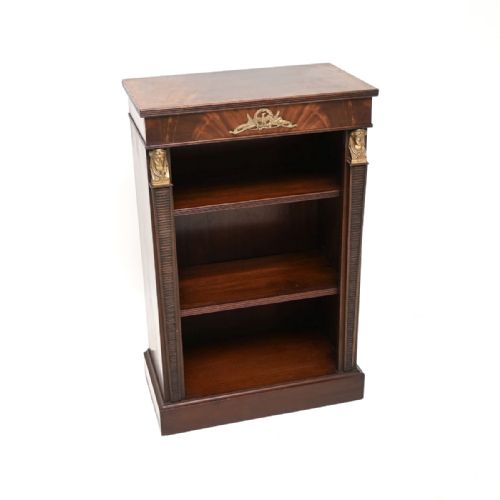
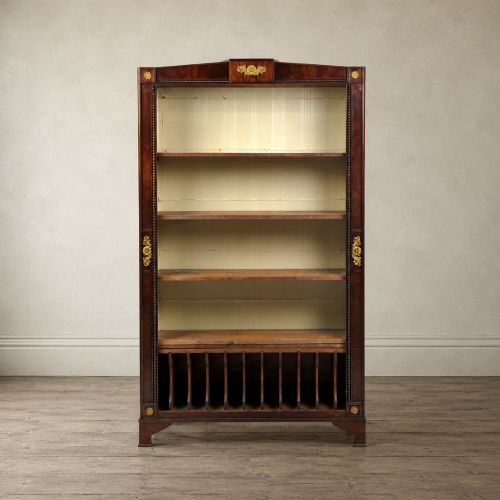
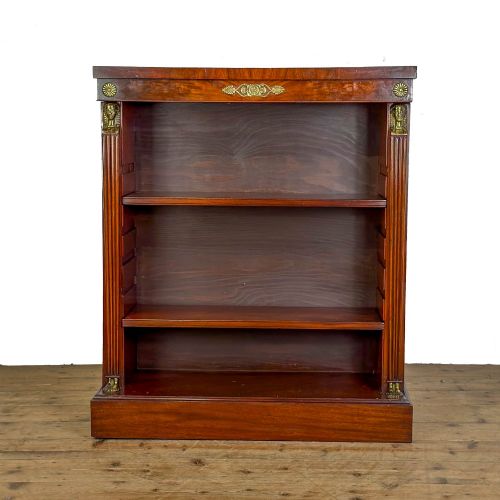
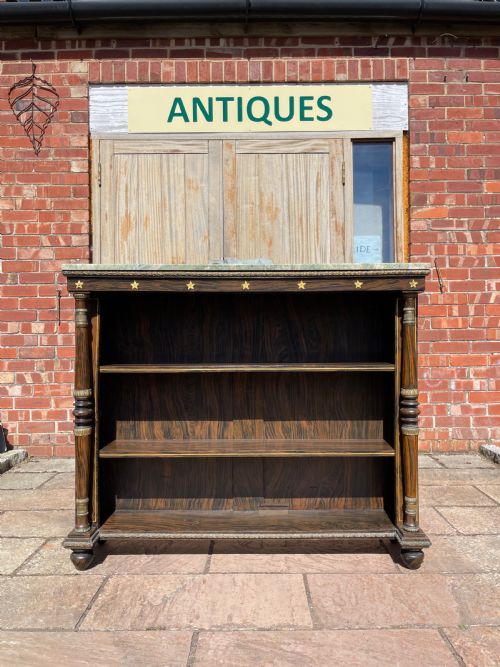
These empire open bookshelf examples bring classical architectural lines and rich timbers into a room, offering both display space and strong proportions.
Empire Open Bookshelf
An empire open bookshelf provides accessible shelving framed by the bold architectural vocabulary of the nineteenth century and its later revivals. These pieces combine linear shelving with classical proportions, making them a practical choice for displaying books and objects while anchoring a wall with formal weight.
On this page, buyers are most likely to meet mahogany or rosewood versions dating from the nineteenth century or the subsequent revival periods. The designs frequently incorporate classical detailing such as columns, pilasters, or metal mounts, reflecting the enduring influence of French empire and neoclassical tastes.
How they were made
Cabinetmakers constructed these bookcases using dense timbers like mahogany, rosewood, and satinwood, frequently applying veneers over secondary woods to achieve smooth, figured surfaces. Workshops also utilised ebonised wood or simulated paint finishes to mimic rarer materials and create stark visual contrasts against lighter walls.
Decorative metalwork forms a central component of the construction, with cast ormolu and brass mounts applied to corners, friezes, and pillars. Marble tops occasionally complete the upper surface, adding weight and a cool tactile contrast to the warm timber carcase.
Listings feature pieces spanning the nineteenth century up to 1930, incorporating materials such as brass, mahogany, ormolu, marble, ebonised wood, rosewood, satinwood, and Swedish birch.
What varies in quality
The standard of timber selection and veneer matching defines the baseline of refinement across these bookcases. Superior examples display continuous, richly figured grain patterns across the primary surfaces, whereas simpler pieces rely on plain or uniformly dark timber.
The precision and material quality of the metal mounts similarly separate the exceptional from the ordinary. Finely chased ormolu and crisp brass fittings indicate a higher level of workshop investment than heavy or plain cast substitutes.
The Empire Open Bookshelf Glossary
- Ormolu
- Gilded bronze used for decorative mounts and hardware on furniture. This technique creates a rich golden accent against dark woods like mahogany.
- Ebonised wood
- Timber stained or painted to imitate ebony. This dark finish provides a sharp, formal contrast often paired with brass mounts.
- Neoclassical
- A style inspired by the classical architecture and art of ancient Greece and Rome. It emphasises symmetry, straight lines, and classical proportions.
- Satinwood
- A durable, yellowish timber prized for its lustrous grain. Cabinetmakers used it to create bright, polished surfaces on fine case furniture.
Empire Open Bookshelf: Frequently Asked Questions
Where should I place an open bookshelf?
These bookcases suit studies, libraries, or living rooms where their formal architectural lines can anchor the space.
Ensure the room has stable humidity levels to protect nineteenth-century veneers and solid timber carcases from splitting.
How do I care for mahogany shelves?
Dust the timber regularly with a soft, dry cloth and avoid placing the bookcase in direct sunlight.
Apply a microcrystalline wax occasionally to nourish the polished surface without building up excessive residue.
Are these bookcases suitable for heavy books?
Solid mahogany and rosewood construction provides robust support for standard collections of books.
Check the fixing of the internal shelf supports to ensure they can bear the weight of dense volumes.
How can I identify the period?
Look closely at the timber preparation, the construction of the shelf supports, and the style of the metal mounts.
Nineteenth-century pieces often show hand-cut joints and denser primary woods compared to later twentieth-century revivals.