

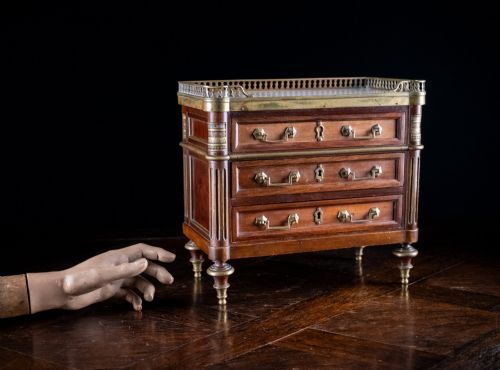
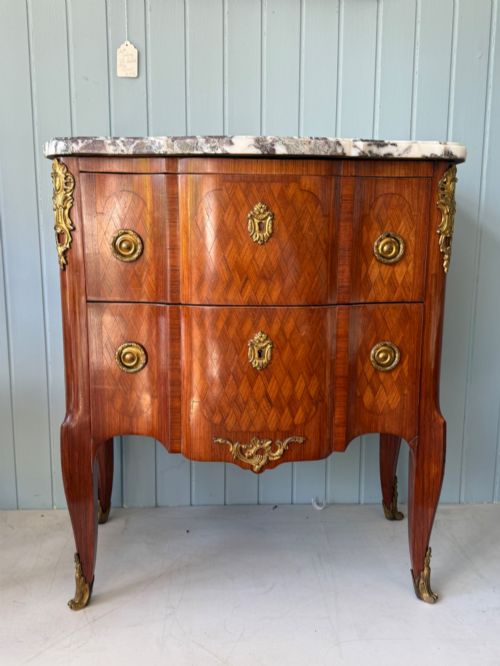
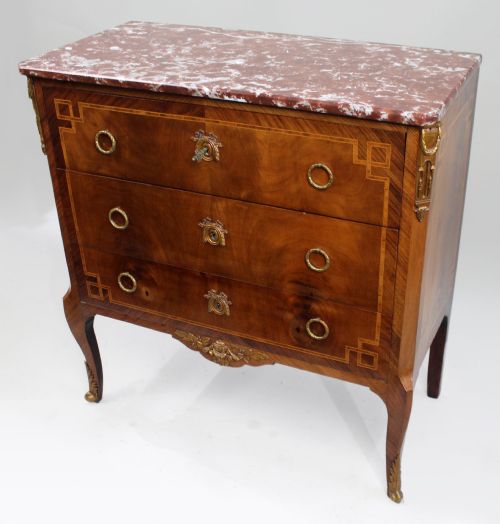
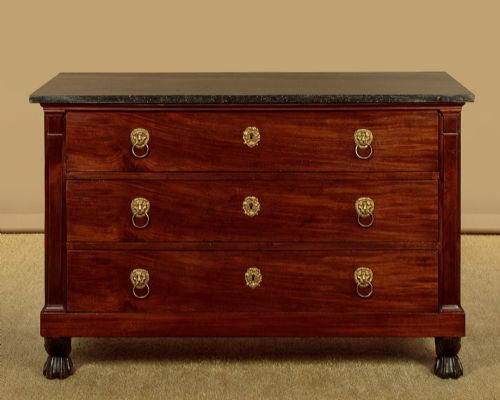
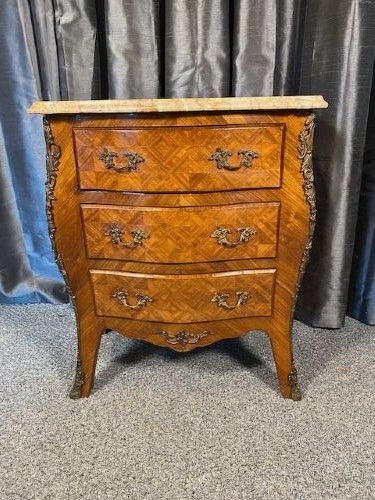
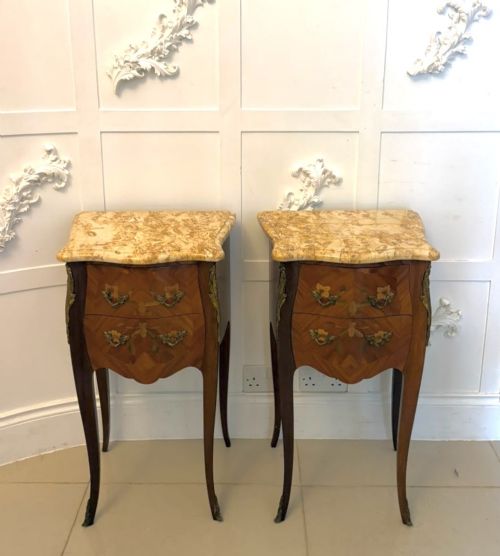
Marble Top Chest of Drawers
A marble top chest of drawers combines useful storage with a durable stone surface, bringing continental elegance to a traditional bedroom or living space.
What They Are
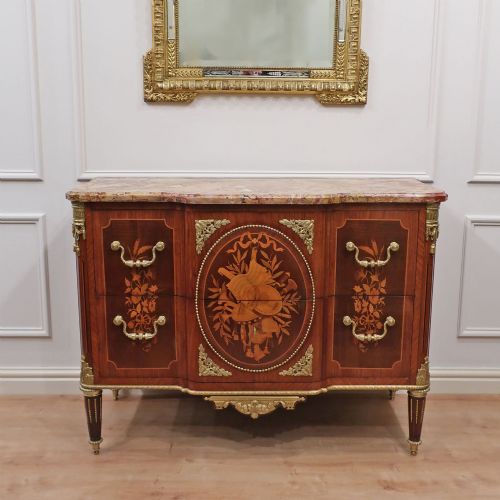
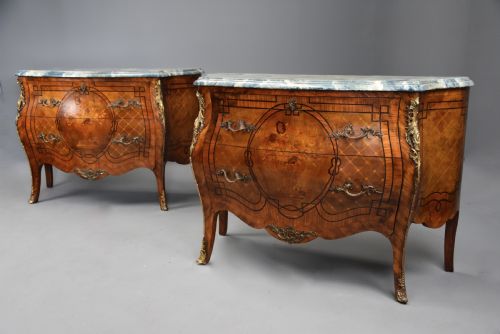
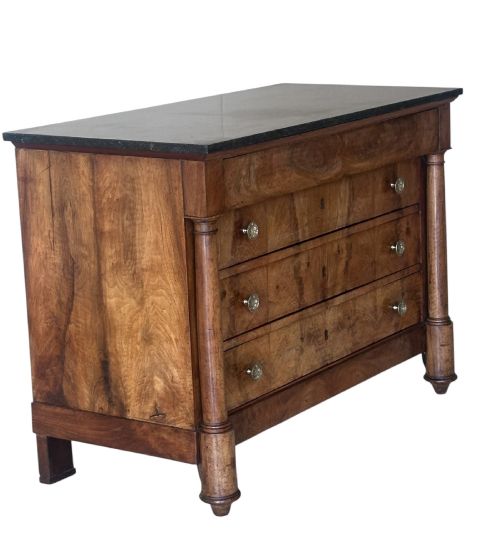
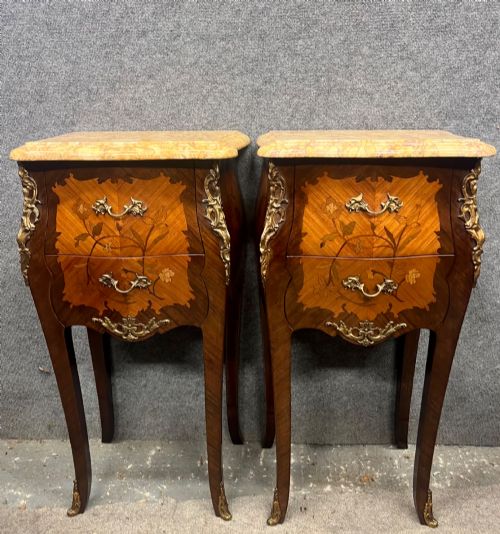
A marble top chest of drawers, often formed as a commode, serves as a robust storage unit topped with smooth stone. These pieces appear frequently in French designs alongside English and Dutch variants.
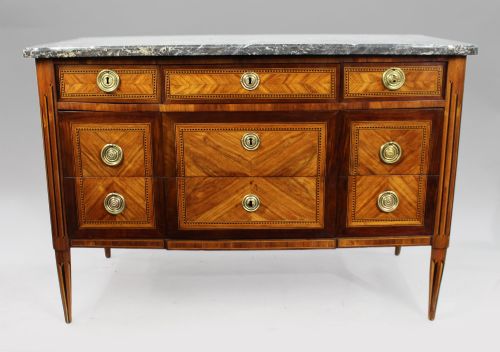
The form spans from the eighteenth century through to the early twentieth century. Common styles include Louis XV, French Rococo Revival, Directoire, and French Neoclassical.
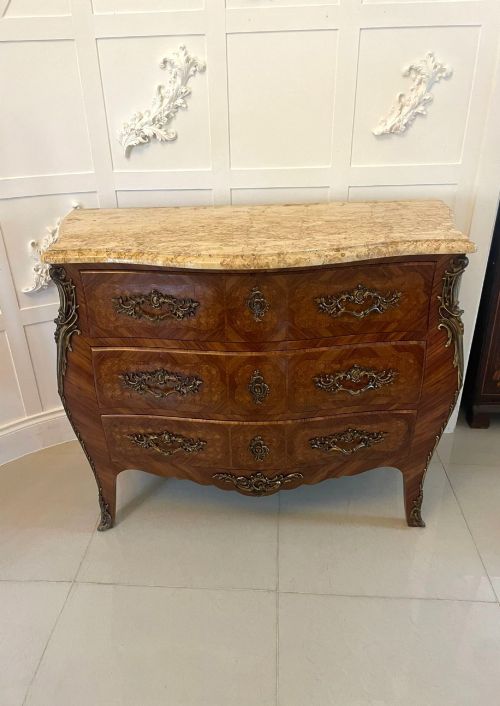
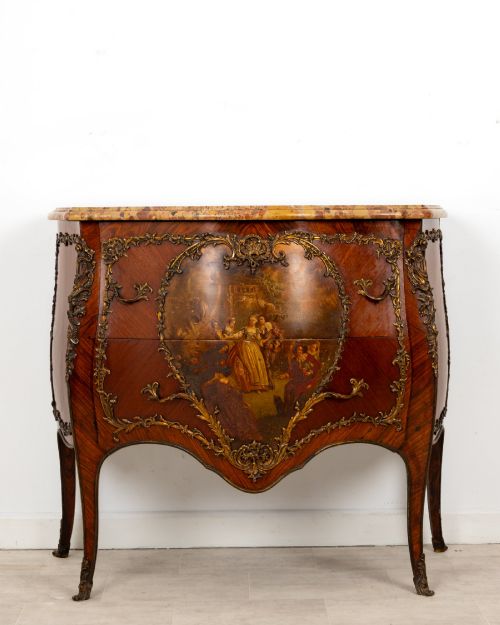
Makers utilised woods such as mahogany, kingwood, burr elm, walnut, satin birch, and oak. Some examples incorporate painted finishes, faux bamboo, or parquetry and marquetry inlay.

How They Were Made
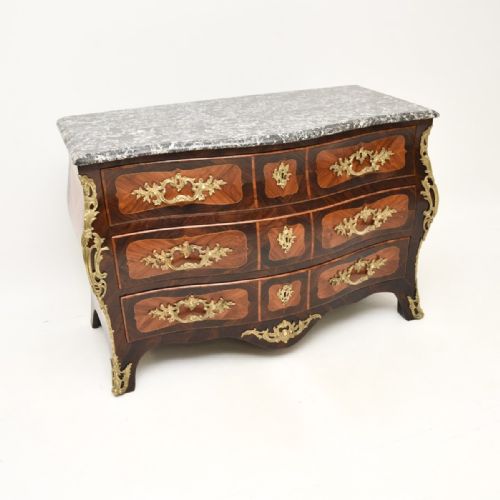
Cabinet makers constructed the carcass from timbers like flame mahogany, walnut, and oak, often applying veneers of kingwood or burr elm across the drawer fronts and sides. Parquetry and marquetry added geometric and floral patterns to the wooden surfaces.
Mounts in brass, ormolu, and bronze decorated the corners, handles, and apron, while scagliola or natural marble provided the heavy stone top. Structural support balanced the substantial weight of the marble slab against the timber base.
Retail Price Guide 2026
Typical UK retail prices for marble top chest of drawers, calculated from the Sellingantiques database of over a million retail prices indexed since 2003. This retail price guide relies exclusively on Sellingantiques data; no external sources or auction records are used, so the figures do not describe the wider market.
Listings feature periods from the eighteenth century up to nineteen-twenty, with mahogany and marble remaining the most common material combination.
What Varies in Quality
The refinement of the ormolu and bronze mounts distinguishes standard utility pieces from higher tier works. Finely chased metalwork and complex parquetry or marquetry patterns indicate superior workshop production.
The selection and matching of stone types, from grey marble to scagliola and Verde Alpi, alter the visual weight of the furniture. Subtly figured timber veneers and precise drawer construction separate simpler provincial chests from grander urban commissions.
Mon Krieger
The Marble Top Chest of Drawers Glossary
- Commode
- A low chest of drawers, frequently associated with French cabinet making and decorative marble slabs.
- Ormolu
- Gilded bronze mounted to furniture as decorative hardware and corner accents.
- Scagliola
- A composite material made from glue, pigments, and selenite that imitates natural marble.
- Parquetry
- Geometric wood veneer patterns arranged across the exterior surfaces of the chest.
- Marquetry
- Inlaid wood designs forming pictorial or decorative motifs on drawer fronts.
Frequently Asked Questions
What is a commode?
A commode is a decorative chest of drawers, typically continental in origin and fitted with a stone surface.
These pieces function primarily as bedside or reception room storage units.
How heavy is the marble top?
The stone slab adds significant weight to the overall structure of the wooden chest.
Most tops rest unattached on the timber frame, allowing them to be lifted off for transport.
Which woods were used?
Cabinet makers utilised mahogany, walnut, kingwood, burr elm, oak, and satin birch.
Many examples feature decorative veneers or parquetry alongside the solid timber carcass.
What styles are available?
Surviving examples display Louis XV, French Rococo Revival, Directoire, and Dutch Neoclassical design elements.
Ormolu mounts and carved walnut details help define these historical periods.
How should I clean the marble?
Wipe the stone surface using a damp cloth and mild, neutral soap.
Avoid acidic cleaners that can etch or dull the polished finish of the marble.