


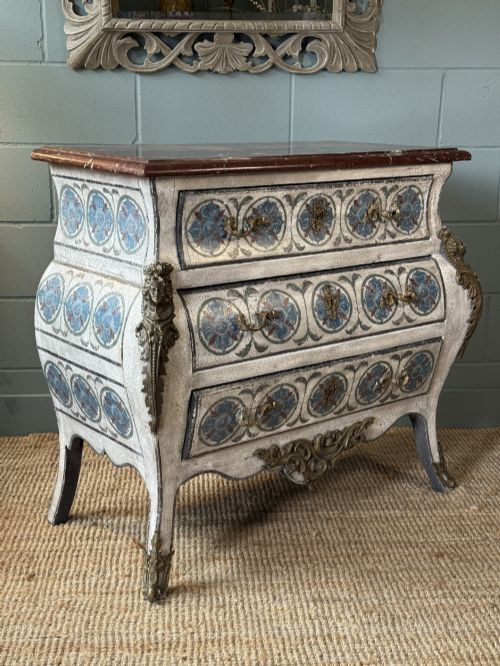


Marble Top Bombe Drawers
Marble top bombe drawers are swelling commodes topped with stone, built to bring Continental curves and surface utility into domestic rooms.

Marble Top Bombe Drawers
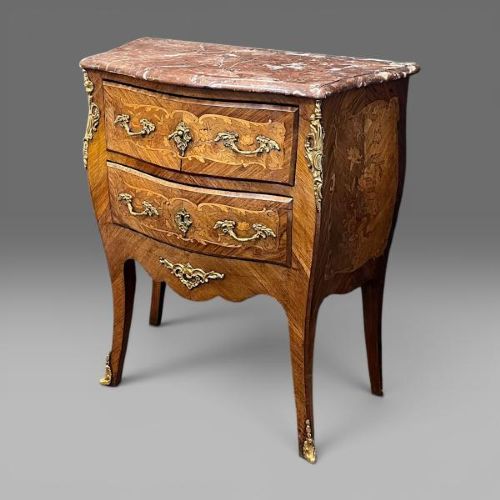
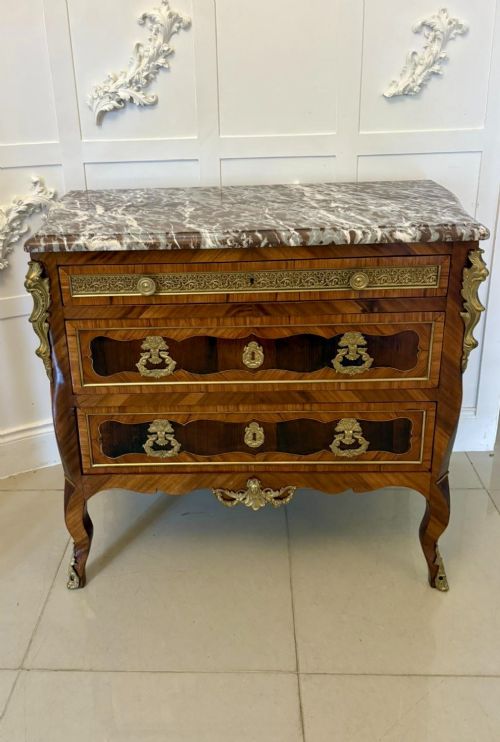
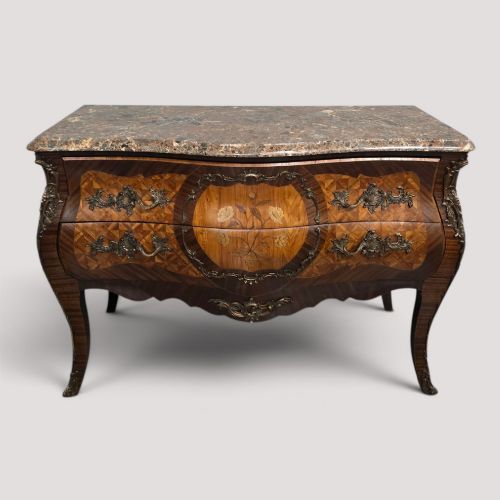
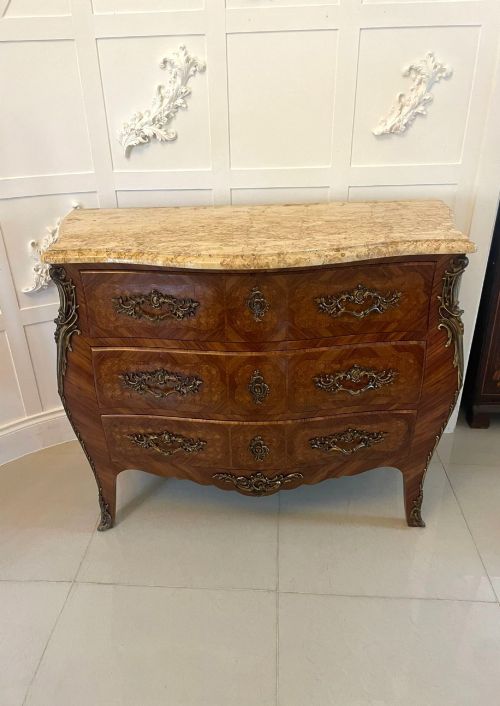
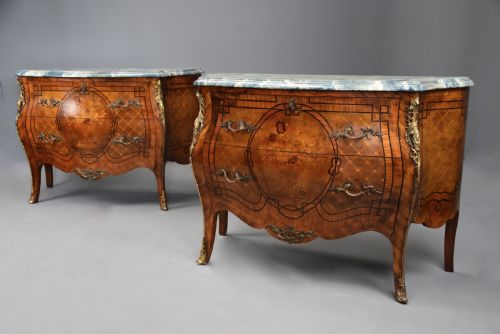
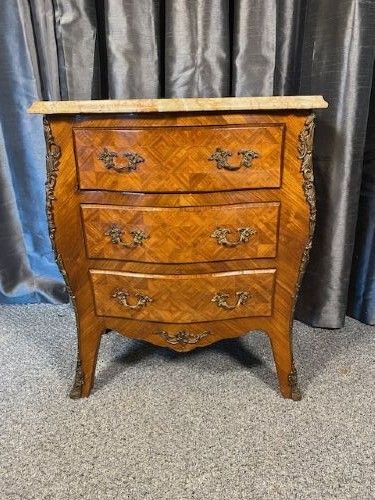
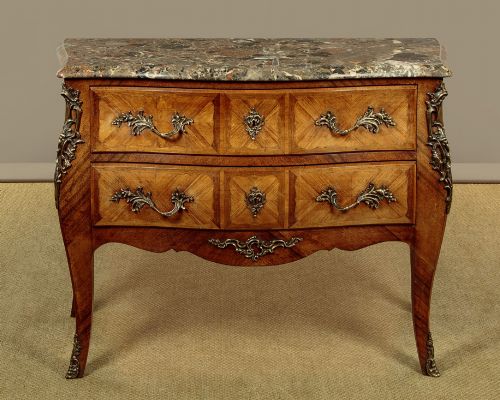
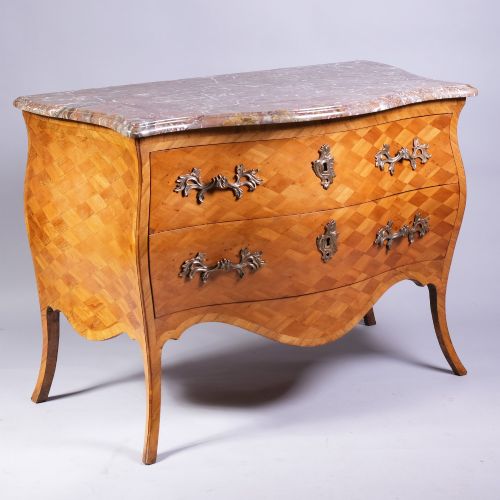
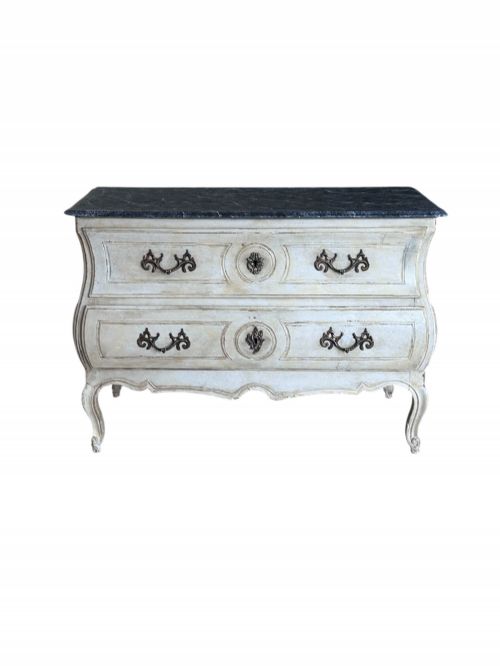
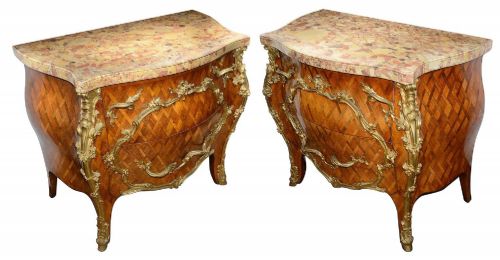
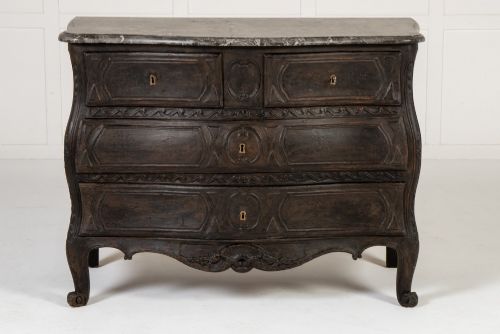
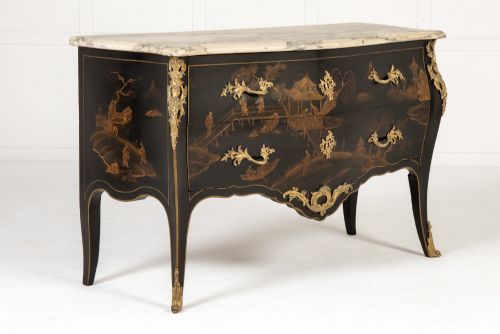
Marble top bombe drawers primarily encompass French commodes and bedside cabinets shaped with pronounced outward-swelling profiles and fitted with heavy stone slabs. The forms range from substantial eighteenth-century examples down to miniature furniture and smaller twentieth-century revival pieces.
The aesthetic leans heavily toward the French Rococo and Louis styles, executed across various periods spanning from the eighteenth century into the twentieth. Buyers encounter numerous commodes alongside bedside tables and sideboards sharing this curved aesthetic.
Origins are predominantly French, though Italian iterations also appear alongside pieces demonstrating regional provincial work. The overriding characteristic remains the swelling serpentine outline paired with a fitted stone top.
How they were made
Construction relies on timber carcases shaped into curves and overlaid with veneers of kingwood, walnut, mahogany, or burr walnut, alongside painted and ebonised finishes. Marquetry and parquetry patterns decorate the surfaces, assembling geometric or floral arrangements from contrasting woods.
Mounts cast in ormolu, bronze, and gilt bronze dress the corners, handles, and apron centres to accent the swelling contours. Heavy marble slabs sit directly upon the timber carcases, following the serpentine and bombe outlines of the furniture beneath.
Marble Top Bombe Drawers Retail Price Guide 2026
Typical asking prices for marble top bombe drawers among the pieces listed under this phrase on Sellingantiques today, from the lower quarter to the upper quarter. They describe what is for sale here now, not the wider market.
The listings here span from the eighteenth century through to the nineteen-thirties, featuring kingwood, walnut, and painted wood beneath marble tops.
What varies in quality
Quality rests in the precision of the carcase curvature and the execution of the timber veneers, where complex parquetry and marquetry demand high joinery skill. Rich selection of woods like kingwood and burr walnut elevates the baseline standard.
The refinement of the bronze and ormolu mounts separates standard production from finer work, as does the thickness and edge profiling of the marble top. Early eighteenth-century origins generally indicate superior hand-cut joinery compared to later revival periods.
The Marble Top Bombe Drawers Glossary
- Bombe
- A swelling, outward-curved furniture shape common in Continental cabinet-making. This convex profile requires specialist timber-bending and shaping techniques.
- Ormolu
- Gilded bronze used for decorative mounts and fittings. It provides metallic contrast against the polished wooden veneers.
- Marquetry
- The art of applying pieces of veneer to a structure to form decorative patterns. Craftsmen utilise various coloured woods to create pictorial designs.
- Parquetry
- Geometric mosaic woodwork used for surface decoration. It creates repeating patterns such as cubes or triangles across the drawer fronts.
- Commode
- A decorative chest of drawers standing on relatively tall legs. The term originates from French furniture terminology.
- Serpentine
- A line or surface curving outward then inward, resembling a snake. This contour frequently defines the front profile of the furniture.
Marble Top Bombe Drawers: Frequently Asked Questions
How do I clean the marble?
Wipe the stone surface using a damp cloth with mild soap, avoiding acidic cleaners that etch the polish. Dry the marble thoroughly after washing to prevent water marks.
Heavier stains require specialised stone poultices rather than harsh scouring agents. Regular dusting maintains the natural finish of the top.
Are these pieces French?
The vast majority originate from France, following design traditions established under the Louis reigns and later revival periods. Italian workshops also produced similar swelling furniture during the eighteenth and nineteenth centuries.
Provenance is typically identified through timber choices, construction methods, and stylistic details in the mounts.
How do I date a commode?
Dating relies on examining the underlying construction timbers, drawer linings, and the style of the bronze mounts. Eighteenth-century pieces display hand-cut joinery and specific wood choices like kingwood, whilst revival periods from the nineteenth and twentieth centuries show machine assistance.
Secondary woods inside the carcase provide clues regarding the geographic origin and production era.