
Marble Top Bedside Cabinet
A marble top bedside cabinet brings a cool stone surface and practical bedside storage into the bedroom.
The Form and Period
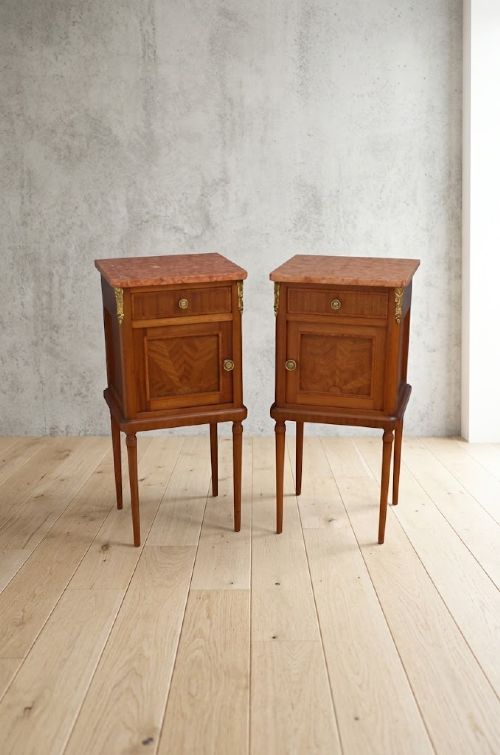
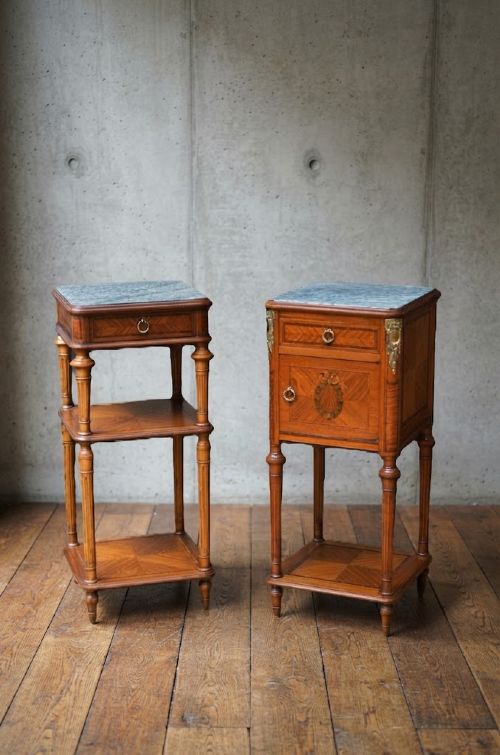
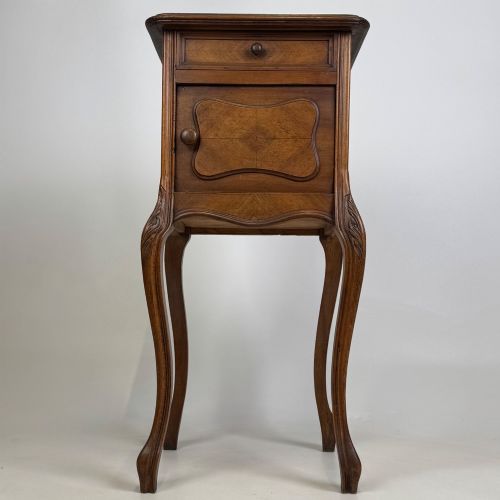
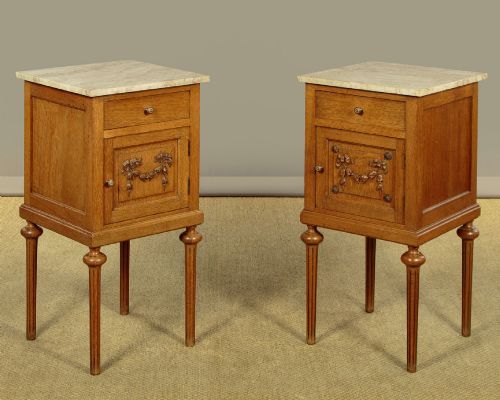
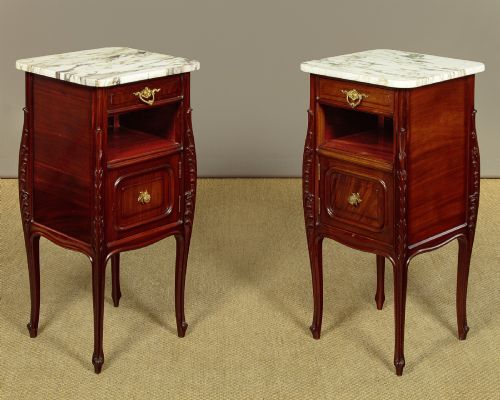
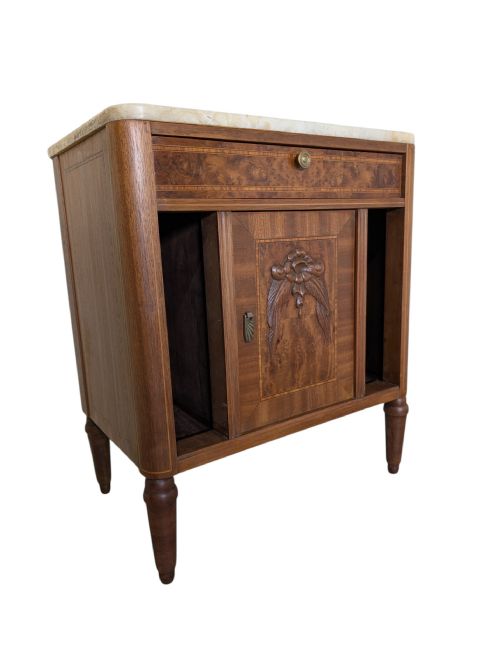
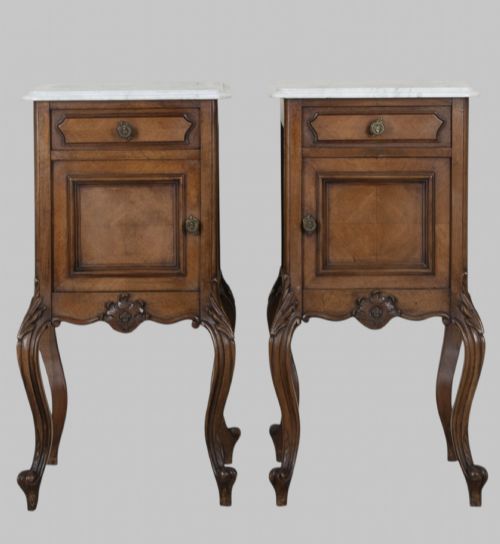
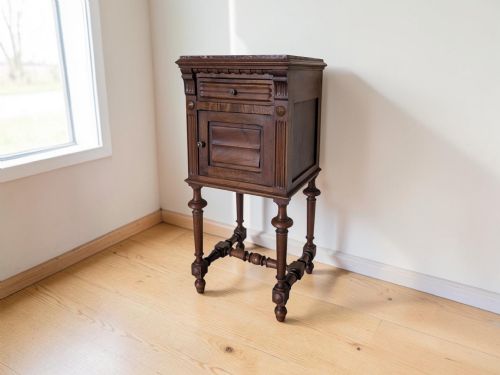
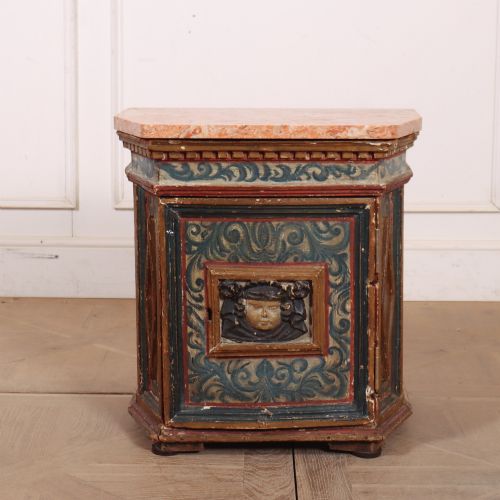
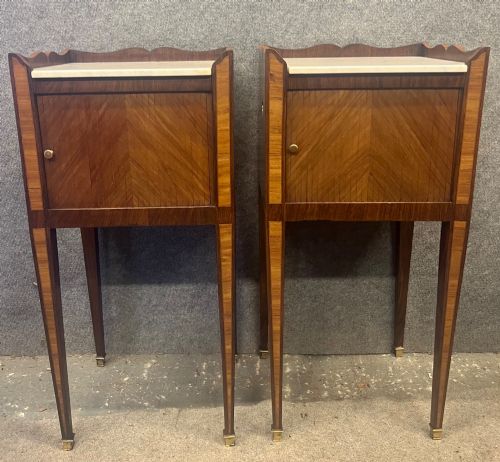
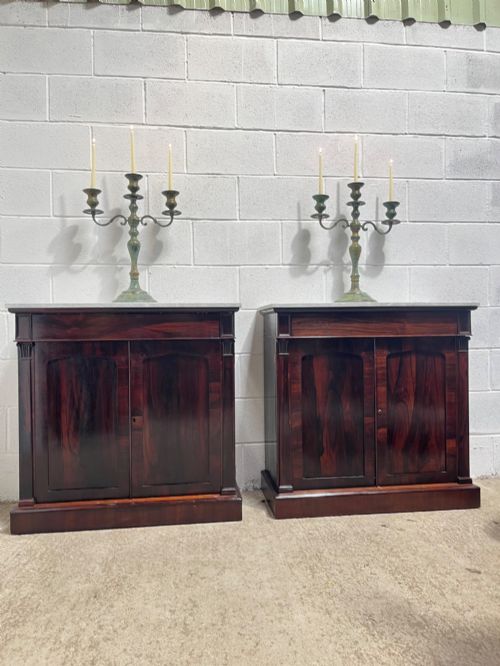
A marble top bedside cabinet combines a durable stone slab with enclosed wooden storage designed to sit beside a bed. The pieces appearing here span the nineteenth and early twentieth centuries, encompassing Victorian British workshops and continental European cabinets.
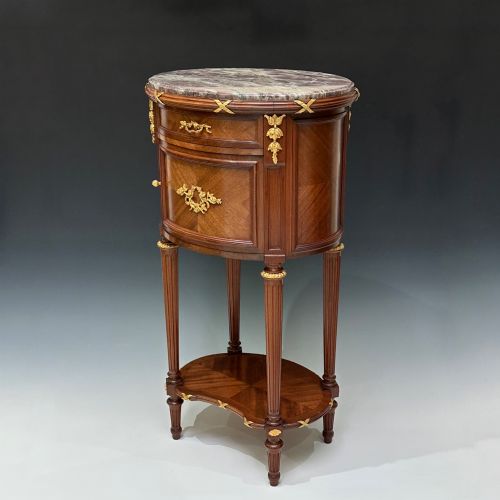
Forms vary from cylindrical and circular shapes to oval and rectangular bodies, featuring single doors, side drawers, and open cupboards. French examples, including Louis XVI Revival and Napoleon III styles, appear frequently alongside traditional Victorian mahogany and walnut pieces.
Materials and Construction
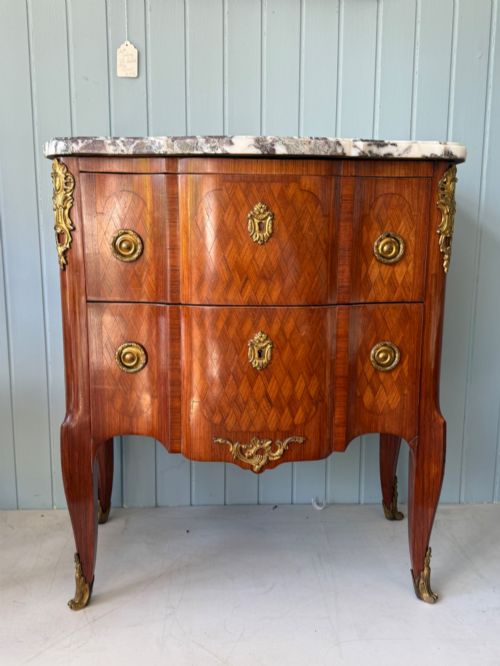
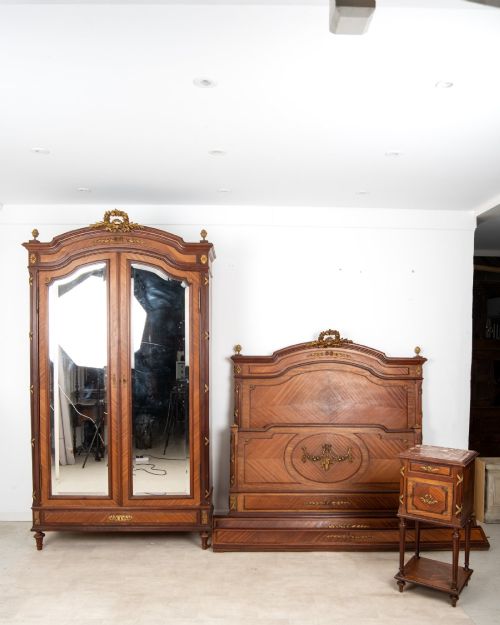
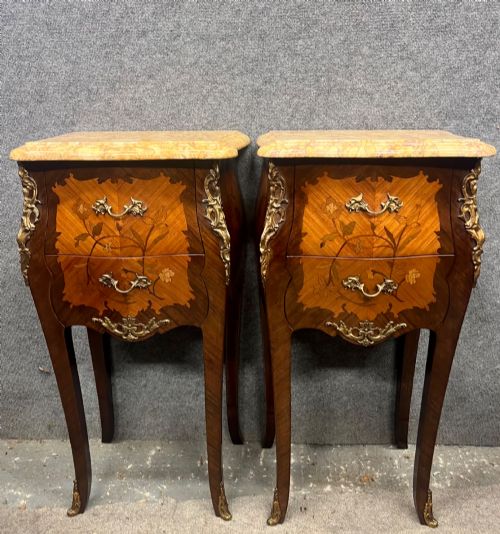
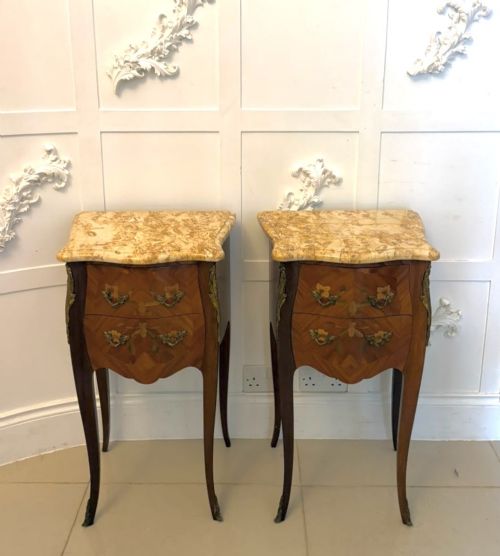
Cabinet makers utilised a rich palette of timber including mahogany, flame mahogany, walnut, kingwood, amboyna, satin birch, oak, and pine. Veneers and marquetry inlay decorate many surfaces, while French pieces frequently incorporate ormolu mounts and brass details.
The defining feature is the inset marble top, selected for its smooth, water-resistant surface. Ceramic liners sometimes appear inside the interior compartments of these cabinets.
Retail Price Guide 2026
Typical UK retail prices for marble top bedside cabinet, calculated from the Sellingantiques database of over a million retail prices indexed since 2003. This retail price guide relies exclusively on Sellingantiques data; no external sources or auction records are used, so the figures do not describe the wider market.
Cabinets span Victorian and Art Deco periods with cylindrical, oval, and rectangular forms.
Distinctions in Execution
Quality rests in the selection of timbers and the precision of cabinet joinery. Finely figured flame mahogany, amboyna, and intricate marquetry separate standard utility pieces from high-status workshop productions.
The choice and thickness of the marble slab, alongside the integration of cast brass or ormolu mounts, mark the difference in execution between simple domestic furniture and elaborately styled French revival pieces.
François Linke
The Marble Top Bedside Cabinet Glossary
- Marble
- A metamorphic rock prized for its smooth surface and decorative veining, forming the signature top of these cabinets.
- Ormolu
- Gilded bronze used for decorative mounts and accents, frequently seen on French furniture.
- Marquetry
- Decorative veneer patterns formed from pieces of wood fitted into a backing material to create intricate designs.
- Chevet
- The French term for a bedside table or cabinet.
- Kingwood
- A dense, heavily figured exotic timber utilised in cabinet making for its rich colour and grain.
Frequently Asked Questions
What is a marble top bedside cabinet?
A marble top bedside cabinet is a small piece of bedroom furniture featuring a fitted stone top above a cupboard or drawer. They provide a sturdy, wipe-clean surface next to a bed while concealing storage space inside.
These cabinets emerged in various European styles during the nineteenth century, ranging from simple British pine and mahogany versions to ornate French walnut and marquetry pieces.
How were these cabinets originally used?
These cabinets served beside the bed to hold night-time necessities, lamps, and washing equipment. The stone top offered a practical, waterproof shelf that could handle water jugs and basins.
Many contained interior compartments or ceramic linings suited to discreet storage. Today, they function effectively as small bedside tables or accent pieces in living spaces.
How do I identify French styles?
French cabinets often feature distinct timber selections like kingwood and walnut, combined with marquetry inlay and cast brass or ormolu mounts. Labels such as Napoleon III or Louis XVI Revival indicate specific design influences from the nineteenth century.
The term chevet also appears in relation to these continental designs.
What wood types are common?
Mahogany and walnut form the basis of many traditional British and French cabinets. Flame mahogany provides a heavily patterned wood grain on drawer and door fronts.
Other materials include oak, satin birch, amboyna, and pine, often enhanced with contrasting veneers.