


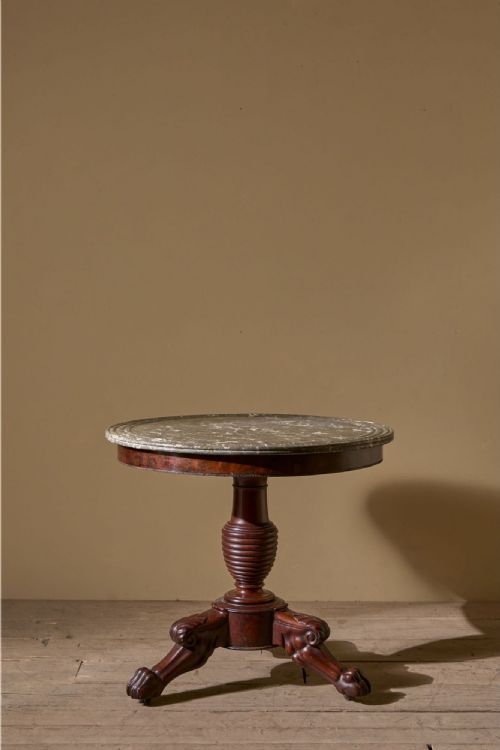
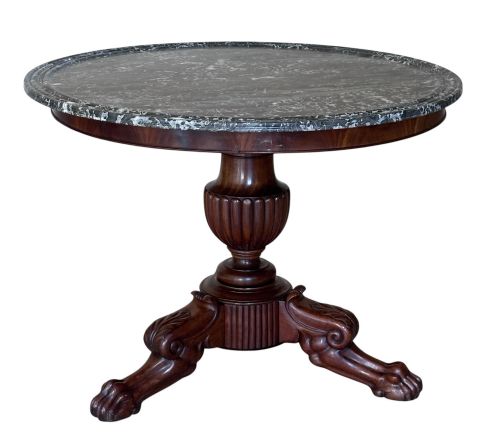
Marble Pedestal Table
A marble pedestal table brings architectural stone tops and timber supports together to anchor a room.
Marble Pedestal Table
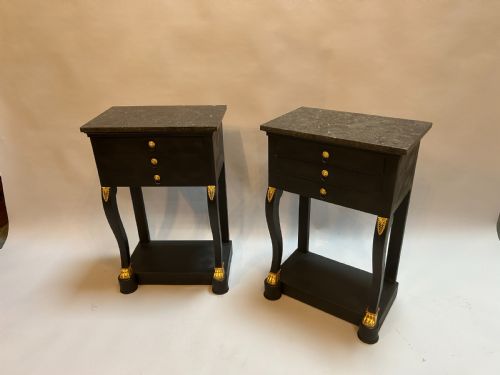
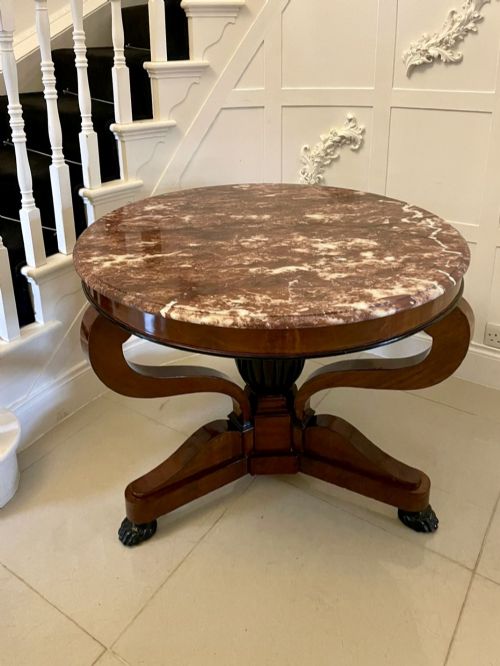
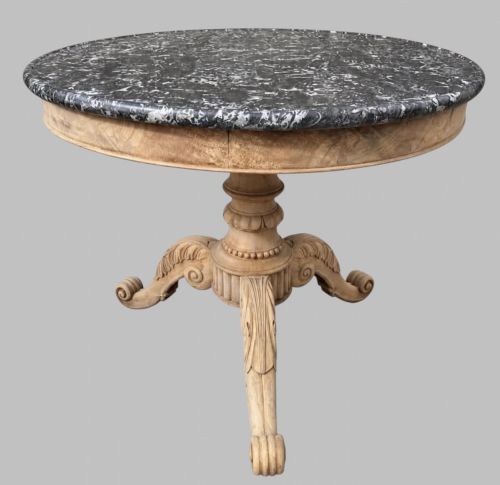
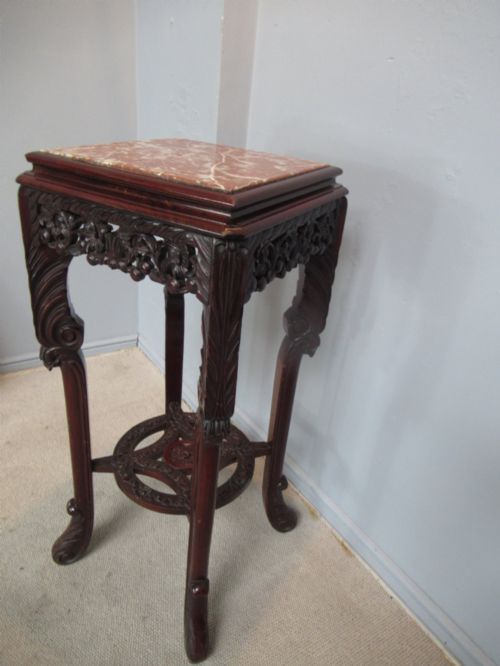
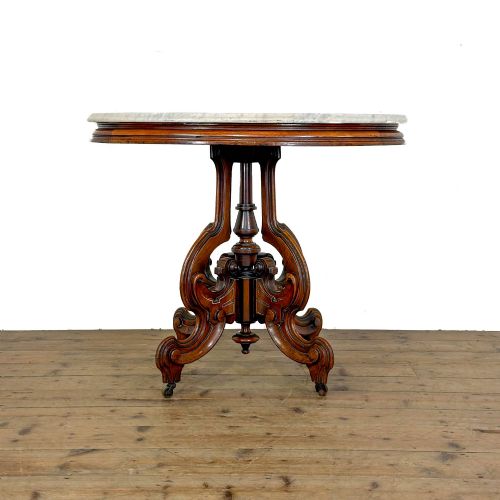
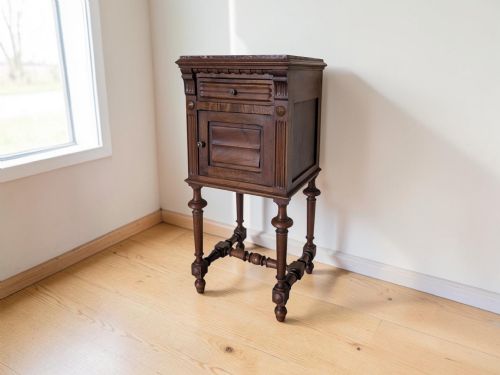
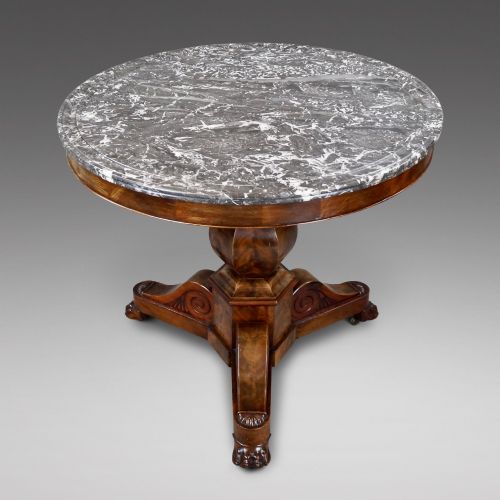
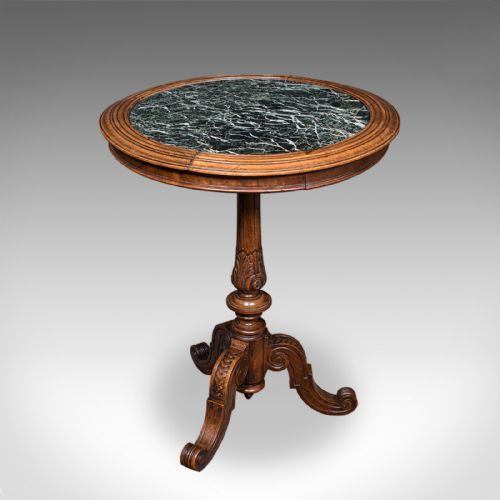
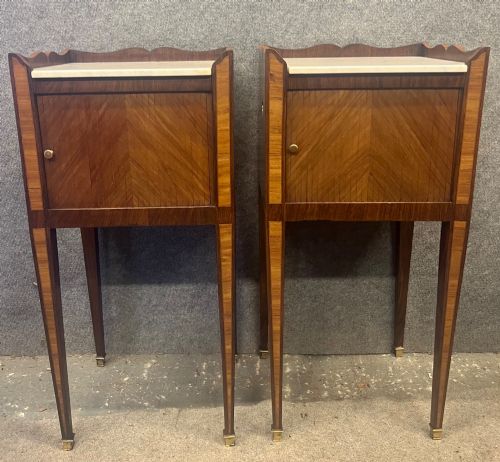
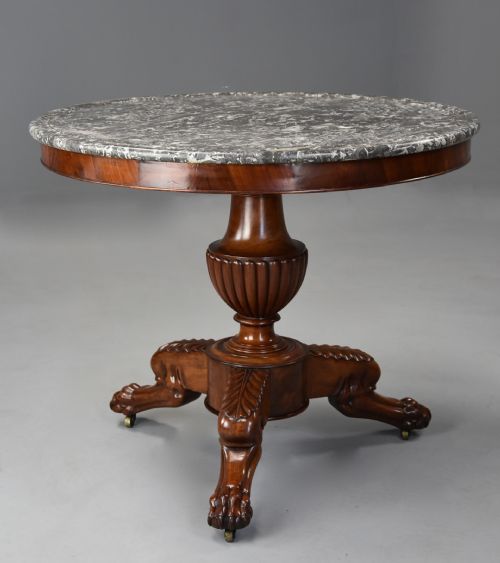
When searching for a marble pedestal table, buyers encounter a variety of nineteenth-century French guéridons, English tripod pieces, and Chinese hardwood plant stands supported by central columns or three-legged bases. These items function as centre tables, side tables, and occasional furniture in domestic interiors.
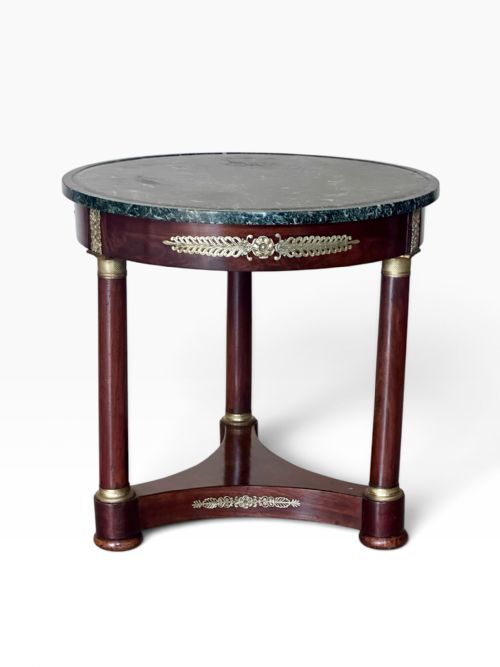
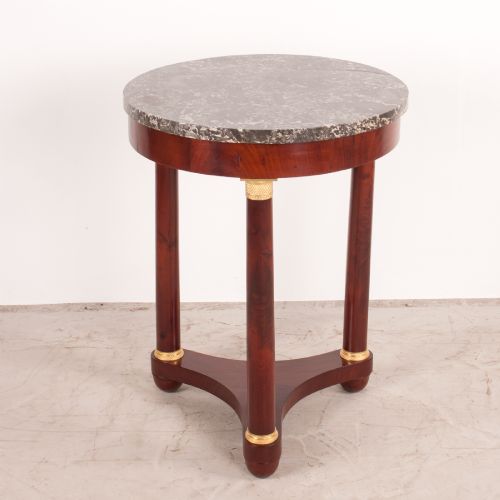
The most common iterations on this page are French mahogany and walnut guéridons featuring circular inset stone tops, alongside Victorian and Regency pedestal designs rooted in classical revival styles.
Materials and construction
These tables combine heavy stone surfaces, including white, grey, and veined varieties, with dense cabinet timbers such as mahogany, walnut, rosewood, and hardwood. Ormolu mounts, giltwood accents, and brass details frequently enrich the structural woodwork.
The stone slabs rest upon sturdy central pillars, tripod legs, or iron café bases, occasionally incorporating marquetry, mother of pearl inlay, or specialist specimen marble work.
Several items double as cocktail bars, proving that nineteenth-century hosts took their evening entertainment very seriously.
Assessing craftsmanship
Quality reveals itself in the weight and figuring of the stone top, the precision of the timber veneer, and the crispness of any cast bronze or ormolu mounts. Superior examples demonstrate harmonious proportions between the central pedestal and the heavy top it supports.
Fine construction relies on stable joinery within the tripod or pillar base to bear the substantial load of the stone without rocking or compromising structural integrity.
François Linke·Thomas Hope
The Marble Pedestal Table Glossary
- Guéridon
- A small French table supported by a single central column or pillar. These pieces often feature circular marble tops and tripod bases.
- Ormolu
- Gilded bronze mounts applied to furniture for decorative effect. Found on French Empire and nineteenth-century neoclassical pieces.
- Pietra Dura
- An artistic technique using cut and fitted polished coloured stones to create geometric or pictorial designs. Seen on inlaid table surfaces.
- Tri-pod
- A three-legged support structure beneath a central pedestal. This configuration provides stable balance for heavy stone table tops.
Marble Pedestal Table: Frequently Asked Questions
How do I style a marble pedestal table?
Place a guéridon in the middle of a hallway to hold a central floral arrangement or use a smaller version as a lamp table beside a reading chair.
The stone surface provides a durable, heat-resistant top that easily accommodates daily items while adding classical architectural presence to the room.
Are these tables heavy to move?
The inclusion of solid stone slabs and dense hardwoods makes these tables remarkably heavy, so they remain stable once positioned in a space.
Lifting them requires care, and separating the top from the pedestal base is often necessary before transporting larger examples.
How do I care for antique marble?
Wipe the surface regularly with a soft, damp cloth and mild neutral soap to prevent staining from acidic liquids like wine or citrus juice.
Avoid abrasive cleaners or scouring pads that can dull the polished finish of the stone over time.
What is the difference between a guéridon and a centre table?
A guéridon specifically denotes a small round table on a single pillar, whereas a centre table describes any freestanding piece designed to be viewed from all sides.
Many French guéridons double as centre tables depending on their scale and placement within a grand salon or drawing room.