
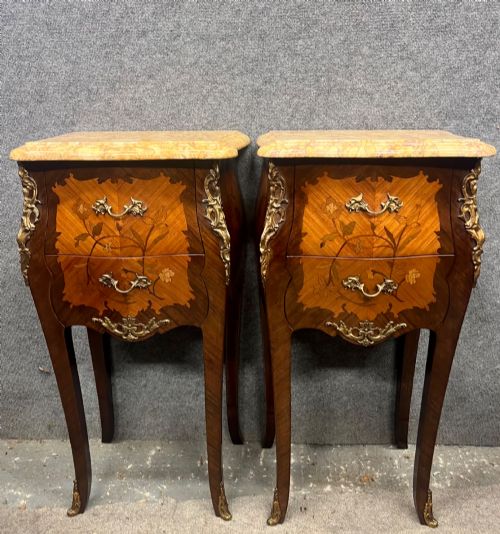
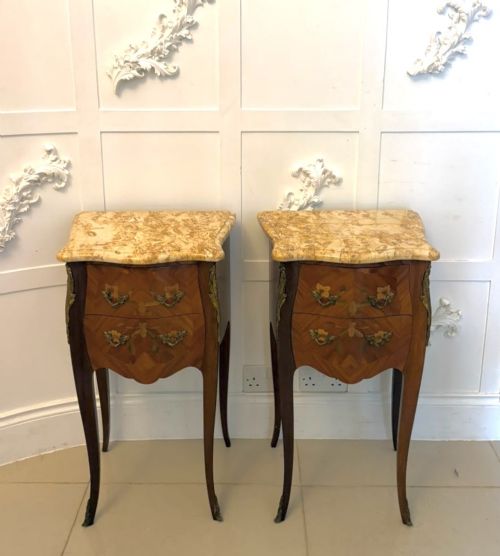
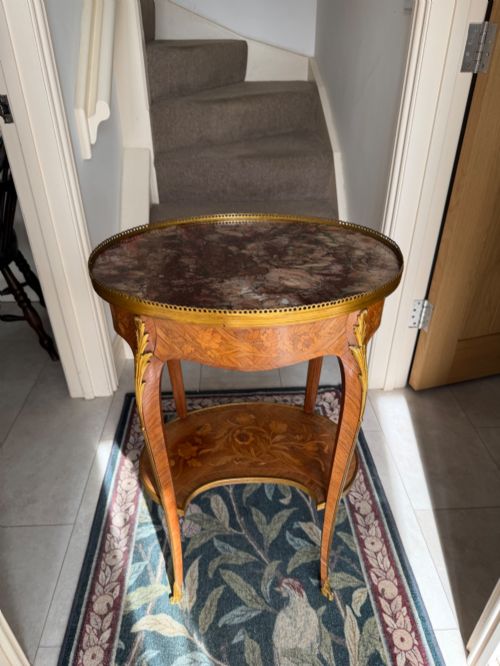
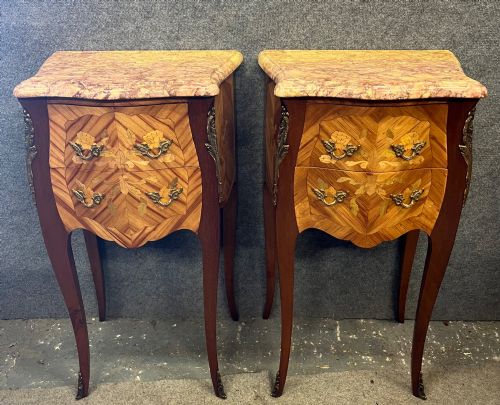
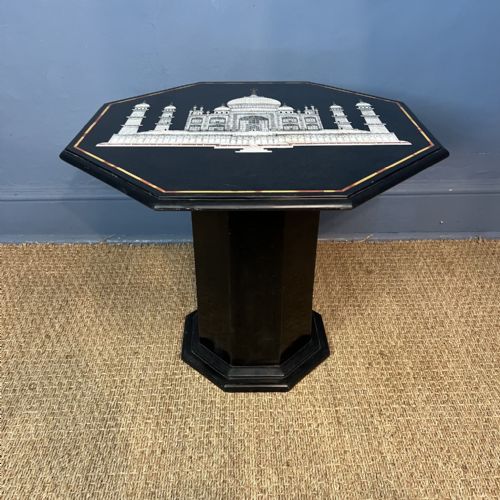
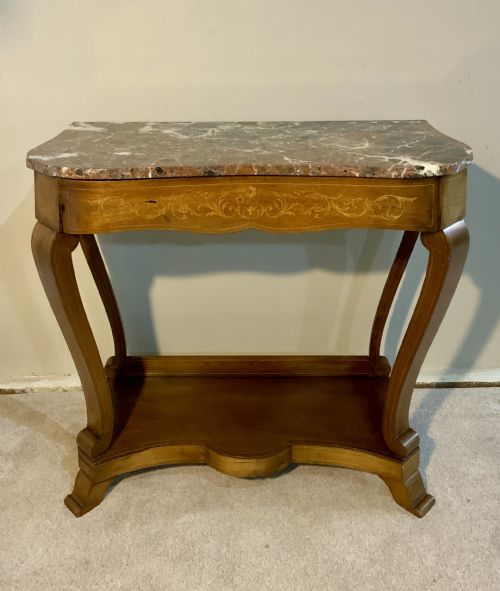


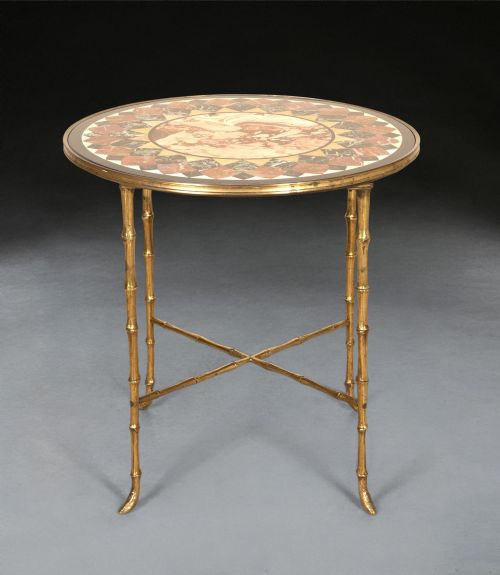
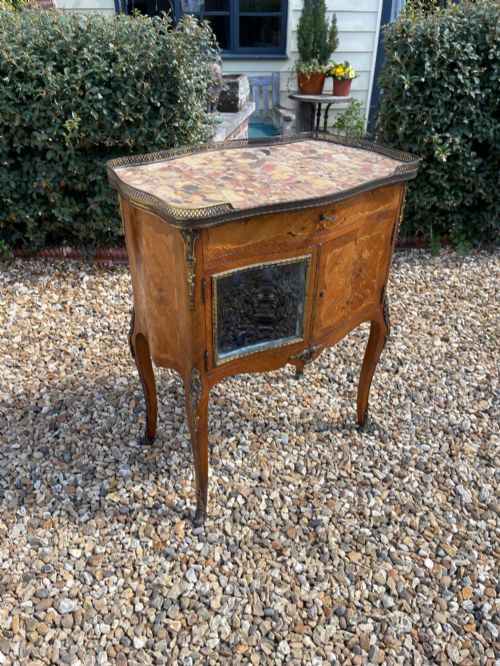

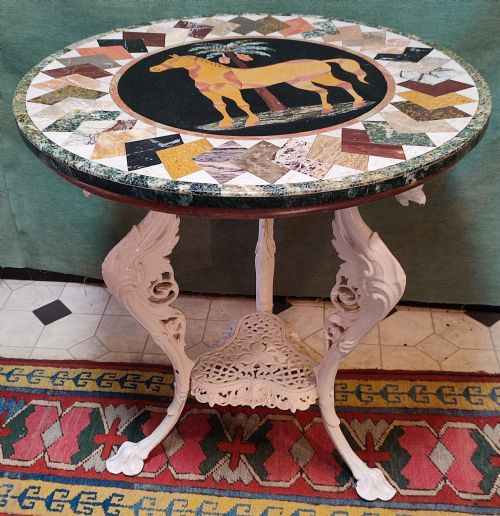
Marble Inlaid Side Table
A marble inlaid side table brings cool stone and intricate woodwork together, offering a sturdy surface for a lamp or bedside book.
Marble Inlaid Side Table
When you search for a marble inlaid side table, you encounter a variety of forms designed for holding small items, lamps, or display objects. The pieces appearing in these records span the nineteenth and early twentieth centuries, encompassing periods such as Regency, Victorian, and Edwardian eras alongside continental styles.
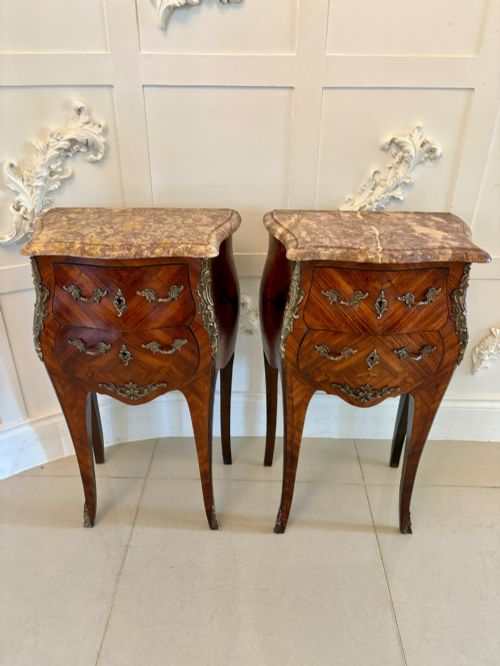
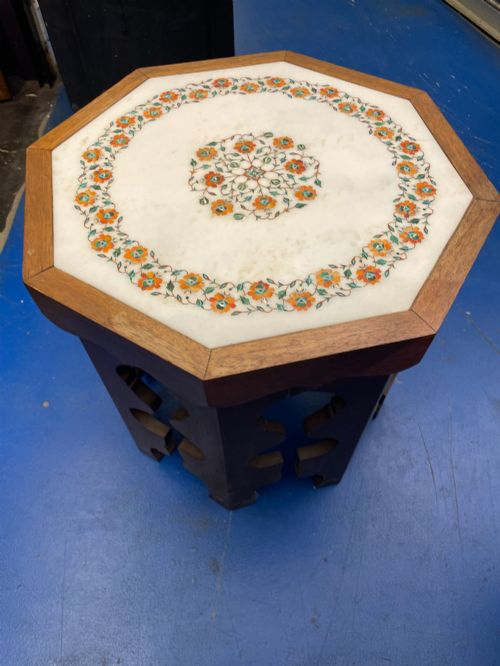
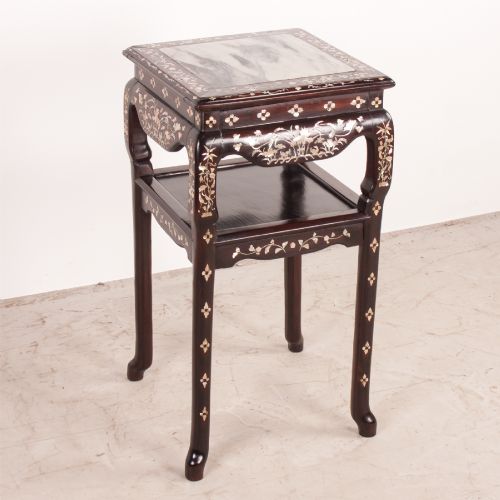
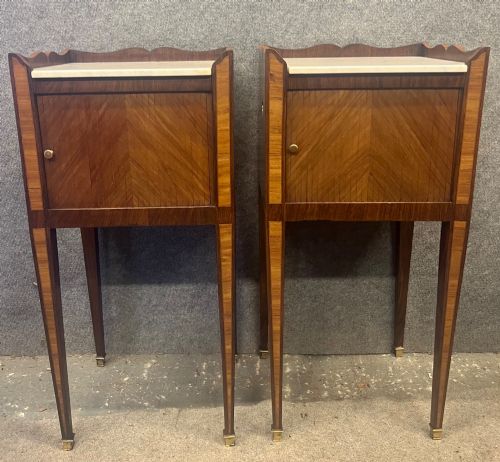
You are most likely to meet bedside cabinets, lamp tables, and occasional tables featuring stone tops paired with wooden frames. These objects originate from English, French, Chinese, and Indian workshops, showing how different cultures incorporated stone inlay into domestic furniture.
The assortment includes console tables and chess tables alongside compact bedside chests, demonstrating that the term covers everything from small lamp supports to larger hall furniture. Each iteration balances the weight of stone with timber structures like mahogany, walnut, kingwood, and rosewood.
How they were made
The construction relies on combining solid or veneered timber carcasses with fitted stone surfaces, often utilising mahogany, walnut, rosewood, or kingwood for the frames. Inlays incorporate specimen marbles, mother of pearl, and contrasting woods arranged in geometric parquetry or flowing marquetry patterns.
Metal elements frequently support the design, with brass and gilt bronze ormolu mounts edging the marble or accentuating the timber legs and corners. Cast iron also appears in some Edwardian examples to support heavier stone slabs.
Cabinetmakers shaped these pieces using traditional joinery, fitting the heavy marble tops directly into recessed wooden frames or mounting them securely above drawers and cupboards.
The records span the Regency, Victorian, and Edwardian periods alongside early twentieth-century designs.
What varies in quality
The integration of secondary materials such as finely chased ormolu mounts and cast brass details elevates the overall execution. Greater refinement appears when the weight of the stone top is balanced by sturdy, well-proportioned framing that shows no warping or heavy restoration.
The Marble Inlaid Side Table Glossary
- Marquetry
- Decorative woodwork where small pieces of veneer are assembled to form pictorial or geometric designs. It is commonly seen on the drawers and sides of French tables.
- Ormolu
- Gilt bronze mounts applied to furniture for decorative effect. These metallic accents are typical of continental pieces from the nineteenth century.
- Specimen marble
- Stone tops composed of various coloured marbles arranged in geometric or mosaic patterns. They often showcase mineral varieties collected during grand tours.
- Parquetry
- Geometric wood inlay forming patterns such as cubes or chevrons. This technique provides a structured surface texture on table tops and cabinet doors.
- Console table
- A table designed to stand against a wall, frequently secured with brackets or legs. These pieces often feature heavy marble surfaces.
Marble Inlaid Side Table: Frequently Asked Questions
How do I use a marble inlaid side table?
These pieces serve well beside a bed or sofa for holding lamps, books, and daily items. The stone surface provides a practical, heat-resistant top that tolerates everyday use.
Larger variations function as console or lamp tables in hallways and reception rooms, offering a decorative surface for vases or ornaments while anchoring the surrounding space.
What periods do these tables come from?
The listings show pieces originating from the nineteenth century through the early twentieth century. Common eras include the Regency, Victorian, and Edwardian periods.
Continental workshops, particularly French makers utilising Louis styles, contributed many of the inlaid bedside cabinets and console tables found in these records.
What woods were used for the frames?
Cabinetmakers employed a variety of timbers including mahogany, walnut, rosewood, kingwood, and satinwood. These woods were often used as veneers for intricate marquetry designs.
Some pieces incorporate fruitwood or hardwood structures, occasionally paired with brass inlays or ormolu mounts to complement the polished stone tops.
Are the marble tops original?
Most tables retain their fitted stone surfaces, which range from plain white or black marble to multi-coloured specimen marble compositions. The weight and thickness of the stone typically match the age and style of the wooden base.
Checking the fit within the wooden rebated frame helps confirm that the top belongs to the structure.