
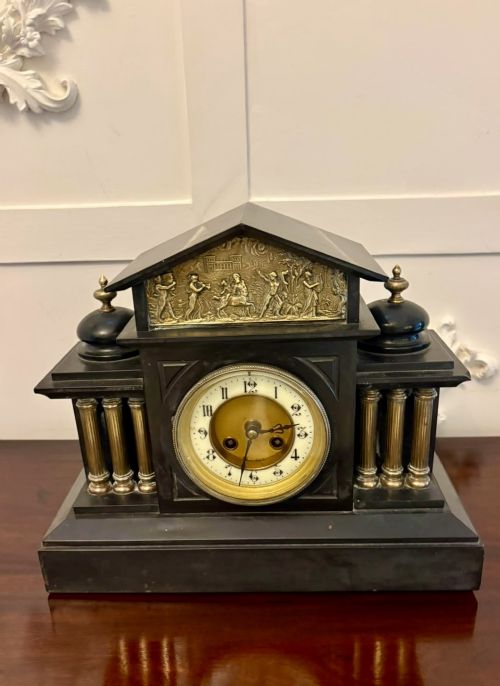


Marble Column Clock
These marble column clock examples combine solid stone architecture with precise timekeeping, offering the classical presence that collectors seek for a mantelpiece.
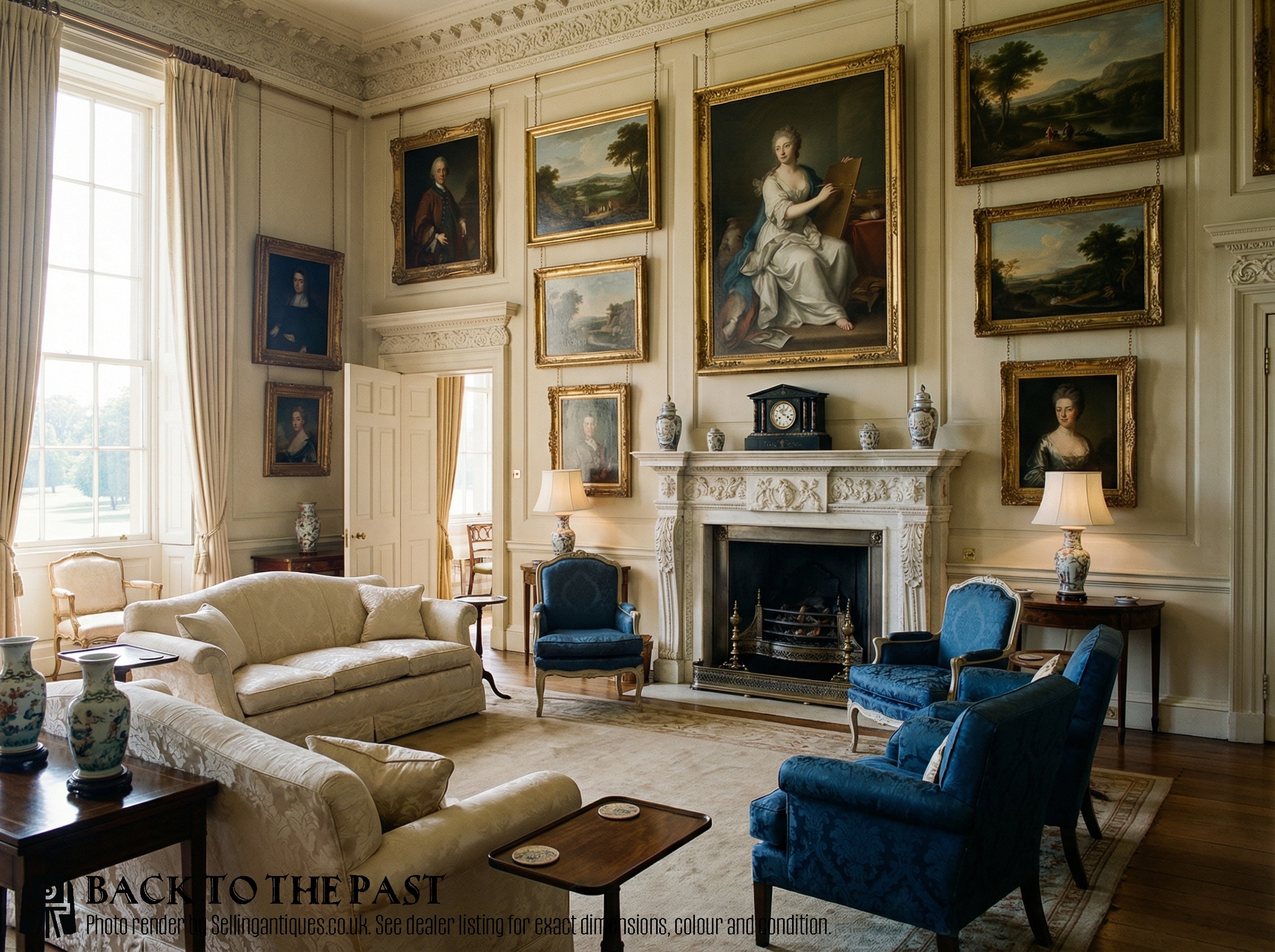
Marble Column Clock
A marble column clock brings architectural dignity to a room, taking the form of mantel clocks and portico clocks built during the nineteenth century. These pieces draw heavily on classical revival styles, echoing Greek and Roman temple designs with stone pillars flanking the central dial.
Most items you encounter here date from the Victorian era and the late nineteenth century, alongside French productions from periods such as Louis XVI Revival and Directoire. The standard form relies on heavy stone bodies combined with glass bezels and metal ornaments.
Makers often paired the stone with matching garniture sets, creating a symmetrical arrangement for a fireplace or sideboard. The proportions range from compact domestic timepieces to large architectural monuments.
Materials and construction
Makers constructed these clocks using black marble, slate, pink marble, and alabaster, often shaping the stone into heavy architectural columns and stepped bases. Metal components such as brass, gilt bronze, and ormolu provide structural mounts, bezels, and decorative capitals.
The dials typically feature white enamel with Roman numerals, protected behind curved glass held in brass frames. Movements range from standard eight day designs to single fusee mechanisms, driven by heavy pendulum systems housed within the stone body.
Listings feature black marble, slate, alabaster, and pink marble combined with brass, glass, and ormolu.
Assessing quality and craftsmanship
Quality rests in the weight and selection of the stone, where solid black marble or carefully matched pink marble outclasses faux finishes. The crispness of the gilt brass or ormolu mounts also defines the better pieces, showing sharp cast detail rather than soft edges.
The sophistication of the movement elevates a piece, particularly signed French mechanisms with eight day movements or fusee escapements. Integrated garnitures and inlaid stonework further separate standard domestic clocks from exceptional works.
Philippes Paris·Baby and Jannings
The Marble Column Clock Glossary
- Garniture
- A set of matching decorative objects, usually comprising a central clock flanked by two matching side ornaments or urns. These sets were designed to display symmetrically on a mantelpiece.
- Ormolu
- Gilt bronze created by applying a finely ground high-carat gold and mercury amalgam to a bronze object. The process produces a rich golden surface finish on metal mounts.
- Fusee
- A conical pulley used in clock movements to maintain even driving force as the mainspring unwinds. This mechanism improves timekeeping accuracy across the power reserve.
- Enamel dial
- A clock face made by fusing powdered glass onto a copper or metal base at high temperatures. The resulting surface provides a smooth, durable white background for painted numerals.
Marble Column Clock: Frequently Asked Questions
How do I wind a marble column clock?
Use the designated winding key on the enamel dial to turn the arbors clockwise until resistance is felt. Care must be taken not to overwind the mainspring.
Ensure you stop winding the moment the spring reaches its limit to avoid internal mechanical damage.
Where should I place a marble column clock?
These heavy stone clocks require a sturdy, level surface such as a mantelpiece, sideboard, or heavy console table. Their significant weight demands solid support.
Avoid areas exposed to direct sunlight or damp conditions to protect the delicate enamel dial and metal gilding.
How do I tell Victorian from earlier French styles?
Victorian clocks often utilise heavy black slate or marble with restrained classical proportions, reflecting mid to late nineteenth-century British tastes. French pieces from the Directoire or Louis XVI Revival periods tend to feature brighter ormolu mounts and lighter alabaster or portico designs.
Examining the movement backplate and signature style often clarifies the origin and exact period of production.
Why does my clock need a garniture?
Garnitures were created as a complete decorative ensemble, visually balancing large mantelpieces alongside the central timekeeper. The side pieces echo the marble and metal details of the main clock.
Displaying the set together recreates the intended aesthetic of Victorian and neoclassical interior decoration.