




Black Stone Desk Clock
These black stone desk clock pieces combine solid weight with classical presence, offering buyers a striking timepiece rooted in the nineteenth and early twentieth centuries.
Black Stone Desk Clock
The selections available here lean heavily towards Victorian interpretations of classical and Egyptian revival styles alongside cleaner geometric lines from the nineteen twenties. These items function as substantial mantel and desk ornaments rather than delicate timepieces, defined by their heavy stone chassis.
Materials and construction
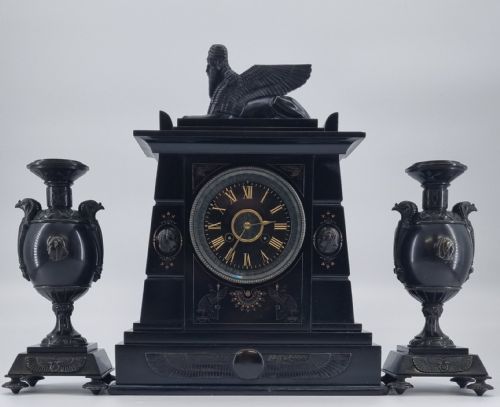
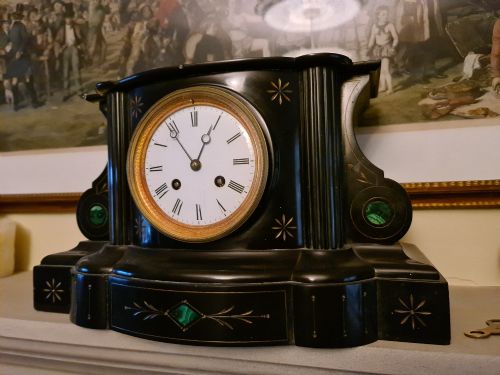
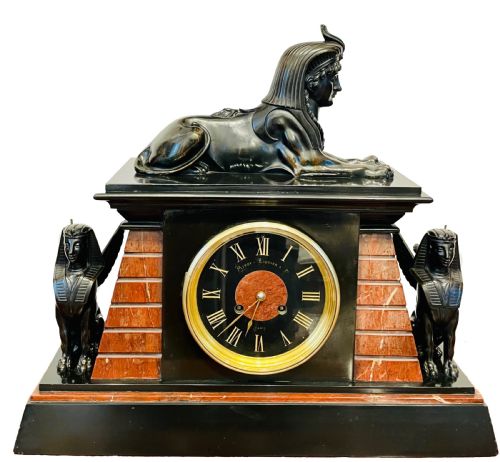
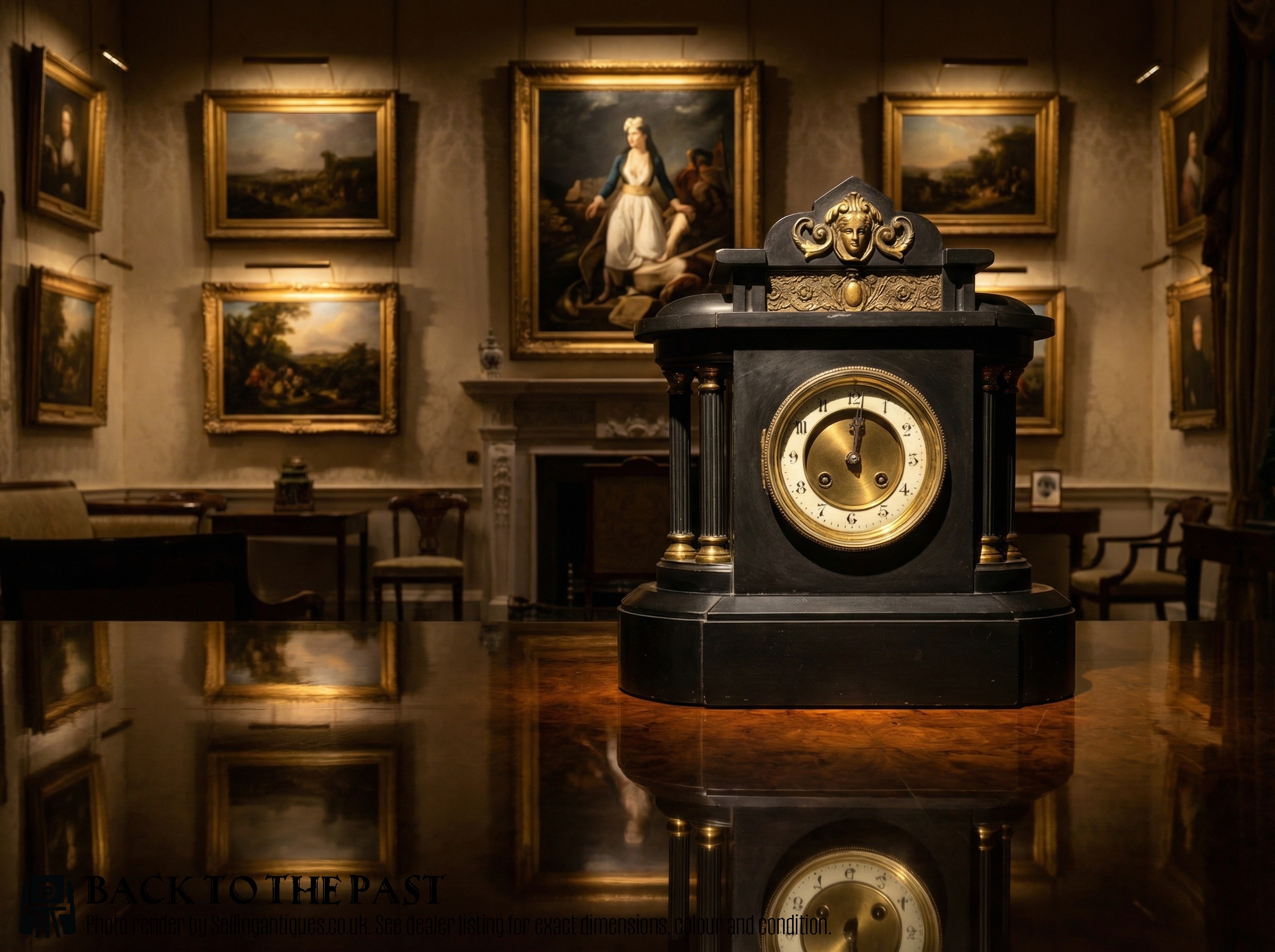
Makers shaped heavy blocks of black slate and marble into architectural cases, frequently housing eight-day mechanical movements behind glass bezels and enamel dial faces. Contrasting details in brass and bronze accent the dark mineral bodies, while occasional pieces incorporate inlaid malachite or Egyptian-inspired motifs.
The construction relies on precision stonemasonry combined with traditional clockmaking, utilising dense stone to create drumhead or temple-shaped housings that require no external support to remain stable on a desk or mantel.
Assessing quality
Quality in these timepieces rests upon the crispness of the stone cutting, the integration of architectural details, and the presence of matching garnitures rather than the mere age of the item. Finer examples show meticulous polish across the slate or marble surfaces and sophisticated use of secondary minerals like brass, bronze, and malachite.
Simpler models rely on plain drumhead shapes with minimal decoration, whereas top-tier pieces feature elaborate Egyptian revival motifs, architectural porticos, or complex multi-stone inlays that elevate the object from a simple utility to a sculptural centrepiece.
The Black Stone Desk Clock Glossary
- Black Slate
- A fine-grained metamorphic rock used extensively for Victorian clock cases due to its uniform dark colour and ability to take a high polish. It provides a heavy, stable housing for mechanical clockwork.
- Garniture
- A set consisting of a central clock flanked by matching decorative ornaments, such as urns or obelisks, designed to sit together on a mantelpiece. These matched sets significantly enhance the visual impact of the primary timepiece.
- Drumhead Clock
- A timepiece featuring a circular clock face housed within a rounded stone casing resembling the head of a drum. This specific silhouette is particularly common among Victorian slate and marble designs.
- Enamel Dial
- A clock face created by fusing powdered glass to a metal substrate at high temperatures, producing a glossy, hard-wearing white surface with painted numerals. It offers high legibility and enduring resistance to fading.
Black Stone Desk Clock: Frequently Asked Questions
Where should I place a heavy stone clock?
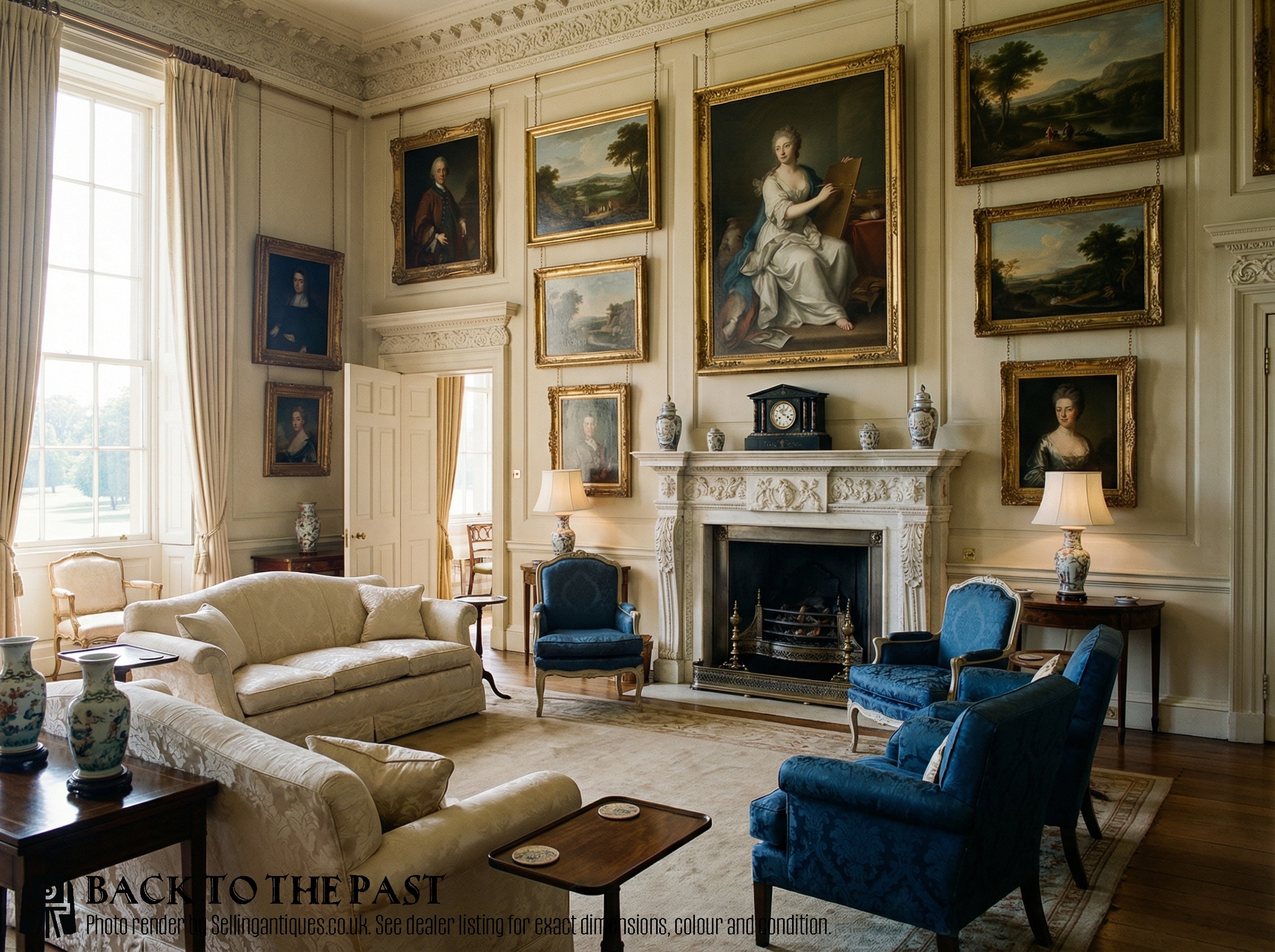
A heavy stone clock requires a deep, stable surface such as a sturdy mantelpiece, sideboard, or heavy desk capable of supporting significant weight. The substantial mass of slate and marble demands a secure foundation.
Positioning the clock away from direct heat sources and damp areas protects the internal brass movements and enamel dials from environmental stress.
How do I distinguish Victorian styles from Art Deco ones?
Victorian models typically feature heavy classical revival details, architectural pediments, or Egyptian-influenced motifs carved into the stone. They lean towards historicism and ornate visual complexity.
Art Deco versions from the nineteen twenties favour streamlined geometric silhouettes, reduced ornamentation, and stark contrasts in the marble. The focus shifts from historical revival to modern form.
What is a garniture set?
A garniture set pairs a central clock with two matching side ornaments, traditionally urns, obelisks, or vases, designed to create a balanced display across a mantel. These matched groupings were popular in the nineteenth century.
Displaying the pieces together maintains the intended decorative symmetry of the period. Each item in the set shares the same stone materials and stylistic vocabulary.