



Marble Base Urns
Marble base urns bring classical proportion and substantial weight into a room through their enduring combination of carved stone and cast metal.
Marble Base Urns
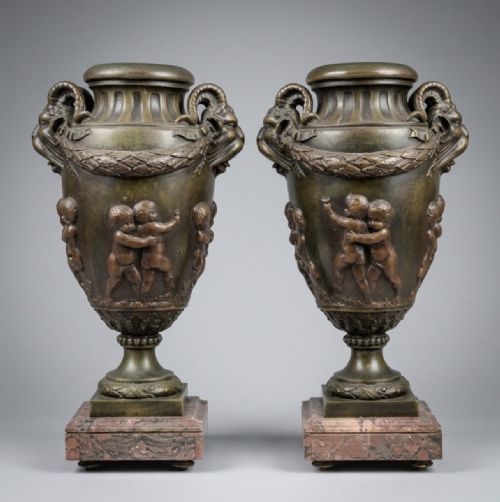
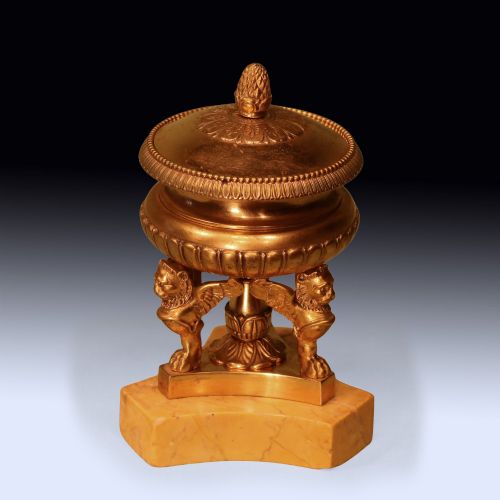
Marble base urns unite heavy stone plinths with vessels fashioned for display, illumination, or utility, drawing heavily on ancient models. When exploring marble base urns, a buyer encounters pieces originating primarily from the nineteenth century, alongside Edwardian examples and Regency designs.
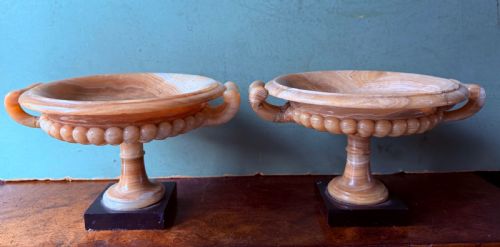
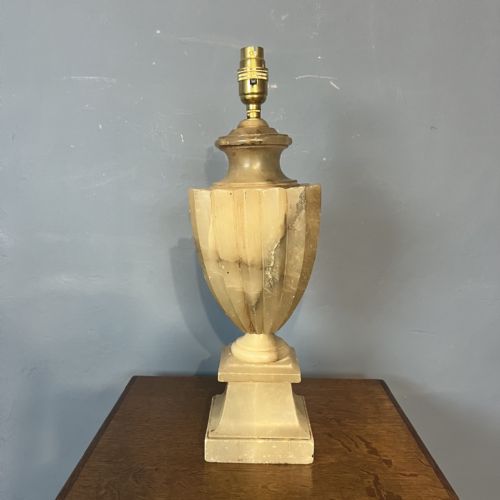
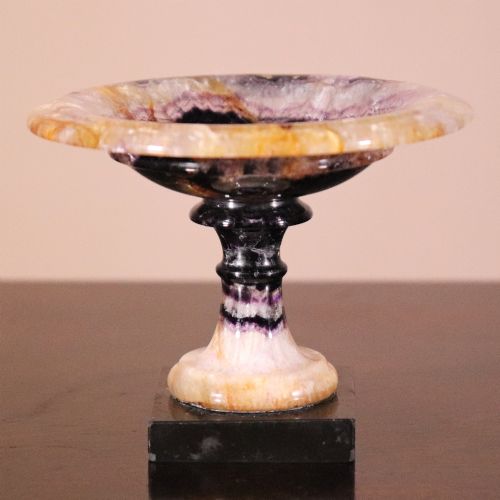
The forms vary widely across the selection, ranging from lidded tazze and campana shapes to converted table lamps, inkwells, and ornamental vessels. French and Italian workshops dominate the origin of these objects, frequently producing Grand Tour souvenirs and neoclassical revival pieces.
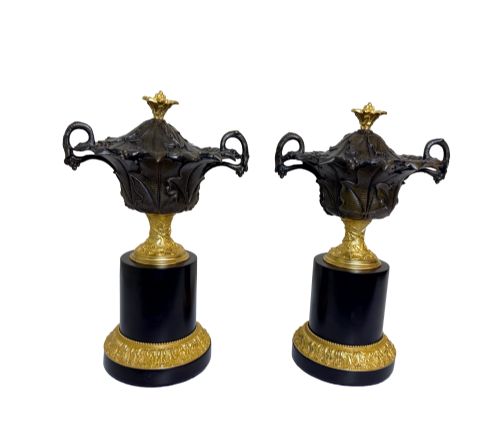
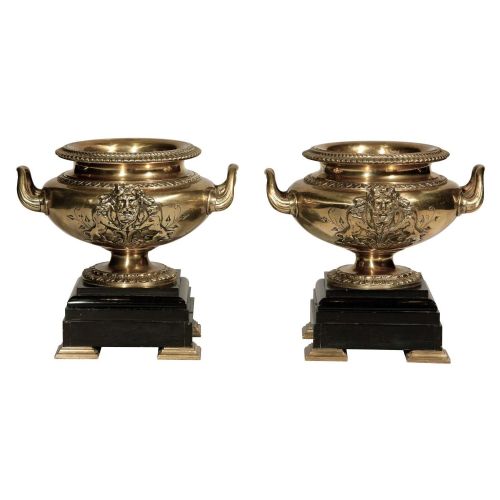
Many items survive as matched pairs, though single decorative vases and sculptural bases also appear frequently. The stone component acts as both anchor and contrast, supporting bronze, gilt bronze, or alabaster bodies.
Materials and construction
The construction relies on the pairing of dense natural stone with cast and chased metals. Makers utilised white, black, Sienna, and rouge griotte marble alongside alabaster for the plinths, mounting them with bronze, ormolu, gilt bronze, and spelter.
Metal components were typically cast, sometimes finely chased, and patinated or gilded to achieve contrasting textures against the polished stone bases. Artisans carved the stone foundations into square blocks, circular plinths, or stepped pedestals to support the heavy vessels above.
Marble Base Urns Retail Price Guide 2026
Typical asking prices for marble base urns among the pieces listed under this phrase on Sellingantiques today, from the lower quarter to the upper quarter. They describe what is for sale here now, not the wider market.
Listings feature items spanning the nineteenth century, including specific periods such as Regency, Charles X, and Edwardian production.
Judging quality
Quality rests heavily on the crispness of the metal chasing and the selection of the stone. Finer examples display sharp, detailed casting in the bronze or ormolu mounts, whereas lesser pieces rely on simpler spelter foundations with softer definition.
The choice of marble also distinguishes standard production from superior items, with richly figured varieties such as Sienna and rouge griotte elevating the piece. The overall balance between the weight of the stone base and the proportion of the urn dictates the visual success of the object.
The Marble Base Urns Glossary
- Grand Tour
- A nineteenth-century tradition where travellers collected classical antiquities and miniature souvenirs in Italy. These items often replicated excavated Roman and Greek artefacts in bronze and marble.
- Ormolu
- Gilt bronze created by applying a mercury and gold amalgam to a bronze base, producing a rich golden finish. This technique was widely employed by French makers on decorative hardware and urn mounts.
- Tazza
- A shallow saucer-shaped vessel or cup elevated on a stem and a footed base. They frequently appear in alabaster or bronze as ornamental display pieces.
- Campana
- An inverted bell-shaped form commonly seen on classical vases and urns. The silhouette is typical of neoclassical design.
- Spelter
- A zinc alloy used as a less expensive substitute for bronze. It is often painted or bronzed to simulate heavier metal.
Marble Base Urns: Frequently Asked Questions
How were marble base urns used originally?
These pieces served primarily as decorative ornaments on mantelpieces, side tables, and pedestals during the nineteenth century. Many were brought back as souvenirs from travels across Europe to display an owner's classical tastes.
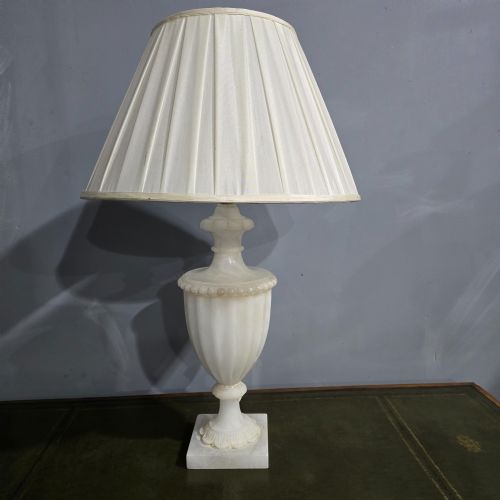
Over time, some urns and tazze were adapted into table lamps or utilised as inkwells while retaining their sculptural presence.
How do I distinguish French from Italian pieces?
French pieces often incorporate refined ormolu mounts, precise chasing, and sophisticated neoclassical styling reflecting periods like Charles X or Louis XVI. They frequently combine gilt bronze with white or Sienna marble.
Italian pieces frequently emerge from the Grand Tour tradition, utilising local stones like alabaster or rouge griotte and often replicating specific antique artefacts found in Roman collections.
Are these urns heavy?
The inclusion of solid marble plinths and cast bronze or alabaster bodies gives these objects substantial weight and stability. This density prevents them from tipping easily when used as lamps or displayed on mantels.
Buyers should account for this weight when selecting furniture surfaces to support larger pairs.
Can I use them as lamps safely?
Many surviving urns and vases have been converted into table lamps over the decades, often integrating wiring through the central core. Buyers should have any vintage electrical components checked by a qualified professional to ensure current safety standards.
The original structure of the stone and metal vessel is typically preserved during these conversions.