
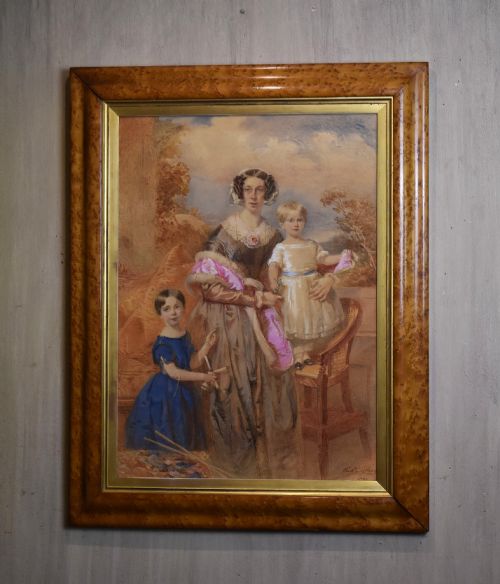
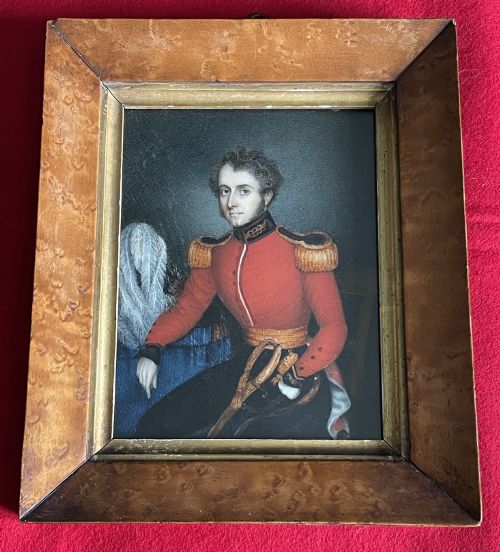


Maple Framed Watercolour Painting
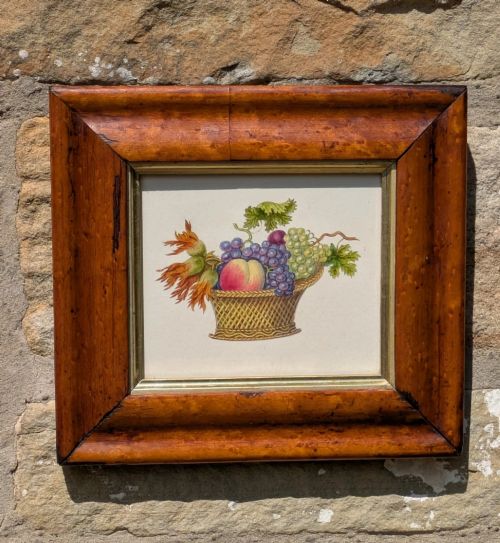
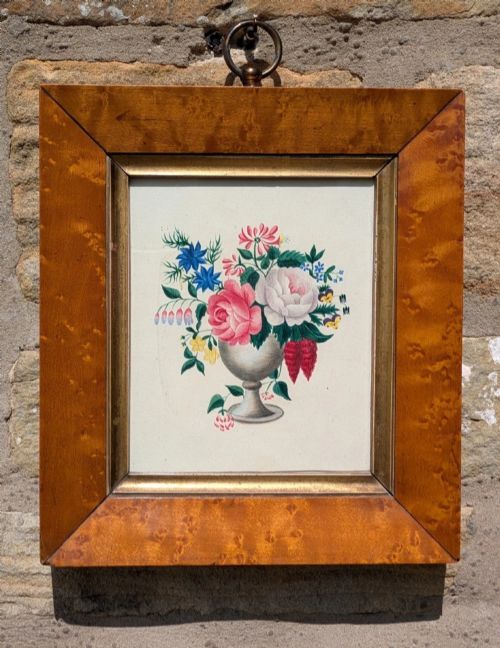
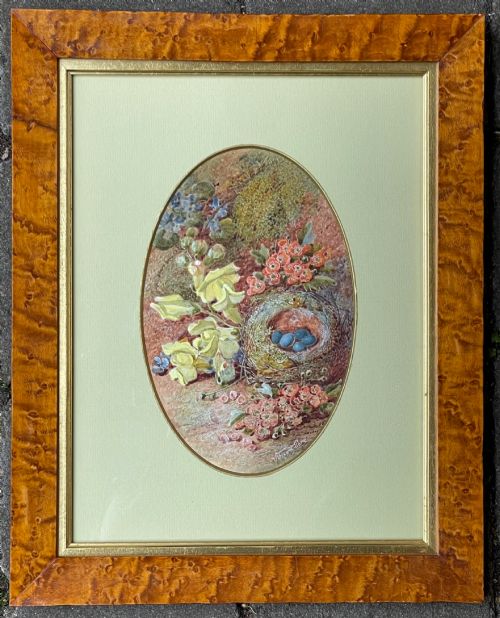
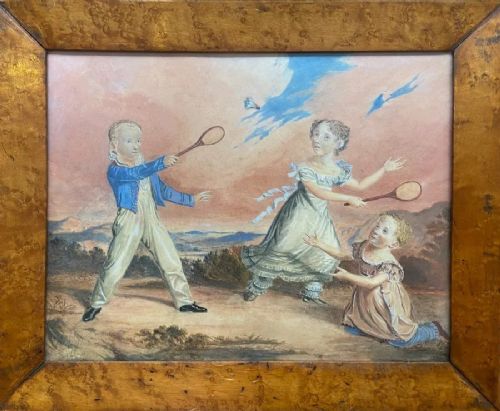
These maple framed watercolour painting examples bring nineteenth-century portraits and botanical studies directly into your rooms with warm wooden borders.
Maple Framed Watercolour Painting
A maple framed watercolour painting represents a distinct tradition of paper-based art housed within characteristic timber surrounds. When you search for a maple framed watercolour painting, you encounter works spanning the Georgian, Regency, and Victorian periods.
You meet both accomplished signed works by known artists and naive folk art interpretations within original wooden enclosures. The framing ranges from bird's-eye maple veneers to warm figured timber mouldings often highlighted with inner gold leaf slips.
Materials and construction
These works utilise watercolour pigments applied to heavy paper substrates, often protected beneath glass layers. The characteristic frames rely on maple veneer or solid wood worked to display distinctive bird's-eye or burr patterns in the grain.
Makers frequently incorporated gilt metal slips or narrow gold leaf inner borders to separate the delicate painted surface from the surrounding wooden frame. Backboards typically consist of historic timber secured with early fixings to protect the paper artwork within.
The listings combine nineteenth-century periods including Regency, Georgian, and Victorian aesthetics across various paper artworks.
Judging quality and character
Quality rests in the precision of the watercolour brushwork and the preservation of the paper support against fading or foxing. Finer portraits and botanical studies display accomplished draftsmanship and subtle tonal gradations that elevate them above naive folk art pieces.
The character of the maple frame itself contributes significantly to the desirability of the piece. Highly figured burr or bird's-eye timber with rich chatoyancy and intact original gilding elevates the visual impact of the artwork it encloses.
Vincent Clare·Henry Travis·Frederick Tatham·J F Marie Huet Villiers·Edward Smyth
The Maple Framed Watercolour Painting Glossary
- Watercolour
- A painting method where fine pigments are suspended in a water-based solution and applied to paper. This medium allows for translucent washes and delicate details.
- Maple
- A dense hardwood utilised for furniture and decorative frames, prized for its distinctive figured grain patterns including bird's-eye and burr formations.
- Regency
- An English design period spanning the early nineteenth century defined by classical restraint and refined decorative arts. Works from this era often display elegant linear precision.
- Gilt
- A thin layer of gold leaf applied to wood or metal surfaces to provide a decorative metallic border. This technique frequently frames nineteenth-century works on paper.
- Miniature
- A small-scale portrait or painting executed with fine detail, common in the nineteenth century. These intimate works often reside in desk or wall-hanging formats.
Maple Framed Watercolour Painting: Frequently Asked Questions
How do I care for these watercolours?
Keep the artworks away from direct sunlight to prevent the pigments and paper from fading over time. Maintaining stable indoor humidity levels also protects the historic paper and wooden frames.
Ensure the pieces hang securely using appropriate fixings suited to the weight of the timber frame and glass. Gentle dusting with a dry cloth keeps the frame clean without disturbing the historic surface.
Are these frames original?
Many nineteenth-century watercolours retain their original maple frames, which show appropriate ageing in the timber and finish. Structural construction methods and historical fixings often confirm this period pairing.
Inspect the rebate and backboard for signs of long association between the paper artwork and the wooden surround. Original glass and backing papers further indicate that the frame has remained with the painting.
What subjects are most common?
Portrait miniatures and full portrait studies of ladies, gentlemen, and officers frequently appear in these listings. Botanical arrangements and fruit still lifes also feature prominently among nineteenth-century examples.
Naive interior scenes and domestic animal studies represent the more informal side of these traditional paper works. Each subject reflects the prevailing domestic tastes of the Georgian and Victorian eras.
How can I date a piece?
Examination of the costume, hairstyle, and sitter's pose often provides a reliable date range for portrait watercolours. Details such as clothing cuts correspond closely to Regency and Victorian fashion timelines.
Frame profiles, paper watermarks, and backing materials offer further physical evidence for dating the object. Signatures and inscriptions by known nineteenth-century artists establish precise creation periods.