
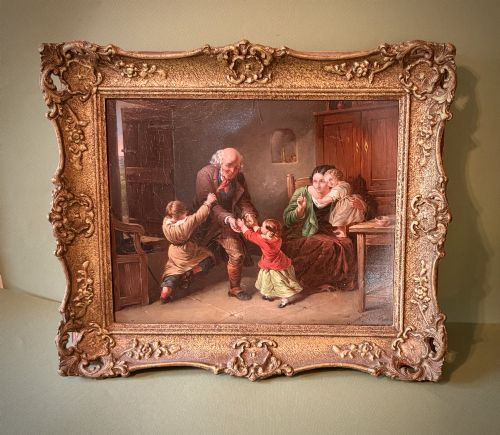
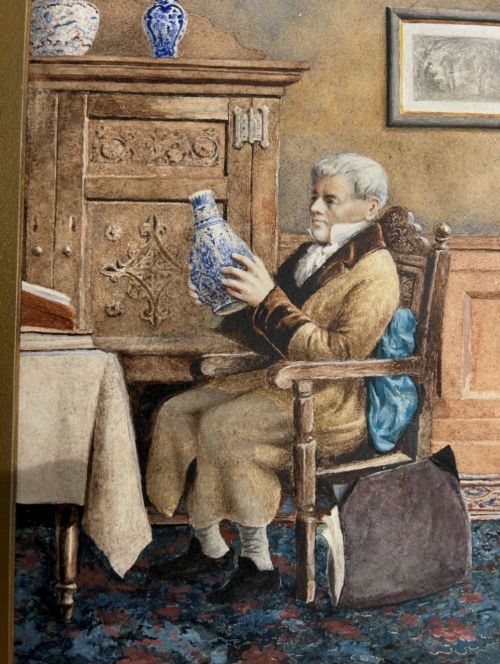
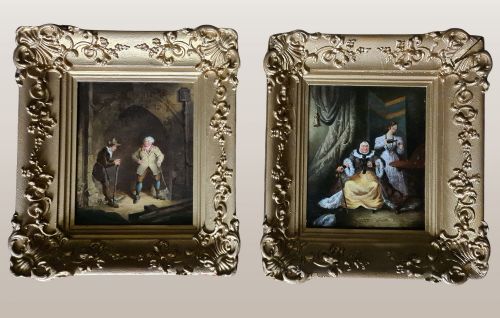
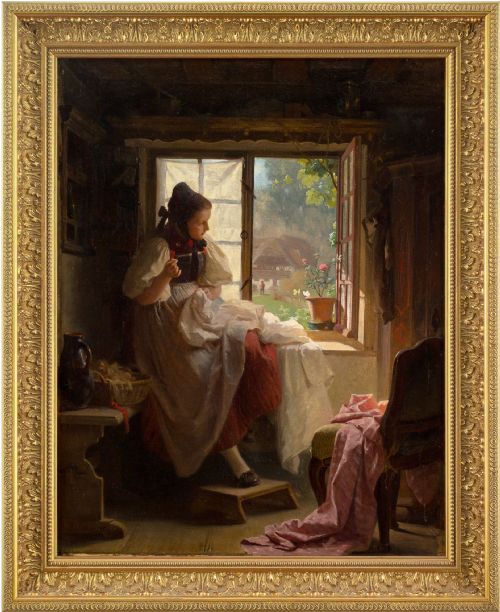




Victorian Interior Portrait
A victorian interior portrait captures domestic and social spaces through oil paint and watercolour, preserving the character of nineteenth-century rooms.
Victorian Interior Portrait
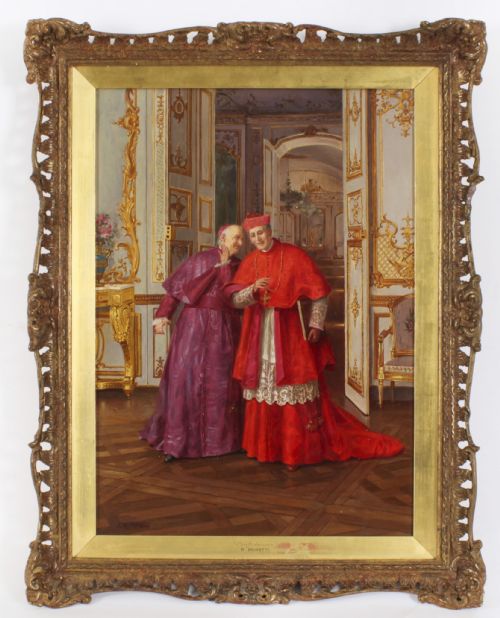
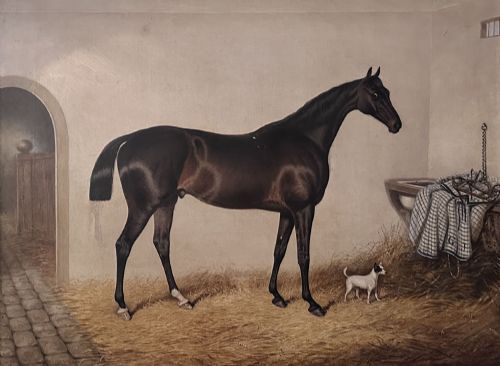
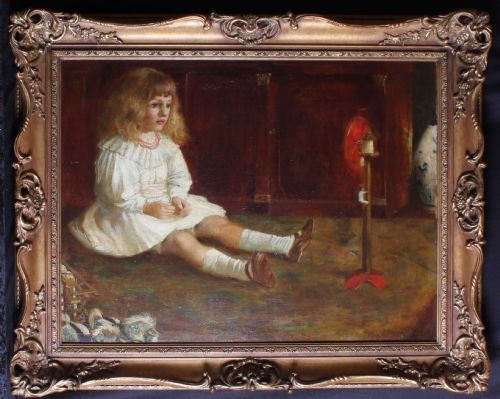
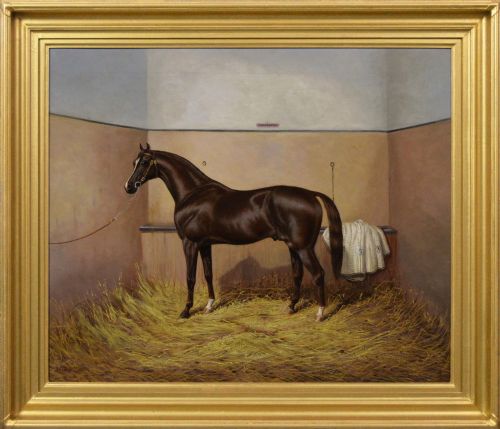
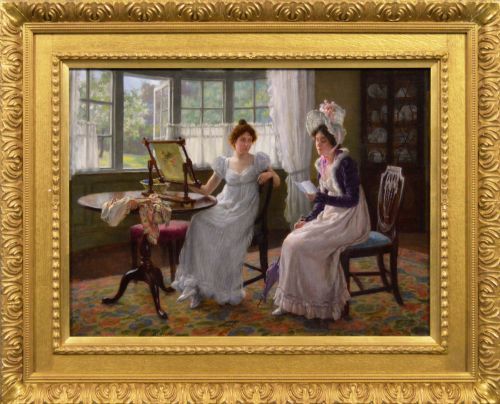
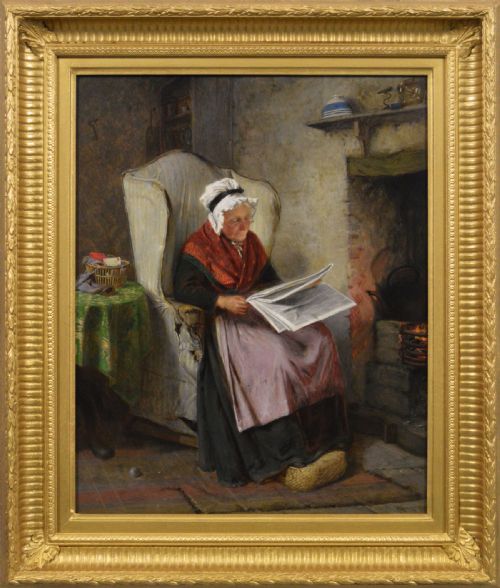
A victorian interior portrait depicts people and animals within domestic, stable or institutional rooms, blending portraiture with genre scene painting.
Buyers encounter oil paintings on canvas and panel alongside watercolours, ranging from quiet cottage scenes to grand European ballroom settings.
The material spans works from the nineteenth century into the early twentieth century, showing figures sewing, reading, or resting beside domestic pets.
Materials and construction
Artists painted primarily with oil paint on stretched canvas or wooden panels, while others worked in watercolour on paper.
Frames incorporated wood decorated with gesso, gold leaf, and giltwood to house and protect the painted surface.
Listings feature works executed in oil on canvas, oil on panel, and watercolour on paper, framed in period giltwood.
Assessing quality and execution
Quality rests in the handling of light and shadow across interior surfaces, along with the precise anatomical rendering of figures and animals.
The depth of narrative in the room and the subtlety of expression distinguish skilled academic or realist works from naive pieces.
Max Kaltenmoser·Renato Moretti·Byam Shaw·Albert Clark·John Watkins Chapman·Charles Haigh Wood·Frank Moss Bennett·Haynes King·James Kyd·Hermann Armin Kern·Benjamin Cam Norton·Edwin Frederic Holt·Leonardo Morello·Charles Bilger Spalding·John R Houston·Samuel John Carter·Ralph Hedley·Robert Gemmell Hutchison·Sir John Everett Millais·John Ferneley Jnr·Pierre-Louis Bouchard
The Victorian Interior Portrait Glossary
- Genre painting
- A depiction of everyday life and ordinary people in domestic or social settings. These works focus on narrative moments rather than formal portraiture.
- Oil on canvas
- Pigment mixed with drying oils applied to a woven fabric support. This combination allows for rich blending of colour and varied texture.
- Watercolour painting
- Pigments suspended in a water-soluble vehicle applied to paper. It yields translucent washes of colour favoured for delicate interior studies.
- Giltwood
- Wood carved and coated with gold leaf or gold paint. Frames utilising this finish add reflective warmth to the artwork.
- Academic realism
- A style resulting from strict academy training, emphasising precise draftsmanship and lifelike representation. Works in this manner display controlled brushwork and accurate perspective.
Victorian Interior Portrait: Frequently Asked Questions
What is a victorian interior portrait?
It is a nineteenth-century artwork showing people or animals inside a room, stable, or hall. These pieces combine the focus of a portrait with the narrative detail of a domestic scene.
Subjects range from solitary figures reading or sewing to family gatherings and stable interiors. Artists used oil paint and watercolour to record the domestic environment of the period.
How were these paintings displayed?
In the nineteenth century, these artworks hung in domestic reception rooms, parlours, and drawing rooms. They were mounted in prominent wooden frames decorated with giltwood or gesso.
Collectors today place them in traditional or contemporary living spaces where the lighting enhances the oil or watercolour pigments.
How do I care for an oil painting?
Keep the canvas away from direct sunlight and damp conditions to protect the paint and gesso frame. Dust the surface gently with a dry, soft brush without applying pressure.
Avoid using water or chemical cleaners on the paint layer or the gilded frame. Professional conservators should handle any structural repairs to the canvas.
How can I tell the date of a painting?
Examine the materials, including the type of canvas, stretcher bars, and framing techniques typical of the nineteenth century. Signatures, exhibition labels, and artist biographical dates provide further clues.
Stylistic elements like clothing fashions, room furnishings, and painting techniques also help narrow down the decade of creation.