


Antique Watercolour Interior Scene
These antique watercolour interior scene works capture domestic life and domestic rooms across the nineteenth and early twentieth centuries through delicate washes on paper.
Antique Watercolour Interior Scene
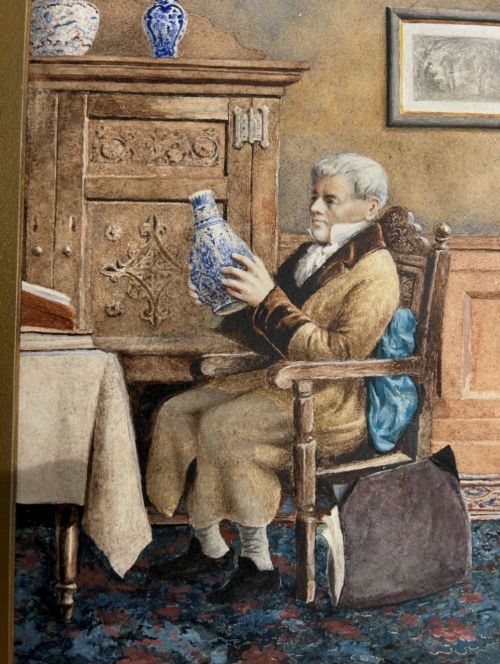
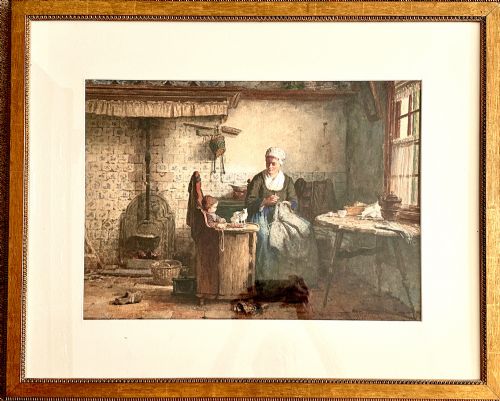
When you search for an antique watercolour interior scene, you enter a world of domestic rooms, cottage interiors, and figures gathered around firesides or dining tables. These paintings capture the daily routines and domestic habits of Victorian and Edwardian households through the delicate medium of paper and pigment. The works range from detailed genre realism to naive folk art and broader British Impressionism.
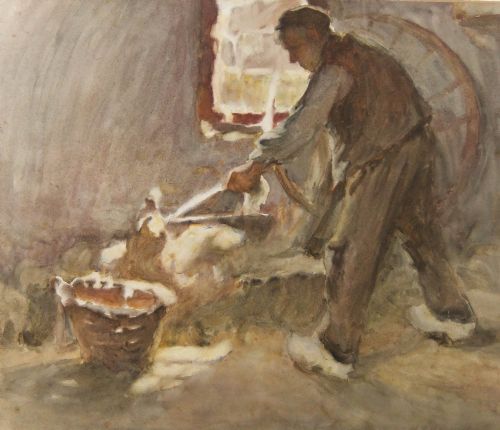
On this page, you are most likely to meet nineteenth century and early twentieth century works executed on paper, often housed in period wood frames with glass protection. The subjects vary from quiet reading rooms and long galleries to busy blacksmith shops and family cottages. Many pieces carry the signatures or distinct hands of known British and European artists who specialised in interior narrative.
The historical scope spans the Victorian and Edwardian eras into the nineteen thirties, reflecting shifting tastes in home decoration and narrative painting. Painters recorded architectural details, furniture, and period costumes with careful observation. Whether rendered by a named artist or an anonymous English school hand, each painting offers a preserved moment of domestic history.
Materials and technique
The foundation of these works is watercolour pigment applied to paper sheets, sometimes enhanced with bodycolour to build opacity in highlights and textures. Artists worked with fine brushes to capture intricate details of interior furnishings, textiles, and facial expressions within domestic settings. The absorbent nature of paper demanded precise brushwork and careful control of washes.
Completed paintings were typically mounted behind glass within wood frames, occasionally accented with gold leaf moulding to complement the palette of the picture. The combination of paper, pigment, and glass protection has allowed these delicate interiors to survive across centuries in varying states of preservation. Frames often reflect the period of creation, adding context to the artwork within.
Listings feature works created on paper using watercolour, often displayed within wood frames accompanied by glass.
Markers of quality
Quality in these watercolours rests upon the artist's command of light, perspective, and narrative detail within a confined domestic space. Superior examples manage complex interior lighting, such as candlelight or hearth glow, while rendering human figures and architectural elements with natural proportion. The handling of watercolour washes determines whether a room feels atmospheric or flat.
Condition and originality also separate the finest pieces from lesser examples, particularly the stability of the paper and the absence of heavy fading or foxing. Stronger works retain their original colour intensity and sit within appropriate period frames that enhance the composition. The presence of a clear signature or attribution to a documented artist further elevates the standing of a piece.
Henry Stacy Marks·Henry Silkstone Hopwood·Hendrik Valkenberg·James Hayllar·George Kilburne·Robert Eadie·Roland Batchelor·Henry Spernon Tozer·George Goodwin Kilburne·George Cattermole·Dorofield Hardy·James Shaw Crompton·Arnold Willms
The Antique Watercolour Interior Scene Glossary
- Watercolour
- A painting method in which fine pigment is suspended in a water-soluble binder and applied to paper. This medium allows for transparent washes and luminous effects well suited to capturing interior light.
- Genre Realism
- A style of painting that depicts aspects of everyday life by portraying ordinary people engaged in common activities. In interior scenes, this includes figures dining, resting, or working within domestic rooms.
- Foxing
- Brown spots or discolouration that commonly develops on older paper due to chemical reactions over time. Collectors monitor this condition when assessing the preservation of antique works on paper.
- Bodycolour
- Watercolour mixed with a white pigment to make it opaque rather than transparent. Artists utilised this technique to add highlights and solid areas of colour to their interior compositions.
Antique Watercolour Interior Scene: Frequently Asked Questions
What periods do these watercolours cover?
The listings encompass nineteenth century and early twentieth century works, stretching from the Victorian era through the Edwardian period into the nineteen thirties.
Artists from these various decades captured changing interior styles and domestic fashions, providing a visual record of home life across generations.
How should I frame and display them?
These watercolours require protection behind glass and conservation mounting to prevent damage from ultraviolet light and atmospheric moisture.
Position them away from direct sunlight and damp environments to preserve the delicate pigments and paper supports over time.
What subjects appear in interior scenes?
Common subjects include figures gathered by firesides, family meals, reading in drawing rooms, and artisans at work in cottage interiors.
Artists focused on domestic narratives, capturing the furniture, lighting, and daily activities characteristic of historical households.
How do I identify a signed piece?
Signatures typically appear in the lower corners of the watercolour, written in pencil or brush by the artist's hand.
Comparing these signatures against known artist records helps confirm the authorship and period of the painting.