
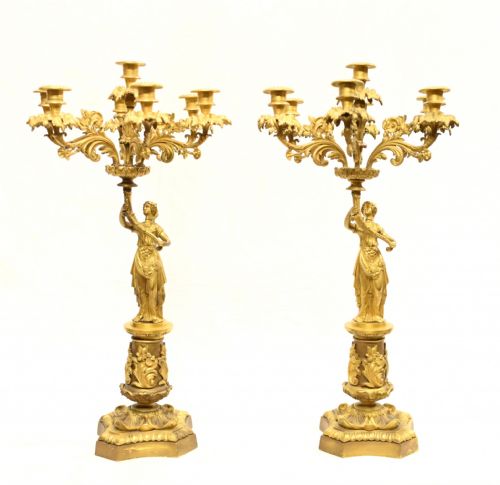


Mantelpiece Candelabras Pair
These mantelpiece candelabras pair selections bring French Empire and nineteenth-century elegance directly to your drawing room.
Mantelpiece Candelabras Pair
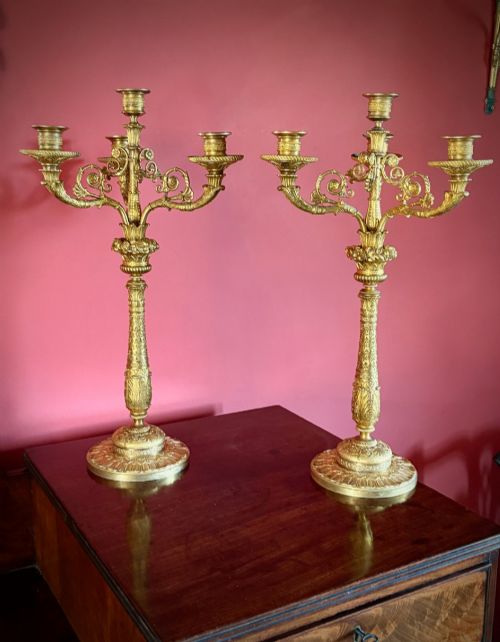
When you search for a mantelpiece candelabras pair, you find matching sets designed to sit symmetrically upon a chimney shelf or sideboard. Most examples encountered here originate from nineteenth-century France, spanning stylistic revivals from French Rococo and Louis XVI to Empire and Charles X.
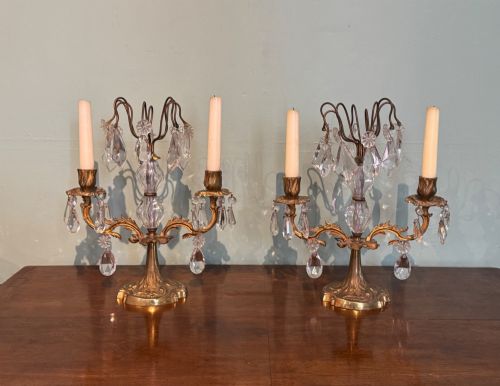
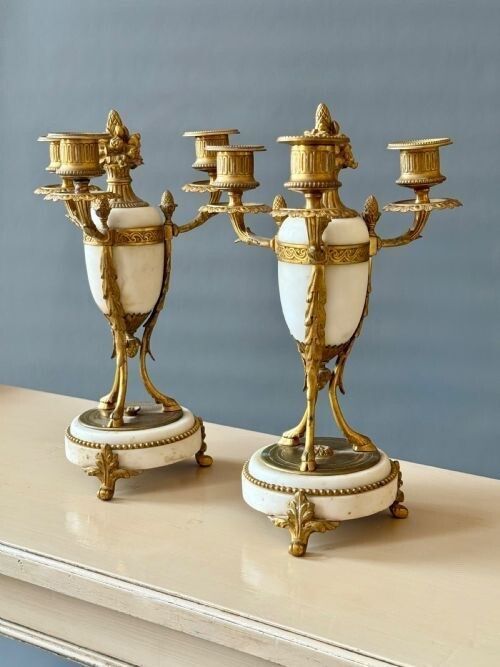
The objects take various forms, from two-branch and three-branch candelabra to larger four-light and five-branch variants, alongside related candlesticks and table lamps. Bronze, ormolu, and marble frequently form the structural composition, often combined with cut glass, porcelain, and onyx.
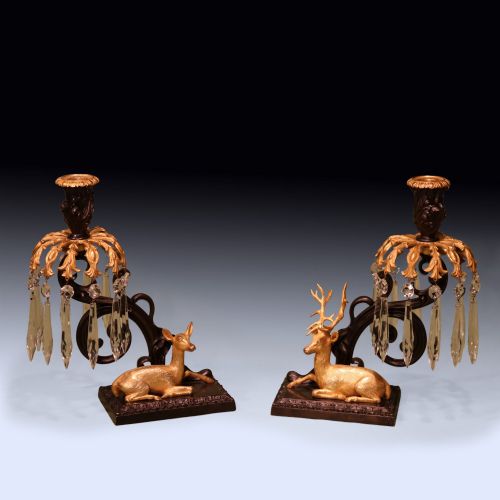
Makers and designers drew upon classical, Renaissance Revival, and medievalist motifs, producing figural works featuring cherubs, stags, does, and maidens. These dual arrangements create balanced illumination and serve as sculptural focal points within period interiors.
How they were made
The manufacturing process primarily relies on cast metals, specifically bronze, brass, and patinated bronze, combined with mercury-gilded ormolu to provide contrasting golden highlights. Foundries shaped these metals into complex figural and floral branches before hand-chasing the surface details.
Sculptural bases frequently incorporate white, green, or porphyry marble, onyx, and porcelain, anchored by heavy metallic mounts. Artisans joined these disparate materials with threaded rods and pins to construct multi-branch candelabra capable of supporting heavy candle sockets.
French stylistic revivals dominate the selection, including Rococo, Empire, Neoclassical, and Renaissance styles.
What varies in quality
Heavier casting weight and more complex multi-branch configurations distinguish superior pieces from simpler utilitarian designs. The integration of high-grade Sevres style porcelain or cut glass elements further elevates the sophistication of the pair.
Claude Clodion
The Mantelpiece Candelabras Pair Glossary
- Ormolu
- Gilded bronze produced by applying a mercury and gold amalgam to a bronze base and heating it. This technique creates a durable golden finish characteristic of French decorative arts.
- Patinated bronze
- Bronze that has been chemically treated to produce a darkened surface colour. This finish often contrasts with bright ormolu mountings on figural stems.
- Candelabra
- A branched candlestick designed to hold multiple candles simultaneously. These fixtures became central ornaments on nineteenth-century mantelpieces.
- Porphyry
- An igneous rock with large crystals, highly prized for its purple or reddish hue. It appears in the bases of select nineteenth-century candelabra.
- Charles X period
- A decorative style spanning the 1820s in France, bridging late Empire and early Victorian aesthetics. Pieces from this era emphasise refined bronze work and classical restraint.
Mantelpiece Candelabras Pair: Frequently Asked Questions
Where should I place a mantelpiece candelabras pair?
These matching sets find their traditional home centred upon a fireplace mantel shelf, creating symmetrical balance in a room.
They also sit effectively upon large sideboards, pier tables, or console tables where their height and branched arms can be fully appreciated.
How do I clean ormolu and bronze safely?
Dust these metal surfaces gently with a soft, dry brush to prevent the accumulation of dirt within the chased details.
Avoid commercial metal polishes entirely, as abrasive liquids will strip away the historic mercury gilding and patination.
What periods do these candelabra represent?
The inventory consists largely of nineteenth-century pieces, including specific dates from the 1860s, 1870s, 1880s, and 1900s.
Stylistic influences span French Empire, Louis XVI, Charles X, and various nineteenth-century revivals like Rococo and Renaissance.
Were these pieces converted into lamps?
Certain examples in the listings combine candelabra and candlestick forms with lamp adaptations to accommodate modern lighting.
These hybrid pieces retain their original nineteenth-century bronze, marble, and ormolu bodies while incorporating electrical wiring.