



Antique Bronze Mantel Centrepiece
An antique bronze mantel centrepiece anchors a room with classical weight, bringing nineteenth-century French proportion and patinated metal to the hearth.
Antique Bronze Mantel Centrepiece
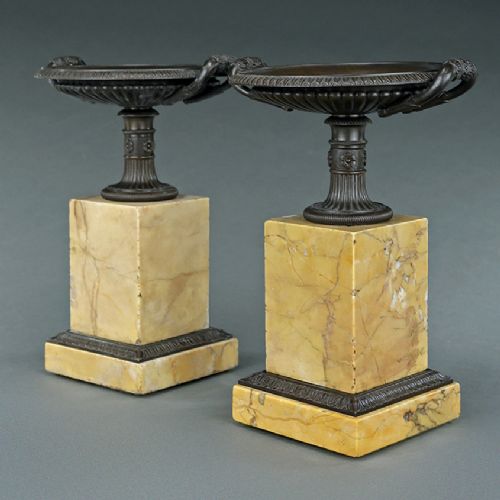
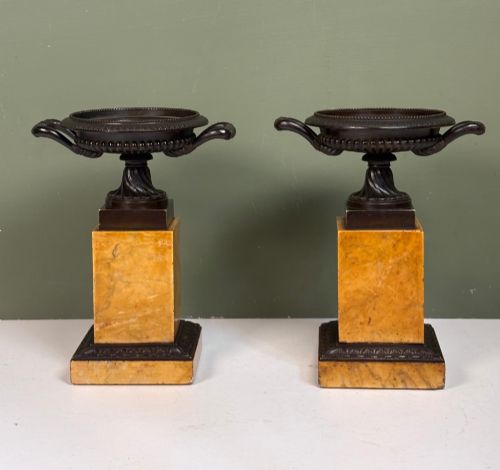
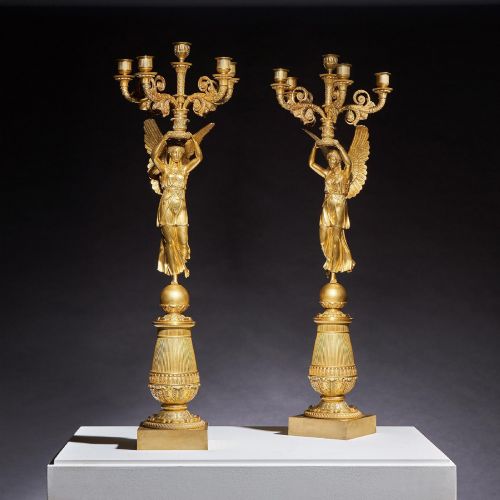
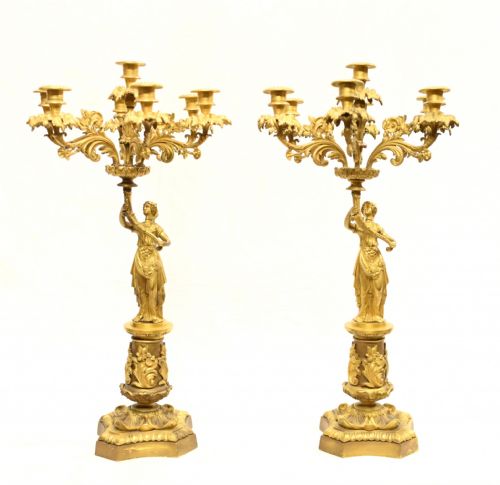
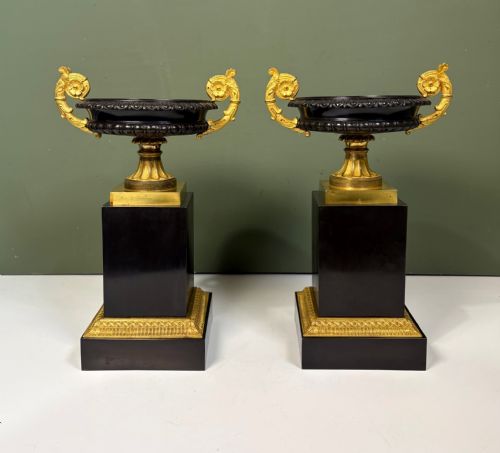
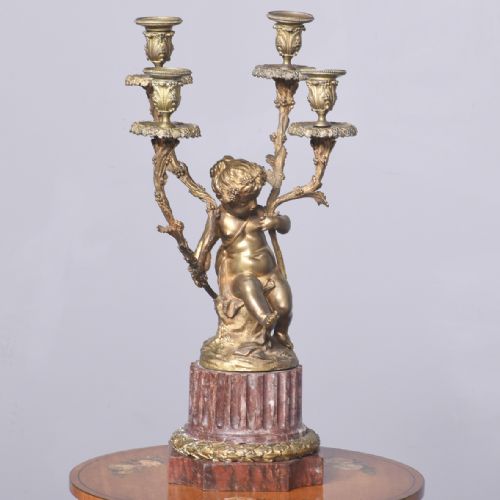
An antique bronze mantel centrepiece comprises heavy ornamental objects designed to sit upon a fireplace shelf, frequently appearing in pairs or three-piece garniture sets. These pieces range from tazzas and decorative urns to candelabra and figural candle holders.
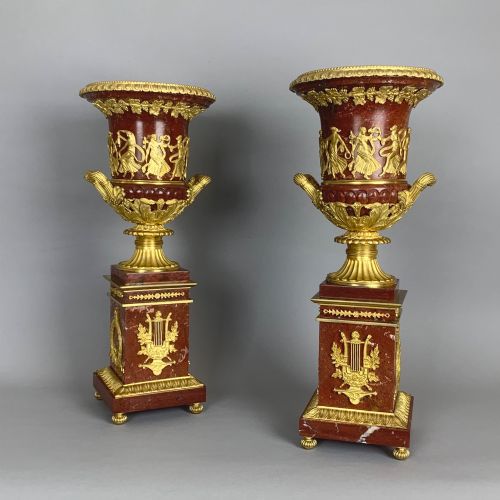
The versions most commonly met on this page belong to the nineteenth century, drawing heavily on French Empire, Regency, and Rococo Revival styles. They combine cast metalwork with contrasting plinths of marble or bodies of porcelain.
Makers paired patinated or gilt bronze with white marble, rouge marble, and glazed ceramics to create imposing decorative focal points for nineteenth-century interiors. Such items served both to frame a mantelpiece and to catch the flicker of candlelight.
How they were made
Foundries produced these centrepieces using traditional metal casting methods, subsequently chasing the bronze surfaces by hand to sharpen details such as acanthus leaves, puttis, and classical drapery. Guilds and workshops applied heavy fire gilding, known as ormolu, or left the bronze with a dark patinated finish.
Stonemasons shaped marble bases and columns to support the metal elements, turning and polishing white or rouge stone to precise architectural profiles. Where porcelain featured, as in Sevres-style urns and garnitures, ceramic bodies were fired and glazed before being fitted with cast bronze mounts.
Listings feature nineteenth-century French design, combining gilt bronze, patinated bronze, white marble, rouge marble, and porcelain into unified decorative objects.
What varies in quality
The distinction between ordinary and superior work lies in the crispness of the bronze chasing and the depth of the fire gilding. Finer examples retain sharp relief in hair, drapery, and foliate scrolls, whereas lesser pieces show softened cast lines that required minimal hand finishing.
The selection of supporting materials also dictates quality, with dense, unblemished marble and heavy cast mounts marking out better pieces. Inferior items often rely on lighter gauge metals and composite stones that lack the substantial heft of the best nineteenth-century work.
Pierre Philippe Thomire
The Antique Bronze Mantel Centrepiece Glossary
- Ormolu
- Gilt bronze produced by applying a mercury and gold amalgam to a bronze base and heating it until the mercury vaporised. This technique leaves a rich, durable golden coating characteristic of fine nineteenth-century French metalwork.
- Tazza
- A shallow bowl or vase raised on a stem and foot, often fashioned from bronze and marble. Originating in classical antiquity, these forms were revived during the nineteenth century as decorative mantel ornaments.
- Garniture set
- A coordinated group of three or more decorative objects, typically comprising a central urn flanked by matching vases or candelabra. They were designed to be displayed together on a mantelpiece or sideboard.
- Patinated bronze
- Metal that has been treated with chemical solutions or heat to produce a dark, stable surface oxidation. This treatment protects the bronze while giving the metal a subdued, mature tone.
- Regency
- A British design period spanning the early nineteenth century that drew heavily upon classical Roman and Greek motifs. Pieces from this era often pair dark patinated bronze with bright ormolu mounts.
Antique Bronze Mantel Centrepiece: Frequently Asked Questions
How do I distinguish ormolu from painted metal?
Ormolu is created through mercury gilding, a process that bonds a gold layer directly to the bronze substrate. This imparts a deep, metallic lustre that does not flake or reveal base metals underneath.
Painted or lacquered substitutes lack the warm, reflective depth of genuine fire gilding. Close inspection under magnification reveals the hand-chased metal beneath the gold layer on authentic pieces.
What periods do these centrepieces come from?
The pieces available here originate predominantly in the nineteenth century, spanning the Victorian era and the decades around eighteen-seventy to nineteen-hundred. Their designs reflect historical revivals including French Empire, Regency, and Rococo.
Maker attributions and stylistic markers help place these objects within specific decades. The integration of materials like rouge marble and majolica points directly to this nineteenth-century manufacturing window.
How should I clean bronze and marble?
Bronze and marble require gentle dusting with a soft, dry cloth to prevent the accumulation of grit. Water and chemical cleaners should be avoided, particularly on gilded or patinated surfaces where moisture can damage the finish.
If deeper cleaning is necessary for unsealed marble, a damp cloth with mild soap can be used very sparingly. Professional conservation is recommended for delicate ormolu mounts that show signs of tarnish.