
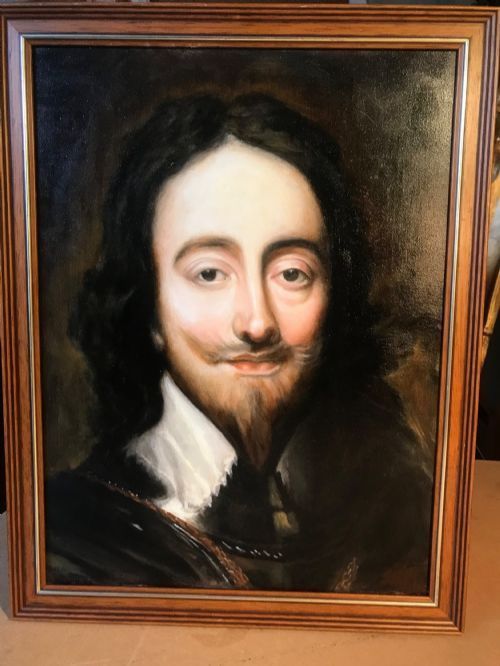
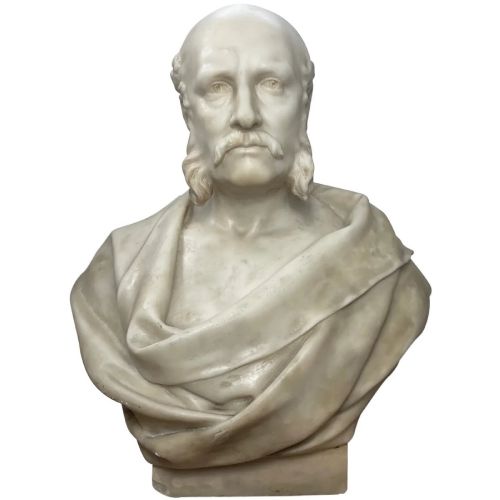
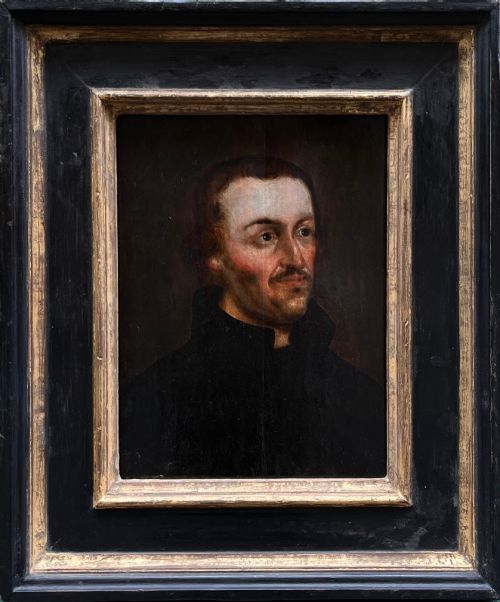
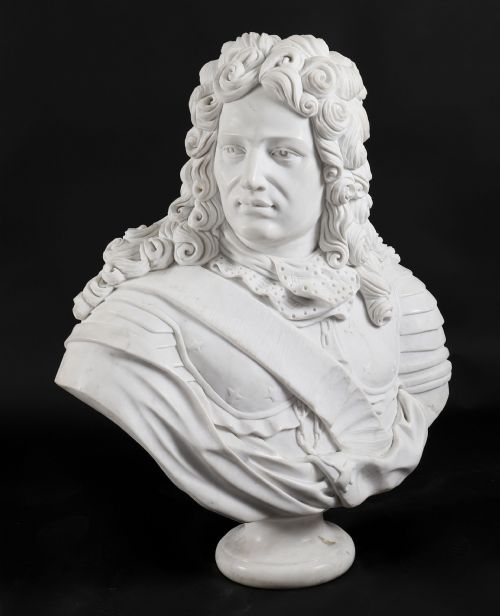
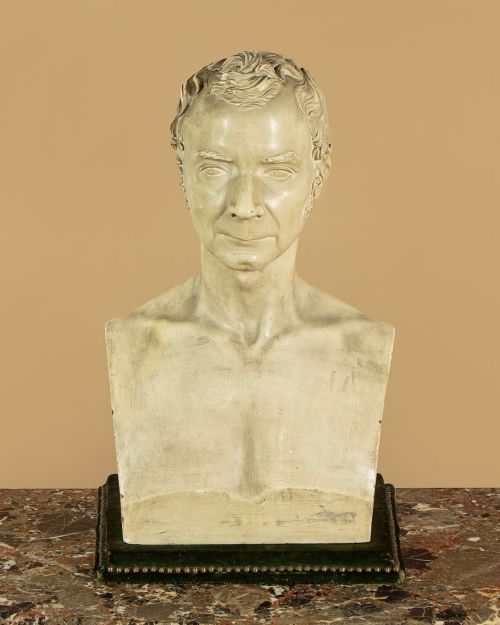


Male Portrait Bust
A male portrait bust records the likeness of a specific man in three dimensions, capturing the gravity and character of its subject.

Male Portrait Bust
When you search for a male portrait bust, you encounter sculpted likenesses rendered in media ranging from carved stone to cast metal. These pieces represent historical figures, classical personages, and private gentlemen whose identities are sometimes recorded in inscriptions or signatures.
The selections span centuries of production, drawing on styles from Neoclassical severity to Victorian realism. You meet Grand Tour library pieces alongside monumental civic commissions and intimate painted canvases that translate the form into two dimensions.
Plaster and white marble appear frequently among the sculptural entries, often echoing antique precedents or recording specific sitters from the eighteenth and nineteenth centuries. Alongside these three-dimensional works, oil paintings and watercolours on canvas capture male subjects in matching portrait formats.
How they were made
Sculptors carved white marble and stone directly from blocks, employing chisel and rasp to define the contours of hair, drapery, and facial expression. Bronze versions utilised the lost-wax method or sand casting, capturing fine details before receiving patination.
Plaster casts allowed workshops to replicate classical antiquities and contemporary subjects efficiently, often finished with painted or simulated stone surfaces to imitate heavier materials. Painted works applied oil and watercolour pigments to canvas and paper supports.
Terracotta pieces involved modelling clay and firing it in a kiln, sometimes leaving the material in its porous reddish state or applying surface colour to suggest bronze or stone.
Materials recorded across the inventory include oil paint, wood, terracotta, and simulated stone alongside traditional white marble and cast bronze.
What varies in quality
The fidelity of the likeness and the anatomical accuracy of the musculature and bone structure separate routine commercial castings from masterworks. A sculptor who understands the underlying anatomy produces hair that falls naturally and eyes that hold expression.
Material selection dictates the tactile presence of the piece, with finely crystallised white marble or heavy cast bronze offering durability and depth superior to porous plaster or soft terracotta. The crispness of the chasing on metal or the sharpness of the chisel marks on stone reveals the hand of a skilled artisan.
Provenance and signature elevate specific examples, particularly when a documented sculptor or a known sitter is attached to the work through contemporary inscriptions or historical records.
Giuseppe Moretti·Sir Thomas Brock·Alajos Strobl·Mathurin Moreau
The Male Portrait Bust Glossary
- Grand Tour
- A cultural journey undertaken by wealthy young Europeans through France and Italy to study classical antiquities. Sculptures and busts were acquired along the route to furnish British country houses and libraries.
- Neoclassical
- An artistic movement drawing inspiration from the art and culture of classical Greece and Rome. This style manifests in calm expressions, heroic nudity, and classical drapery.
- Plaster
- A building and casting material composed of gypsum, water, and other ingredients. Workshops used it extensively for library busts and affordable replicas of antique sculptures.
- Patina
- A thin layer that naturally or artificially forms on the surface of bronze through oxidation and age. It alters the colour and sheen of the metal, adding depth to the sculpture.
- Baroque Revival
- A nineteenth-century architectural and decorative style that revived elements of seventeenth-century Baroque art. Pieces in this style display dramatic movement, deep undercut drapery, and emotional intensity.
Male Portrait Bust: Frequently Asked Questions
How do I display a heavy marble or bronze bust safely?
Heavy stone and metal sculptures require a solid, level surface such as a dedicated column, heavy console table, or reinforced sideboard. Ensure the centre of gravity sits well within the boundaries of the support to prevent accidental tipping.
Position the piece away from high-traffic walkways and direct heat sources that might destabilise surrounding furniture. For wall-mounted brackets or heavy plaster pieces, anchor directly into structural wall studs.
How can I tell a nineteenth-century plaster cast from a modern reproduction?
Examine the surface texture, weight, and underside of the plaster for signs of age, such as oxidised metal armatures, old repair marks, and natural yellowing of the gypsum. Nineteenth-century casts often exhibit crisp moulding lines that softened over decades of subsequent commercial duplication.
Look for period collection labels, handwritten inscriptions in ink or pencil on the base, and the natural patina of accumulated dust embedded in recessed crevices.
Why do some male portrait busts include classical Roman armour?
Sculptors and patrons utilised classical Roman armour, known as paludamentum or lorica, to elevate the status of contemporary sitters by associating them with ancient military heroes and emperors. This convention framed the subject as a figure of civic virtue, authority, and historical importance.
The inclusion of straps, medallions, and metal plates also allowed artists to demonstrate their technical skill in rendering hard materials and textile folds.