




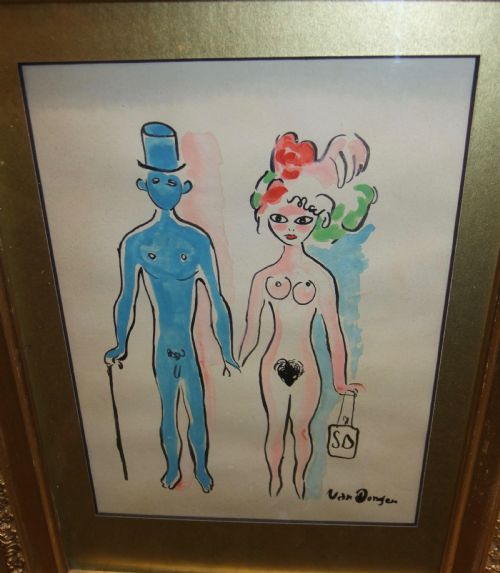


Male Figure Drawing
These male figure drawing examples range from academic life studies to modern works on paper, offering profound insight into anatomy and historical technique.
Male Figure Drawing
A male figure drawing represents the human form across multiple periods, including the eighteenth century, the Georgian era, the nineteenth century, and twentieth-century movements. Such works appear as framed drawings, original artworks, and framed art originating from various international schools.
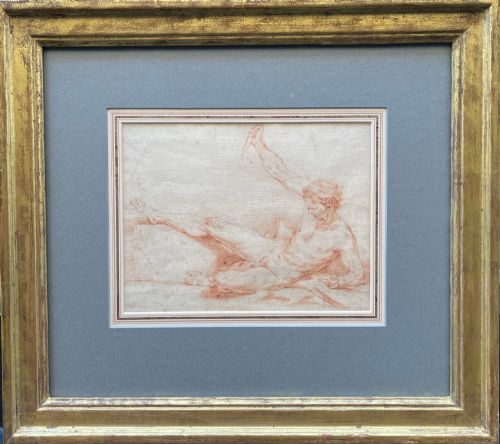
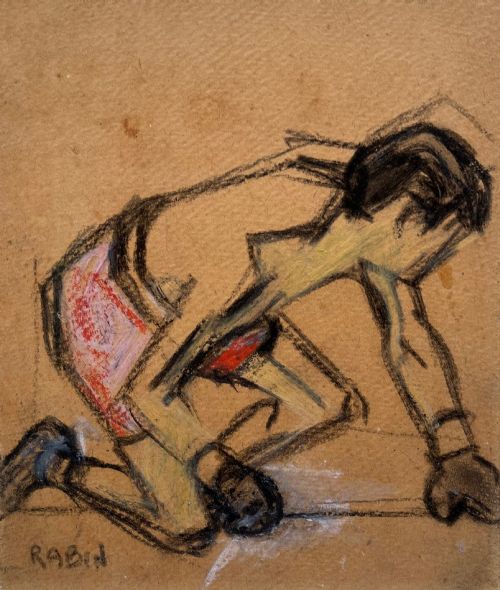
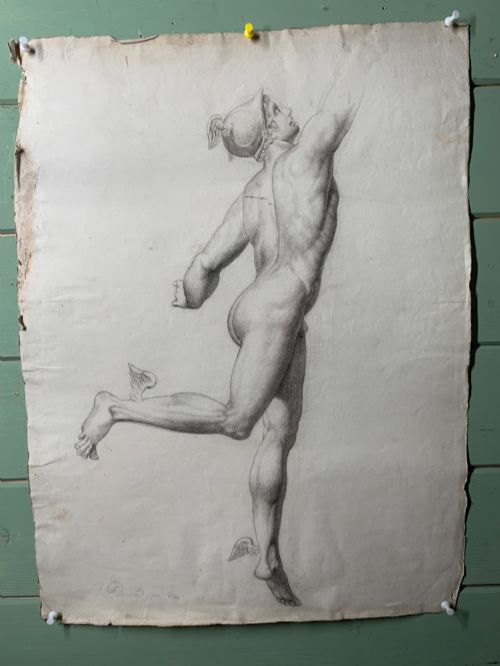
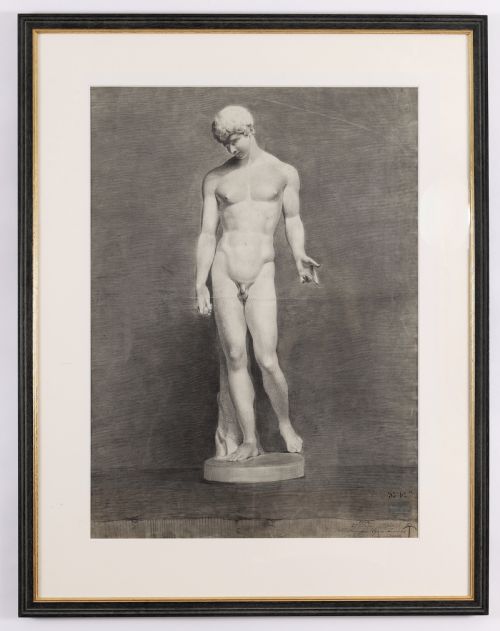
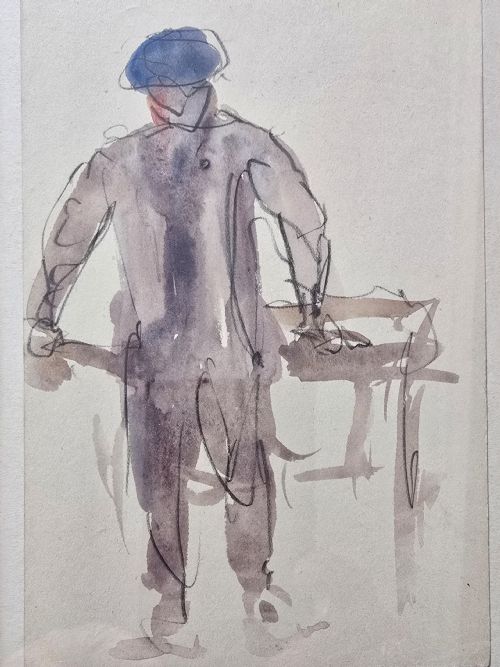
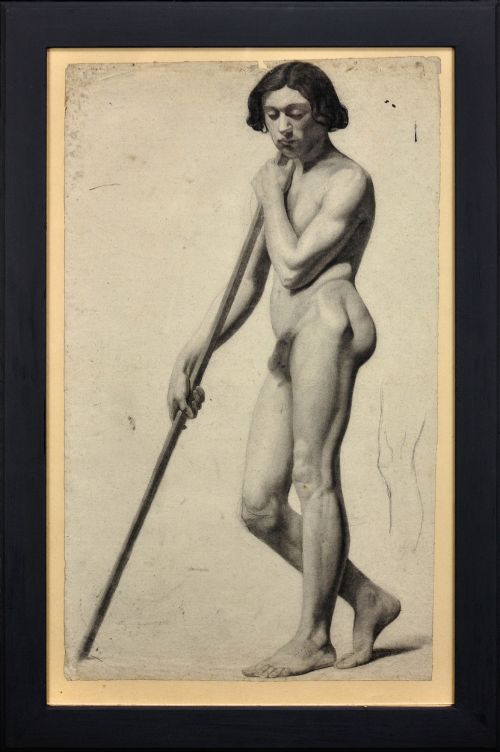
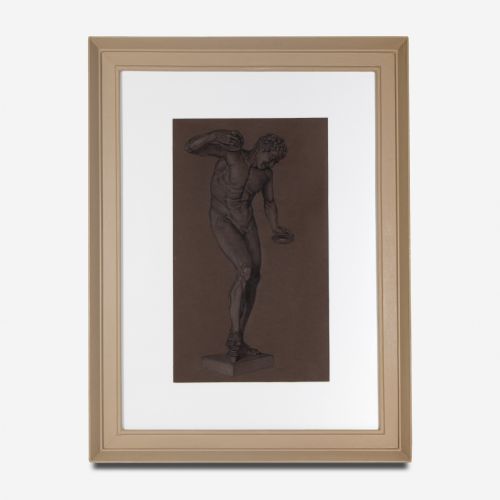
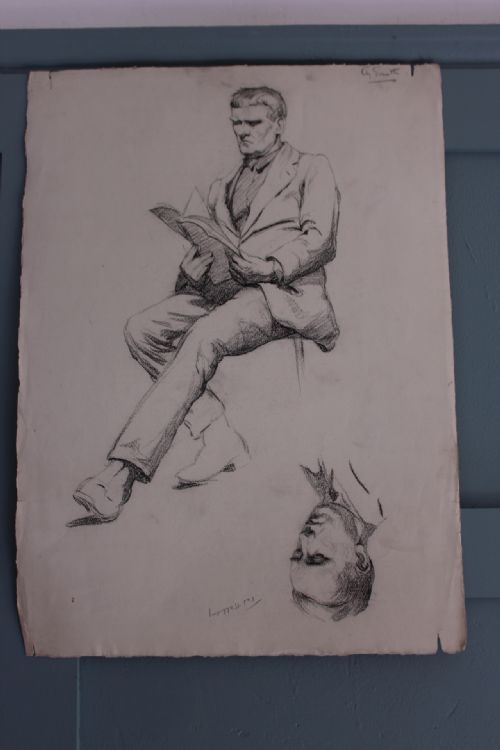
The subjects span academic life studies of a male nude carrying a staff, portraits of specific sitters, and mythological or classical studies like the God Hermes, the Capitoline Antinous, and the Death of Attis.
How they were made
Artists executed these works on paper using charcoal, graphite, ink, red chalk, and watercolour. Many pieces reflect rigorous academic training in proportion, light, and shadow.
Framed artwork presentations often incorporate glass and wood surrounds to protect the delicate medium of graphite, ink, or charcoal against environmental degradation.
The inventory includes works executed in graphite, charcoal, ink, red chalk, and watercolour upon paper supports.
What varies in quality
Quality rests in the precision of anatomical rendering and the confidence of the draughtsmanship, distinguishing formal academic submissions for prizes like the Grand Prix de Rome from informal studio sketches.
The sophistication of the tonal work and the expressive handling of materials such as red chalk or watercolour separate routine classroom exercises from accomplished compositions by recognised artists.
Hyacinthe Colin de Vermont·Samuel Rabin·Henry Arthur Roberts·Kees van Dongen·Francis Dodd
The Male Figure Drawing Glossary
- Academic Realism
- A style of painting and drawing produced under the influence of European academies of art, prioritising strict adherence to classical rules and anatomical precision.
- Life Study
- A drawing or painting executed directly from a live model, serving as a cornerstone of traditional artistic training.
- Graphite
- A form of crystalline carbon used as a drawing material, prized for its tonal range from silvery grey to deep black.
- Red Chalk
- A brownish-red material, also known as sanguine, commonly utilised by artists for figure drawings and preparatory sketches since the Renaissance.
Male Figure Drawing: Frequently Asked Questions
What is a male figure drawing?
A male figure drawing is an artwork depicting the human male form, created using mediums such as graphite, charcoal, or watercolour. These works range from rigorous academic life studies to expressive modernist portraits.
Historically, these drawings served as foundational training for artists mastering anatomy, perspective, and proportion before progressing to large-scale paintings.
How do I identify academic life studies?
Academic life studies often display precise anatomical detailing, careful shading, and poses derived from classical sculpture or live models in a studio setting. They frequently relate to formal school submissions or institutional training.
Look for inscriptions, dates, and stylistic markers indicating structured proportions and meticulous draughtsmanship typical of nineteenth-century academies.
What materials are used in these drawings?
Artists employed paper as the primary support, applying media such as graphite, charcoal, ink, red chalk, and watercolour. Framing often utilises wood and glass to preserve the paper.
The choice of material dictates the texture and tonal depth of the piece, with red chalk offering warm earth tones and charcoal providing stark contrasts.
How should I display drawings on paper?
Drawings on paper require framing behind glass with acid-free mounts to protect the delicate medium from dust, handling, and atmospheric moisture. Proper conservation framing ensures longevity.
Position framed works away from direct sunlight to prevent the fading of graphite, ink, and watercolour pigments over time.